Christmas is beginning to make its presence felt, little by little, across the streets of Barcelona: in the earliest decorations, the festively dressed shopfronts, and the lights already hanging above much of the city. It can also be sensed in the first fairs and shows that have arrived ahead of the main calendar – like the Sagrada Família Christmas Fair, which opened its traditional stalls this past Saturday, or the illuminated trail at the Sant Pau Art Nouveau Site, inspired by The Little Prince, featuring light sculptures like the rose and the aviator that evoke Antoine de Saint-Exupéry’s literary universe. Yet in the Catalan capital, one date marks the official start of Christmas: this Thursday, 26 November, in the afternoon, when the lights that will illuminate the city throughout the holidays are switched on for the first time.
The switch-on ceremony, centred on Passeig de Gràcia with simultaneous celebrations across the neighbourhoods, will usher in a week in which festive spirit spreads right across the city through gatherings, performances, and activities for all audiences. It will form the opening chapter of a Christmas that Barcelona will celebrate with heightened intensity this year, coinciding with its recognition as European Capital of Christmas, a title awarded by the European Capital of Christmas organisation and shared by the Catalan capital this year with Wels, in Austria, and Kirkop, in Malta.
Light, music, and aerial dance to welcome the festive season
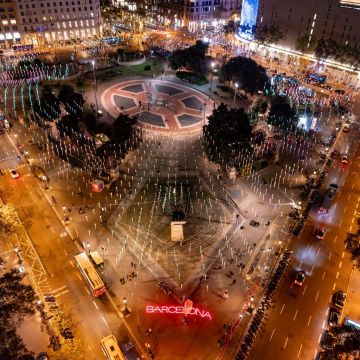
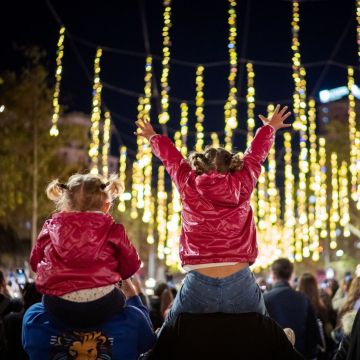
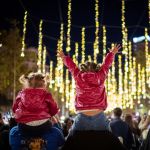
Thursday will therefore mark the end of the countdown to the Christmas holidays in the Catalan capital. Yet, as has become tradition, the lights switch-on will reach far beyond a simple symbolic gesture. Passeig de Gràcia will once again provide the setting for the flagship ceremony, featuring a spectacle of music, light, and aerial dance beginning this Thursday, 26 November, at 6pm and culminating half an hour later with the switch-on of the Christmas lights across the entire city. This year, the illuminations will stretch across roughly 140 kilometres of streets and public spaces, remaining lit until 6 January. In parallel, various neighbourhoods will also mark the arrival of the festive season with their own events and choral performances, ensuring the switch-on is experienced simultaneously in different corners of the city.
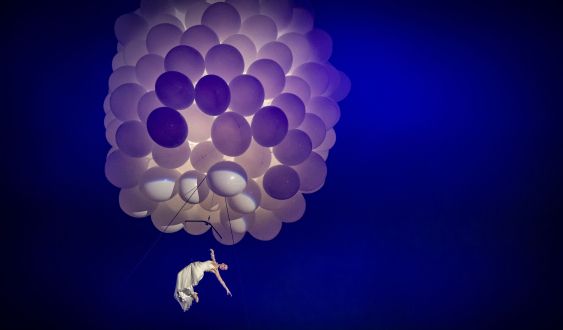
Although Passeig de Gràcia returns as the central stage for the switch-on, the show will shift slightly up the boulevard from its usual spot this year, taking place on the stretch between Carrer del Rosselló and Avinguda Diagonal. There, a scenic and audiovisual production will unfold, blending projections, music, and aerial dance. Circular forms will serve as the show’s guiding thread: snow globes, bubbles, Christmas baubles, and balloons will appear as visual motifs to weave a story around reunion, celebration, and shared traditions. The score, composed especially for the occasion by Raffel Plana, will accompany the dramaturgy throughout and set the pace for each scene.
Beyond the plays of light, much of the spectacle will also take place in mid-air. Acrobatic feats and suspended choreography will provide some of the evening’s most eye-catching moments, featuring two international companies specialising in this style of production. Italian troupe Studio Noè will bring Molecole Show to Passeig de Gràcia – a piece incorporating floating set designs, giant balloons, and suspended structures – while the Hispano-Argentine company Voalá will send its acrobats soaring through routines combining repertoire pieces with creations devised specifically for the event.
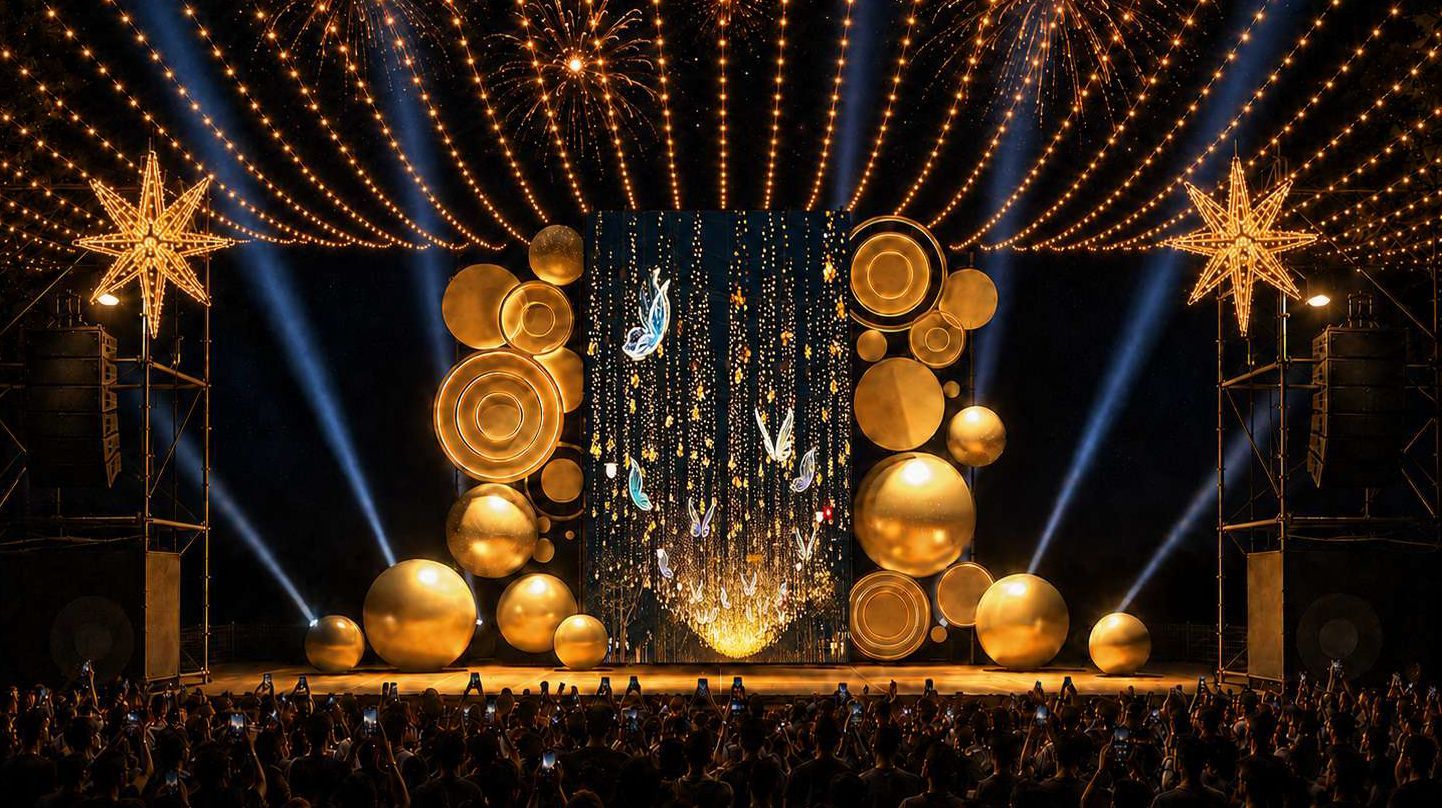
Live music will give voice to the celebration through two performances. First, the Barcelona duo Alosa – formed by Giulietta Vidal and Irene Romo, who breathe fresh life into Catalan folk songs – will perform a festive repertoire. Meanwhile, a children’s choir will revive Un cor que batega, Barcelona’s official Christmas carol, created by Irieix and Soon in Tokyo. The song will form part of the ceremony’s soundtrack and accompany the countdown leading up to the switch-on, capped off by a finale of aerial acrobatic dance and pyrotechnics.
Yet the celebrations will not remain confined to the city centre. While Passeig de Gràcia hosts the main spectacle, several neighbourhoods will also welcome Christmas with their own gatherings and choral concerts. Local squares will briefly become festive stages: in Sarrià-Sant Gervasi, at Plaça de Frederic Soler; in Gràcia, along Passeig de Pi i Margall; in Horta-Guinardó, at Plaça d’Eivissa; and in Sant Andreu, at Plaça de Massadas. Sants-Montjuïc and Les Corts will share a stage at the junction of Gran Via de Carles III and Avinguda de Madrid, while Nou Barris and Sant Martí will also join the switch-on with programmes of their own.
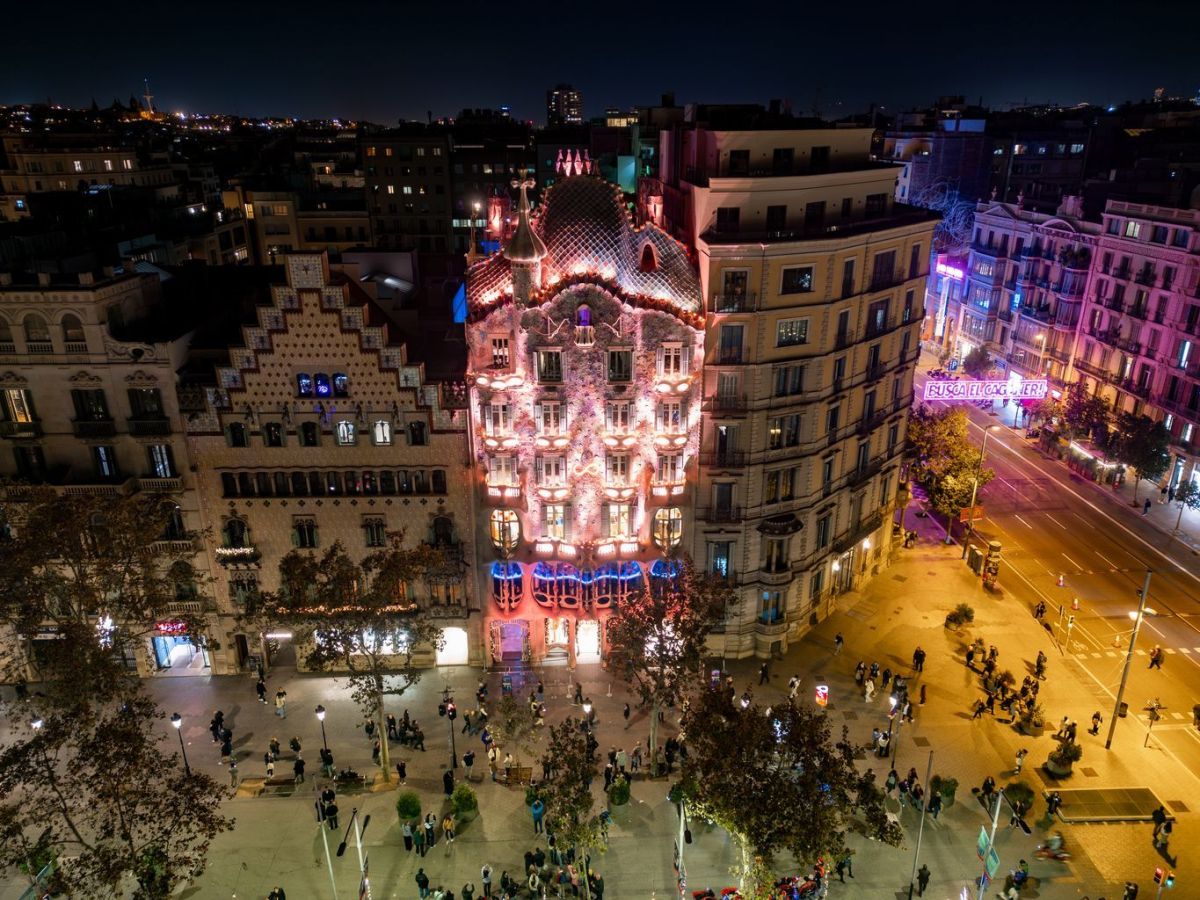
Once the countdown has officially welcomed Christmas to Barcelona, the festivities will continue across the facade of another Passeig de Gràcia icon: Casa Batlló. Gaudí’s landmark building will premiere its three-minute light and music projection show, running every half hour between 6.30pm and 9.30pm. The display will be repeated daily from Thursday through to 6 January.
The celebrations will make another standout stop at Plaça de Sant Jaume, where a projection show onto the facades of City Hall and the Palau de la Generalitat will premiere at 7pm. Created by digital artist Alba G. Corral, the installation will turn both buildings into the two halves of a giant Christmas card, with flowers, leaves, branches, and organic shapes unfurling across the projection. Jointly backed by both institutions for the third consecutive year, the commission forms part of the square’s redesigned festive approach: for the past three years, nativity scenes have been housed inside the buildings while the exterior space is reserved for shared artistic interventions. The projection show can be viewed daily until 5 January alongside the traditional Christmas tree.
From Passeig de Gràcia to Port Vell: Christmas spreads across Barcelona
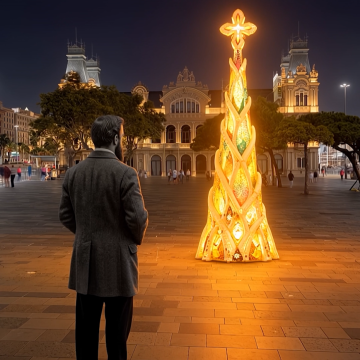
The lights switch-on along Passeig de Gràcia will fire the official starting gun for the holidays in Barcelona, yet it is only the opening chapter of a week in which the city will steadily add new stages and revive some of its most cherished traditions. The following day, Friday 27 November, the spotlight shifts towards the sea with the inauguration of the Port Vell illuminations at 6pm. This maritime Christmas will place Gaudí centre stage: in Plaça del Portal de la Pau, an inflatable installation inspired by the Sagrada Família’s Tower of Jesus Christ will rise as a monumental Christmas tree, surrounded by some thirty illuminated three-dimensional figures and more than 150 decorated streetlamps.
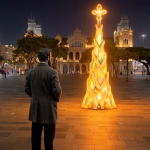
That same Friday also marks the return of one of the season’s most traditional sights: the Fira de Santa Llúcia. From that day onwards, nearly 160 stalls will line Avinguda de la Catedral until 23 December, selling nativity figurines, caganers, moss, and festive ornaments. The day will add yet another fixture to the city’s holiday calendar: CASA SEAT CUPRA launches its Magic Days, offering an adventure in which children and adults alike can hunt for the hidden Christmas treasure with the help of the elf Revelf, who guides them through the building.
Even more events will join the roster across the city over the weekend. On Saturday 28 November, Poble Espanyol will once again transform into Natalis, featuring six themed worlds and fantastical characters inviting visitors into distinct Christmas realms. Joining this line-up is the Magical Christmas Experience at the Reial Cercle Artístic, which from 26 November will offer an immersive walkthrough blending projections, holograms, and virtual reality to explore how Christmas is celebrated around the globe. The lights switch-on thus serves merely as the first grand moment of a festive season that will gradually unfold right across Barcelona – through illuminated streets, fairs, shows, and experiences for all ages – all the way to Three Kings’ Eve.
Add The New Barcelona Post as your preferred Google source for free
Stay informed with the latest news.