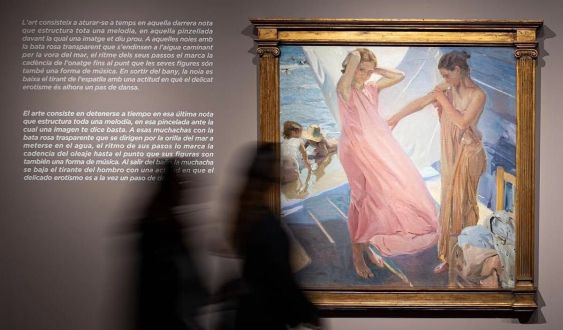
"Here is my secret: it is only with the heart that one can see rightly; what is essential is invisible to the eye." This is dictated by this famous phrase from The Little Prince. A quote that, in turn, could well be attributed to Joaquín Sorolla himself to describe his vibrant paintings. No one like him has known how to portray the crystalline water of the Mediterranean, that which bathes and envelops children and fishermen. Nor has anyone like him known how to portray the warm luminosity of the coast —not in vain, he is known as the painter of light—. Small details, such as the waves, the light, or the Mediterranean warmth that, although imperceptible and invisible to many other artists, through the dynamic brushstrokes of Sorolla, who observed the coast with his sight, but especially with his heart, unfold in all their splendor.
This quote, in fact, could even be attributed to Manuel Vicent, a Valencian writer for whom, as for Sorolla, the sea is much more than a landscape: it is a lived experience and a memory recalled by the heart. Experiences and memories that connect painter and writer, and that have led Vicent to become the atypical curator, through his words and descriptions, of the exhibition In Sorolla's Sea with Manuel Vicent, which can be visited at the Palau Martorell until April 6. An exhibition featuring the beauty of these elements invisible to the eyes, but which pierce the hearts of visitors.
The binomial beauty and Sorolla has become a regular feature in the brief, but intense, history of the Palau Martorell. Beauty, on the one hand, because the magnificence of this neoclassical building is, more than a setting, a central element of all the exhibitions —from Botero to Mucha— that have passed through its walls. Designed by the architect Joan Martorell (who gives the building its name) and built between 1886 and 1990, it was originally the headquarters of the old Sociedad del Crédito Mercantil.
It was not until the end of 2022 when the private initiative of Jesús Rodríguez (director of the cultural management company Evolucionarte) and José Félix Bentz (president of the Real Círculo Artístico de Barcelona) brought this building, owned by the Núñez i Navarro Group, back to life. Thus opening the doors to the beauty of this neoclassical palace, dominated by a large central skylight, Novecentista ornamentations, stained glass windows, and Doric columns.
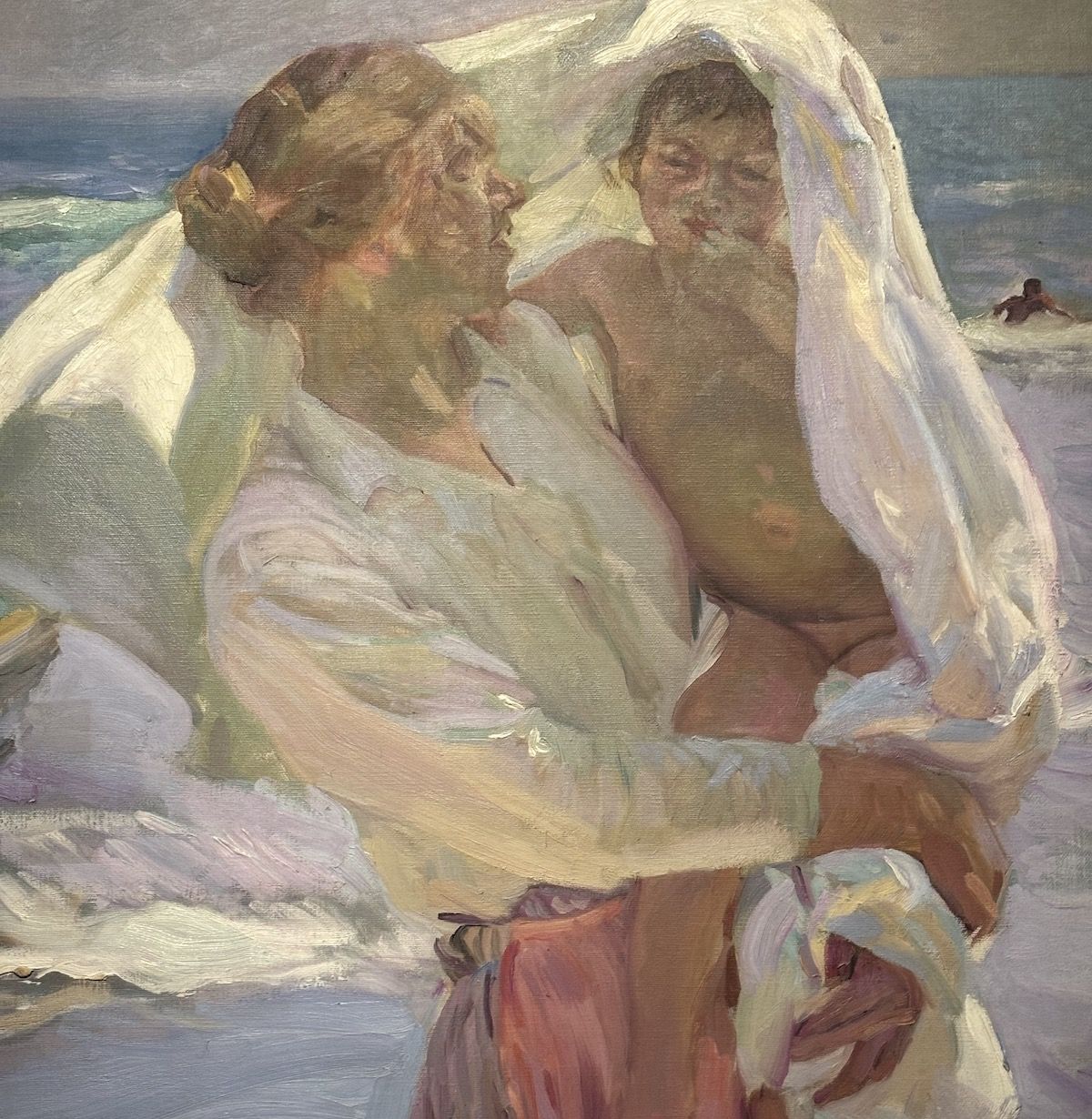
And, on the other hand, Sorolla. It was precisely with this artist that the Martorell began its journey as a museum more than three years ago. If in that first exhibition, under the title of Cazando impresiones (Hunting Impressions), a total of 193 miniatures conquered the mansion, in the current exhibition, narrated by the words of Manuel Vicent, there are 86 works that take visitors on a journey through the painting of the Valencian artist. Among the selected paintings, some of Sorolla's most famous oil paintings stand out, such as El balandrito (The Little Yacht) or La hora del baño (The Bathing Hour).
A unique opportunity to explore the coastline that Sorolla depicts in his paintings without having to travel to Madrid. In fact, the exhibition has been possible precisely because the Madrid-based Sorolla Museum, where the painter also resided with his wife Clotilde and their five children, has been closed since 2024 for an ambitious restoration and expansion project, which will add more than 2,000 square meters of surface thanks to an investment of 6.5 million euros contributed by the Ministry of Culture. It is these works, which normally occupy the walls that were once the artist's studio and refuge, that can now be visited, for a limited time, in Barcelona.
The sea as a microcosm
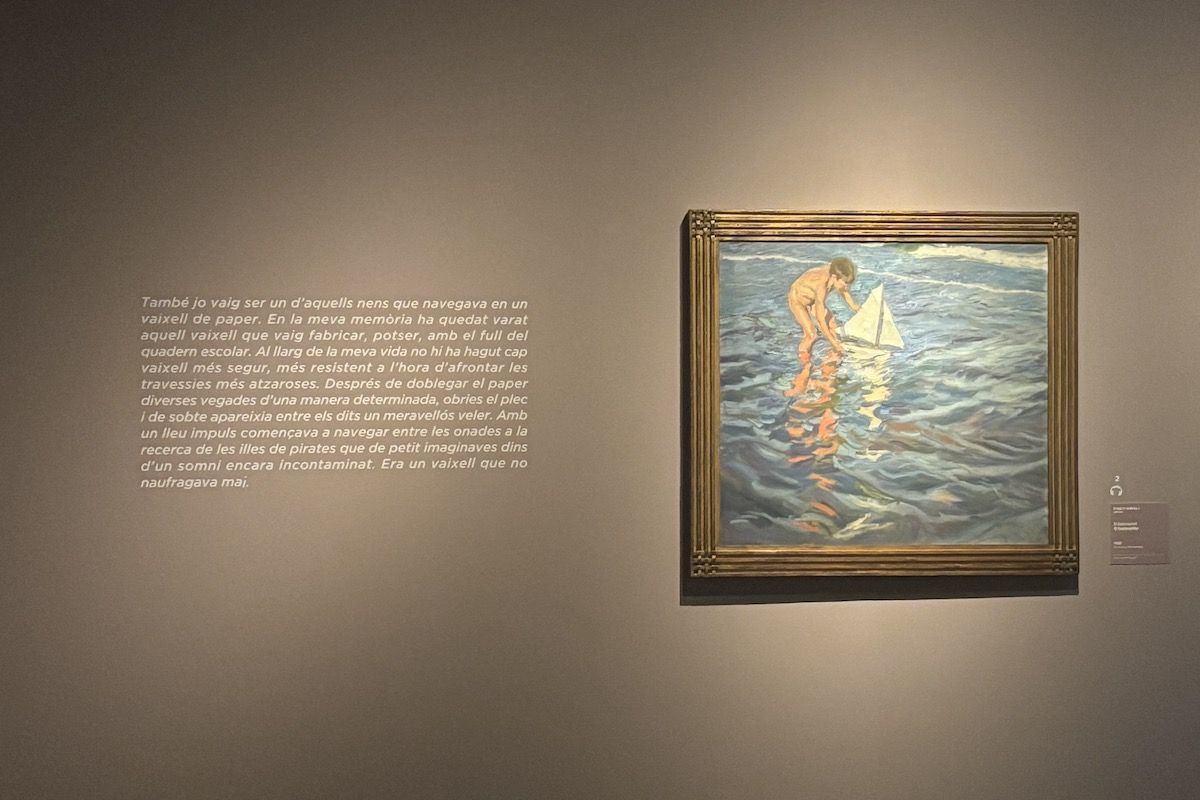
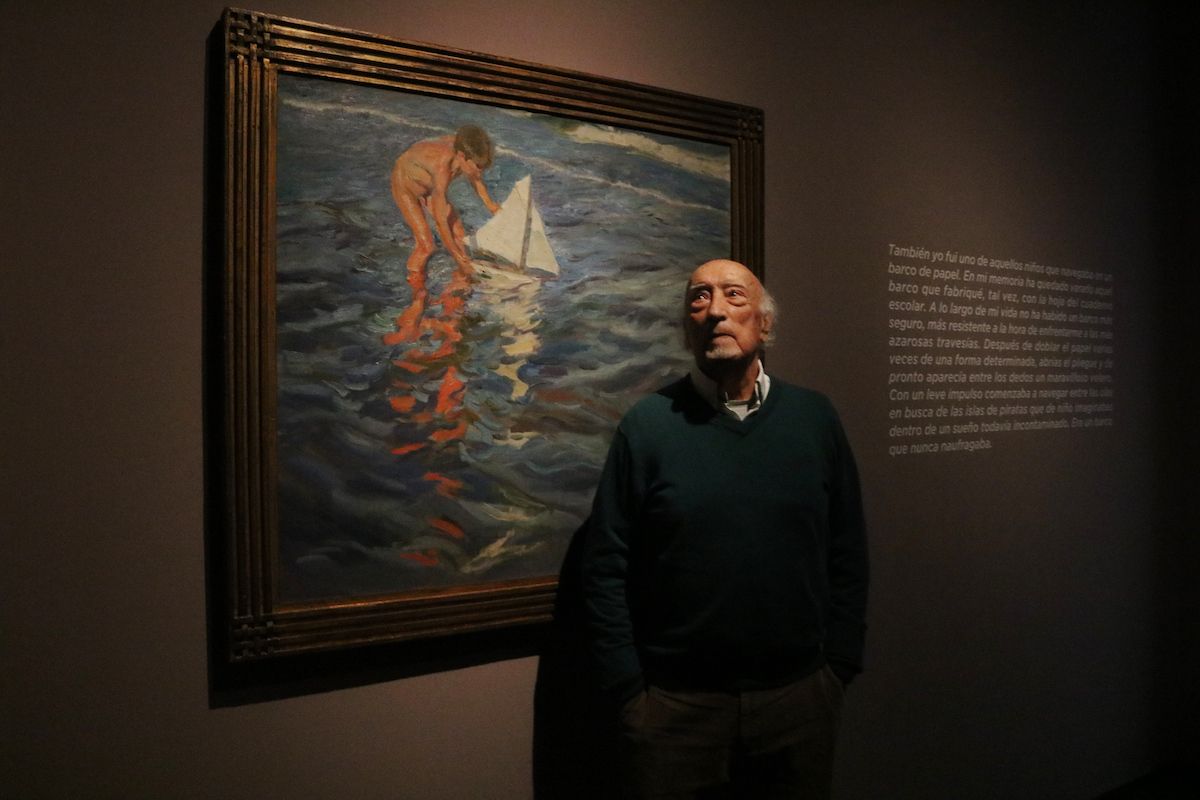
"The water was such a fine blue! And the vibration of the light was crazy. I have witnessed the return of fishing: the beautiful sails, the groups of fishermen, the lights of a thousand colors reflecting in the sea… which today was of a sublime intensity." This is how Sorolla (1863-1923) described to his wife Clotilde his visit to the Valencian town of Xàbia (Jávea). It was in these coastal cities, with the continuous presence of fishermen and naked children playing under the sun, where the Valencian painter discovered his particular paradise. A paradise where the sea was synonymous with freedom, entertainment, and innocence.Those same notions of innocence and freedom are what, for Vicent, who with his words becomes the narrator of the exhibition and of the painter, are associated with the coast. "I too was one of those children who sailed in a paper boat… Throughout my life there has been no safer boat, more resistant when facing the most hazardous journeys," Manuel Vicent recalls next to El balandrito. Moreover, when Vicent first observed one of Sorolla's paintings, he had the sensation that he had witnessed that light before, remembering his days as a child and teenager by the sea: "I already knew it, because to know is only to remember. Sorolla's light had been wandering like a synthetic idea through the spheres since time was created."
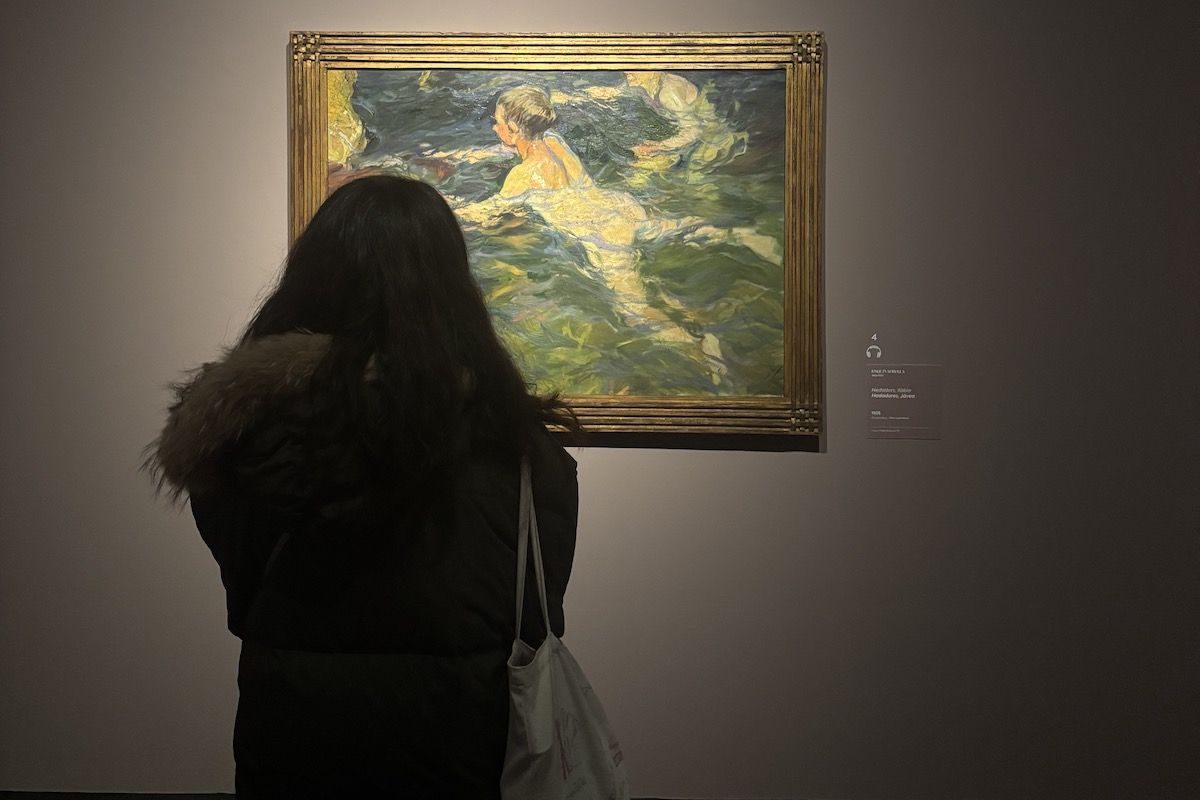
And it is this sea, which for both Vicent and Sorolla represents more than a mere landscape, that this exhibition explores in all its facets. From the tranquility of women and children enjoying simple pleasures by the shore, in works such as El baño or Muchacho en la orilla del mar, to the dedication and daily effort of those who dedicate their lives to the sea: the fishermen and fisherwomen of Cabanyal, protagonists of works such as La llegada de las barcas or Repasando la vela.
In this place, Cabanyal, the sea becomes a microcosm where two worlds and social classes intertwine: the universe of bourgeois vacationers who wore wide-brimmed hats and lived in colonial-style houses, and that of the fishermen who survived in miserable shacks and hid a knife under their sash. This is how Sorolla paints it, with himself and his family as an example of these bourgeois who observed the sea from the outside, without having to work and suffer in it. And this is how Vicent also recalls it: "at the beginning of the 20th century, the maritime villages were united with the summer colonies that the Valencian bourgeoisie had established on the beach, and in them the happy shopkeepers of the city and the fishermen of elemental passions coexisted for a few months a year."
And beauty as an aesthetic challenge
Scenes, all of them, portrayed by Sorolla with dynamic brushstrokes and special attention to beauty and the influence of light on characters and landscapes. A gamble that may seem, at first glance, superficial, by painting bourgeois characters and their amusements along the coast. But which, in reality, is much more than an aesthetic decision, being even a philosophical gamble.At the beginning of the 20th century, artistic avant-gardes began to emerge —from expressionism to surrealism, passing through cubism—, which opted for deforming, obscuring, and even escaping from reality. It is in this context, when Sorolla, in the style of the French Impressionists, decides not to hide reality, but to portray it, paying special attention to those invisible details, such as light or the movement of the waves. Painting not only reality, but what he felt when living it. Working on the beach, under a scorching sun, because only then could he observe through sight, but also through feelings and the heart.
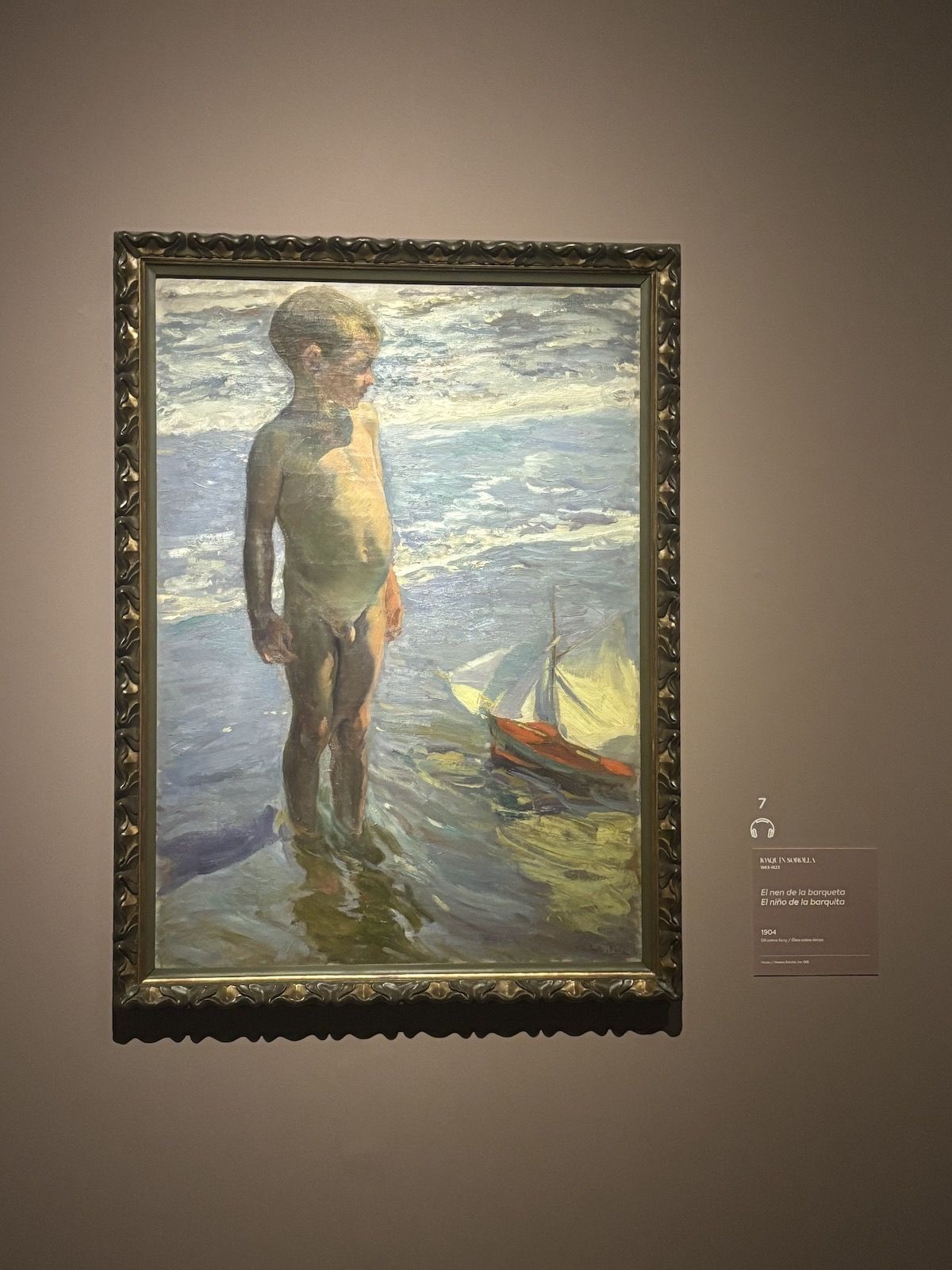
A decision that does not stem from ignorance of the artistic movements of his time, as the painter had trained and exhibited in major cities: from Paris, Berlin, London or New York, but from a clear commitment to transmit that joie de vivre: those small pleasures and the feeling one has when approaching the sea. This is also confirmed by Vicent in one of the texts accompanying the exhibition: "Miguel de Unamuno exclaimed: "Valencians, aesthetics are your downfall". He believed that on this Mediterranean coast lived a frivolous, hedonistic, superficial and even pagan people. Apparently, this philosopher entangled in the tragic sense of life was unable to imagine that in Sorolla's painting there was a natural paganism that was also a no less profound philosophy."
The joie de vivre and aesthetics that Unamuno found superficial, in Sorolla's brushstrokes become universal: managing to transmit to the visitor of the Martorell the purity and beauty emanating from that Mediterranean that also bathes Barcelona.
Add The New Barcelona Post as your preferred Google source for free
Stay informed with the latest news.
