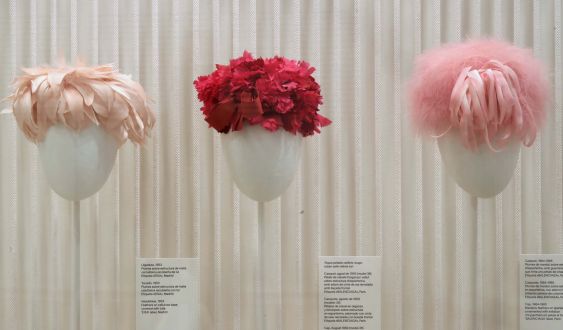
"To appreciate a Balenciaga hat, you don't need to know about fashion; this is an exhibition open to all lovers of beauty," defends Sílvia Ventosa, one of the people responsible for Balenciaga. The Elegance of the Hat, which can be seen at the Museu del Disseny de Barcelona from this Thursday until October 3. The exhibition includes 87 pieces, ranging from the 1930s to the late 1960s, all conceived by who is considered the best couturier of the 20th century.
"I couldn't choose one design. All are wonderful for their originality, exquisite craftsmanship, quality of their materials… Each one tells us a story," says Ventosa, visibly enthusiastic about the result of a year and a half of laborious work in close collaboration with the Balenciaga Museum in Getaria, which contributes 44 of the exhibited models.
The exhibition, conceived "in an elegant, contemporary, and timeless way," is as innovative as the hats themselves, being a pioneer in dignifying a clothing accessory that the couturier's workshops made with the same delicacy and care as the suits. For this reason, the idea is already having international repercussions. "We hope it will be a success, even though we are in complicated times for culture due to the pandemic."
The content of what is exhibited is also of great value, as it is not easy to find old pieces, and there are two hats from the 1930s that reflect the style of the era very well. Likewise, there are 12 from the 1940s and many more from the 1950s and 1960s. "These are hats that are in very good condition, and we have a diverse representation of styles, shapes, colors, techniques…," explains Ventosa, who shares curatorship with the director of collections of the Balenciaga Museum, Igor Uría.
How did the idea for such an original exhibition come about?
The exhibition is the result of the synergy between the two centers. The one in Getaria was inaugurated a decade ago to study and highlight the work of the creator, who was born in that Gipuzkoan town. The connection was established when the Basque museum showed a fashion photography exhibition in 2018 that had been held at the Barcelona museum. "We went there to give talks on the subject and connected very well," says Ventosa.
The textile and clothing conservator of the Museu del Disseny explains that it was at that moment when they chatted about the possibility of holding an exhibition on some unknown facet of the genius and immediately thought of hats. In Getaria, they house 375, while in Barcelona there are 173. They were excited about the idea of exploring that world of fantasy that is little appreciated and always remains somewhat relegated when talking about fashion.
Uría traveled to the Catalan museum during his vacation and, as an expert in Balenciaga, helped catalog the existing collection. "We worked intensely and realized that we had wonders, so we set to work on developing an exhibition script."
Where do these wonders come from?
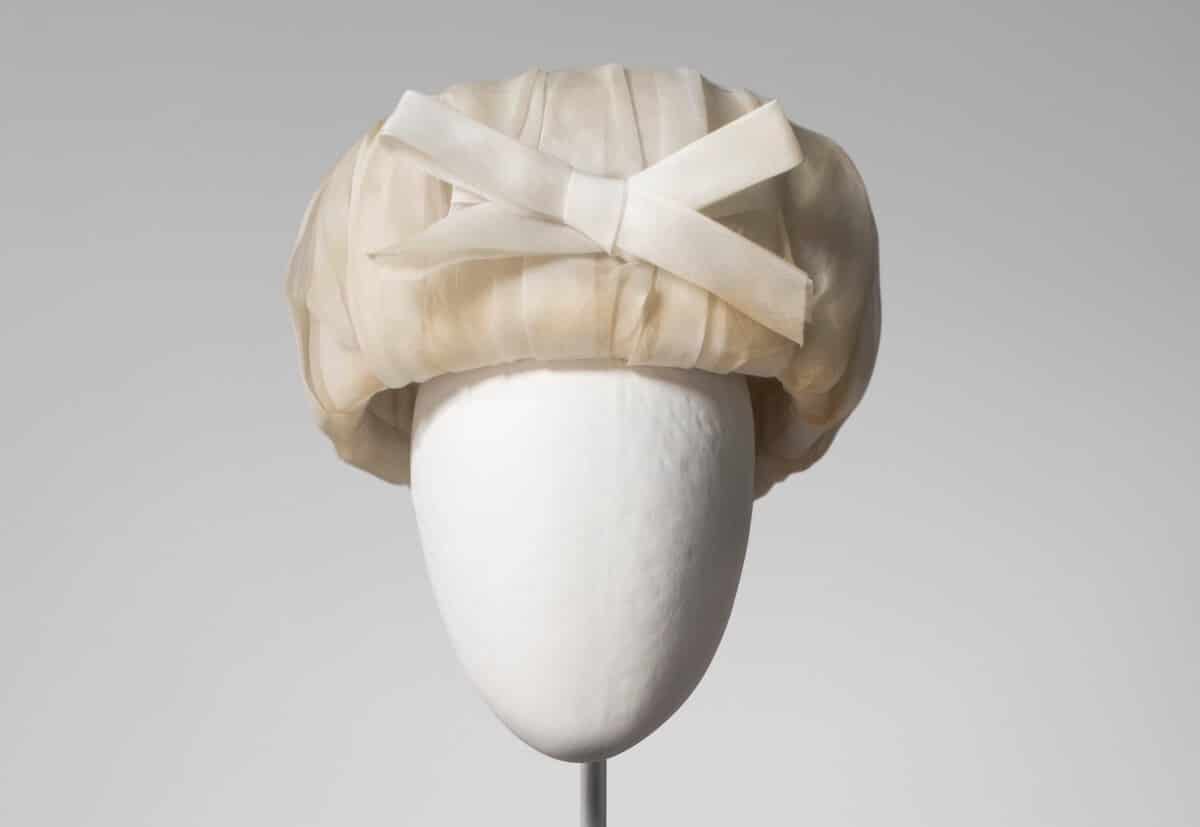
The hats in Barcelona come from donations, with two prominent sources. In 1974, two years after Balenciaga's death, editor and fashion guru Diana Vreeland organized his first major exhibition at the Metropolitan Museum in New York, dedicating it to Balenciaga. Seven years later, about eighty of the dresses and 40 hats from that exhibition arrived in Barcelona thanks to a donation from the Spanish association of chemical producers, who learned that a modern fashion institute was planned to open in the city.
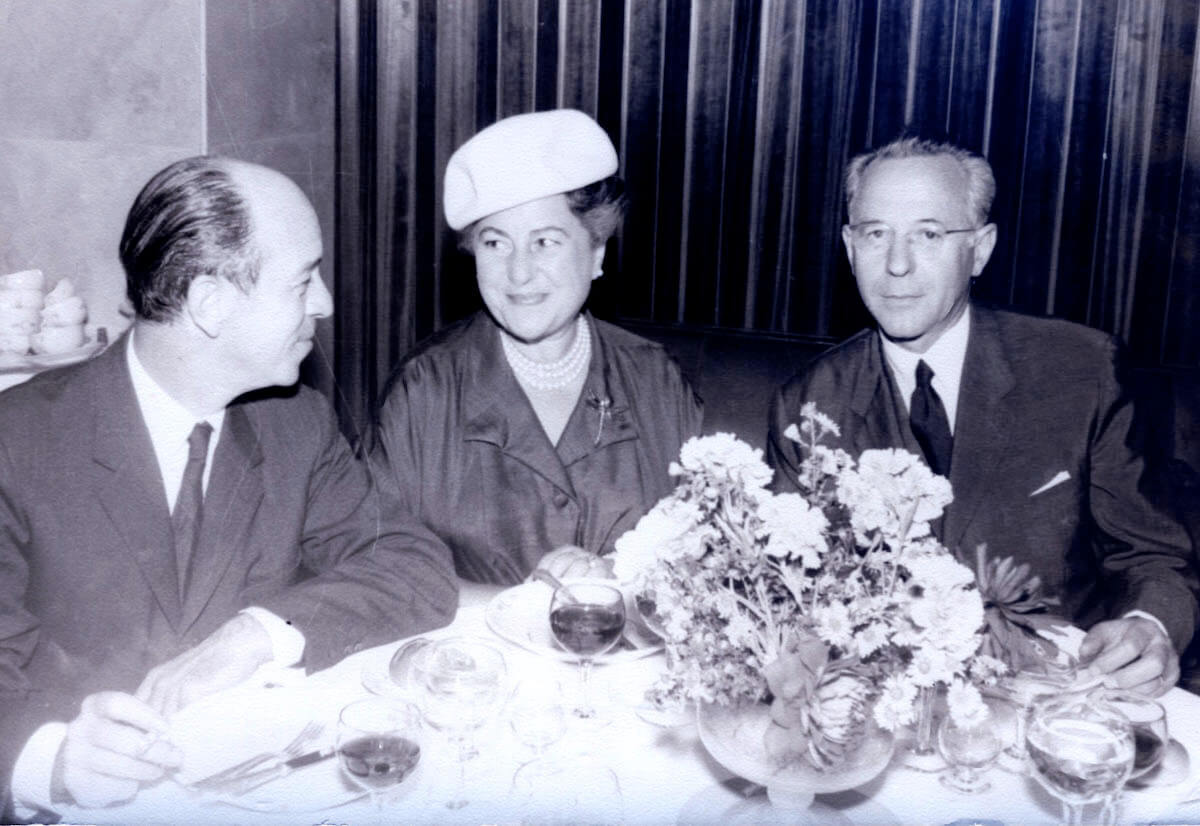
The other major source is the private donation from clients, among whom Anna Maria Torra Amat stands out, wife of editor Gustavo Gili, who delivered a total of 81 hats she owned and kept at home to the museum in 1988. For Ventosa, "they are exceptional, perfect works," to which few—not even the family—gave the importance they deserved as elements that completed and rounded out the Balenciaga look.
How did they combine with suits and coats?
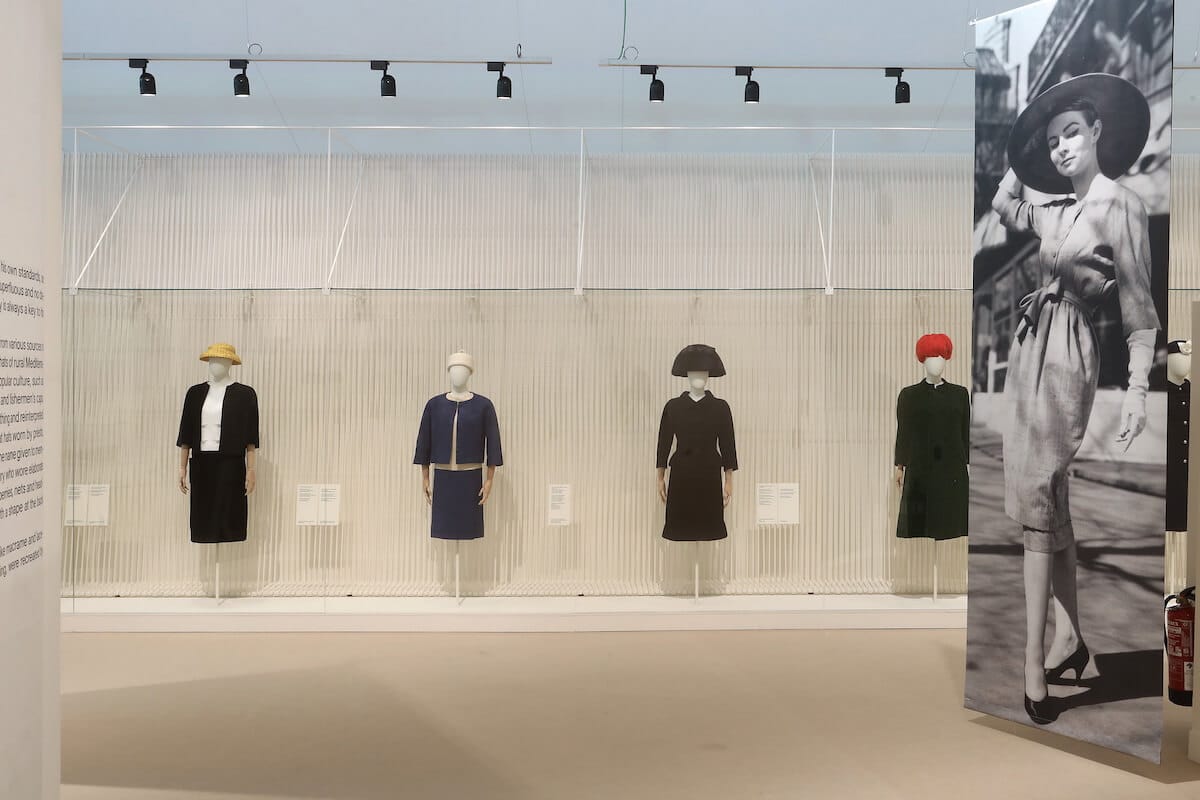
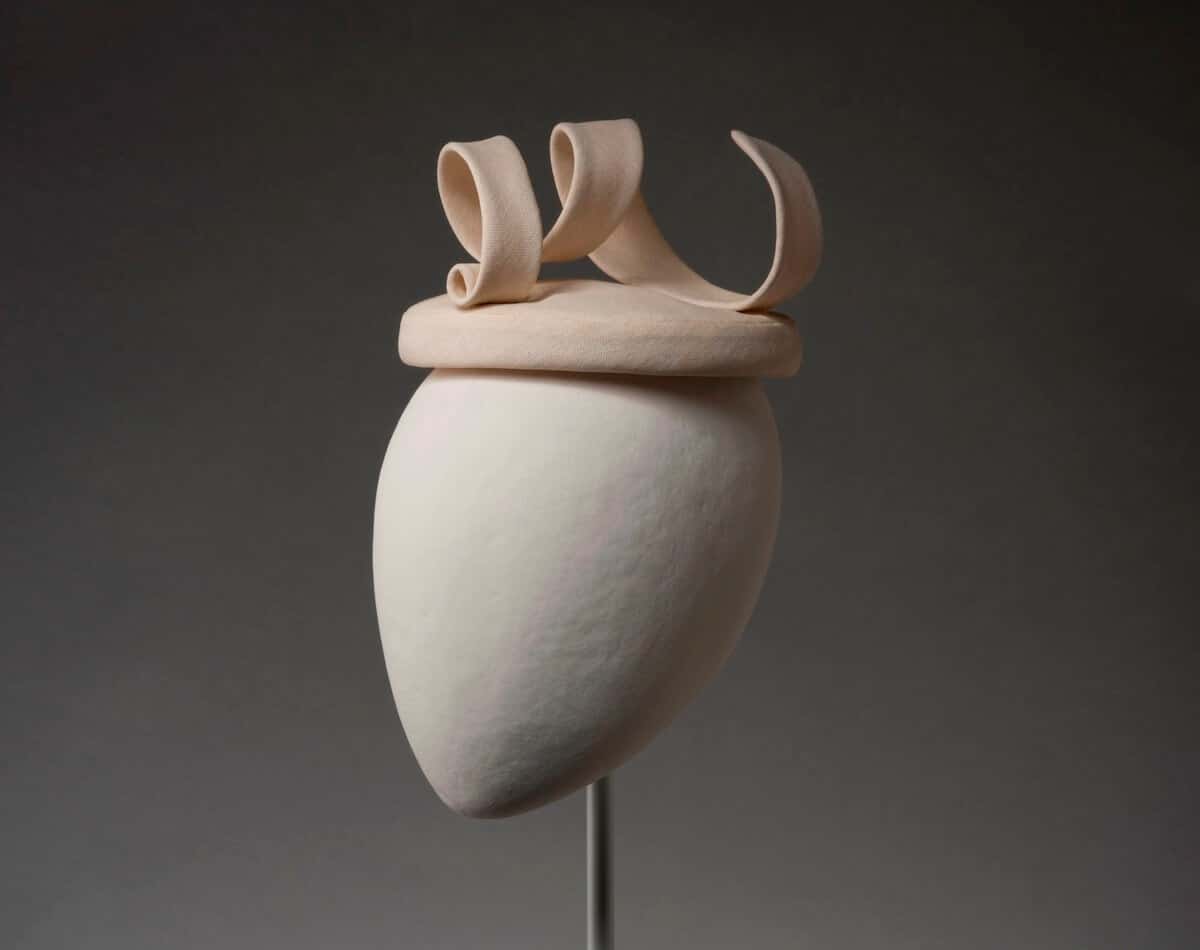
Because the designer thought globally. The dress he created to his client's measurements was accompanied by a matching hat, which was often surprising. Sometimes it is small and designed to be worn with a very wide coat, or a very narrow suit combined with a huge-brimmed hat. "In this way, he compensated and harmonized the silhouette," notes Ventosa, who also highlights how he combined colors in the styling, "sometimes from the same chromatic range or quite the opposite, seeking contrast with black and white, or even adding an eccentric touch." These ensembles caused a sensation at collection presentations and also appeared in prestigious magazines.
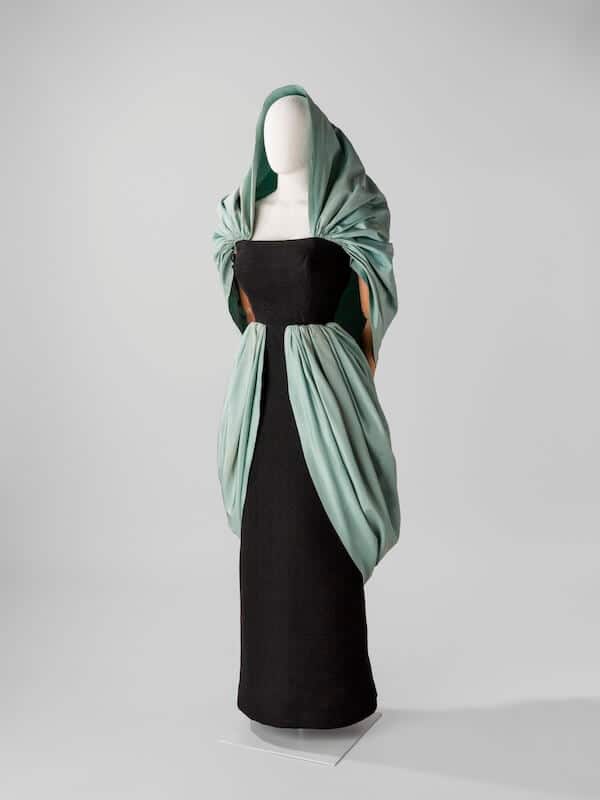
To didactically stage Balenciaga's overall vision, the exhibition has incorporated original dresses and displays them with hats designed to accompany them. In total there are ten ensembles, nine with hats and the last one with a stole over the head, which could also be worn over the shoulders. The stole is the only headpiece designed for the evening; the rest are day hats that well-to-do ladies wore in their daily lives or at events following protocol.
What are the most exotic pieces?
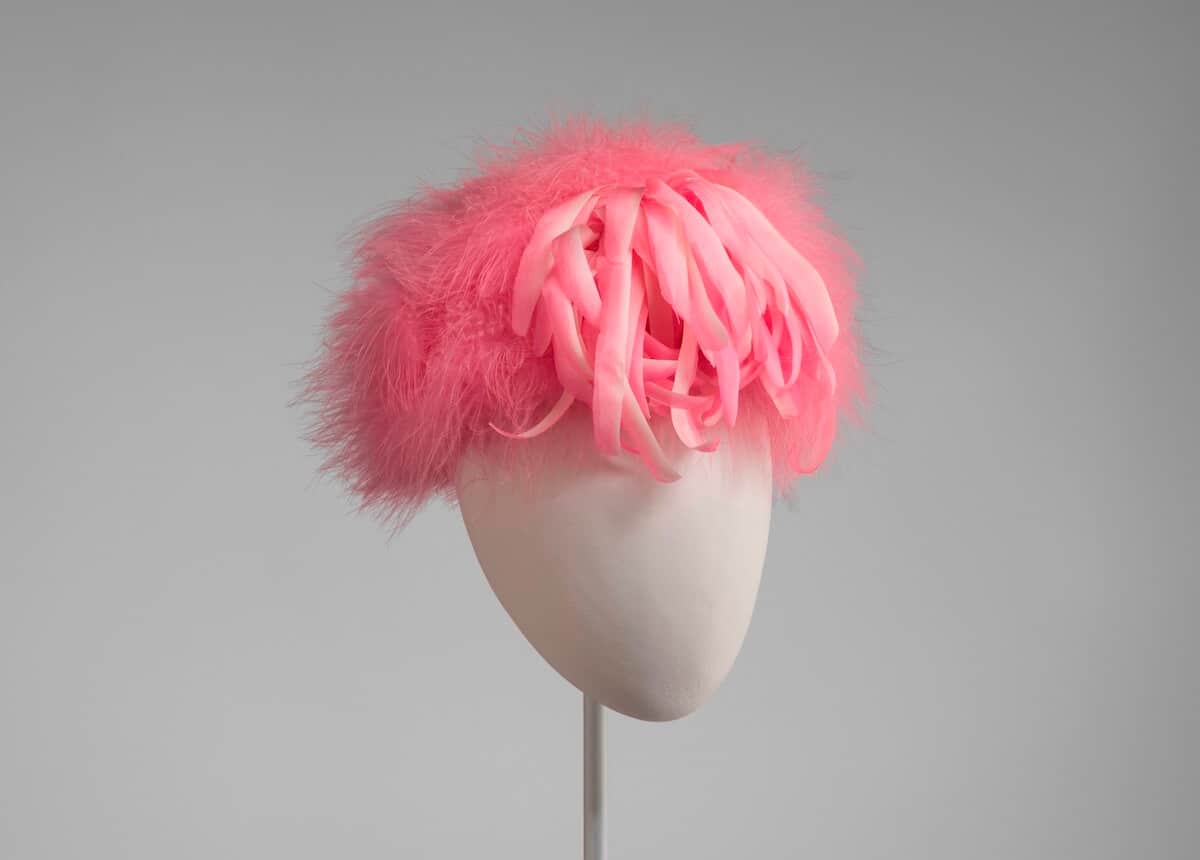
In the exhibition, we can discover a wide variety of designs made with a multitude of fabrics and natural elements. From the finest quality wool to ermine. Some of them, like furs, would not pass current ethical scrutiny, but at the time they were the height of glamour. Even monkey fur or exotic bird feathers are used, something that recalls the imaginative hats made during the most baroque period of the Belle Époque, a period from which fashion in the 50s drew inspiration, especially in the conception of the hourglass female silhouette. Balenciaga was a great connoisseur of the history of hats, and, as he did with clothes, he was inspired by designs from the past to reinterpret them, experimenting with shapes and colors.
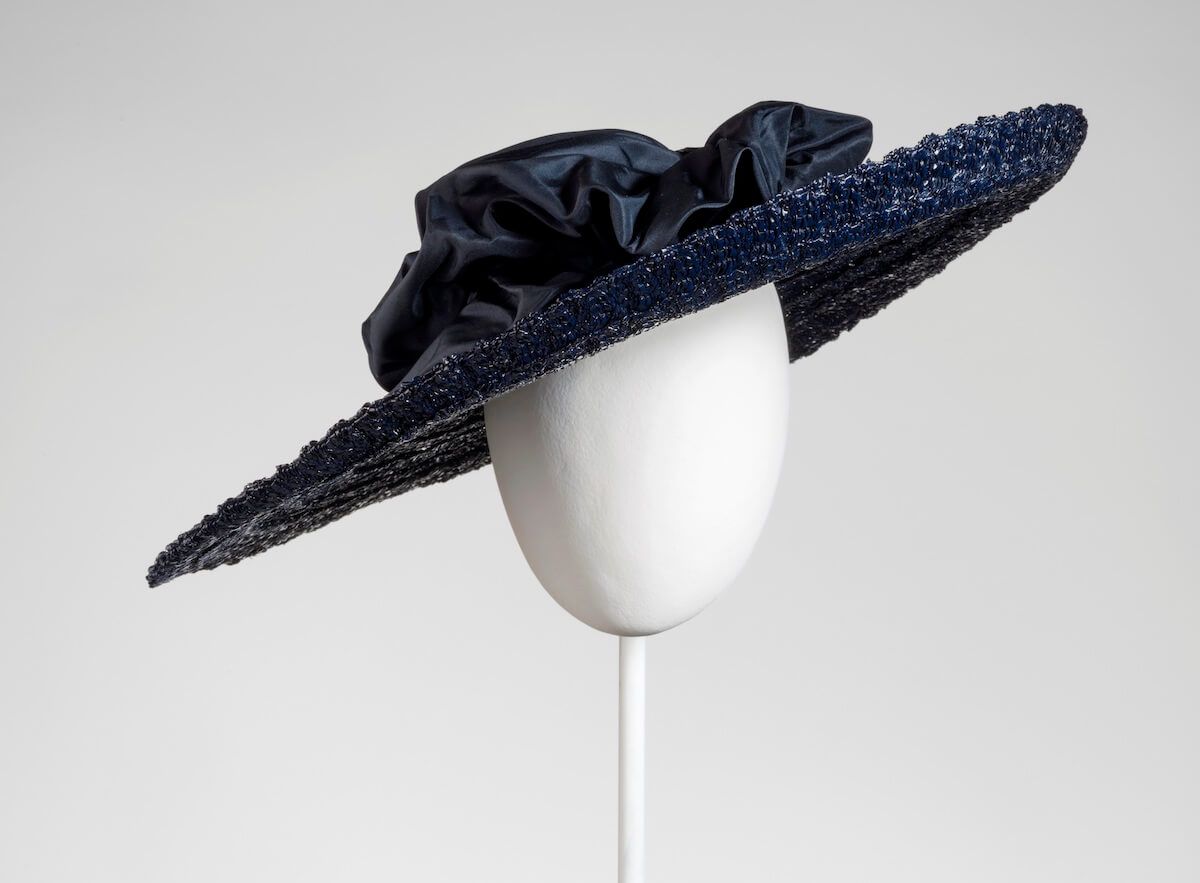
Some of them, like furs, would not pass current ethical scrutiny, but at the time they were the height of glamourFrom the plant world, the use of all kinds of straw is surprising, from the thickest to some so fine that it could easily be mistaken for silk organza. "Even the velvet flowers look real. The raw materials are of excellent quality and the tailoring is so impeccable that you don't see where the seam begins or ends," says Ventosa, which highlights the fact that everything is exquisitely handmade. Pure luxury craftsmanship. After being restored, they are displayed on timeless heads designed by Anna Alcubierre in a minimalist setting.
Were they made in Barcelona?
Well, no. Balenciaga had a store in Barcelona, but the hats were made in his workshops in Madrid and Paris. Especially in Paris because there he found all kinds of artisans to make his fantasies come true with lace, feathers, ribbons, tulle petals... The exhibition vindicates the professionals of the house's millinery departments, such as Wladzio d'Attanville, who signs some of these pieces alongside the couturier. Or the teams of women who made or sold them.
The exhibition vindicates the professionals of the house's millinery departments, such as Wladzio d'Attanville, who signs some of these pieces alongside the couturierAlthough there was no millinery workshop,the Barcelona store, which opened in 1935 at Santa Teresa street, number 10, conceived as a salon, "was very important because it became the antechamber of the one that would open two years later in Paris", explains Ventosa, and adds: "He took the concept of interior design: the chairs, the white tones, and the idea of timelessness." An aesthetic minimalism that also reflects his clothing.
53 years after its closure, this 2021 Barcelona has once again had a Balenciaga store ---now owned by the luxury group Kering--- in the Mandarin Oriental hotel, which curiously is also decorated with light tones, although the clothing designs have evolved so much that its current creative director Demma Gvasalia prefers a cap rather than a wide-brimmed hat that elegantly falls over one eye, like those we can see in the exhibition.
Did the Balenciaga store in Barcelona work?
Son of a fisherman and a seamstress from Guetaria, Balenciaga followed in his mother's footsteps and at 15 offered to make a dress for one of her clients, the Marchioness of Torres (grandmother of Fabiola of Belgium). The lady was so enamored with his work that she paid for a tailoring course, and his career took off. It was in 1924 when he opened his first store in San Sebastián. He would later do so in Madrid in 1933 and in Barcelona two years later. In the midst of the Civil War, he moved to Paris, opened a salon, and created the Balenciaga brand with great success.
The Marchioness of Torres (grandmother of Fabiola of Belgium) was so enamored with his work that she paid for a tailoring course, and his career took offBeing in the French capital allowed him to be known and recognized internationally. From that moment on,the pieces she elaborates in her three workshops in Spain will be called EISA Costura, a name inspired by her mother, Martina Eizaguirre. She could probably make them at a better price than in Paris and that's why "she even hadtoursof tourists who came to Barcelona to shop because the designs were cheaper," Ventosa points out. His stores would close in 1968 when the couturier realized that the dominance of prêt-à-porter was unbeatable.
Can we wear a Balenciaga hat today?
The answer to this question is: Why not? The desire for timelessness is etched into each of Balenciaga's designs, even if they belong to eras with a very different dress code than today's. But, above all, they are exquisite sculptures that deserved an exhibition like this to be recognized and valued. Barcelona has the honor of being its host. In May of next year, the exhibition will travel to Getaria. And, in the future, perhaps to more museums.
Add The New Barcelona Post as your preferred Google source for free
Stay informed with the latest news.