Barcelona is one of the three best cities in the world for workation. The term, a mix of work and vacation, describes a way of traveling that is increasingly common among workers who can do their job remotely: extending a getaway, spending a few weeks in another city and continuing to work from there.
According to the fourth edition of the annual Work from Anywhere barometer by the International Workplace Group (IWG), Barcelona ranks third in the world, only behind Bangkok and Tokyo. The study classifies cities based on factors such as climate, internet connection speed, accommodation, transport, gastronomy, culture, and the availability of flexible workspaces. And with all this, and according to the ranking published this August by IWG, the global top 10 is made up, in order, of: Bangkok, Tokyo, Barcelona, Porto, Vancouver, Budapest, Naples, Medellín, Lisbon, and Seoul.
Barcelona, a global workation destination
Barcelona once again ranks among the best cities in the world for workation thanks to a combination of factors that favor both remote work and the traveler's experience. The study specifically highlights the city's international connectivity, its transport, a wide range of accommodation and flexible workspaces, as well as a climate, cultural offerings, and gastronomy that make it an attractive destination for extended stays.
The study also points out that for this combination of work and travel to be possible, it is essential that destinations have spaces to work. 38% of workers consider, in fact, that flexible workspaces are a key factor when choosing where to work remotely while traveling. And in this sense, Barcelona has available offerings to meet this demand; the city is one of the main flex-office hubs in the Mediterranean, with almost 300,000 square meters of surface area dedicated to shared offices, according to JLL figures, and 81% occupancy.

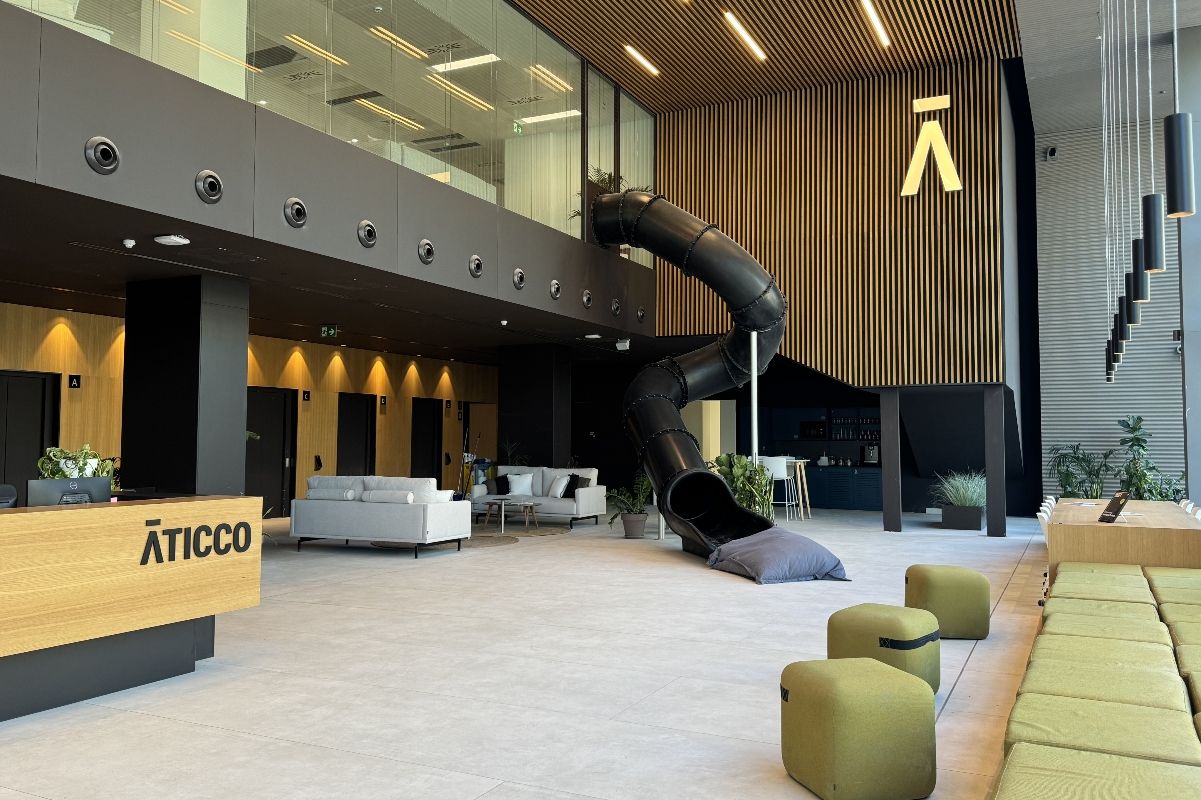
The shared office park in Barcelona, in fact, accounts for 30% of Spain's total, which for the first time has exceeded one million square meters, with 1.058 million in total. This million square meters is extracted from the report El estado del coworking en España 2025-2026 (The state of coworking in Spain 2025-2026) prepared by Coworking Spain, which outlines a market in which 57.5% of the surface area is concentrated in 14 large operators, which are: Aticco, Cink, Cloudworks, Crec, First Workplaces, Impact Hub, IWG, Lexington, Loom, Monday, Networkia, Utopicus, Wayco and WeWork.
Price also forms part of the equation: according to Plug&Play, a coworking space in Barcelona currently costs between 250 and 550 euros per month, depending on the location and the contracted modality.
A key factor for workation: being able to telework
But for workation to exist, there must first be a job that allows remote work. And Barcelona plays on both sides of the equation: it is one of the most highly rated cities in the world for workation, but it also has a growing proportion of workers who can potentially become workationers, thanks to telework. According to the study New forms of organizing work: telework in Catalonia, prepared by the Open University of Catalonia (UOC) and Pimec based on the Barometer of Competencies and Occupations of Catalonia, 10.2% of job offers published in Catalonia in 2024 included some telework option, compared to 0.9% in 2019.
In the province of Barcelona, the percentage is even higher: 12.34% of job offers published included the possibility of teleworking.
The evolution helps to understand why workation has ceased to be such an exceptional practice. In just five years, the possibility of working remotely has gone from being an almost testimonial mention in job offers to appearing in one out of every ten vacancies in Catalonia. The consolidation of the hybrid model thus expands the number of workers who, at least potentially, can turn a holiday stay into a workation stay.
The consolidation of Work from Anywhere
And behind the rise of workation there is, in reality, a deeper transformation, understood as an evolution of teleworking: the consolidation of work from anywhere, of Work from Anywhere. According to a study commissioned by IWG and carried out by Censuswide among a sample of 2,000 office workers with hybrid models in the United Kingdom and the United States, more than half (51%) state that their company already offers a Work from Anywhere policy. The impact that workers attribute to this flexibility is also significant: 90% say it has improved their work-life balance and 80% directly state that it has improved their productivity, although we should also ask their bosses about this.
And the trend seems to be growing. 48% of workers plan to extend their holidays or getaways in 2026 by working remotely, and 46% say they are more likely to do so than the previous year. The practice, in fact, is already quite widespread: 43% claim to have worked remotely from a holiday destination without using holiday days.
62% of respondents would consider changing jobs to access a more favorable Work from Anywhere policy.
These policies are, in fact, highly valued when looking for a job: 80% of respondents state that a Work from Anywhere policy would make a new job opportunity more attractive, while 62% would consider changing jobs to access a more favorable policy.
Finally, among the reasons for extending stays working remotely, the main one highlighted by respondents is to avoid burnout and improve well-being, indicated by 54%. This is followed by spending more time with family and friends (53%) and making better use of available holiday days (52%).
The workation therefore draws a new profile of traveler, halfway between tourist and worker. But delving into the profile of the tourist Barcelona receives is opening another can of worms. And we'll leave that for another Barcelona in figures. Another Monday.
Add The New Barcelona Post as your preferred Google source for free
Stay informed with the latest news.