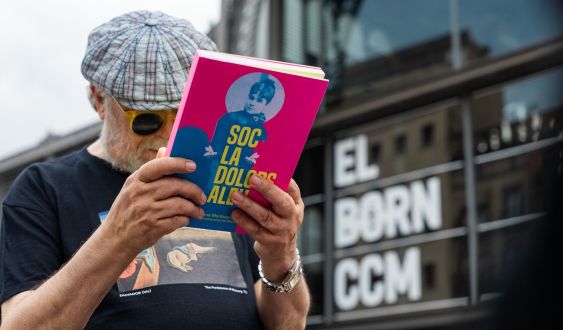
Sant Jordi has arrived again, and the city has filled with book stalls, the scent of roses, clamor, and small declarations of love in the exchange of gifts. For some people, it may be the first they spend here, others will have lost count, and some will experience it this year from a completely different perspective, but all will share the same setting, a perfect framework for telling any story.
It occurs to me, therefore, that to understand Barcelona through literature, it is not enough to read one genre; one must read its strata. It is a city written in capital letters by day and in small, blurry print by night. So, if you want to know it, don't buy a guide, just follow the hands of this literary clock.
08:00 | Vida. Herbario y bestiario ilustrado, Joana Santamans (Bridge publishing house)
The awakening. In the morning light is when urban nature, the birds and flowers that Santamans illustrates, are best appreciated. It is the perfect filter for the most natural Barcelona. Before the chaos of traffic, this is the moment when the city breathes like a living being. "Animals brought to the city seem to me aesthetically to make a beautiful contrast. I have always thought that city and nature complement each other perfectly and are necessary." That is why these books are an illustrated gem that functions as an urban herbarium and bestiary. The painter captures the fauna and flora that coexist with the asphalt, reminding us that, beneath the concrete, the city is still earth and life.
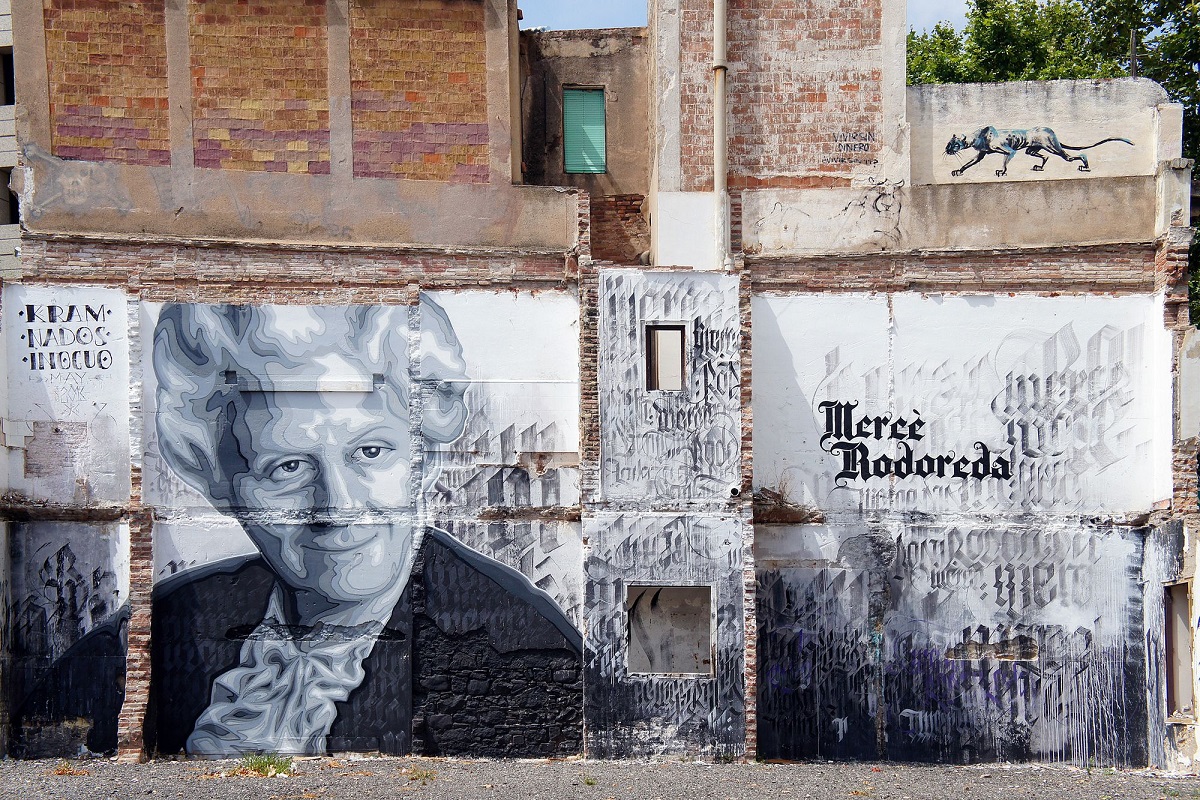
10:00 | La plaza del Diamante, Mercè Rodoreda (SM Publishing House)
The pulse of the neighborhood. It's time to go to the market in Gràcia. The sun enters the squares and Colometa's voice resonates amidst the hustle and bustle of opening shops. It is the daily vitality that precedes tragedy, the fluttering of pigeons before history breaks the dishes. This is the sentimental chronicle of Natalia (Colometa), a humble woman whose life is marked by the Republic and the Civil War, and a reality that imposes itself on desire. An intimate portrait of female resilience in a Barcelona trying not to crumble.
12:00 | La ciudad de los prodigios, Eduardo Mendoza (Booket Publishing House)
Ambition in the sun. Noon is for big projects and hustlers. Onofre Bouvila represents that expansive Barcelona, that of the Universal Exhibitions, the city that expands with hammer blows and money, that shines with the force of progress. It is the Barcelona that wants to conquer the world in full sun. In the epic of Onofre Bouvila, he is a young man who arrives in the city to distribute anarchist propaganda and ends up becoming one of the richest men in Spain. It is the biography of the city of Barcelona itself between 1888 and 1929.
14:00 | El zoo d'en Pitus, Sebastià Sorribas (Editorial la Galera)
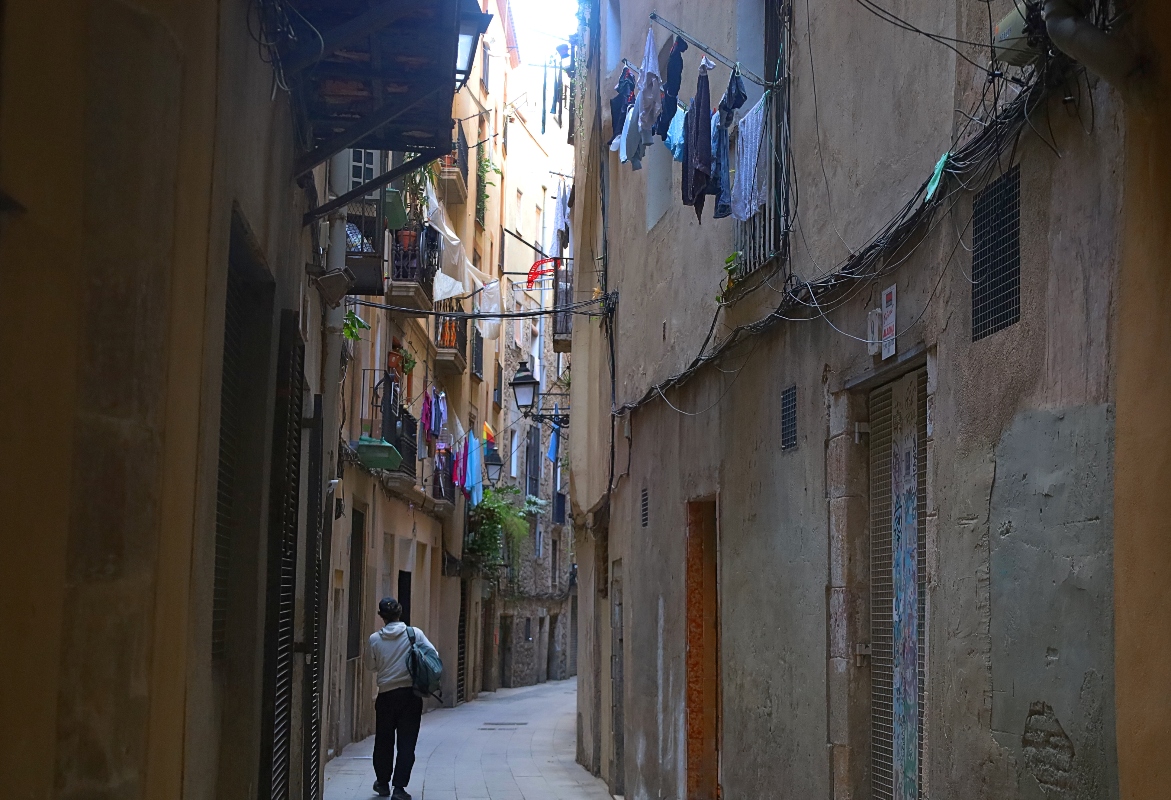
Childhood at noon. The time for leaving school, playing in the street, and neighborhood loyalty. Pitus's Raval is bright and noisy, full of a low-class joy that breaks the monotony. It is the truce of innocence in the middle of the gray city. This classic of children's literature, where a gang of friends sets up an improvised zoo to raise money and help their sick friend Pitus, is an ode to neighborhood solidarity, and a beautiful portrait of neighborhood life in the big city.
16:00 | Nada, Carmen Laforet (Editorial Austral)
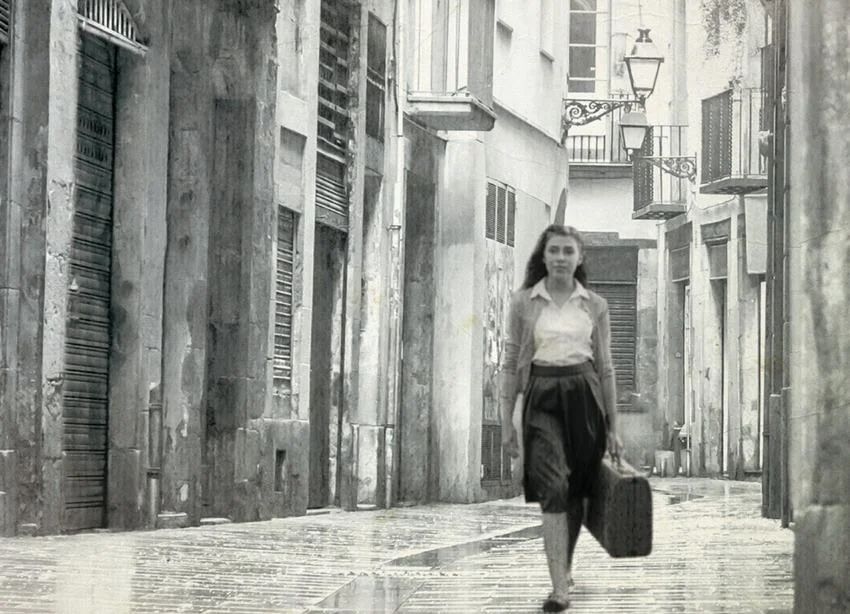
The suffocating siesta. That dead, hot hour where dust floats in the Eixample apartments. Andrea wanders through a gray city that seems frozen in time, walking down Aribau street under a post-war silence that smells of hunger and unfulfilled hopes. It is the Barcelona that runs out of air. In this essential novel, its protagonist arrives in the city to study at university, but finds herself trapped in a decadent family home, full of violence and much hunger. It is a novel that portrays the moral misery of the 1940s and a city that rises after the fall.
18:00 | El día del Watusi, Francisco Casavella (Editorial Anagrama)
The changing of the skin. When evening falls, Barcelona becomes mythical. It is the moment when Fernando Atienza begins to search for the Watusi between the golden light and the shadows descending from Montjuïc. It is the moment when the shantytowns and urban legends mix with the echo of the great city. This is a brutal trilogy that follows Fernando Atienza at three key moments of his life, pursuing the myth of a man, the Watusi, while Barcelona transitions from dictatorship to democracy with more shadows than lights.
20:00 | Barcelona, mapa d'ombres, Lluïsa Cunillé (Sgae Foundation)
The scenic twilight. The hour when the theater lights come on. We enter a living room in the Eixample where the parquet creaks. It is the hour of truths that die with the day, where silences say much more than any scream. The city bids farewell in semi-darkness, and an elderly couple, in a rented apartment in the Eixample, receives visits from various characters while contemplating their own end. Although it is a theatrical piece, it functions as an emotional map of a disappearing Barcelona.
22:00 | Vida privada, Josep Maria de Sagarra (Editorial Anagrama)
Elegance and the dart. The hour of bourgeois dinners, of gossip in the small palaces and of golden decadence. The night begins with a cocktail and much hypocrisy. It is not street noise, it is the clinking of crystal glasses and the poisonous whisper of a decadent aristocracy. If Edith Wharton described the decadence of New York high society, Sagarra mercilessly portrays the vices, scandals, and loss of power of Barcelona's high society in the 1930s. A literary scalpel that dissects the fall of the Lloberola family.
00:00 | The Shadow of the Wind, Carlos Ruiz Zafón (Editorial Planeta)
The gothic mystery. Midnight is the hour of the Cemetery of Forgotten Books. The fog rises from the port and the streets of the Gothic Quarter become dangerous labyrinths, where every step echoes like a threat or a revealed secret. Daniel Sempere, the protagonist of this novel, is led by his father to a secret warehouse of forbidden books. There he chooses one that will change his life, immersing him in a plot of mystery, forbidden loves, and vengeances that span decades.
02:00 | Taxi, Carlos Zanón (Editorial Salamandra)
The nocturnal drift. Sandino's night shift. Barcelona seen through the windshield: neon lights, desperate lovers, and the loneliness of someone who doesn't want to go home. It's the pulse of a city that doesn't know how to sleep and seeks solace in the rhythm of a sad rock and roll. Sandino, a taxi driver who refuses to go home to avoid facing his marital failure, wanders through Barcelona for seven days. It's an urban road movie about melancholy and survival.
04:00 | Anarcoma, Nazario (Ediciones La Cúpula)
The free underworld. The rogue hour par excellence. The Barrio Chino in its maximum splendor of sexual freedom, wigs, dives, and a Barcelona that ignores any law. It's the noise of Las Ramblas before being tamed by tourism. This is a cult comic starring a transsexual detective who has become the most vivid and unbridled portrait of the underground and rogue Barcelona of the 70s, where desire knew no rules.
"Don't ask Barcelona to be a balanced city. It's a city that only knows how to scream or be completely silent. Choose your hour and choose your book"06:00 | The Thief's Journal, Jean Genet (Cabaret Voltaire Publishing House)
The hangover and the cold. The dawn of the marginalized. Genet walks through the empty Ramblas, between the cold of the port and hunger, closing the cycle of the city, which exhales its last breath of misery before everything starts again. An autobiographical account where Genet narrates his experiences as a beggar and thief in 1930s Barcelona. A work that dignifies marginality and hunger with poetic and raw prose.
Reading these 12 books is like walking down Via Laietana: sometimes the traffic deafens you, and other times, if you turn the right corner towards the Gothic Quarter, a silence invades you that forces you to lower your voice. Don't ask Barcelona to be a balanced city. It's a city that only knows how to shout or be completely silent. Choose your time and choose your book; the rest is just tourism.
Add The New Barcelona Post as your preferred Google source for free
Stay informed with the latest news.