--- We have met in 22@ for a reason. Go ahead.
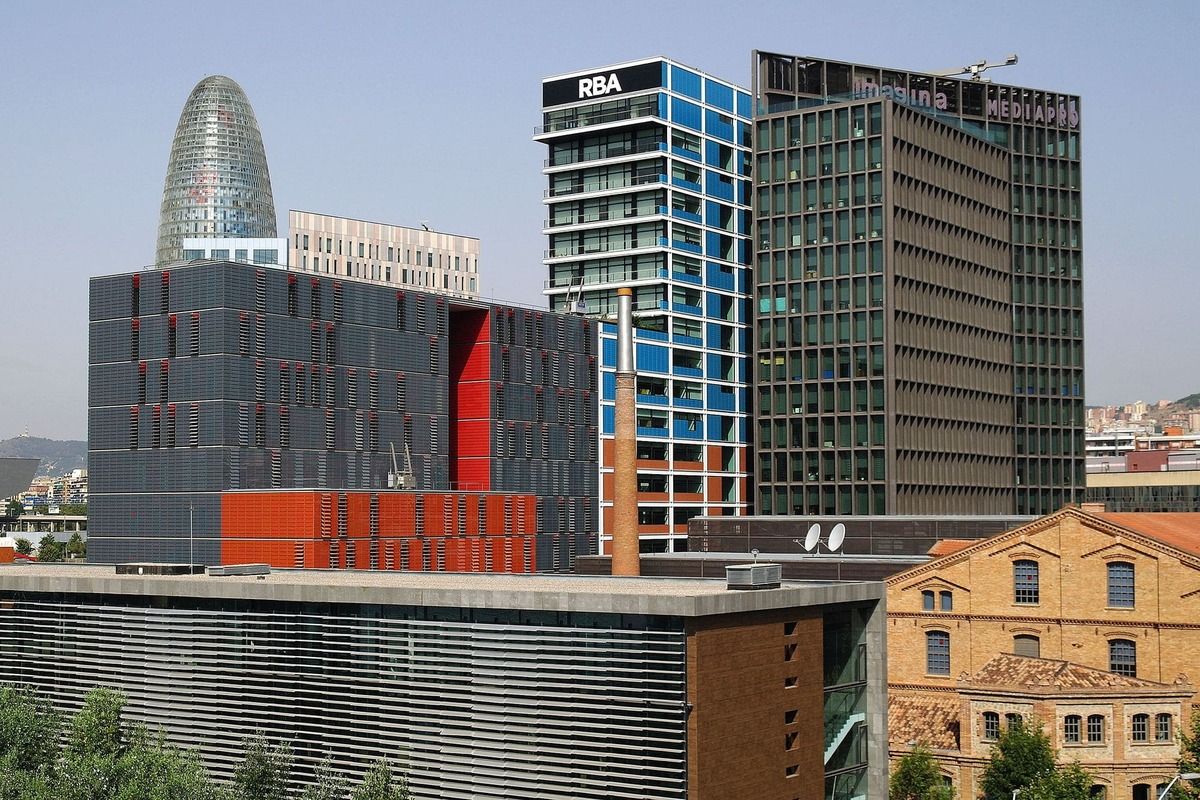
--- The 22@ was a great city decision, to create a digital district that would host new companies and digital transformation projects. It continues to expand to develop business centers, training centers, and all kinds of facilities to make Barcelona a leading city in the digital field. Poblenou was the ideal neighborhood, and from being a great industrial hub, it has ended up becoming an unstoppable digital hub. One only needs to see how buildings are still being constructed and rehabilitated in the neighborhood.
--- And from a personal point of view?
--- I observe a clash between public opinion and published opinion. Many projects are flourishing here, and we don't find out about them. While looking for spaces for our project, I was truly amazed: while the newspapers told us that Barcelona is stagnant, I literally freaked out. I would say that, generalizing a lot, from a psychological point of view, we may be a city in decline, but in reality, what we are doing is digesting the externalities of success. The depression or constant self-criticism comes, I suppose, from comparing ourselves so much to Madrid, just because it is the capital of a State, instead of doing so with San Francisco (which also has its problems managing success). Or directly with Berlin, or Amsterdam, which share this ambition to transform the city into a less classic, less monumental, and more friendly and social idea. No longer talking about big events, but about more natural growth.
--- I would say it will be a while before we hear about Olympic Games.
--- Happenings have gone very well for us, but now this type of developmentalism has become old-fashioned. The city must be a place that creates wealth for a more just and convivial, healthier space. Now we find ourselves in an enormous digital transformation and this implies rethinking cities. We are still burdened by the philosophy of doing striking things and we forget the need to have a rooted city. We are open, but we should not be a city for the foreigner, which is being sold off in pieces. We want people who want to be here, but also who want to be from here. That is, to settle down. Now the lifelong Barcelonian suffers a kind of "self-hatred" and says he wants to leave, while seeing an immigration of stranger lower classes who also want to live the Barcelona experience, but not stay. As if it were an Erasmus at 40.
"We are still burdened by the philosophy of doing striking things and we forget the need to have a rooted city"
--- San Francisco's death by success came precisely because of Silicon Valley. Beware of digital ghettos.
--- Gentrification is an evil that exists everywhere, but in Barcelona, being a city of powerful success, this has even more risk. That's why I say that Barcelona can grow through 22@, but not only by building offices and business centers, or configuring a kind of technological Défense: this must be balanced with services, with neighborhood community, with real citizens. Not focusing on a single use.
--- But the market is the market, isn't it?
--- Let's see, we are experiencing a triple revolution: that of the means of production, that of the means of information, and that of the means of learning. All three at once. How to manage this in a controlled way, without wars or revolts appearing? What I notice is that not everyone realizes that we are creating social inequalities due to the lack of a very specific workforce: developers and Big Data people. This, too often, the country does not provide. It is then that we are fodder for those of the "Barcelona Experience," added to the arrival of highly qualified people from abroad, who are accustomed to receiving much higher salaries. But, if this workforce were from here, they would not be so expensive and, furthermore, we would avoid so much dependence on foreign talent.
"Not everyone realizes that we are creating social inequalities due to a lack of very specific labor: developers and Big Data people."
--- Are you creating a new social class?
--- A new bourgeoisie is taking shape, which will replace the bourgeoisie of industrial tradition, which is where the Barcelona lobbies are still based. All this world of hospitality, tourism... If we don't evolve, if we don't transform, we won't offer value-added jobs to locals. Digital transformation is not something that is about digital companies: it also involves the administration, the general interest, social equality. And we are running late.
--- Do you mean training people?
--- Training them and, furthermore, if we don't want to leave anyone out, absolutely empowering everyone. Even the losers of the system. We cannot become the waiters of the new bourgeoisie, so our strategy can no longer be "let a lot of money come in." Digital transformation is more about people than technology, but there are ideological currents (on the right and left) that do not want to empower people. The more information there is, the more misinformed the majority of the population is, I already know all this: there are many paradoxes, yes, but we cannot be denialists of digital transformation. Do you remember when anarchists attacked industrial machines? Well, that was an option for revolt, but they had another: to make it their own, create industry, learn and win the game by playing with those above.
--- So, should we forget ideas like the Olympic Games, the Hermitage, Hard Rock…?
--- All the people who make these proposals also do so because they love Barcelona, in addition to wanting to do business. And those who are against it are not that they don't want business to be done, but that they see them as projects too far removed from them. Everyone wants the best for the city, let's not mess around. We polarize too much and in the trenches is where we get stuck. Asking ourselves whether we want a third runway, or a Russian art museum, is totally pertinent: but bunkering down in yes or no is infantilizing people, because on both sides there are very valid people. What I say is that there are people who want to extend too many recipes that had worked until now and that is going to cost them a lot. It is probably already impossible.
--- Therefore, are we in decline or not?
--- This is like with city entrances, which can degrade or not its image: and no, people from outside do not see us in decline. Nor do they see us as an expensive city. The investment funds from Paris and London I talk to laugh at me when I tell them Barcelona is expensive. "You'll see how expensive it will get," they tell me. And this can be fixed by improving salaries here, indeed, but to do what? That's why I say we must train people in digital transformation and reward the brave who undertake. But it's not easy to create a company, not even for those who have inherited fortunes. That's why we need a Polytechnic, a public aspect that encourages and promotes, a public commitment to careers like engineering, a public commitment is much more necessary than a commitment to private investment, which will come anyway, or than creating new business schools. More Barcelona Activa is needed, more neighborhood centers, places where everyone can access and update themselves.
"What I say is that there are people who want to prolong too many recipes that had worked until now and that is going to cost them a lot"
--- And, in the world of gaming, where is Barcelona located?
--- In the world of gaming, Barcelona is a true European and global hub. The competition here, within Barcelona, at the moment is totally fierce. The desire is to generate the first city with a monographic university on gaming. We are talking about approximately 200,000 million in sector turnover in Barcelona and that alone already surpasses cinema and music combined. In Barcelona, we are experiencing double-digit growth in this area, and that doesn't make the news!
--- Has the mobile killed the Play star?
--- No, it has only doubled its turnover. Consoles and computers are holding up well, but now mobile accounts for 70% of global consumption. The company Rockstar Games, founder of Grand Theft Auto, has been invoicing 1,000 million a day since 2013. And it still has to release GTA 6, do you understand? And it still invoices for updates, for example. Furthermore, everything that the mobile allows can be transferred to a console.
--- I can't resist: are we alienating children with video games?
--- Many industries compete for people's free time. I compete with Netflix, and Port Aventura too. We all compete together for people's non-productive time.
--- But a child should not be "productive".
--- I am open to the debate of how people can be alienated, but I want to make it clear that a war game does not generate violence. No more than a movie, in any case. I accept the debate, but not if it comes from any media outlet, for example, from newspapers that accept money from gambling (advertising for sports betting, casinos, etc.). In our case, 99% of the games are free, and we only make money from the 1% that is paid. Oh, and it costs one dollar.
--- I don't know if you've answered me.
--- We are simply the new entertainment industry. We are the new Hollywood. Video games used to be made based on movies and now movies are made about video games. Alienation? Yes, just like it used to be in cinema or video. Everyone plays our games, children and adults, more men than women, but the number of female and adult consumers is progressively increasing. A mobile allows access to many more age groups than a console.
"We are the new Hollywood. Video games used to be made based on movies and now movies are made about video games"
--- How do you see Barcelona in the future?
--- Barcelona has the opportunity to be one of the places where the new world is rethought, at a time when people believe they have more past than future. What happens is that there are still very individualistic dynamics and we do not take enough responsibility to help society and the country to be better. We still see startups as financial windfalls, ways to get rich quickly, and not as a transformative tool. Since we have few large companies, and we do not have our own state, we have remained in the traditional SME model. This is not a problem at all, but an advantage, because SMEs can adapt to changes. The only thing they must do is forget about the ways of functioning of the 20th century. If, on the other hand, you depend on what the BOE says, or on the Bernabéu box, perhaps you cannot adapt so much to changes.
--- What kind of company do we need, then?
--- What we need are companies that, through technology, change people's lives. Not aimed at making quick money and not trying to be financial products. Look: in the 20th century there was also everything, like now, but now we have the duty to compensate for the individualistic school. Look towards civic sense and the country. It's not an option. It's a vital issue.
Add The New Barcelona Post as your preferred Google source for free
Stay informed with the latest news.
