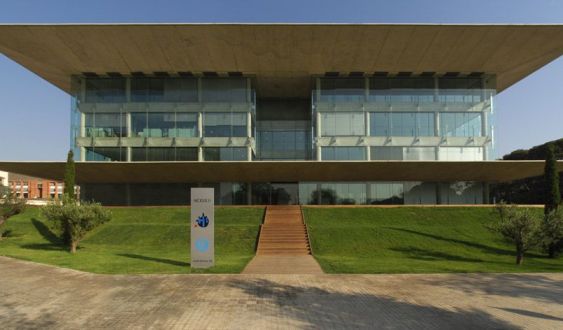
After losing the bid to host the European Medicines Agency in 2017, Barcelona is once again well-positioned to attract the headquarters of a European body with a strong technological profile to the city. This is the new headquarters of the European Centre for Medium-Range Weather Forecasts (ECMWF), an independent intergovernmental body formed by 22 European Union states and twelve associated states.
[subscribe_newsletter_esp]
The candidacy of the Catalan capital, which competed with those presented by nine other European countries, has passed to the second and final selection round, so now it only remains to wait for the final vote, which will be announced on December 9.
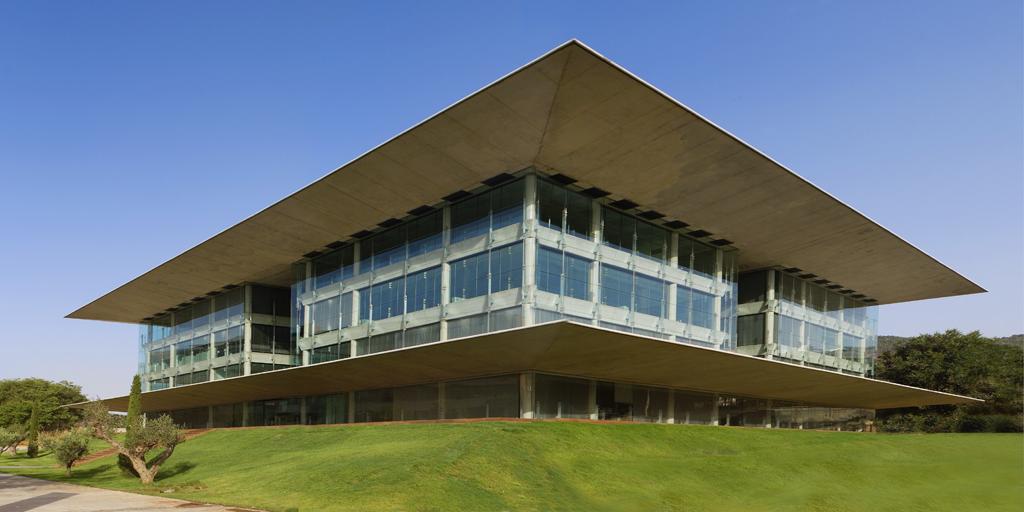
The proposal has been promoted by the Government, the Generalitat, and the Barcelona City Council and has been coordinated by the Barcelona Supercomputing Center and the State Meteorological Agency (AEMET). One of the strengths of the candidacy is that it offers a turnkey building, already built, in a quality scientific environment and with capacity to house 400 people. This is the Nexus II building, located on Jordi Girona street, on the UPC campus. The property, designed by Ricardo Bofill, is owned by the Consorci de la Zona Franca (CZFB), has an area of 7,600 square meters and, according to the candidacy, could be available by July 1, 2021.
It should be noted that Nexus II is a short distance from the chapel of Torre Girona, which houses the MareNostrum supercomputer, one of the key infrastructures on which Barcelona's bid to win the meteorology agency is based, as it requires powerful computing facilities to make its predictions.
The Barcelona project is also based on the high quality of life offered by the city, its network of international connections, the scientific and university ecosystem, the wide range of international schools, and the existence of a dynamic job market for qualified professionals. Specifically, the bid highlights that the city has eight universities, more than 1,500 startups, an airport located just fourteen minutes away with 200 connections, sustainable mobility services such as Bicing, 17,600 nursery places, 1,900 sports facilities, 40 international schools, 30 kilometers of beach, and restaurants with 31 Michelin stars.
"It is very good news for Spain to have reached the final phase; our bid, based in Barcelona, has been very well received, and if it goes ahead, it would boost our country's research capacity in new meteorological prediction techniques essential in the current scenario of greater meteorological adversity due to global warming," highlighted the Minister for Ecological Transition, Teresa Ribera.
According to Barcelona's Deputy Mayor, Jaume Collboni, having passed the first cut of the process shows that "the COVID crisis does not stop us" and that "we continue to address the reality of day-to-day life, but we also do not give up working for the Barcelona of tomorrow."
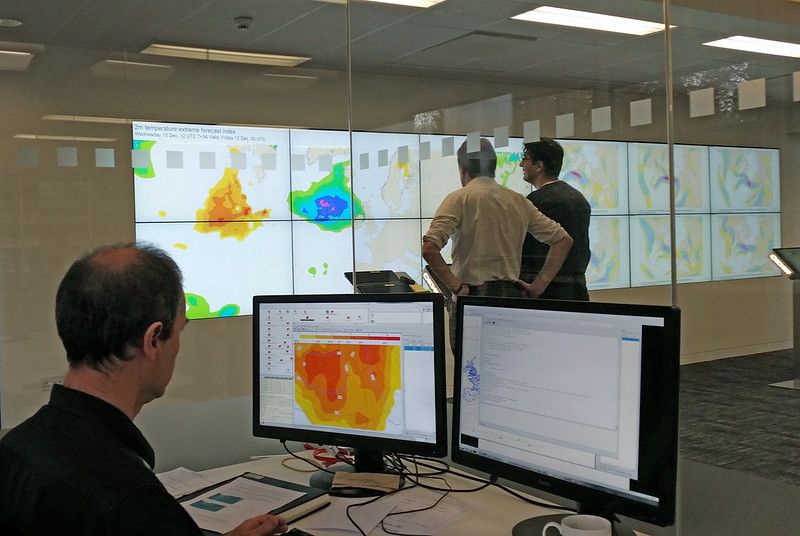
The European Centre for Medium-Range Weather Forecasts was founded in 1975 and currently has two locations. The first, since its inception, is in Reading (United Kingdom) and the second is now being built in Bologna (Italy), where in 2021 the data center and the entity's new supercomputer will be located. ECMWF currently employs 360 people of 30 nationalities, and its main mission is to offer global numerical weather forecasts and monitor the Earth system, in addition to maintaining a meteorological data archive and conducting scientific research related to climate.
This agency has an approximate annual budget of 110 million euros. 51% of this amount is contributed by member states and the rest are revenues from the sale of its data and forecasts to third parties. The ECMWF operates two Copernicus Earth observation programs of the European Union, CAMS (Copernicus Atmosphere Monitoring Service), dedicated to monitoring the Earth's atmosphere, and C3S (Copernicus Climate Change Service), linked to climate change.
Add The New Barcelona Post as your preferred Google source for free
Stay informed with the latest news.
