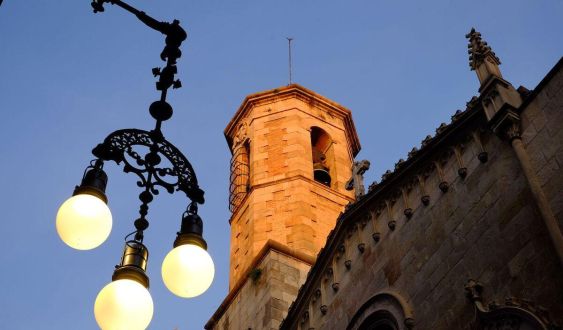
Lighting is one of the urban elements that most influences the sensations we have when walking through the city. It becomes key in narrow streets, without shops or with very tight corners, and in vacant lots and abandoned areas where we don't see everything there is. Not only for personal safety but also to avoid falling over curbs or potholes that we couldn't anticipate. In Barcelona, there are almost 150,000 light points, but there are still dark spots to resolve throughout the city. The council works to renew streetlights and gain in safety and energy efficiency, promoting the use of LED technology.
[subscribe_newsletter_esp]
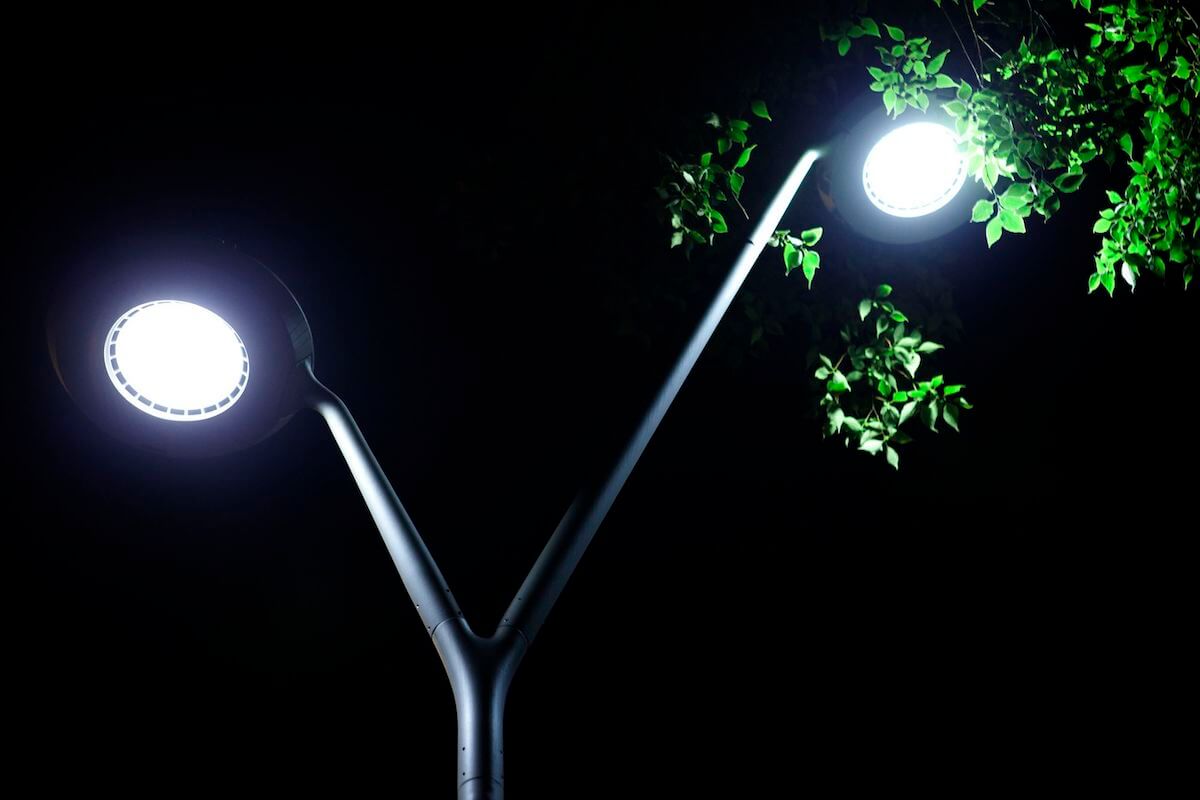
The Barcelona City Council uses two ways to improve the city's lighting: the public lighting contract, which is responsible for the maintenance and conservation of the different lights, and the comprehensive renovation plans, which gradually renew them. The streetlights we see on the street have a useful life of between fifteen and twenty years, and they are changed when they break down or when better technology appears, such as LED. In the Catalan capital, we can distinguish two types of lights, some with a more yellowish color and others with a whiter one. The former are high-pressure sodium vapor lamps, while the latter are equipped with LEDs.
LED technology began to be implemented about six years ago in Barcelona and currently represents almost 30% of all the city's lighting points, according to the director of Energy Services of the Barcelona City Council, Cristina Castells. Every time the council makes a renovation in public lighting, it does so with LED lights, pursuing a double objective. On the one hand, they are more efficient and allow for a reduction in electricity consumption, even though sodium vapor lamps are already quite efficient and, therefore, not much is gained. What LED technology does considerably change is the luminous sensation thanks to the use of white light, making pedestrians perceive that there is more light and improving the precision of the colors they see.
LED technology represents almost 30% of the 150,000 lights in the cityThis is one of the mechanisms the City Council has to improve the feeling of light that Barcelonians have, but it is not the only one. Traditionally in cities, street lights mainly served to illuminate the roadways where cars circulate and not the sidewalks. According to Castells, the current focus is on ensuring good visibility in pedestrian areas, through lighting points with two lampposts, which illuminate both the roads and the sidewalks.Likewise, work is being done to ensure that there are no dark spaces between the areas illuminated by the streetlights and that uniformity is achieved, meaning that the entire street can be seen with light and there are no dark parts.
One of the factors that also influences our perception when walking through the city is the presence of trees, which grow towards the light and, sometimes, their branches and leaves block the lighting. That is why the council is introducing poles with two levels, one above the treetops that illuminates the road and one below that does so for the sidewalk.
Illuminating sidewalks more and roadways less is one of the demands of Barcelona's merchants, in addition to adding more light points in the city and not just renovating existing ones. The president of Barcelona Comerç, Salva Vendrell, maintains that, if the city continues to advance towards a pacification of its streets, it is necessary to ensure that one can see well when walking on its sidewalks at night, and highlights the role that shops play in this, which, with their lights, bring life to the streets and security to residents.
For Vendrell, the last comprehensive lighting renovation plan, approved at the end of 2017, has been insufficient because no more lights have been gained, and he demands that the next one finds a greater balance between lighting on sidewalks and roadways, increasing the light points on the former and renovating those on the latter.
Night walks to detect dark spots
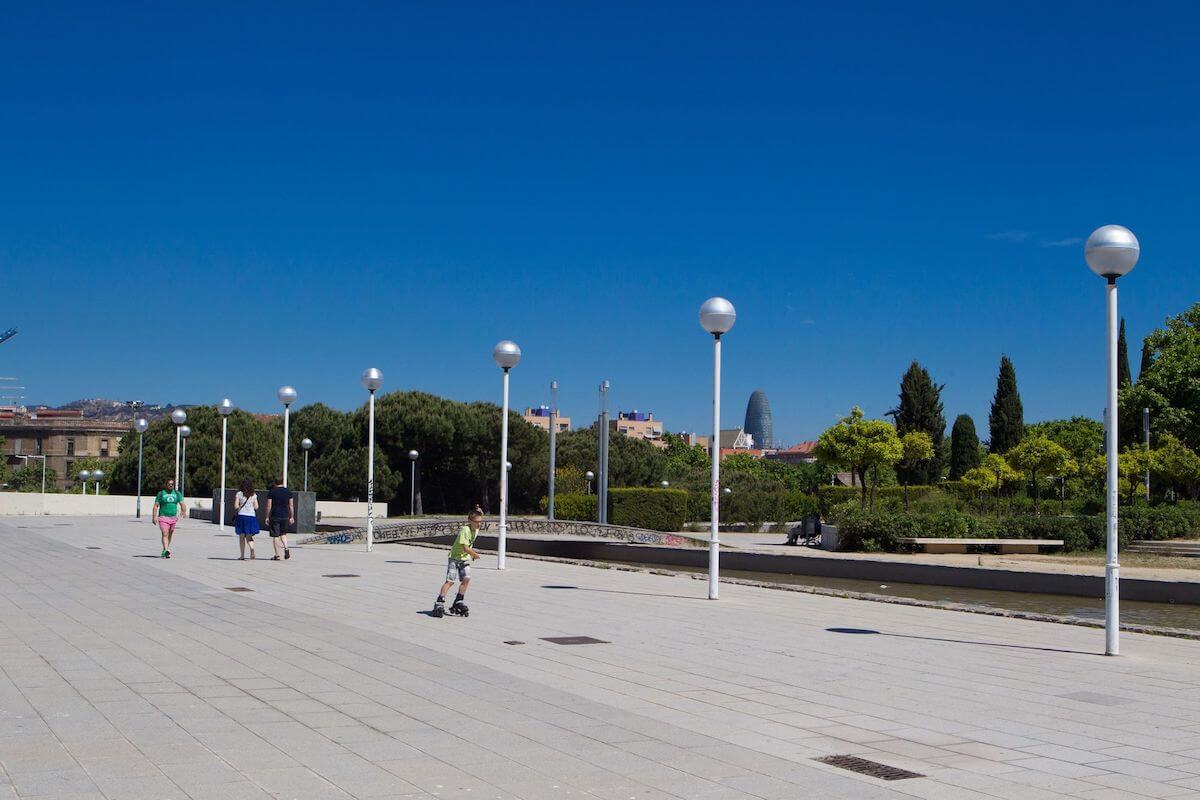
The City Council detects areas where lighting only illuminates the road, where many shops have recently closed and street lighting has been lost, or where trees have grown too much and block the lights, through the companies responsible for the maintenance and conservation of the light points. But also through the observations of the residents themselves. One of the ways to know what sensation they have when walking through the city is through night walks, in which dark spots in the neighborhood are identified or which areas are more insecure for women or the elderly.
The City Council and entities like Col·lectiu Punt 6 do nocturnal routes to see which are the most insecure areas of the city for womenThese nocturnal tours are also done by Col·lectiu Punt 6, a Barcelona cooperative that works to build a more inclusive city. One of its members, Roser Casanovas, explains that these routes serve to understand that the sensations on the street at night or when it is dark clearly have a gender component and are based on how urban elements are configured.
Lighting to guarantee a more inclusive city
To reverse urban gender inequality, Casanovas argues that one of the solutions involves emphasizing better lighting, with more LED lights, focusing on sidewalks and making lighting coexist with trees, but also with lights on building facades ---the lighting is more continuous and does not encounter obstacles along the way---, or lighting more spaces such as bus stops, which serve as a guide in places we do not know. She also proposes changing the design of building entrances and shop windows, with glass windows or doors that allow their interior lights to spill onto the street, and equipping public facilities with emergency lights that are always on.
Col·lectiu Punt 6 suggests lighting more spaces such as bus stops, which serve as a guide in places we do not knowHowever, Casanovas points out that better lighting is not enoughto make cities more inclusive. Lighting more spaces that are perceived as unsafe can be a short-term solution, but she emphasizes that in the long term they need to be reformulated. She gives the example of tunnels to access metro stops like Mercat Nou, which, no matter how many lights they have, continue to cause a feeling of insecurity.
New public lighting contract and comprehensive renovation plan
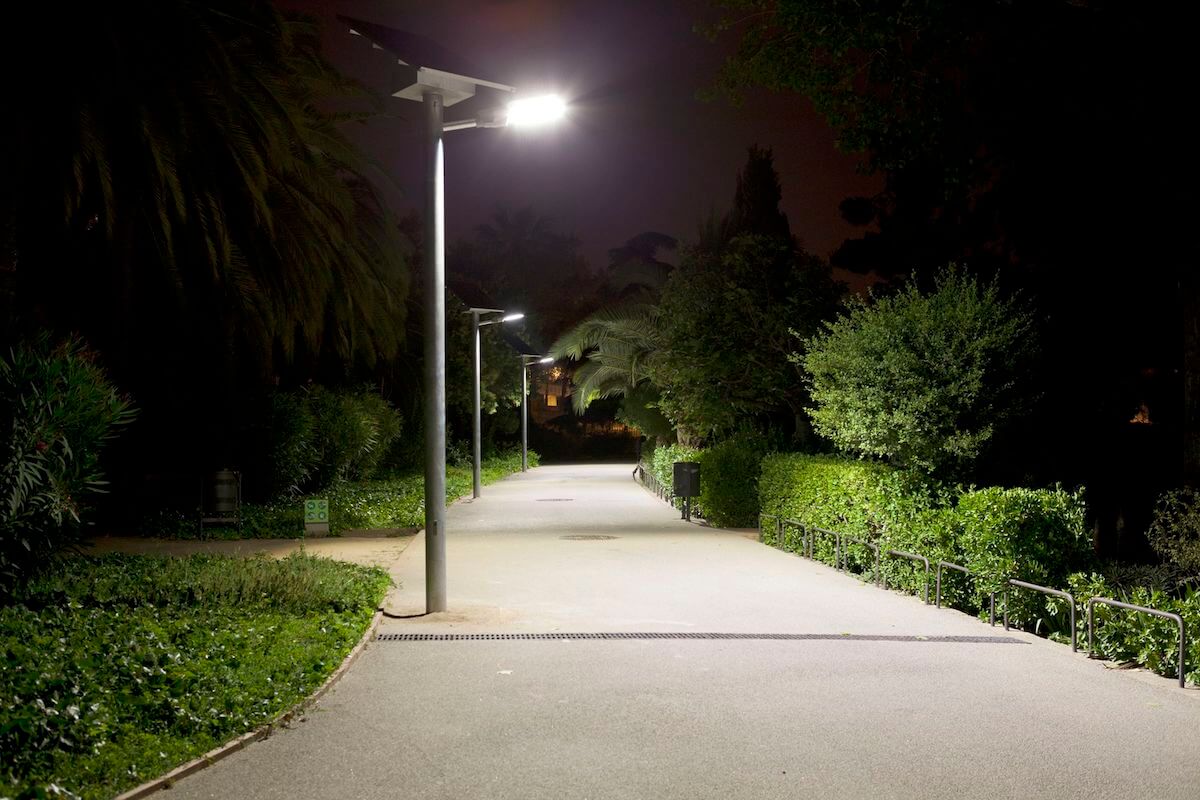
The city council recently approved the terms for the new public lighting contract, which will last for three years plus two extendable years and is valued at 18.8 million euros annually. The Director of Energy Services for the Barcelona City Council, Cristina Castells, indicates that medium-sized companies, not too large, specialized in the maintenance of urban services or in works, usually bid. The new contract, quite continuous with the previous one, divides Barcelona into three zones, making it easier for smaller companies to bid ---they do not manage the entire city--- and fostering competition among them. The local administration expects the formalization of the awarded companies to take place in September.
The public lighting contract divides Barcelona into three zones, making it easier for smaller companies to bidOnce the three companies responsible for the maintenance and conservation of public lighting in Barcelona are chosen, the City Council will begin to work on the new comprehensive renovation plan, delving into the main objectives set by the previous one, such as more safety, energy efficiency and smart management, and better health and environmental quality, in addition to reinforcing sidewalks and lighting uniformity, among other issues.The last plan had an expected validity from 2018 to 2020, but the pandemic has delayed its completionand the consistory calculates that they will finish it in April.
Add The New Barcelona Post as your preferred Google source for free
Stay informed with the latest news.
