[dropcap letter="E"]
n a 1960s television commercial, a couple in their twenties is sitting on a bench in what could be a park. It is guessed to be a park by the twisted, almost baroque shapes of the bench. Also because both are elegantly dressed, as if for a stroll. But in no case is there explicit reference to the park: the set, for example, is neutral, white. He reads the newspaper and holds two leashes with their respective dogs. She, noticeably bored and in order to get the man's attention, takes an immaculate handkerchief from her handbag, raises her arm, and lets it fall to the ground. Then a voiceover says. "Pay attention. Are you receiving the signal correctly? With a Werner, always. And you won't lose a single image or sound. It's worth it. Pay attention to Werner television."
[subscribe_newsletter_esp]
These are some of the examples of the first televised advertisements that could be seen at that time through a single operational channel, TVE. For practically two decades, television commercials continued to respond to similar formats. Everyday productions. Simple messages. Basic interpretations. Actresses and actors who reproduced stereotypes of successful profiles. And, in practically all cases, a neutral set. It is not until the late seventies that exterior locations gain relevance.
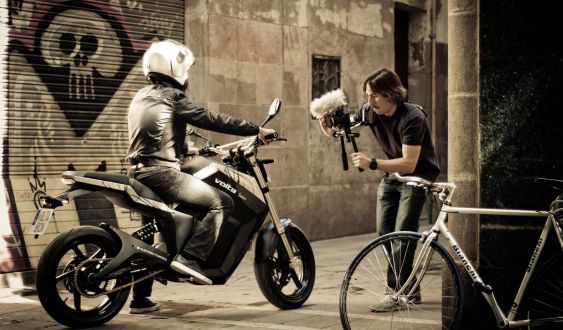
In current advertising pieces, however, location is one of the layers where creativity has the most transcendence. We have spoken with Pau Ramírez, Gina Mills, Cristina Marin and Xavi Vara, four emerging professionals in the advertising sector in Barcelona and specialized in shooting advertising films. What's cooking behind the ads we see on TV or through social networks? What role does Barcelona play as a location?
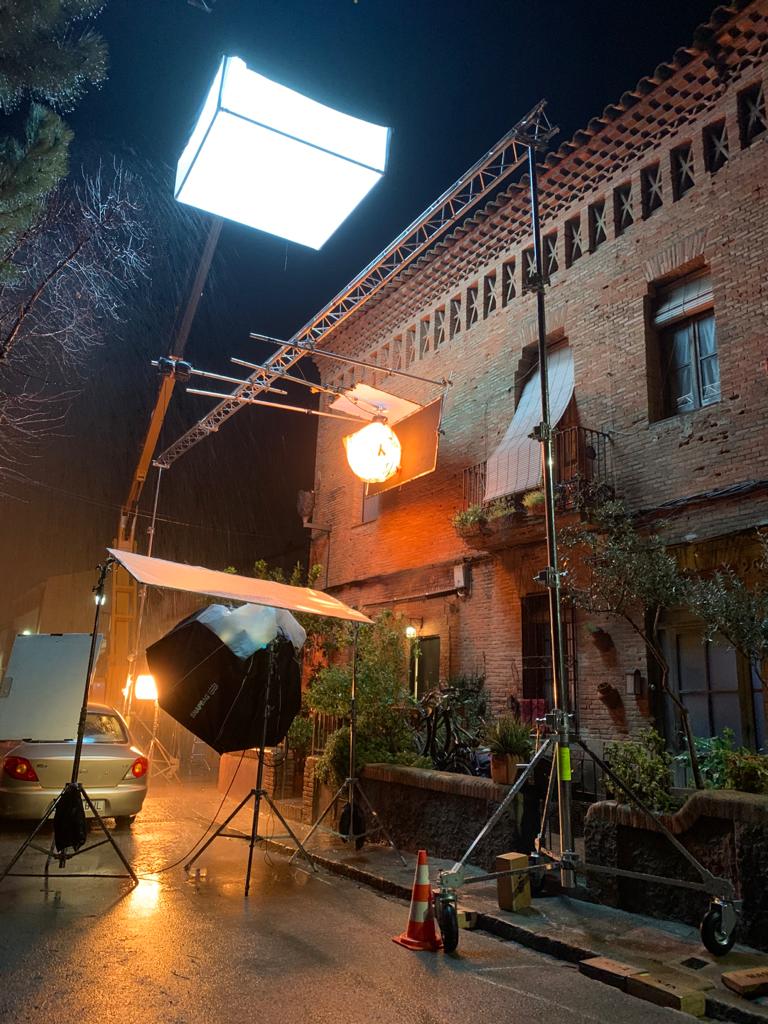
Pau Ramírez (Instagram: @pauramirezmarques) is a gaffer, a slang term that the English, years ago, used to refer to the head of a brigade of workers. The world of cinematography has recovered the word and integrated it to label the leader of the lighting team. A gaffer is a magician to whom, almost always, miracles are entrusted. Pau does not turn fish into bread, but he does turn darkness into light. His role requires close coordination with the director of photography. Both are responsible for searching for and finding locations and creating the lighting design to adapt the shoot to the creative needs of the advertisement, budget, atmosphere, and transport.
Pau believes that Barcelona is perceived as the main European set for advertisements. The reasons are the comforts and versatility it offers compared to other capitals. The sea, the mountains, an inexhaustible variety of colors, reflections, and textures at relatively short distances and within reach of large cities. Contrasts and landscapes of vineyards, drylands, alpine, irrigated, maritime, cosmopolitan, rural... Barcelona has this environment and this makes it unique as a set.
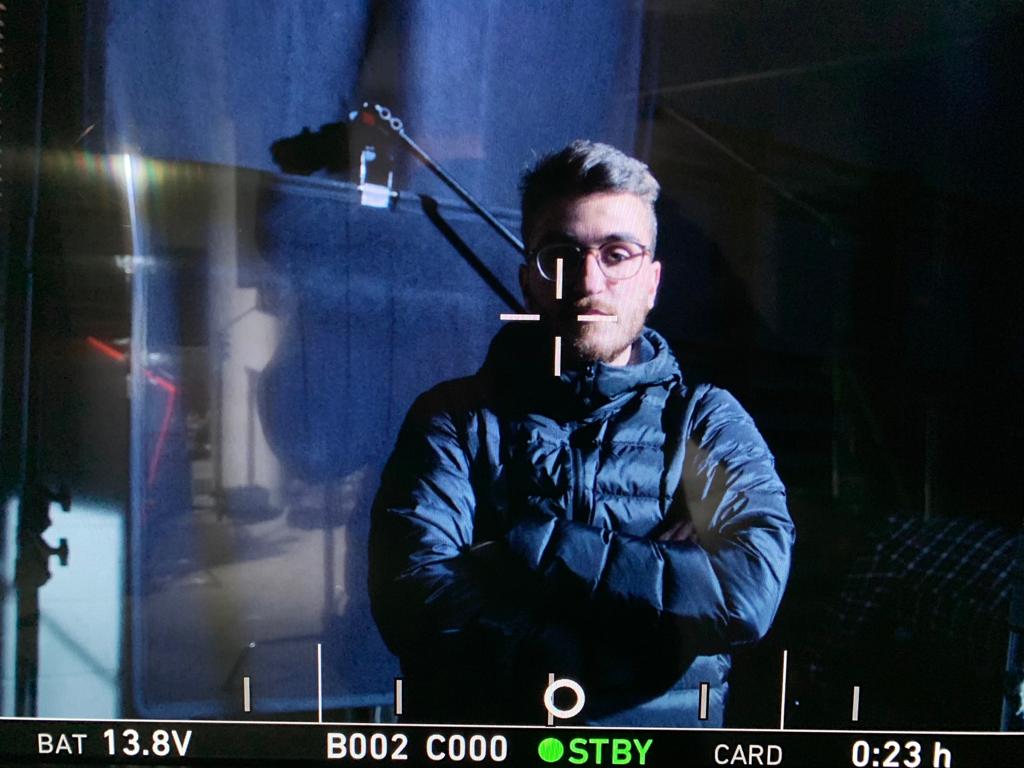
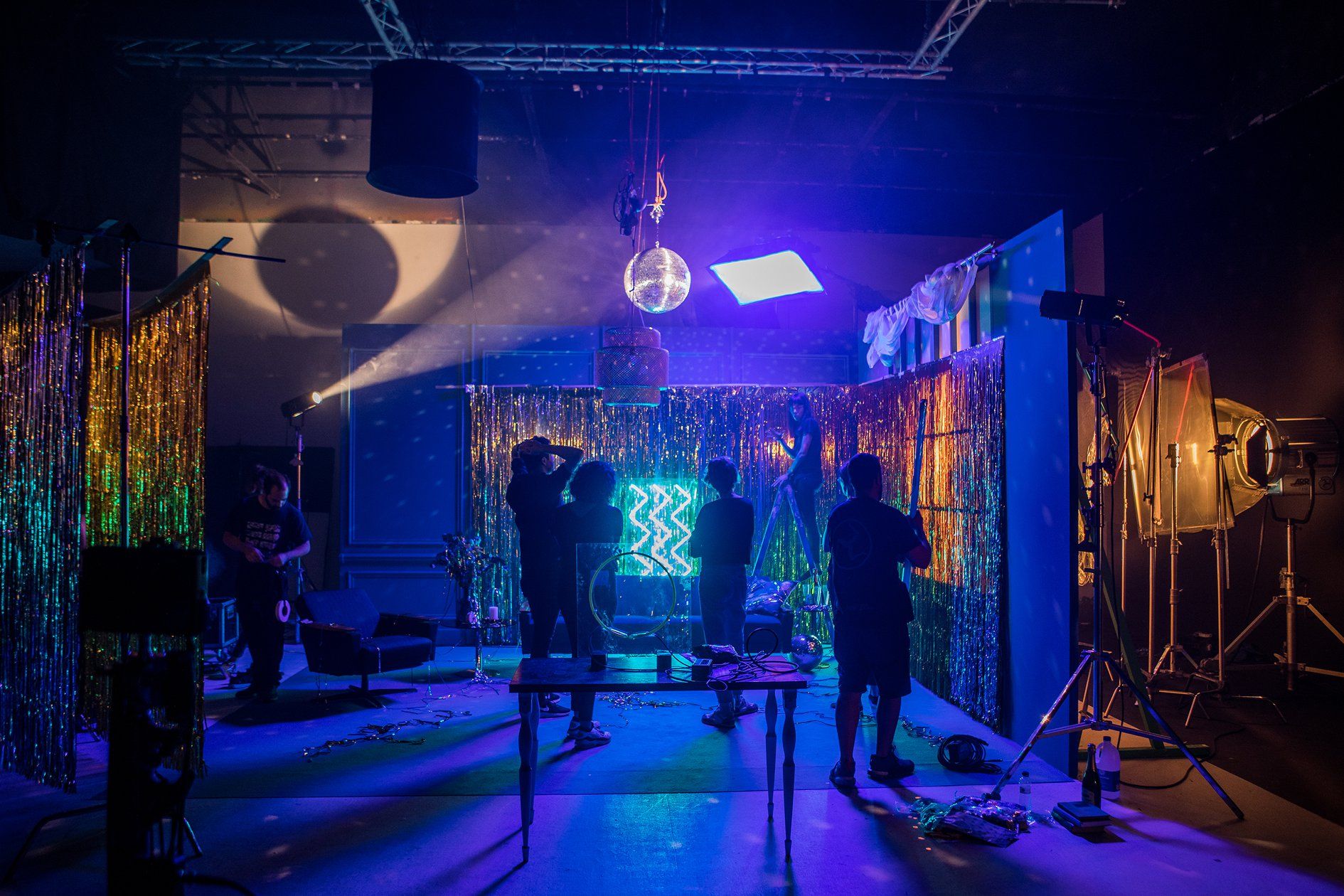
Gina also adds the costs, which are more economical. Gina Mills (@ginaamills) is an art director. Responsible for planning what intervenes in the scene that opens before the cameras, including objects and ambiance. Her role within the team begins with an exhaustive search for aesthetic references, which must be aligned with the criteria dictated by the director. These aesthetic references, as well as the proposed material, are subsequently debated and agreed upon with the client and the advertising agency. Once approved, purchases are made, sets are built, and on the first day of shooting, assembly takes place. The duration of a shoot varies according to circumstances. However, the most influential factor is the number of locations.
Xavi makes an approximation of the budget for an advertisement shot in Barcelona. He believes it can range widely, from fifty thousand euros to a million or more in cases of campaigns for major brands. Xavi Vara (@xavi.vara) is a producer. When asked about his functions, he laughs, "I do a thousand things at once," he comments. He feels particularly capable of coordinating departments, of seeking and generating good harmony among the teams that take part in the shooting. Sometimes he also acts as a link between client, agency, and director, given that, eventually, the creative proposal of the agency and the client, and that of the director, may not be balanced. Then Xavi mediates between the positions of each of the parties and tries to find a common ground. These differences in the approach to the creative idea appear because, beyond both parties seeking the ad to convert into sales, the director will also seek a creative plus aimed at gaining recognition in festivals like Cannes or Berlin.
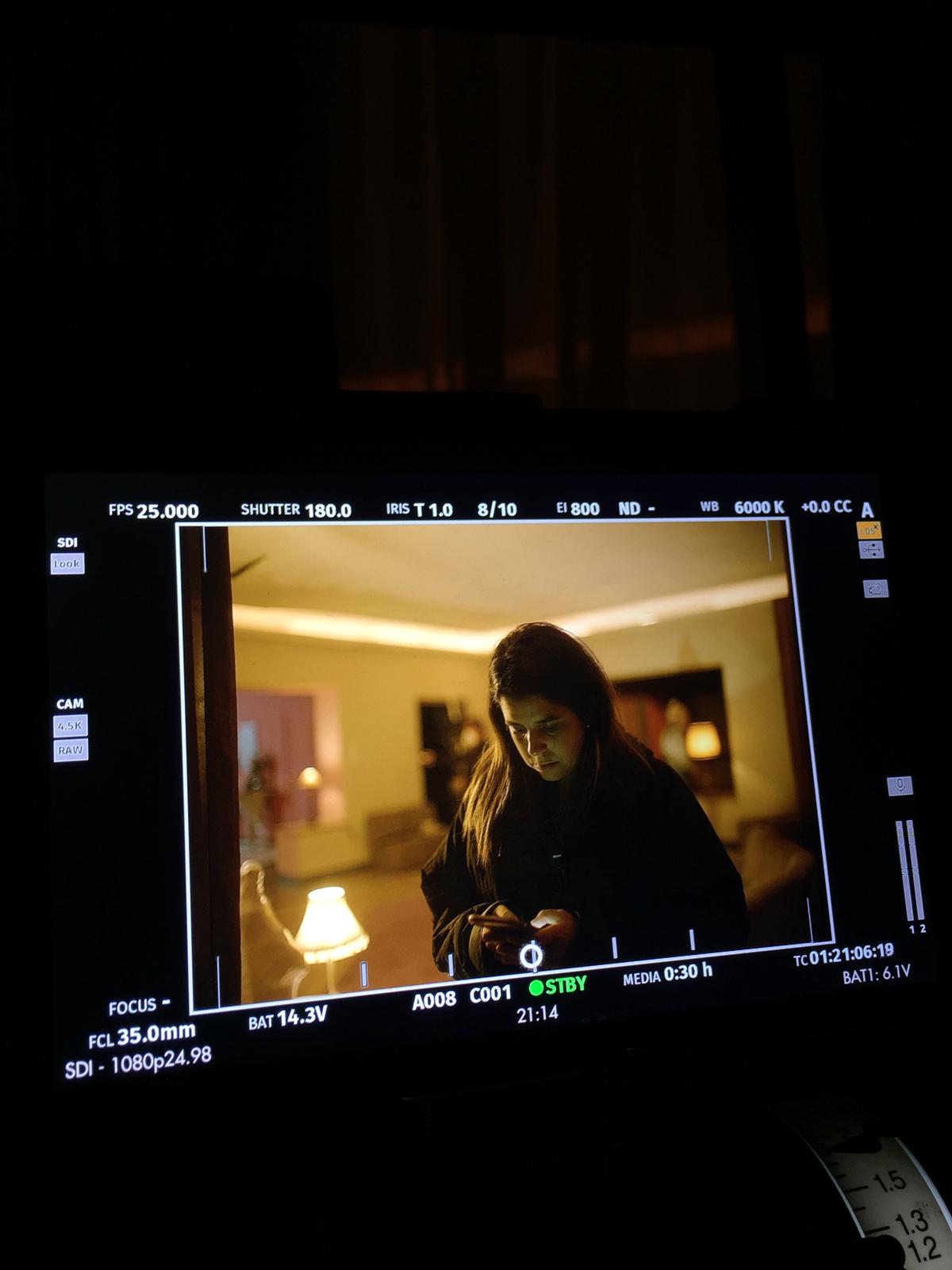
Cristina Marín (@crismruz) is head of production. She goes out of her way to coordinate the technical and human team and the necessary resources for the shooting to flow smoothly. "One second of shooting implies weeks of work from a handful of people," she states. Cristina highlights the evolution that advertisements have undergone in just twenty years. Given the multiplicity of channels, various formats are worked on, which, at the same time, demand different languages. It is not the same to address the social media audience, which requires a concise, fast, intelligent message that allows effective segmentation, as it is to address a television audience, notably massified and older.
Also noteworthy is a sociological evolution in scriptwriting. In this area, however, Gina and Pau disagree. While Pau speaks of a notable normalization of the female condition ---except for some exceptions or moments where she has experienced sexist behaviors typical of past eras---, Gina believes that inequality is still exaggerated and that there is a long way to go. Also in the racial sphere and, in general, in social and psychological stereotypes. For similar reasons, the four agree that, probably, both clients and agencies should take risks with the content of the advertisement. Because ads continue to influence consumption, and for this reason, they believe, they would help provoke a reorientation of values in society. An example of this idea with which the four agree is the refocusing of details in the Estrella Damm summer ad.
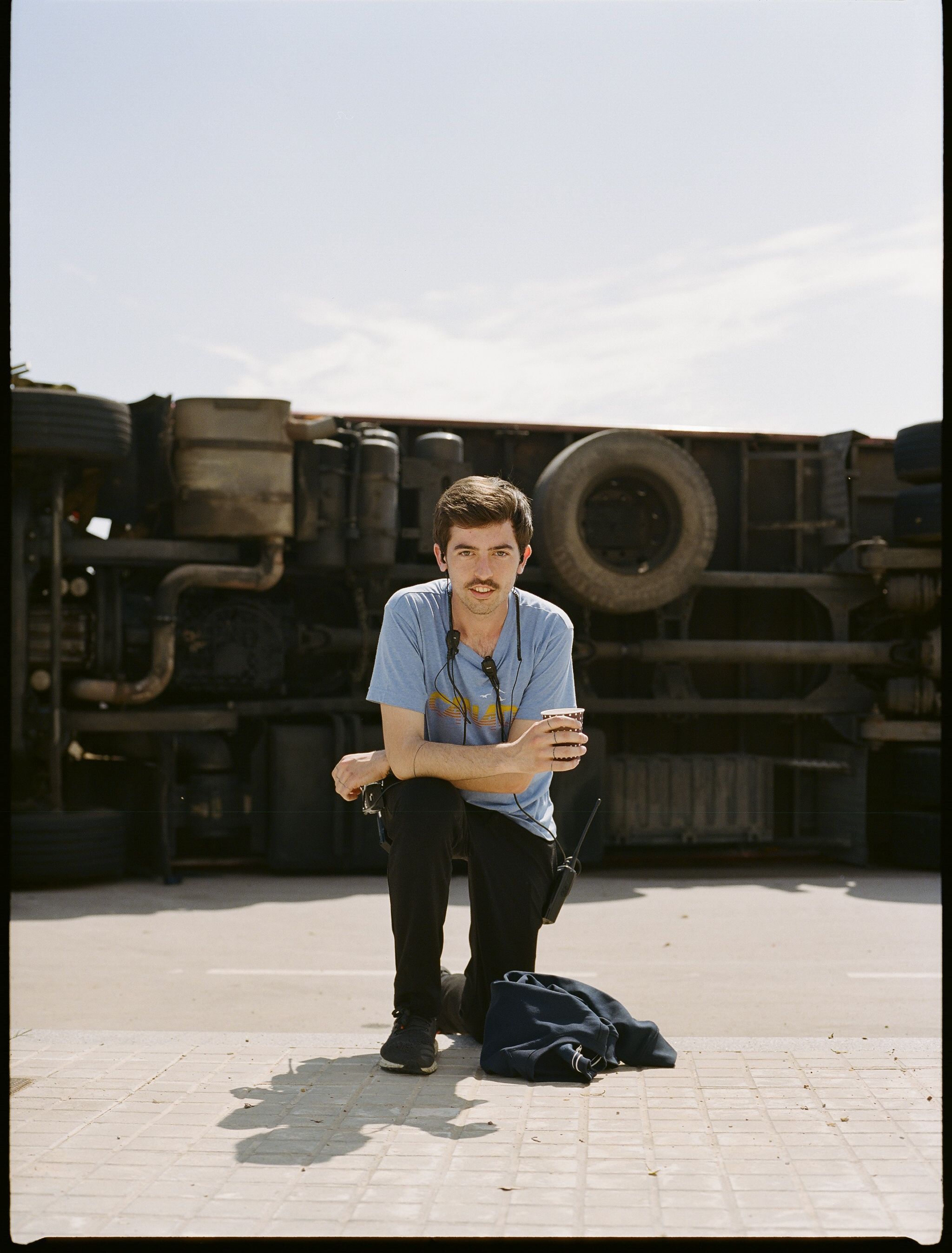
Xavi believes that details, just like in cinema, make the difference in a television spot. Because that is what differentiates one language from another. Details make the narrative vibrate, he says. And light ---Pau adds---, which plays a more prominent role than we think when it comes to creating sensory expectations, expectations that end up leading us to try or acquire the product. Cristina and Gina also believe that the details of an ad are fundamental to impact the profile of Barcelonans around twenty-five years old. Young people, many of them, who are starting to generate income and, therefore, increase their willingness to consume. Details, they affirm, are the key to success when it comes to impacting this new target. If the details are not worked on, the piece loses freshness and originality. It can even affect the degree of sincerity perceived in the message. Barcelonans around twenty-five are looking for imperfect scenarios, everyday stories with which to feel reflected and, above all, simplicity and non-invasive proposals.
The battle to differentiate oneself in the field of digital content and in advertising in general takes place daily. And the location where it is forged is a paramount issue. For this reason, Barcelona appears on the table of fashion agencies around the world, where the heads of the most influential creative departments of the moment converge. And surely also during the afterwork over some beers or vermouths. Because Barcelona is always there. Like a dream. Like an ad within an ad.
Add The New Barcelona Post as your preferred Google source for free
Stay informed with the latest news.