Umtiti, Dembélé, Lenglet and Griezmann are the French colony of FC Barcelona. In the club's history, there have been 25 French members of the Barça squad. The first was Fenouillère, in 1902. He played only three friendly matches and died in the First World War. Then came more: Muller, Blanc, Abidal, Henry… Today, with the four mentioned at the beginning, the French contribution to Barça is important, but the presence of the colony from the neighboring country in the Catalan capital goes far beyond Camp Nou.
The presence of citizens from across the border in Barcelona has been documented since the 15th century. They were a group of merchants and artisans who quickly organized themselves into a brotherhood that would initiate a network of solidarity and interests of the French community, which today brings together dozens of entities, from the aforementioned Société de Bienfaisance and Chambre de Commerce et d'Industrie, as well as Le Cercle des Français-Barcelone Accueil, the Institut Français, the Lycée Français, the Jaimes bookstore and Equinox radio, among others, without forgetting the important role that the consulate plays and has historically played.
Through these institutions, the French colony of Barcelona has contributed to a wide range of activities, in education, culture, commerce and, of course, in business. Several relevant initiatives in the country's economy have French origins. For example, the Bonapartist Cros family, which at the beginning of the 19th century created a chemical company in Sants that gave rise to the current Ercros. Or the Norman Charles Lebon, who built the first gas factory in Barceloneta and obtained the concession for public lighting in the city. And also, the great contribution to beer thanks to the Alsatians Moritz and Damm.
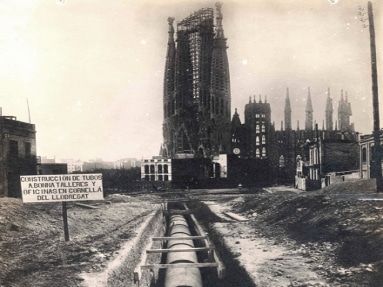
The most important company of Gallic origin is Aguas de Barcelona (Agbar). It dates back to 1867, when the Compagnie des Eaux de Barcelone was created in Belgium, which in 1882 was acquired by French capital, establishing in Paris the Sociedad General de Aguas de Barcelona, which, in turn, acquired some local companies. Currently, it is a subsidiary of the French Suez. Onses himself worked for 15 years at Agbar.
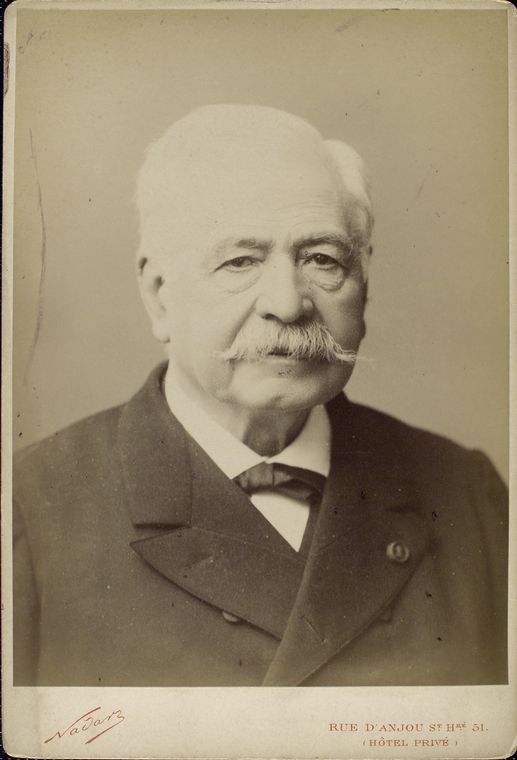
The French presence in Barcelona acquired great importance in the 17th and 18th centuries, although it went through a crisis after the Napoleonic invasion. The book pays great attention to the figure of Ferdinand de Lesseps, who was consul in Barcelona between 1842 and 1848. Lesseps played an important role during the revolt of 1842, which Espartero decided to quell with cannon fire from Montjuïc castle. The consul organized assistance to the French community, but given the magnitude of the army's repression and the large number of wounded and affected people, he decided to extend it to the entire population. He also exhibited his diplomatic skills and managed to stop the bombings and secure the release of many of those detained. Since then, Barcelona sealed a commitment of eternal gratitude with Lesseps and named the current square after him. It was for that decisive mediating role and not for having promoted the Suez Canal, which is what gave him worldwide fame.
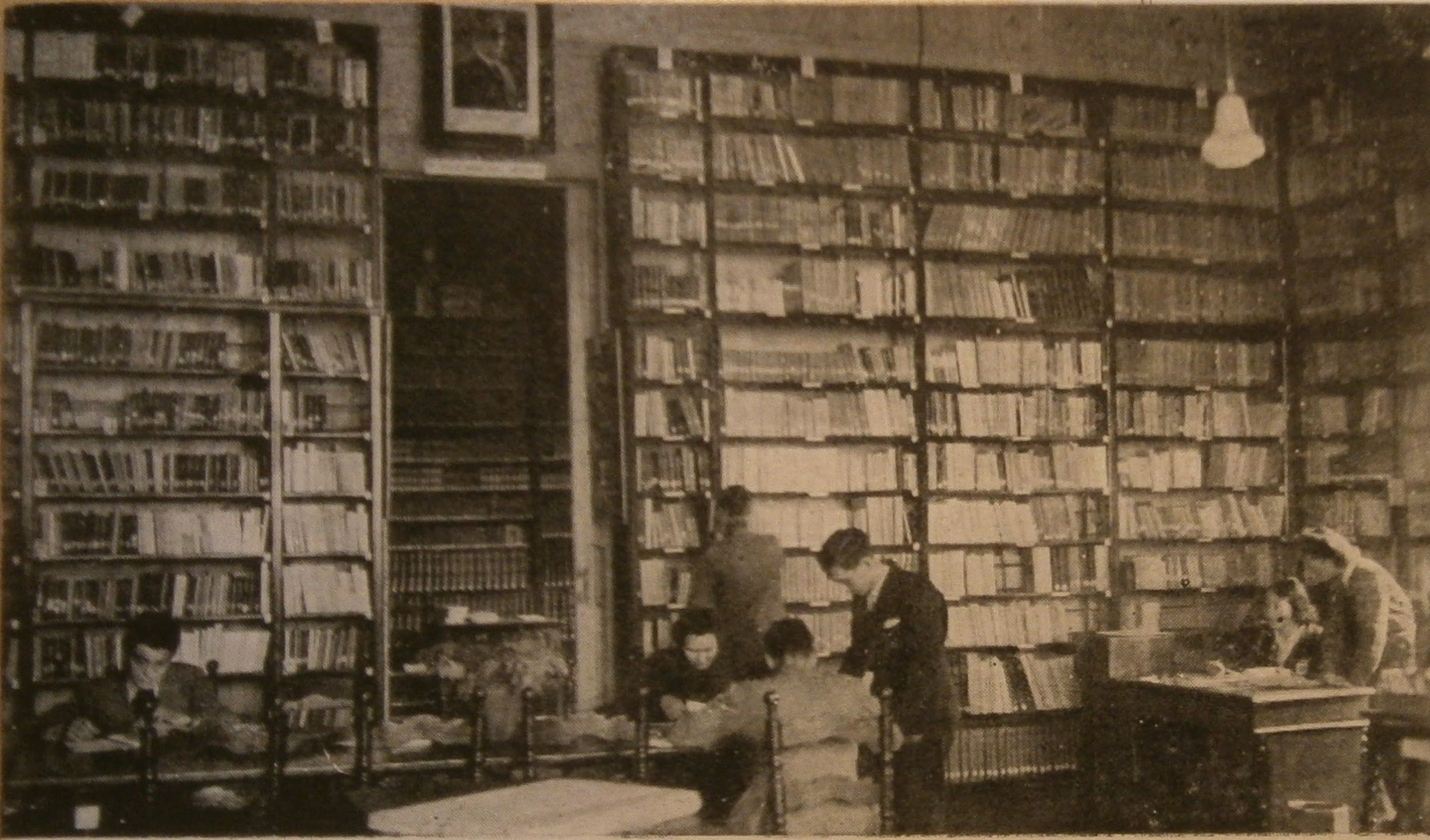
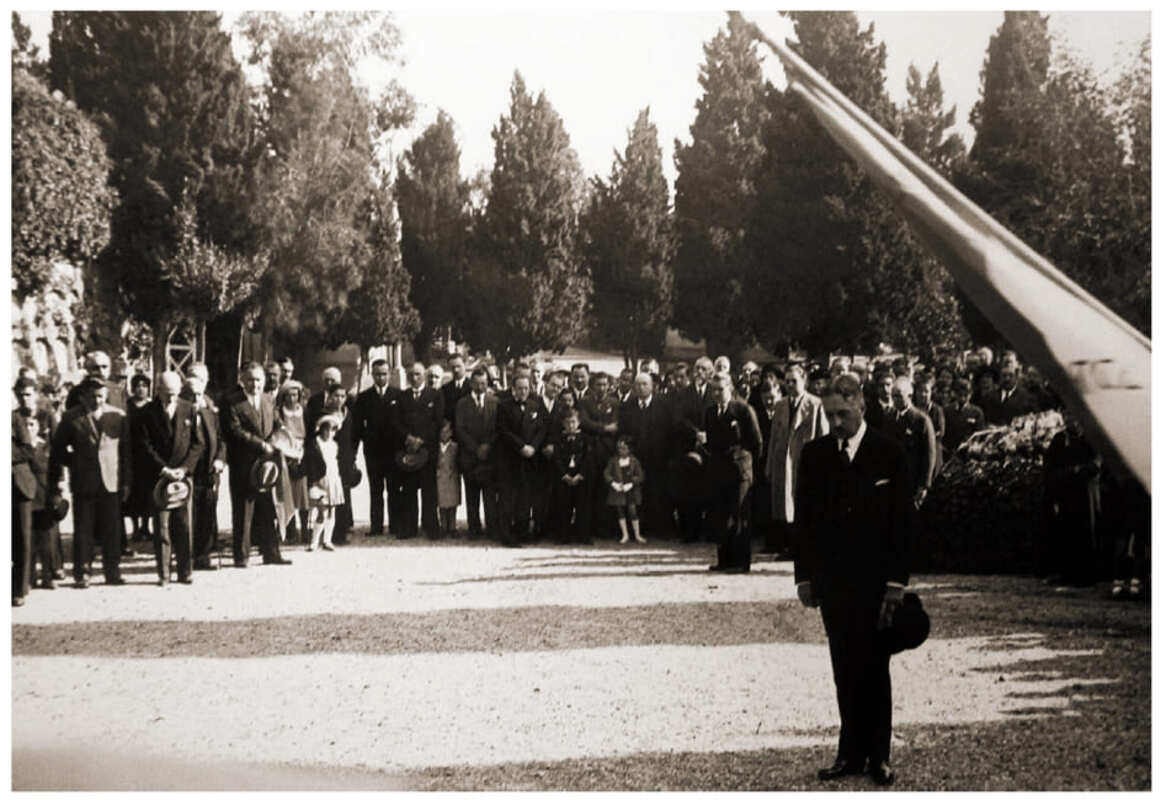
The book, written entirely in French, stops its story in 1947, awaiting the publication of a second part. One of the contributions of this volume is the great documentation work. Dozens of documents and photographs illustrate the work. And, as Onses explains, the book has been a consequence of the process of preserving the historical archives of Le Cercle des Français and the Société de Bienfaisance, which they want to extend to the rest of the associations of the French colony.
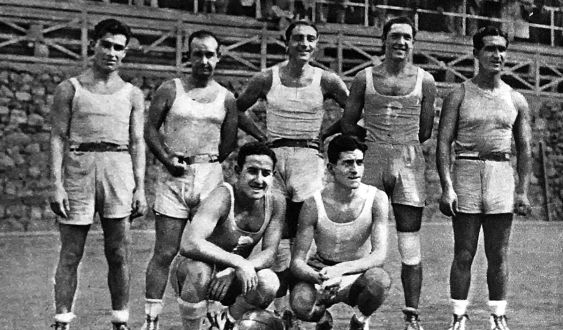
I leave for the end a story I didn't know and that has to do with the contribution of the French community of Barcelona to the development of basketball in the 1920s and 1930s. A team made up of young people from the colony, Patrie, has gone down in the history of this sport as one of the best teams in the country in those early days. In 1923, it won the Catalonia championship, and in 1935, the Spanish championship against Rayo Madrid, ancestor of Real Madrid. Its most outstanding player was Armand Maunier. He played four times with the Spanish national team and due to the war returned to France.
In short, a book that crossed my path by chance and has been a complete discovery. The pity is that its distribution will be very limited as it is basically aimed at the consumption of the French community itself. However, it is highly recommended to seek it out for those who read in French and want to know the crucial role of this community, which today brings together 35,000 people, in the economic and social development of Barcelona.
Add The New Barcelona Post as your preferred Google source for free
Stay informed with the latest news.
