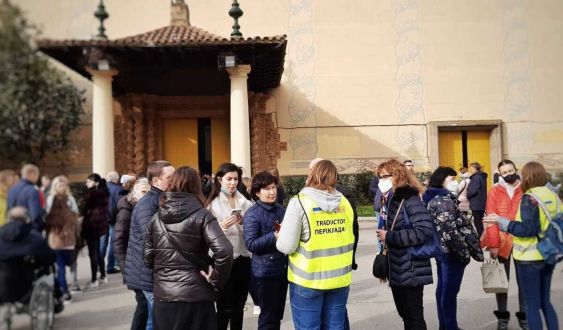
Barcelona woke up this Friday with hundreds of Ukrainian refugees at the doors of the Palacio de Victòria Eugènia, in pavilion 7 of Fira de Barcelona in Montjuïc, one of the spaces chosen by the Ministry of Inclusion, Social Security and Migrations to assist them with administrative tasks. They were seeking advice and solutions to start, even if temporarily, a stage of their lives in Barcelona or Catalonia, after being forced to leave their homes due to the war initiated by Russia against their country.
There are already 8,000 Ukrainian citizens – of whom there is a record, although there may be more – who have arrived in Catalonia by various means since the outbreak of the armed conflict on February 24. For the moment, 151 unaccompanied minors have also arrived, 132 of them with a Terrassa entity, Tanu, which had already been helping Ukrainian minors since the Chernobyl tragedy. The Department of Social Rights has registered the predisposition of 10,000 families with the intention of being able to host an unaccompanied minor from Ukraine.
In Barcelona and by extension throughout Catalonia, they are met with a warm welcome from the Catalan population, accustomed to being a hospitable society. Thus, with a rapid response, solidarity and voluntary initiatives have emerged from society and civil entities during the first days of the conflict, but administrations and humanitarian organizations insist that it is necessary to channel all efforts through institutions [Catalonia with Ukraine portal] or the Ukrainian Consulate in Barcelona.
Therefore, humanitarian organizations, social entities, and all institutions have focused on centralizing all efforts in welcoming arriving families ---many mothers and grandmothers with their children and grandchildren; men between 18 and 60 years old cannot leave their country---. The 6,000 square meter space at Fira de Barcelona is an example.
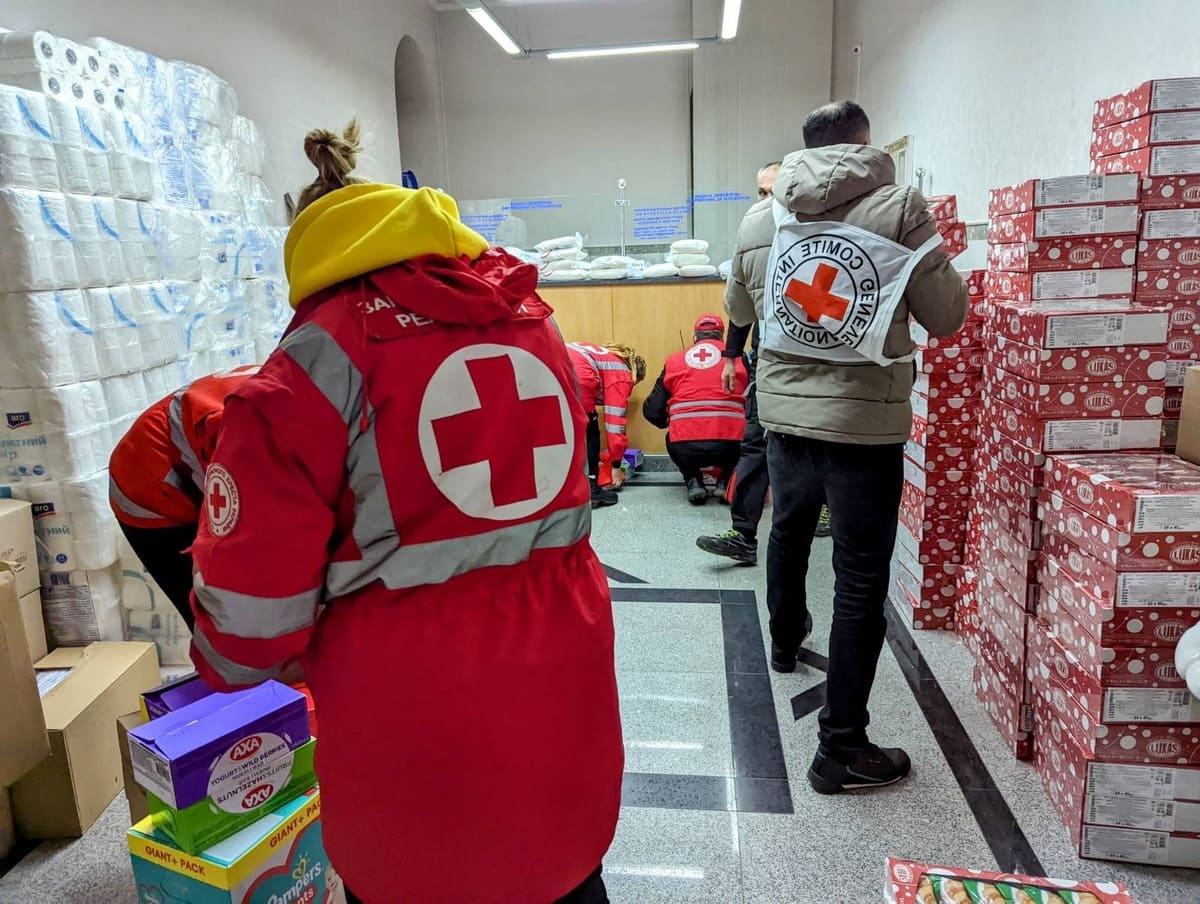
In the pavilion, managed by Cruz Roja, the Government and the Generalitat have deployed a set of services to simplify administrative procedures for Ukrainian citizens (of all nationalities) to obtain the so-called "temporary protection" in less than 24 hours, which grants access to social rights for a period of one year, extendable to three. This implies a residence permit, work permit, and access to all social rights, such as healthcare ---including psychological care services with about fifty experts--- or schooling, which depend on the Generalitat.
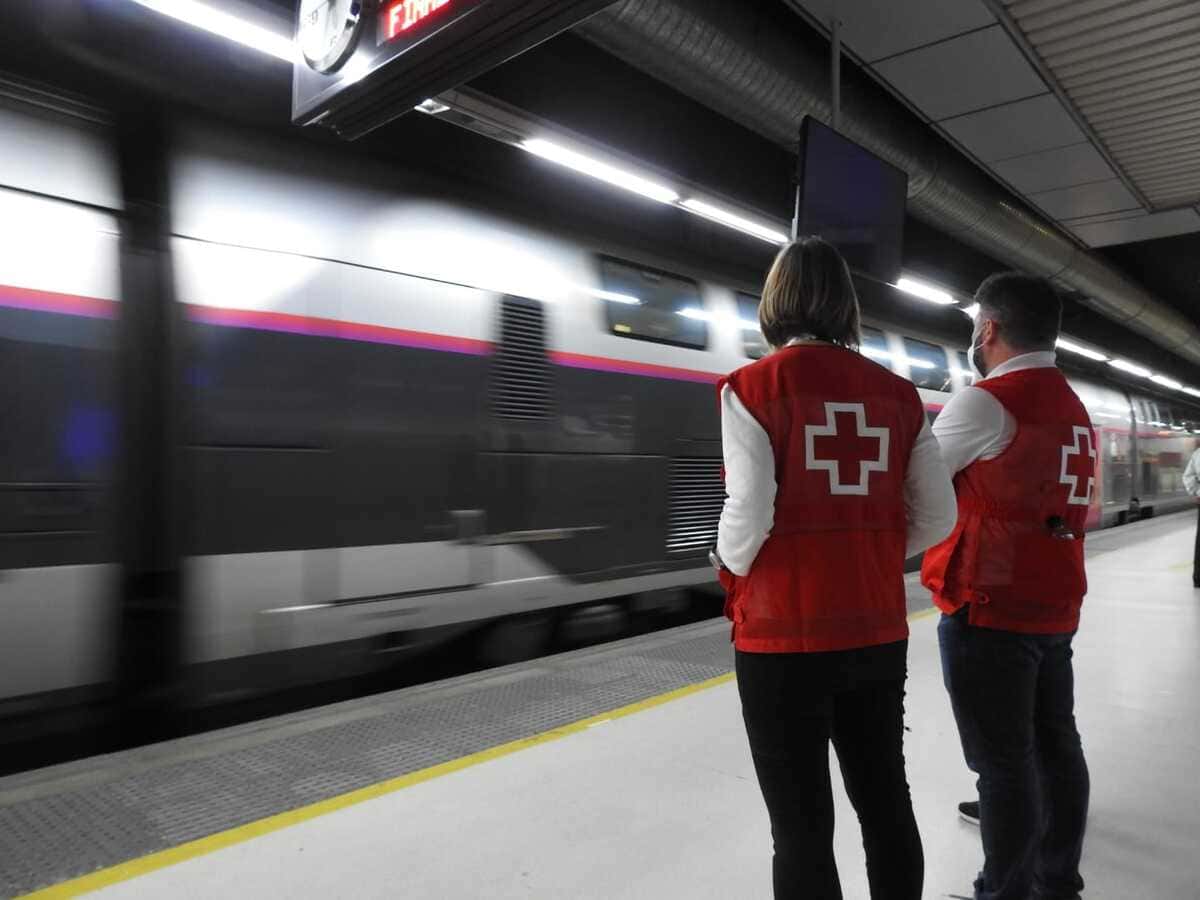
This is not an accommodation center, although it will have 200 beds for temporary rest in case of displaced persons who have just arrived in the city. But both Cruz Roja, the Generalitat, and the Barcelona City Council provide information on their emergency accommodation and reception spaces and services (childcare, logistics, sustenance, accompaniment). Not to mention the arrival of children suffering from illnesses and undergoing medical treatment who are transferred to different hospitals in Catalonia to receive the necessary care.
City councils, an essential tool
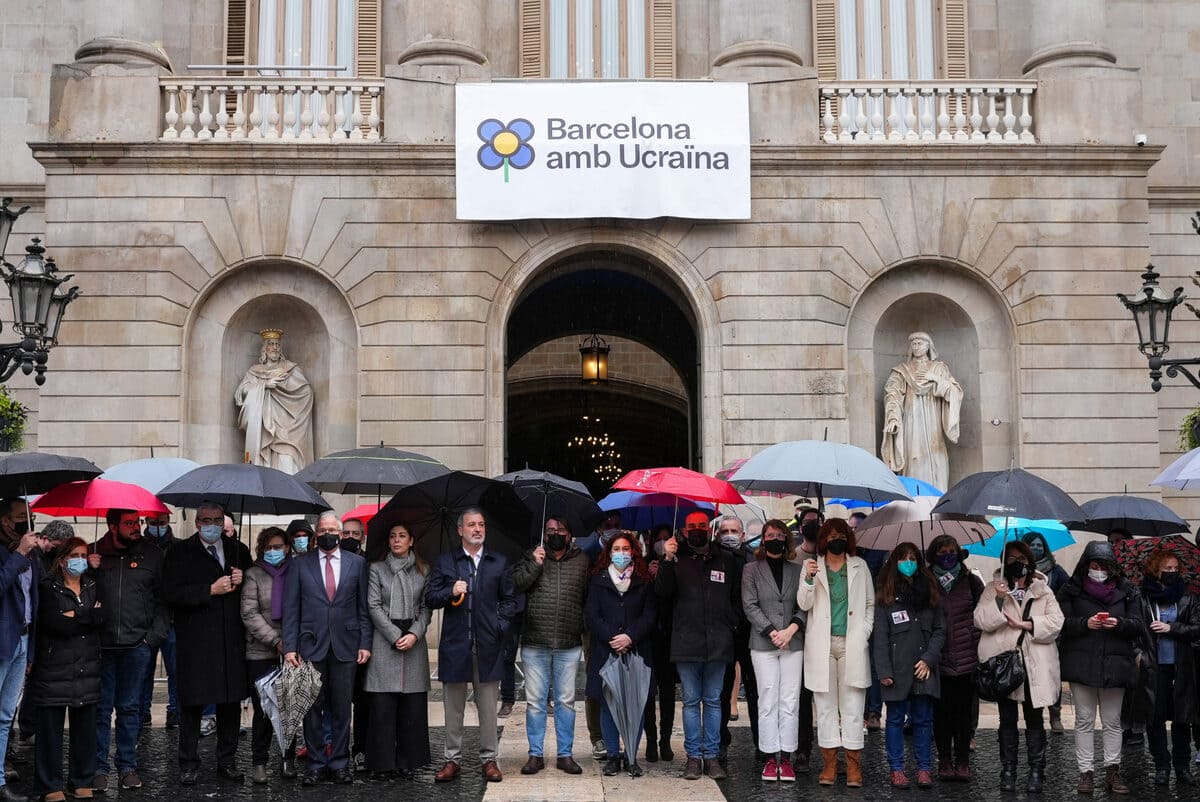
The Barcelona City Council, through the Barcelona Refugee City Plan, has launched a new website to facilitate reception. Its objective is to provide the public with the most up-to-date information possible in an understandable way about the different municipal services involved: initial reception offered by the Barcelona Social Emergency and Urgency Center (CUESB) 24 hours a day, 365 days a year; and the Immigrant, Emigrant, and Refugee Assistance Service (SAIER) to provide guidance on the necessary procedures to obtain asylum and refuge.
Many more local administrations are contributing to the best of their abilities. This is the case of the Guissona City Council, one of the towns with the most Ukrainian residents for years and where now, due to family ties, about 300 families have already arrived. This council has received 50 computers, donated by the NGO Labdoo.org, which will be given to the family units.
The business and sports sector
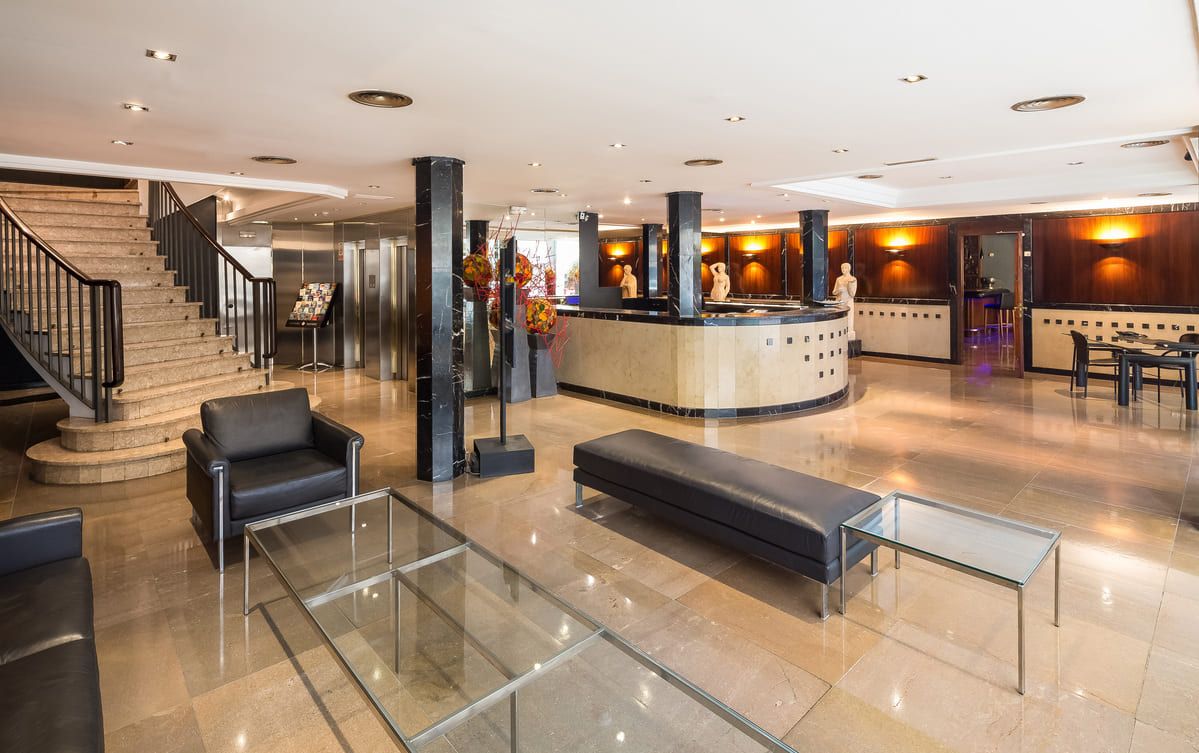
It should be said that, in parallel, the city's availability has translated into offers from a multitude of entities and companies. In accommodation, the Gremi d'Hotels de Barcelona has enabled around 3,000 reception places in about twenty establishments in the Catalan capital and its surroundings, in coordination with the Red Cross to resolve the needs of displaced people. In addition, the guild has made the Hotel Derby available to act as a landing point for displaced people and is also considering carrying out actions to integrate some of the people arriving in the Catalan capital into the hotel sector.
The Port de Barcelona has ceded an 1,800 square meter space in the Logistics Activities Zone (ZAL) to store humanitarian aid for Ukraine. The CaixaBank Volunteers Association is mobilizing two bus convoys to transport 400 refugees from Ukraine to Spain. Also, RCD Espanyol and the 'És per tu' Association have sent material and transported Ukrainian families. FC Barcelona, through its Foundation, will collect products for babies and young children jointly with the Red Cross, encourage members and fan clubs to host Ukrainian families, and organize socio-educational and sports activities for refugee children arriving in Catalonia. The Club Natació Barcelona has made itself available to the consulate with a plan that contemplates that any displaced athlete can participate in the dynamics and training of the club's different teams, depending on their age and competitive level, in the disciplines of swimming, water polo, triathlon, artistic swimming, and karate.
Among the displays of solidarity, an infinity of donations of sanitary material, food and cleaning products, technological items... Highlighting projects such as that of the startup Adtende, a Catalan company that offers its Platoon technology free of charge to city councils for simultaneous translation and to be able to attend to war refugees by phone.
The children of Chernobyl and the Balkan war
Barcelona's ties with Ukraine have been strong for years: it has been a temporary refuge for people affected by the accident at the Chernobyl nuclear power plant in Ukraine in 1986, and in an attempt to help and introduce some normality into the lives of the affected children, entities such as the aforementioned Tanu de Terrassa or the Osona amb els Nens organization, which hosts families of the so-called Chernobyl children during the summer, act.
Later, the Catalan capital rallied to support refugees from the Balkan War. On November 21, 1995, the Dayton peace agreements were signed to end the Balkan War. That year, the Barcelona City Council declared Sarajevo the eleventh district of the city to support the reconstruction of the Bosnian capital. It was the beginning of international cooperation projects promoted by the city. Currently, the city council's cooperation with the capital of Bosnia continues through a joint program with Medicus Mundi for the prevention of gender violence in Sarajevo, with the maintenance of the Women's Information Center in Sarajevo, and the creation of transitional apartments for women who leave this resource and begin to live an autonomous life.
More recently, Barcelona has been the point of arrival and reception for people affected by armed conflicts in the Middle East. In the summer of 2018, with migrants rescued by Open Arms in the middle of the Mediterranean, Barcelona was also a port of entry for many refugees from Libya, in a year in which the NGO's activity was very intense and often met with the refusal of many European countries to disembark rescued people.
Add The New Barcelona Post as your preferred Google source for free
Stay informed with the latest news.
