Local commerce gains weight in Europe thanks to Barcelona. The European Parliament approved this Tuesday with a very large majority the proposal presented by Barcelona Comerç and Vitrines d'Europe, supported by some fifty administrations, entities, professional associations, and companies in the city, to create a European Capital of Proximity Commerce. Once this process is completed, the European Commission will be the one to finalize the process. In this sense, the Community Executive will have to shape the initiative, which includes incentives and budgetary implications for neighborhood stores, as well as proposals to reduce the administrative burdens they face and boost their promotion. All of this, with the aim of guaranteeing their viability, now affected by inflation and the popularization of competitors with more financial muscle.
For Barcelona Comerç, the European Capital of Proximity Commerce will contribute to ensuring the survival of a city model that maintains its neighborhood identity as an element of social and territorial cohesion, moving away from commercial desertification and confronting globalization, omnipresent brands, and e-commerce. The association also values that the initiative will serve to give merchants entity before European administrations.
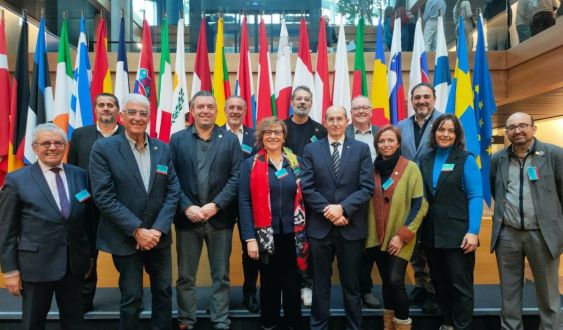
"We have created a very powerful operational tool that will serve to preserve and promote the common heritage of Europe's multicentric cities, a social and city model that allows for more humanized and sustainable ways of life, the 15-minute cities that ensure their inhabitants have all basic services nearby and in which proximity commerce plays a leading role as a backbone," says Salva Vendrell, president of Barcelona Comerç, who followed the vote live in Strasbourg. He was accompanied by the Barcelona City Council's Councilor for Commerce, Montserrat Ballarín, and the Generalitat's Director General of Commerce, Jordi Torrades.
The European Commission will also have to define the bases for choosing the cities and towns that can opt for the capital status each year. It is expected that the designation will involve the organization of informative and training activities aimed at citizens and merchants to highlight this economic activity, which represents 11.5% of the added value and employs more than 29 million people in the European Union.
Barcelona is already working to be the first to achieve it, with the program finished and the intention of starting the necessary procedures as soon as possible. In fact, in this Tuesday's session of the European Parliament, the chair of the Petitions Committee, Dolors Montserrat (PP), and MEPs Jordi Solé (ERC), Jordi Cañas (Cs) and Ernest Urtasun (Comuns) have advocated for this new initiative to debut in the Catalan capital. The City Council and the Generalitat have also shown their support. "We will spare no effort to ensure that Barcelona becomes the first European capital of proximity trade," defended the first deputy mayor of Barcelona, Jaume Collboni.
Add The New Barcelona Post as your preferred Google source for free
Stay informed with the latest news.
