Humanity would annually need 1.75 planets like Earth to satisfy the current demand for natural resources. Thus, maintaining the pace of consumption that now prevails in the world implies compromising the future of coming generations, as reserves corresponding to tomorrow's societies are being depleted. "This is not sustainable" and, to reverse it, companies are called to play a fundamental role, as stated by Miura partner Esther Sarsa. "Companies and also consumers can work to change it", she proclaimed alongside the director of B Lab and the B Corp Movement in Spain, Belén Viloria, in a new session of the cycle The New Barcelona – Moments Estel·lars, organized by The New Barcelona Post with the collaboration of CASA SEAT, Barcelona Global, Must Media Group and Giny Barcelona.
The also member of Women Action Sustainability and advisor at Roots for Sustainability and Ship2B has launched her recipe for this situation: "The company plays a fundamental role, but the solution is systemic: we are all related, both public and private entities, as well as citizens. We all have something to say" to contribute to making a final sprint to bring the SDGs closer.
Looking ahead to 2030, it is currently projected that 15% of what was established in the 2030 Agenda for the SDGs will be achieved, and companies and consumers are called upon to broaden this forecastAnd what role can citizens play? "We invite them to rewrite history with us, to consume in a different way, to read what a company does and how it does it when consuming its product," highlighted the director of the B Corp movement in Spain. Facilitating this task for the consumer, B Corp developed two decades ago a system to certify that a company works by meeting standards and practices that generate a positive impact in areas such as the environment, the community, workers, and its governance. Thus, B Lab established these standards with the goal of "using the power of business to do things better and transform the economic system into one that is more just, more inclusive, and more regenerative."
Concretized in 200 indicators, the fulfillment of these B Corp standards certifies that a company takes steps to transform society positively. Born 20 years ago in the United States and established in Spain from Barcelona a decade ago, the B Corp movement now has 8,500 companies globally in 160 countries. Together, the companies are part of nearly 170 different industries, and include companies of all sizes, which in Spain are distributed as 70% SMEs and 30% large companies.
Many of the companies that are part of this non-profit movement manage to be certified as B Corp after a process developed "in small steps" within a "point of no return process," which begins by self-evaluating compliance with B Lab requirements and undergoing verification by an external analyst. However, "there may be many companies that are B Corp and don't know it," carrying in their DNA the practices of a B that refers to the benefits that a company generates, beyond economic ones.

"Certification is the entry window and, once achieved, we carry out joint actions to push the action of companies," highlighted Viloria, who illustrated this action with advances such as the "milestone" achieved in Spain by creating the figure of benefit and common interest societies (Sbic). "These are purpose-driven companies that meet our requirements and aim to promote positive social and environmental impact," Viloria remarked, assuring that B Corp companies increase their revenues by 30% and retain talent better.
In addition to talent and revenue, these purpose-driven companies require other elements to grow, especially financing. And this is where actors like Miura Partners come in. "We invest in companies that are doing things well, that have a purpose and that generate a positive impact"; in short, companies driven to tackle a social or environmental problem, according to Sarsa.
The executive director of B Lab in Spain assures that companies certified as B Corp increase their revenues by 30% and retain talent betterThe objective is not only to provide economic resources, but also knowledge of the field of sustainability, to contribute to the growth of impact projects. "We help companies and we help them grow", emphasizing not only their purpose, but also the methods and the process to achieve it. The private equity firm does so nestled in a Barcelona ecosystem full of startups and companies with the potential to generate a positive sustainable impact, "companies with projection that believe in transformation".
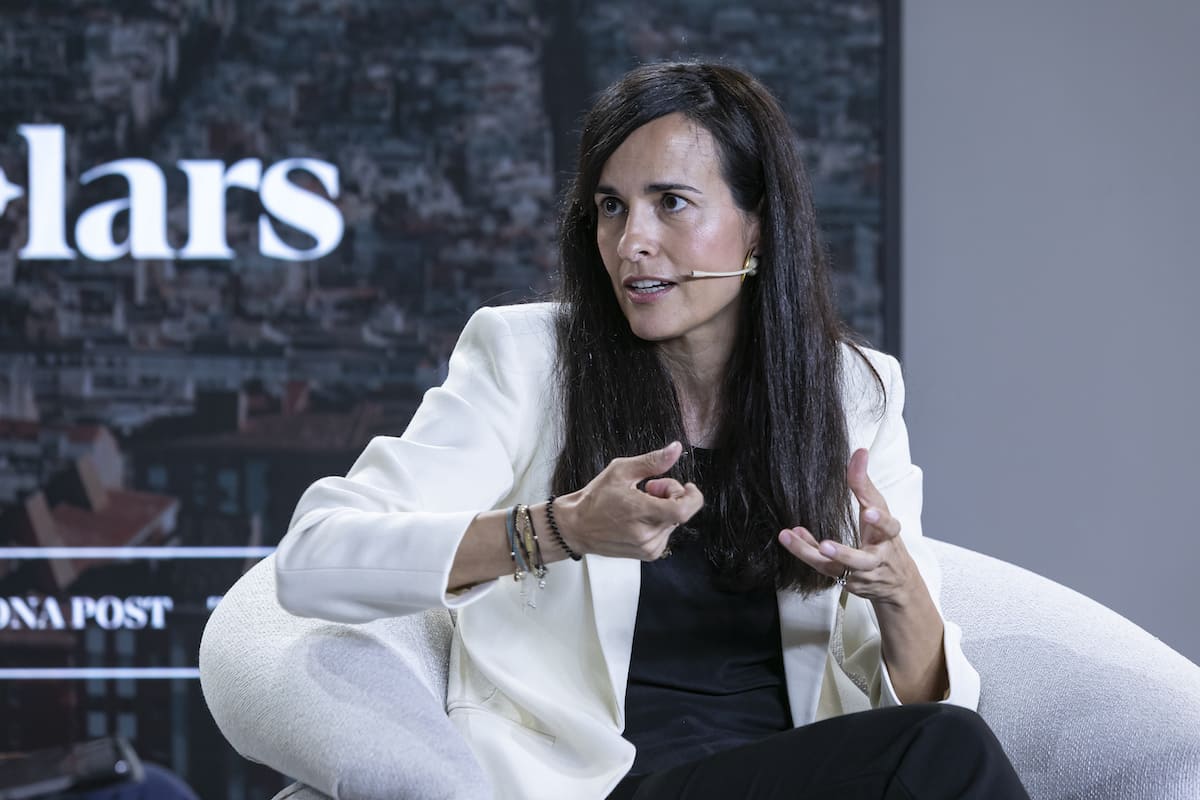
And Miura does not face this task alone: "In ten years, the amount of money allocated to impact investment has grown exponentially," Sarsa stated. And from the balance of recent years, to the challenges of the coming ones: "The biggest challenge is to move from verticality to horizontality," Viloria warned. In this regard, she maintained that the commitment companies acquire through corporate social responsibility (CSR) is positive, "but it is a patch" and not the definitive solution to the change demanded by a more sustainable future.
Given this change, the executive director of B Lab Spain has also identified another great challenge: to stop conceiving this transformation as an element linked to a specific area and start seeing it globally: "It is necessary to realize that everything we do influences". Therefore, "all decisions must be focused in the same direction": one that allows progress towards a more sustainable system both socially and environmentally.

Add The New Barcelona Post as your preferred Google source for free
Stay informed with the latest news.