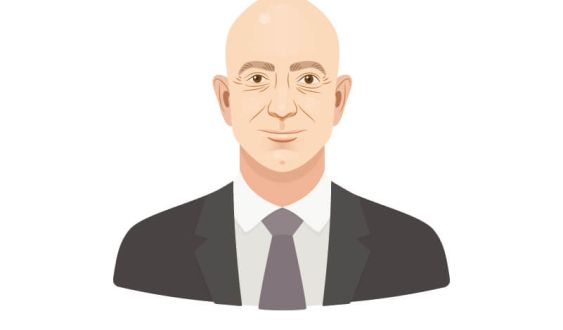
One of the things that Emilio Duró always remembers is the importance of identifying those who know, and doing the same. In today's corporate scenario, one of the figures who stands out most is Jeff Bezos, founder of Amazon, one of the five largest companies in the world and a main protagonist of the current technological and digital revolution in various fields. In his latest and notable book, The WTF Economy, Tim O'Reilly, a technology popularizer, collected some of the insights that Bezos shared in a meeting with his staff to face the challenges of the future.
In these meetings, O'Reilly explained, Bezos always begins by reminding everyone that "it's still day one," a kind of catchphrase that the Amazon boss uses in all his meetings. Once, one of his employees asked: "what will day two be like?" This question led Bezos to, again, explain the central principles that explain the passion and dedication of the Amazon owner in everything he does, and which he has recalled in his annual letters to shareholders: "Day two is stasis. Followed by irrelevance. Followed by atrocious and painful decline." In a somewhat melodramatic tone, Bezos reminded his staff that transforming a sector, an industry, the very way of buying and selling, requires always pedaling as if it were day one. Immediately after, Bezos pointed out four basic tips to avoid this "day two."
First, customer obsession. In line with Peter Drucker's celebrated mantra that considered the customer had to be the center of all processes and activities of an organization. The customer is who gives meaning to the company; the moment a company moves away from the customer, it is laying the foundations for its decline. This, in Jeff Bezos's case, includes anticipation: "even if customers haven't discovered it yet, they always want something better." Organizations focused on satisfying this customer yearning for something better are the companies that innovate and transform the world every day.
Second, a skeptical opinion of proxies, that is, not getting carried away by the trap of thinking that things are going well simply because the organization's indicators and processes are going well. The evaluation of results is always done according to the old norms, which is why we must always strive to go further, demand more from ourselves, and never fall into complacency. What matters are the results, the pay-off in the felicitous expression of Nassim Taleb, and these results must always be subjected to a demanding value judgment.
Third, enthusiastic adoption of trends from outside the organization itself. It is important for any company to be up to date on the great global winds, identify them, know where they come from, and jump on the megatrends and revolutions that can help your corporation grow and improve. Staying out of these disruptive and global improvements can mean being out of the game in a short time. It is essential not to miss out on new sources of value creation, efficiency, and currents of change that are emerging and on which to grow, and which can also be enriched with our own capital stock. A message that reminds us that capitalism is a positive-sum game where voluntary cooperation between economic agents is much more important than competition.
Finally, Bezos reminded his employees and shareholders of the advantages of being a fast and flexible organization, capable of making decisions effectively. In today's accelerated and changing world, it is not enough to just be right; you have to be right and do it quickly. Decision-making is always the most delicate part of a company; it is where the corporation's brain is and where it is determined whether a company will succeed or not.
For Bezos, this is a handcrafted process that must be adjusted to the circumstances of each decision and therefore can hardly be standardized. For example, there are decisions that are reversible, others that are not; the processes in each case will necessarily have to be different. Another key element is to keep in mind that the future is uncertain and information is always incomplete. Bezos points out that decisions should be made with about 70% of the information we consider available. If we have waited to have 90% or more of the information, we have surely fallen behind. Making good decisions means (above all) making them on time.
One doesn't always get it right. Bezos emphasizes the theme of speed in decision-making and then adds that it is equally important to know how to distinguish between good and bad decisions and, with humility and determination, to correct bad decisions as soon as they have been identified. One always learns from mistakes, and if one is quick in making decisions and identifying errors, the result is usually not costly. However, if one is paralyzed in decision-making due to lack of information or because the fear of making a mistake is terrifying, that delay and paralysis always come at a high price. Again, it's about remembering that Amazon always lives in day one: where one is fast, flexible, and corrects errors.
Some interesting lessons to reflect on, not only in the business sphere but also at the level of society in general, where great challenges lurk, and sometimes I wonder if we are not too often stuck in "day two."
Add The New Barcelona Post as your preferred Google source for free
Stay informed with the latest news.