If you are one of Juan Avellaneda's (Barcelona, 1982) 300,000 followers on Instagram, you are never bored. In the same week, you can find him in his stories entering a luxury suite in a Madrid hotel, cooking with Nandu Jubany for a sophisticated kitchen utensil brand, or giving styling advice. "Showing yourself as you are, being transparent and approachable is essential for brand building, but let's not kid ourselves, I also do it because I love it, I've always felt very comfortable in this field," explains the Barcelona designer to The New Barcelona Post. Avellaneda acknowledges that his mastery of social media has been one of the pillars of his meteoric career. The other, his television facet as a contestant on Masterchef Celebrity 4 or as a judge on the reality show focused on image change, Cámbiame, which have made him known to the general public.
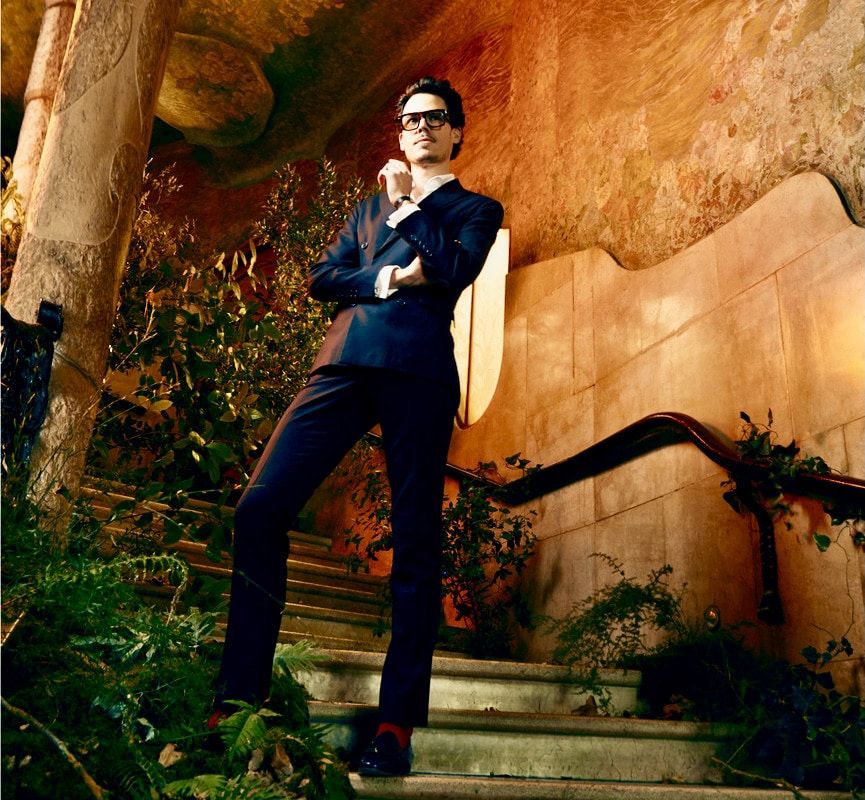
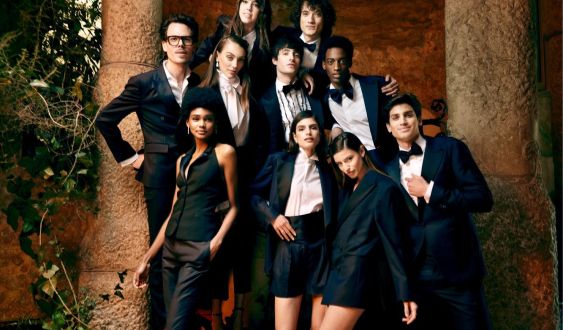
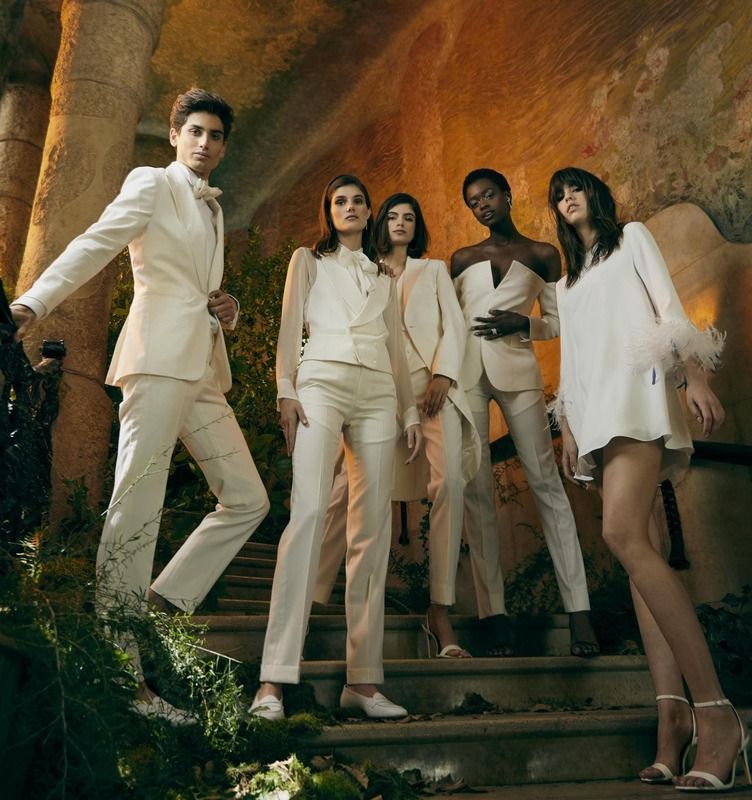
Character and profession merge successfully in the Avellaneda universe, although nothing would be possible without his keen sense for navigating the complex and changing world of fashion. He started in 2014 by placing a few men's pieces in a discreet pop up in Santa Eulalia, and six years later he has opened the 080 Barcelona runway with a Fashion Show where he displays a carefully crafted and elegant capsule collection that traverses an imaginary forest located in the organic Pedrera, the setting chosen by the Catalan Fashion Week for this season.
"Fashion must once again envelop us in beauty"
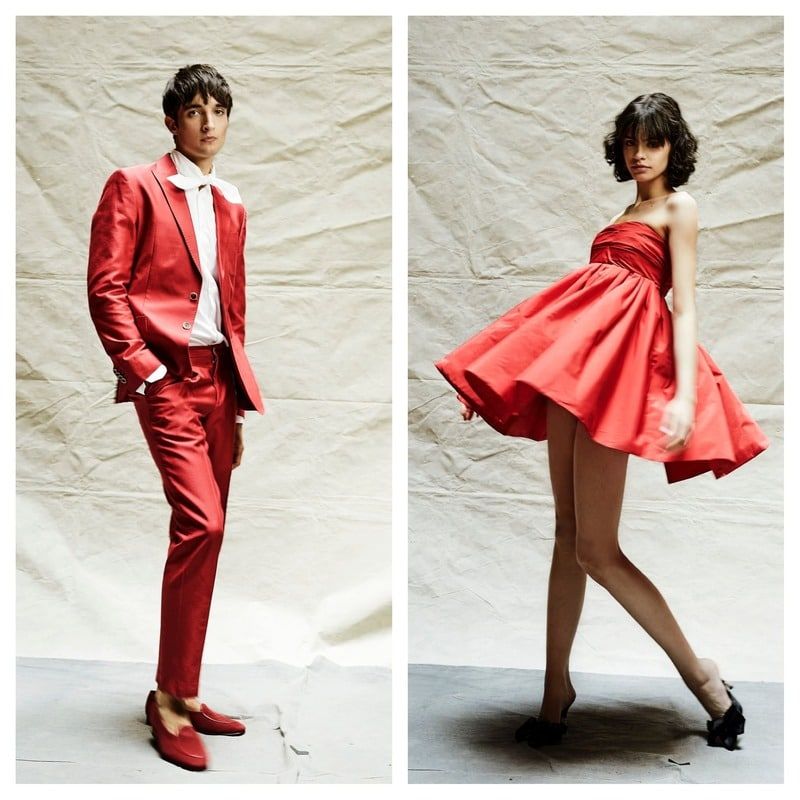
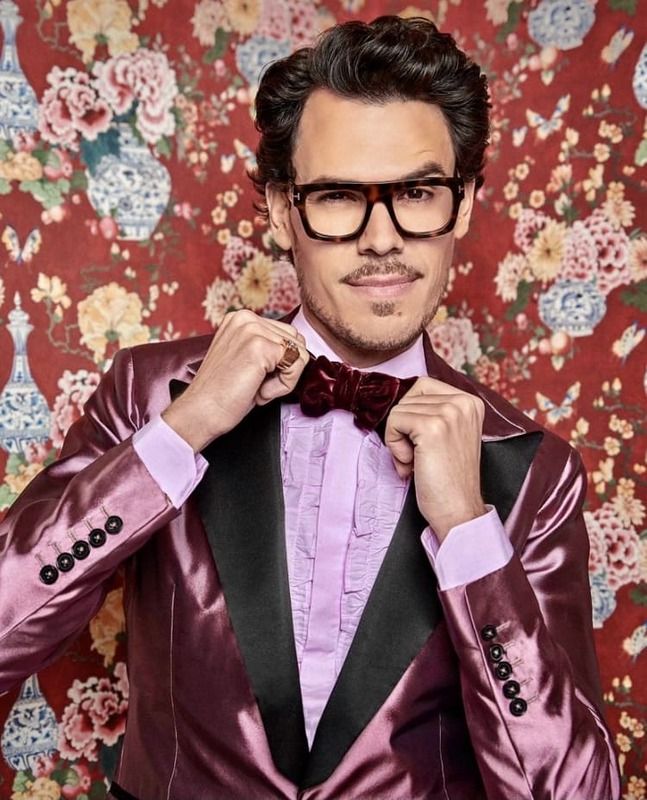
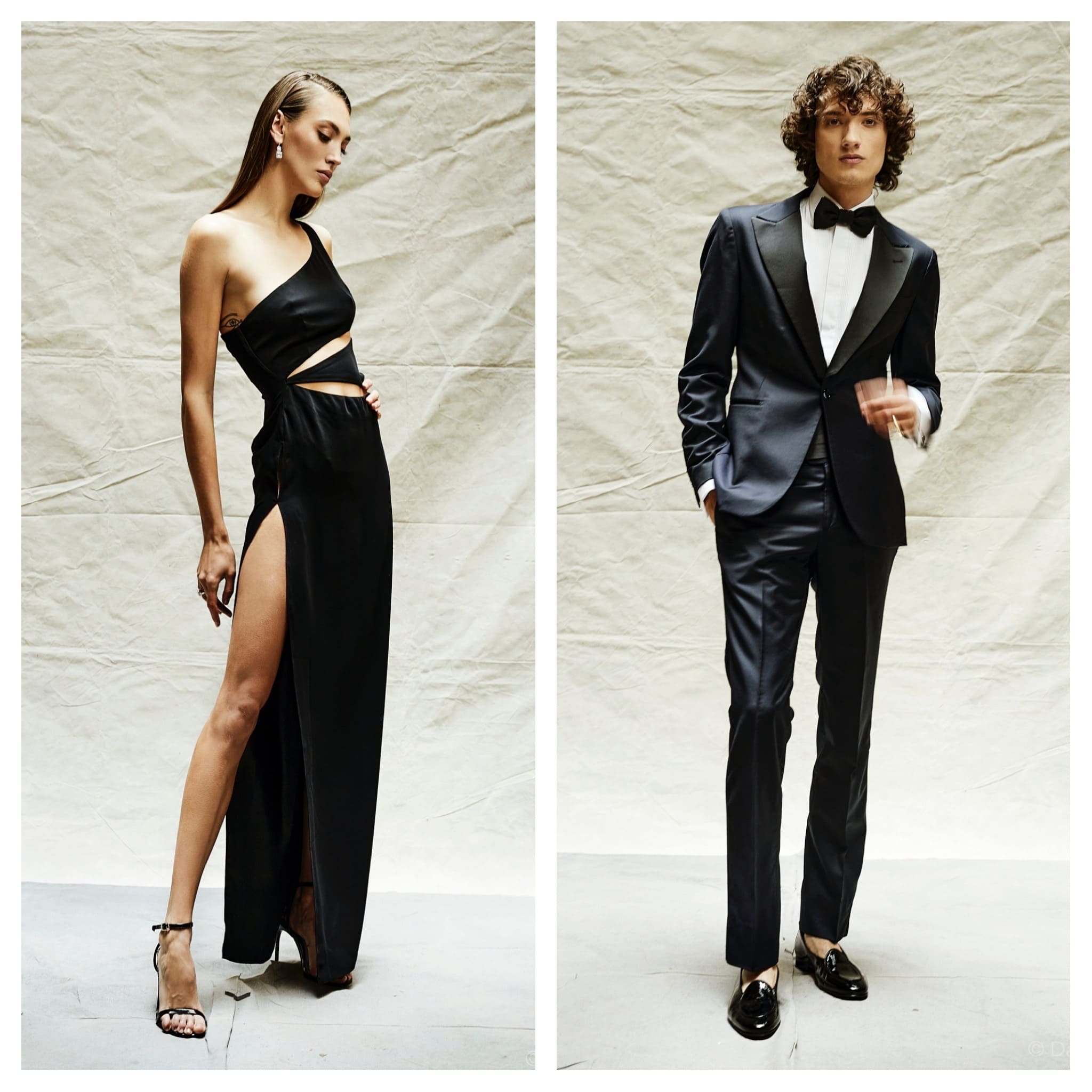
In his proposal (La nuit éclairée) we find sophisticated designs with some surprising twists. Like the feminine dresses that play with masculine sashes. "In times like these, fashion must recover its ancestral function: to envelop us in beauty, joy, fun, and escapism," he explains when asked about the inspiration for the line. "The events of the last year have made us shed ballast to keep only the essential, so I have concentrated on a few elements that condense my vision of fashion and the world." Tuxedos for men and women, prints inspired by Chinese porcelain, glamour, energetic color palette…
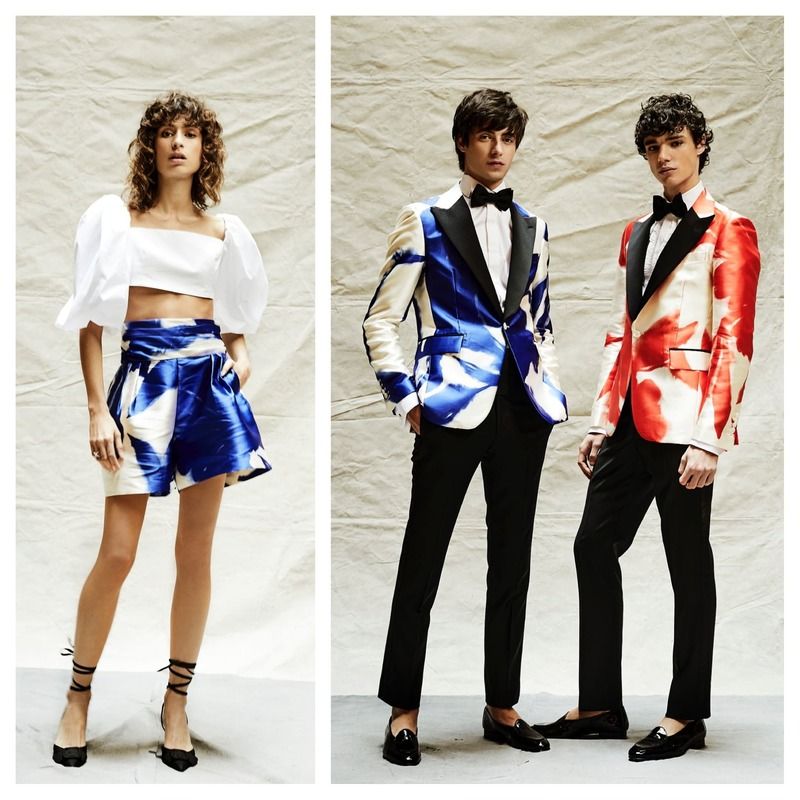
He has not presented a conventional collection. Avellaneda does not produce like a big brand, several collections a year. "When you release so many looks at once, people don't retain everything, and it's also not sustainable," says the designer, who believes in a permanent trickle of pieces ---approximately one a month---, locally produced and available on his website. He has no stock. He manufactures on demand, "and that makes things more human because the client sometimes asks you to embroider initials or shorten a sleeve," he comments. It takes 8 days to deliver and 3 weeks to make a suit. There is also the option of having a completely custom design sewn, and "also, from time to time, a story, a feeling inspires me and I create a capsule collection like this last one from La Pedrera."
It is the second time his clothes have been shown at the Barcelona event. "I like to support the city," he says. The previous one was a month before the pandemic, and it was held as a glamorous party to celebrate the brand's fifth anniversary. Many of his friends (Boris Izaguirre, Clara Mas, Judit Mascó, Carles Francino, Marta Torné…) wore classic pieces from the house.
Designs suitable for men and women, because where is it written that worlds cannot cross? Like those unapologetically fitted tuxedos, with flowers or sequins that have subverted the conservative masculine image in recent years ---"Why can't a man wear a pink suit, a large bag, or Cuban boots with heels?"--- and have brought edgy tailoring to the female body. "I am very much in favor of keeping basic pieces of the house that define your style current, sometimes with some adjustments. Those who have invested in them have the right to continue wearing them. Chanel does this and nothing happens, but if you do it, it's easy for people to question you," says Avellaneda, who includes in this category his pajama-style shirts, or those with Liberty print, all adapted to both sexes. A way to bet on timelessness and also on sustainability. "For me, this is the future."
Leaving banking to immerse himself in patterns
When Avellaneda decided to launch his own brand, he had a stable and very well-paid job in a banking entity. With an engineering background, he had chosen to follow the path that guaranteed him economic security, where his parents' advice and his own education had led him, but he was not happy. He had liked fashion since he was a child. He felt comfortable when, as a child, he accompanied his father and grandfather to the tailors.
An admirer of Yves Saint Laurent and Tom Ford designs, he was 29 years old when he dared to jump into the void. "I didn't know how it would go and I discovered that being an entrepreneur was very hard, but I told myself that there would always be time to turn back. I wanted to try to realize my dream." He trained at the prestigious British school Central Saint Martins, where the irreverent John Galliano and Alexander McQueen studied, although curiously Avellaneda assures that there, more than follies, he learned "how to organize a business." He began working for luxury brands creating men's accessories anonymously. With the complicity of his partner, Sergio Corbera, in 2014 he dared to take another step, to create his brand, "although I was very embarrassed to sign my own clothes."
From the very first moment, when Lluís Sans gave him the opportunity to display his men's leather pieces made with premium material in a pop-up store in Santa Eulalia, he knew how to communicate his work. At that time, he turned to jetsetter friends linked to the world of culture to act as spontaneous models in front of a good photographer's camera: Ramon Freixa, gallery owners Hugo Portuondo and Miquel Alzueta, editor Claudio López de la Madrid, interior designer Jaime Beriestain, Boris Izaguirre, or Esteve Rabat. Back then, he didn't yet dare to use flowers, but he did make denim-style jackets with fine napa leather. "My clothes don't seek noise or circus," he said then, and he assured that Barcelona, where his workshop is located, was one of the most creative and attractive cities in Europe from which to make his way into the world.
One day he discovered that the Rolling Stones' bassist, Ronnie Wood—who had bought an apartment in the city—was wearing one of his jackets; Jaime de Marichalar called him because he had seen his clothes and chose a blue mouton coat… and in 2016 he was surprised when the prestigious fashion publication Women's Wear Daily highlighted his work, stating that he "sought to fill a gap between British and Italian tailoring."
Becoming one's own brand image
His vision of the Mediterranean man, relaxed but also sophisticated, and above all his love for tuxedos allowed him to dress recognized runway faces such as Los Javis, Carles Francino, or Aldo Comas (Macarena Gómez's partner) who dares to wear anything, even that jacket with the lobster embroidered in clear homage to Dalí and Schiaparelli.
Nieves Álvarez also wore them, thus initiating what would be Juan Avellaneda's bet on women's fashion, always with a tailoring aroma and bows of declared romanticism. "She is my friend and my great muse," confesses the designer, who has also made the model the image of his recent bridal collection, a new line of business that can now be found on his website. Their complicity is absolute. It was she who encouraged him to proudly display his designs at social events, on social media, on trips, and he followed her advice, thus becoming his best ambassador.
In his current life, there are collaboration projects with beauty, jewelry, and even tableware brands. His personal brand is imprinted on multiple projects, especially after appearing on the small screen. Participating in Masterchef Celebrity 4 added Tamara Falcó to his list of friends, with whom he established so many synergies that they even signed a clothing collection together. "We connected right away. She is very funny and witty. Now we hardly see each other due to the pandemic and because she is very focused on her brand and on television," he says of his friend, whom he supported by phone when her father, Carlos Falcó, passed away last March.
The television experience in Cámbiame on Telecinco helped him realize "how lost people are when it comes to dressing," and from there Poténciate (Grijalbo) was born, a manual to lose the fear of experimenting with clothes. "Women have many insecurities related to their bodies, and men fear looking effeminate," he says. A lover of the "fun and eccentric" 70s, Avellaneda is a convinced detractor of tracksuits, even if the wearer tries to give it a glamorous touch: "It bores me, I can't stand people being careless when dressing." So, aesthetically, the confinement has been terrible for him.
Pandemic time to reflect and reorder
The pandemic caught him at the peak of work. "I didn't stop for a moment," he admits. For this reason, although it is a misfortune for your company to suffer an forced slowdown, he assures that the break has been good for him. "I have been able to reflect calmly, think and reorder my business in different areas such as the web," he explains to The New Barcelona Post. He has reaffirmed his commitment to quality timeless pieces, "which is what we need most right now," and has reinvented his online store. "That's when I decided I wouldn't have stock."
Hyperactive by nature, he has also decided that he will not plan long-term, and, although he has projects in mind, he prefers to be cautious and not talk about them. Of course, he will not start business ventures outside his immediate geographical area, "between Spain and Latin America there is a connection, we are united by the same language, aesthetics and color, and that must be taken advantage of."
On Instagram, he has been very active during this time, sharing everything from style tips to recipes from an experienced cook. He joined forces with Vicky Martín Berrocal to make gowns and masks for healthcare workers. On Instagram, he allows himself to express his feelings, even when he's not having the best day. Not everything in Avellaneda's life is rosy. He posted the "faggot" painted on his door on social media to denounce cowardly aggressions made from anonymity, and he has also made public that he suffered testicular cancer in the past so that people facing such news do not fear verbalizing it aloud and asking for help and advice from those who know.
The future of fashion? For Avellaneda, it means overcoming the tracksuit's moment of splendor. "Now, even if you just go out to dinner at a friend's house, you dress up a lot," he says, convinced that we will emerge from this wanting to show off. "Hedonism and a more elaborate aesthetic will triumph, without paying attention to what others say." The pandemic has left us without some physical stores of fashion brands. "I believe the future will be a mix between the physical store and online sales; it's clear that brands will have to focus on generating gratifying experiences for their customers." The 080 is one of them.
Add The New Barcelona Post as your preferred Google source for free
Stay informed with the latest news.