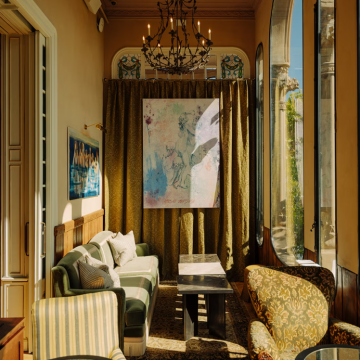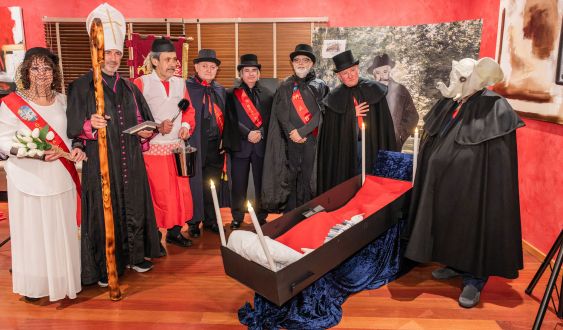
The Elephant receives us at the Reial Cercle Artístic. In other circles, he is known as Robert Cristòbal, but in the association he presides over, everyone knows him as the Elephant. There, members are not known by their usual name, but by an animal. It is Arca de Noè, which is preparing to celebrate its first century of activity as a recreational and cultural association, with an origin that intertwines with that of the space where the Elephant tells us its story, where dinners are feed; restaurants, stables, and everyone needs a godfather, a baptismal ritual, and to have done something wild.
In 1927, journalist Joaquim Ciervo set out to cheer up a depressed and sickly friend; it was Santiago Rusiñol, in delicate health and far from the intense cultural life he had lived until then. Ciervo proposed an idea to him to get out of the spiral of discouragement and boredom: why not create a comic society? The idea came with a concrete proposal: to take advantage of the fact that they shared animal surnames —ciervo (deer) and Rusiñol (nightingale)—, to create a Arca de Noè made up of people with animal names and surnames.
Ciervo encouraged Rusiñol, and thus began an association that, a century later, promotes popular culture through humor, with initiatives ranging from cultural gatherings and support for Catalan traditions, such as the Tres Tombs, to collaboration with city entities with animals as a common thread, award ceremonies, and the parade of the Home dels Nassos —yes, they are in charge of parading him on the only day of the year he goes out into the street—. Their dinners are feed; restaurants, stables, where their members meet nine times a year. There are 400 of them, with about 145 active members.

But not all of them have animal names anymore; this rule mutated shortly after Ciervo and Rusiñol launched the entity: "When they had been going for eight or ten months, the animals of Barcelona had run out, and they started to open up, but also with certain requirements." It was necessary to have a special sensitivity towards culture and the city, and to have done an "animalada" (something wild): the Elephant's was having been a founding member of the Catalan scouts, a feat with which he became part of the Ark 25 years ago.
With this inclination towards culture, and with Ciervo and Rusiñol at the helm, the entity attracted prominent personalities from the cultural world and other areas of the city, and beyond: “Before the war, requests to join were received from all over the world. One from a boxer from the United States was rejected because he was not the profile of the Ark.” And it is, to be part of it, apart from cultural sensitivity, another requirement was (and is) to have a sense of humor. To enter, one must also have two endorsements, attend two feeds, a godfather, and a baptism ritual, with the animal name with which the new member feels identified, or the one that the members consider most suitable for them (without repeating any). Initially, moreover, it was reserved for men, and the entity opened up to women two decades ago.
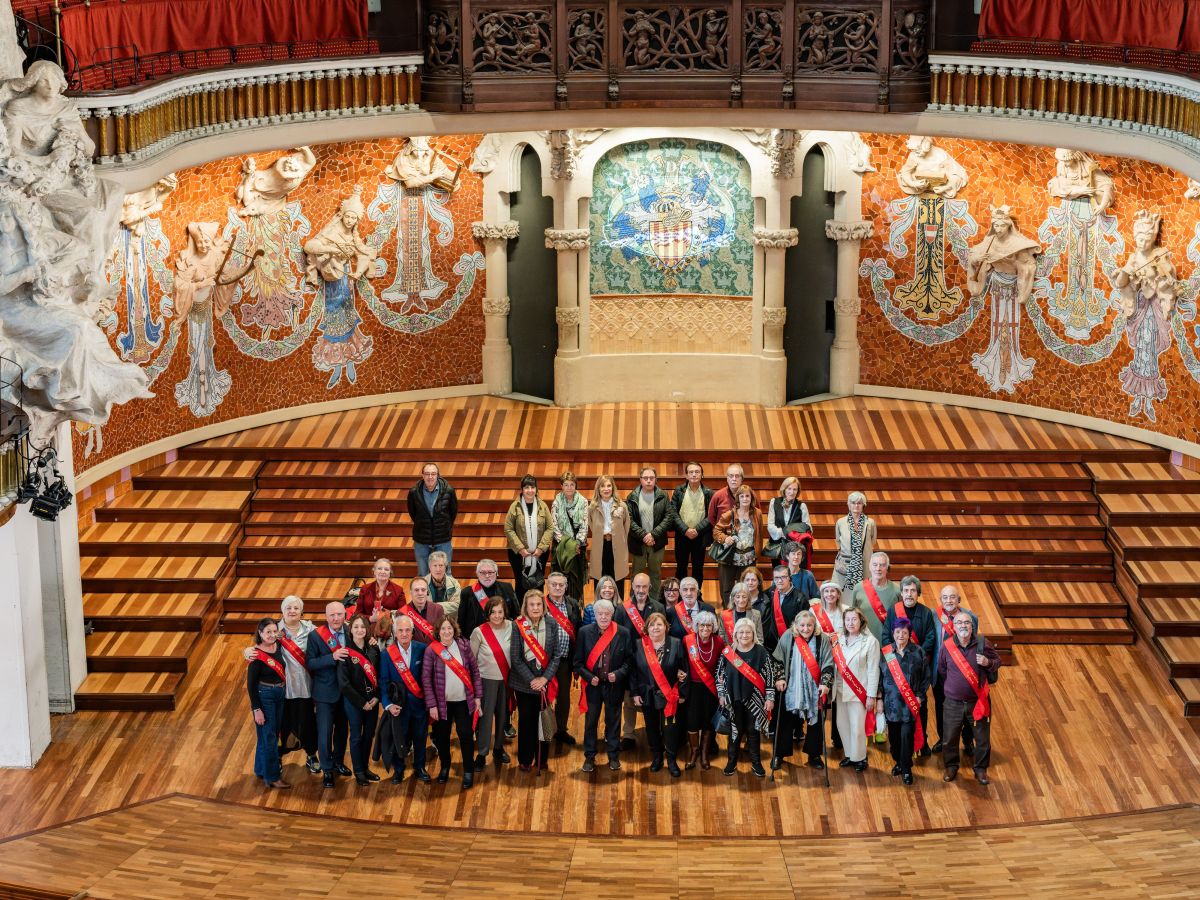
With the re-baptism, in the Ark, positions, surnames, and careers are left outside the stable door. Mayors, artists, journalists, athletes, businessmen, and more anonymous profiles may have arrived there (or not) with a list of merits, but within the association, all are animals. It is one of the peculiarities that has made the Ark a unique meeting point in Barcelona: during the feeds, hierarchies blur and real names give way to animals. A mayor, an artist, or a Barcelonian without public projection can sit next to each other and, for a few hours, leave their roles behind.
To enter, one must have two endorsements, attend two feeds, a godfather, and a baptism ritual, with the animal name with which the new member feels identified (without repeating any)
And it is that, throughout its century of history, among the members of the Ark there have been prominent names such as Casas and Tàpies or, also, most of the city's mayors, already members of the Ark before reaching the mayoralty. Professionals from all fields, from artists to journalists and athletes, and politicians of all colors have passed through the Ark, which serves as a meeting point for prominent and anonymous Barcelonians who here know each other by their animal name and not by their own. “The goal is to have a good time, doing culture, and also with a lot of humor and irony,” even with performances at their feeds and with a very recognizable aesthetic: the Ark's gatherings have a dress code, with a red band with the name of each animal, combined with black clothes and hat in winter, and white and straw hat in summer.
“L’Arca has always wanted to be something that gives value to society and to Barcelona”, Cristóbal highlights. This value takes the form of culture and the preservation of traditions, but also as a meeting point for influential profiles in the city, away from the spotlight and with a relaxed and festive atmosphere. In fact, in the original statutes, a rule was established regarding topics of discussion: “One could not talk about politics, religion, or bullfighting, because these were topics that generated confrontation”. Now, as Cristóbal explains, one can talk about everything, from this tone of humor and irony, and taking into account that the diversity of its members allows it to remain a link between profiles from all fields, even politicians of various colors.
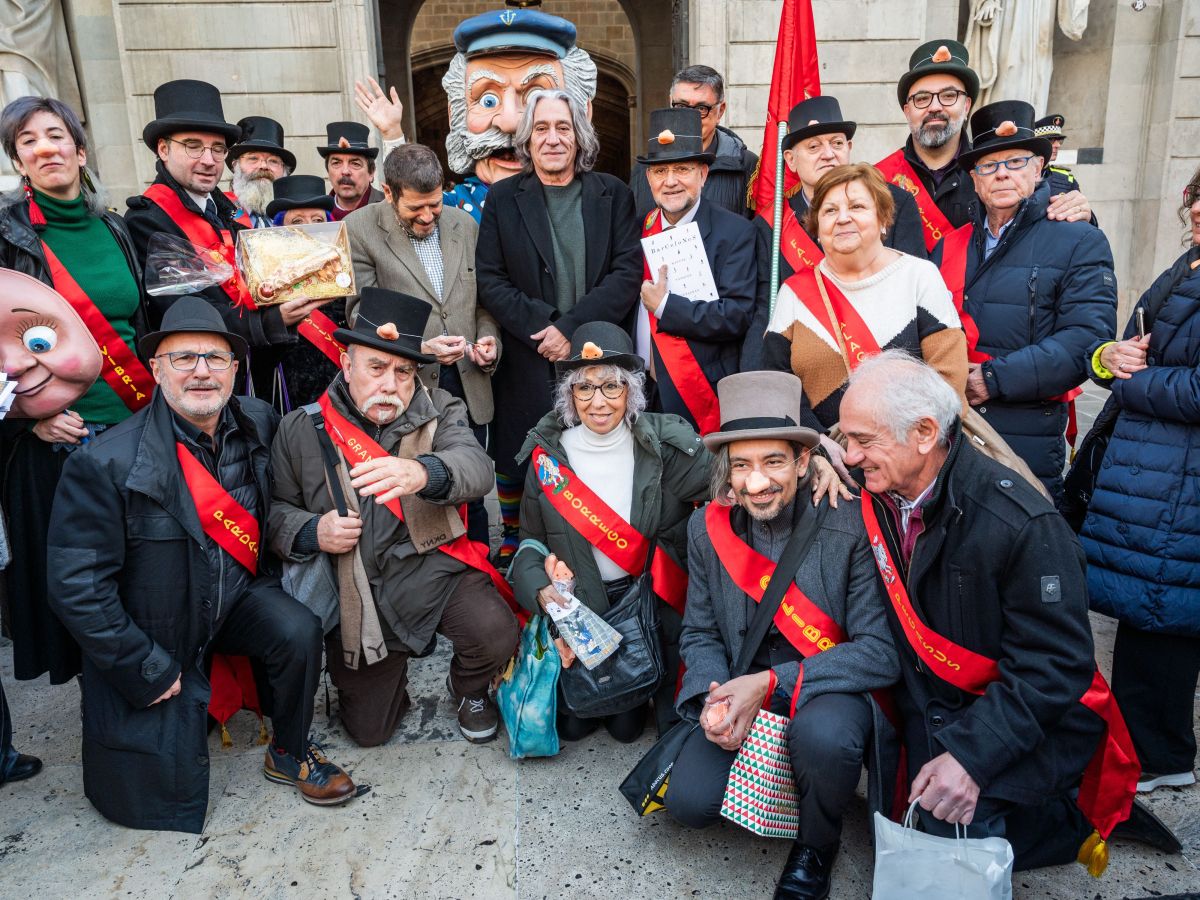
This value is also granted through a consolidated relationship with the Barcelona Zoo, where it promoted the installation of the monolith of Félix Rodríguez de la Fuente when he died and where it sponsors animals, from Floquet de Neu to the giraffe Thembi. L’Arca also sponsors a police dog and a horse from the Guàrdia Urbana. It collaborates in the organization of the Tres Tombs, and recovered the figure of the Home dels Nassos, who appears on December 31st and also runs the Cursa dels Nassos. The entity also brings value to the city in the form of awards: since the 60s, it has awarded the Pantera and Gasela journalism prizes —to the most aggressive journalist and the most agile and fast— and, since 2002, it also presents the Paparra prize, which distinguishes entities that persistently defend their goals.
“If L’Arca has survived until now, it’s because it has always known how to adapt to the times”, defends the Elephant. The same goes for culture: “Culture must keep changing so that it doesn’t get lost”. While preparing for a year of celebration for its centenary, L’Arca looks to the future to continue preserving and promoting this culture and the city of “animalades” (wild acts/antics), as it has done since it was born with animal names of modernist soul.
Add The New Barcelona Post as your preferred Google source for free
Stay informed with the latest news.