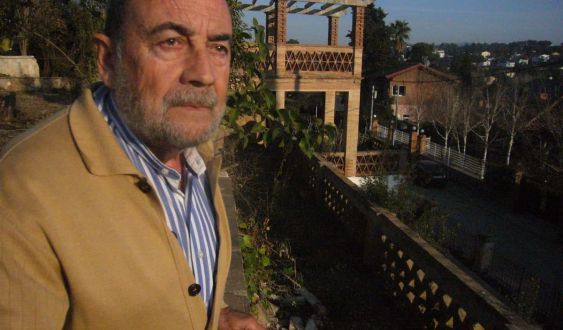
He arrives at the Bar late in the morning, at his unhurried pace, which characterizes him as a writer who has taken his time to shore up the corpus of an incomprehensibly minority work.
His work includes historical novel titles such as Lesbia mía, starring the poet Catullus; La encina de Mario, whose main character is Cicero; El corzo herido de muerte, focused on the figure of Mariano José de Larra; or El silencio de Goethe, where the philosopher Schopenhauer explains his world and the world to the little dog and the reader, under the Jupiterian gaze of the Poet of Weimar. A work that also has one foot in the essay, as in Del suicidio considerado como una de las bellas artes.
--- What are you going to have?
--- Beer or wine, depending on the tapas you invite me to
Born in Barcelona in 1939, Antonio Priante settles at the bar with his gaze fixed on the immensity of a knowledge that has pushed him to write, "because I haven't made the decisions, rather they have made me, as always happens, although few admit it. I have the impression that I have been led by life. For example, starting to write was not the result of a pondered decision. It was imposed on me by the same destiny that governs my life. And it is always like that in artists and, I believe, in the rest of humankind. That's why asking a writer, a real one, not one who sniffs out trends or consults with the editor before starting to write, why he writes, is like asking a child why he plays."
Thus, he went from being a law professor to a translator until, at the age of 45, his activity focused exclusively on historical narrative, journalism, and essay.
An author for the happy few
Antonio Priante considers himself "a normal person" who was born "in a somewhat abnormal country just after a fratricidal war." As a child, he confesses to having been an obedient child, "then a revolutionary by word of mouth or, more than anything, by book," later he remembers himself as "a more or less integrated professional, but always faithful to a strange vocation born already in the time of an obedient child and today converted into a few books that only the happy few read, as Stendhal would say."
He is satisfied with the slow pace of his career "and with the late and statistically modest achievements. I am very proud of my family and some of my works."
--- And now are you involved in any new thing?
--- At this point, I am no longer concerned with any other movement than that of making my work accessible to all possible interested parties.
Total Barcelona
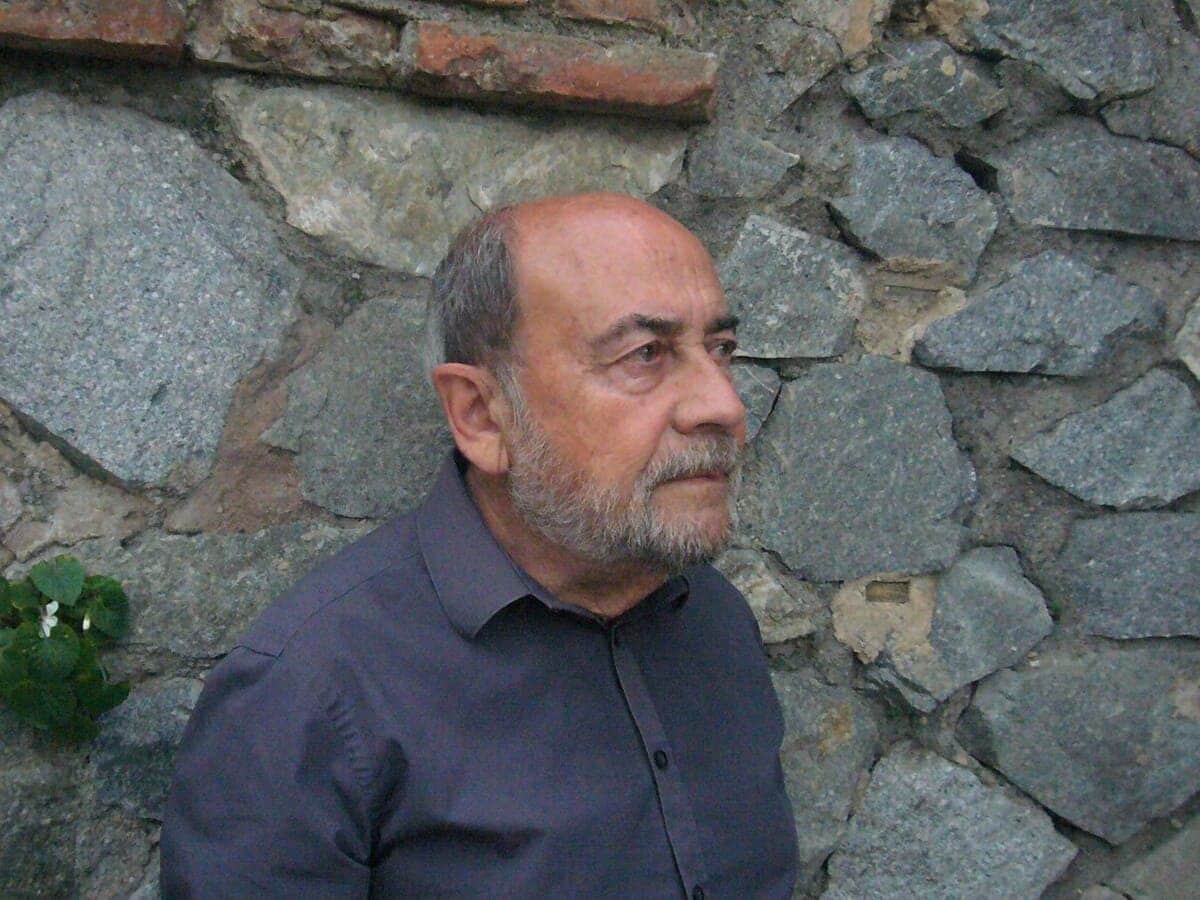
"My relationship with Barcelona is total!" ---exclaims the regular. "It's my whole life, including neighboring Valldoreix and the brief, distant, and nostalgic San Fernando-Cádiz".
And speaking of whom it is, the Bar's clientele asks him to explain, with his knowledge and mastery, some historical anecdote of the city. Antonio accepts and warns that "it is a historical anecdote that tells us, without saying it, about the power of good literature."
The impromptu audience huddles, in silence, around the speaker.
"Once upon a time, at the dawn of Christianity in Europe, back in the 4th century, a very cultured bishop of Barcino named Paciano, spent his life balancing between the love of Christ and the love of letters, to the point that the sermons he addressed to the people, and which he later published, had a clearly Ciceronian air. On one occasion, determined to eradicate old customs and celebrations linked to the worship of ancient gods, he delivered and published a sermon against the festivities that used to be celebrated at the beginning of the year, in which people dressed up as deer and other animals and indulged in all kinds of excesses; what was then called 'playing the deer'. A sermon so well constructed, descriptions so beautifully achieved, that the effects were soon seen: the following festivities were more successful than ever. 'It seems that no one knew how to play the deer well until I taught them,' poor Paciano was heard to lament."
As if it were a concert attendance, he is asked to tell more, to tell another or others. To which Antonio Priante smiles with a hint of shyness, before declaring:
--- Brevity is one of the great virtues, in art and in life. And I think I've already gone too far.
And then he continues with his drink and his tapas, which may eventually lead to a full meal.
Add The New Barcelona Post as your preferred Google source for free
Stay informed with the latest news.
