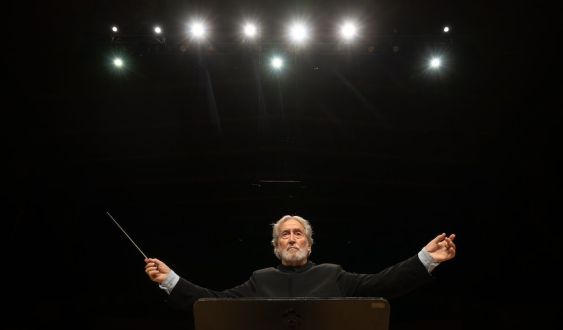
How many times does the 21st-century music lover get the chance to discover a profoundly classical work—conceived by one of the greats—and yet, "new"? If to this infrequent situation, to the pleasure awakened by the surprise of the discovery itself, we add a rigorous and overwhelming interpretation, the experience transcends the merely pleasurable. It mixes with a sensation of strangeness and disbelief, more akin to dream activity, when the never-before-seen coexists with a certainty that feels absolutely real. We could, of course, debate or question whether Felix Mendelssohn sits at the table of the Beethovens, Bachs, or Mozarts; but, at the same time, what is unquestionable—Maestro Savall recalled at the end of the concert, microphone in hand—is that this composer's artistic reputation has always been affected by extramusical issues, related to his family's spiritual tradition—of Jewish origins—and his apparently comfortable existence, an image that absolutely did not fit with the typical attributes of the romantic creator.
To help challenge that image, and spread Mendelssohn's true greatness, the Catalan maestro staged a work that was fascinating and thunderous in equal measure: The First Walpurgis Night, a secular cantata with text by Johann Wolfgang von Goethe, which he adopted, proving—once again—his spiritual open-mindedness and his deep roots in the sensibility of the era; close to the most visionary artists, but also to philosophers like Schelling, Hegel, or the poet Hölderlin—fellow students of theology—who conceived Geist ("spirit") as a principle inserted in contrasting forms in nature and in civilizations.
That is a piece with choir and also soloists, which in its instrumental introduction already develops with polyphonic vehemence: a sharp string counterpoint, rhythmically framed by the timpani and the menacing interventions of trombones, sets the stage for the ritual that is to take place after the "inclement weather" (Das schlechte Wetter), already with the "arrival of spring" (Der Ubergang zum Fruhling), which the druid will announce first.
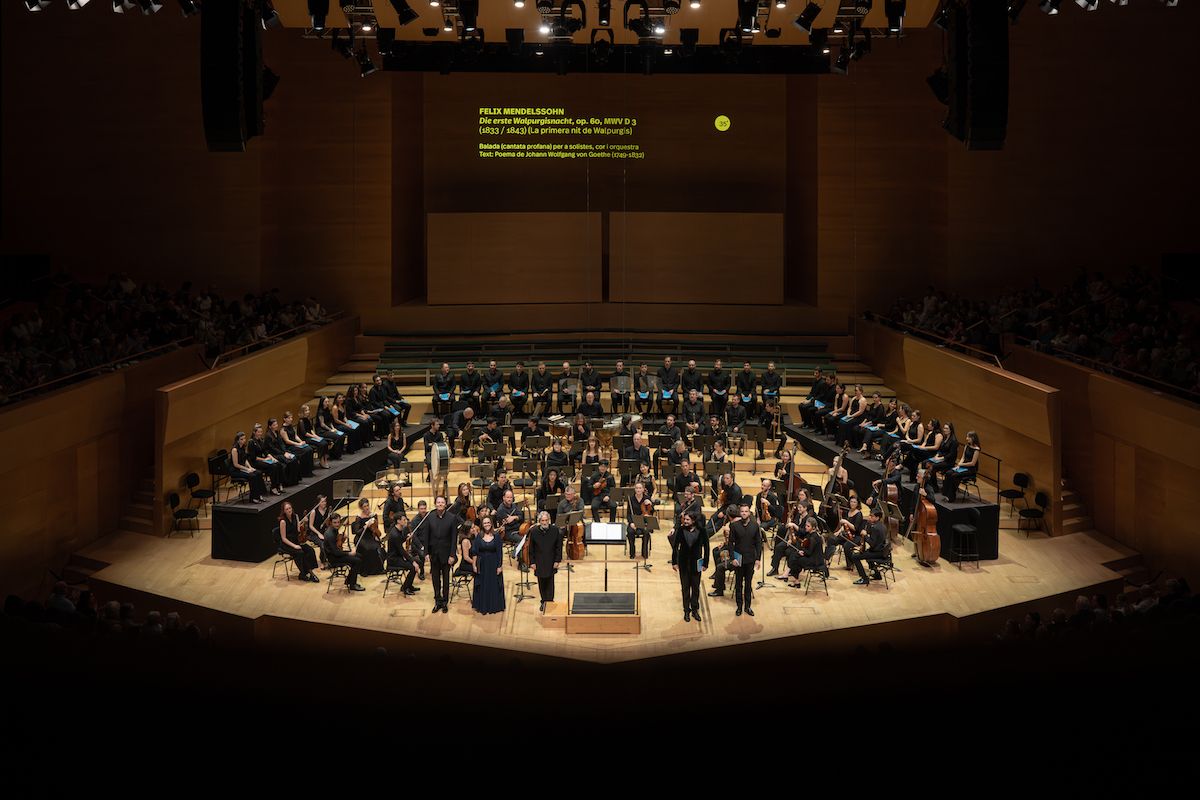
The intervention of the female section of the Cor Nacional de Catalunya, located on either side of the stage in a most opportune manner, immediately caused an impact on the listeners, perceptible in the atmosphere of the main hall of L'Auditori. The quality of this celebratory intervention ---uttered as if to conjure the benevolence of the elements, with a charming spontaneity--- surely transported some listeners to more recognizable places; other sacred-themed choral pieces composed by Mendelssohn, as well as his Symphony No. 2, 'Lobgesang' ("Song of Praise", which, to commemorate Gutenberg's invention of the printing press, incorporates texts from the Lutheran Bible, made accessible to all people), or the music conceived for Shakespeare's comedy A Midsummer Night's Dream.
Unlike the latter, in Die erste Walpurgisnacht the drama seems to unleash, imminent, with the rain of pagan imprecations that will only be appeased by the certainty of love ---the "light"--- at the end. When the priest interacting with the choir establishes a transcendent truth, wielded from the Christian tradition, but extrapolable to other forms of spirituality: "Your light, your light, it is always sure!".
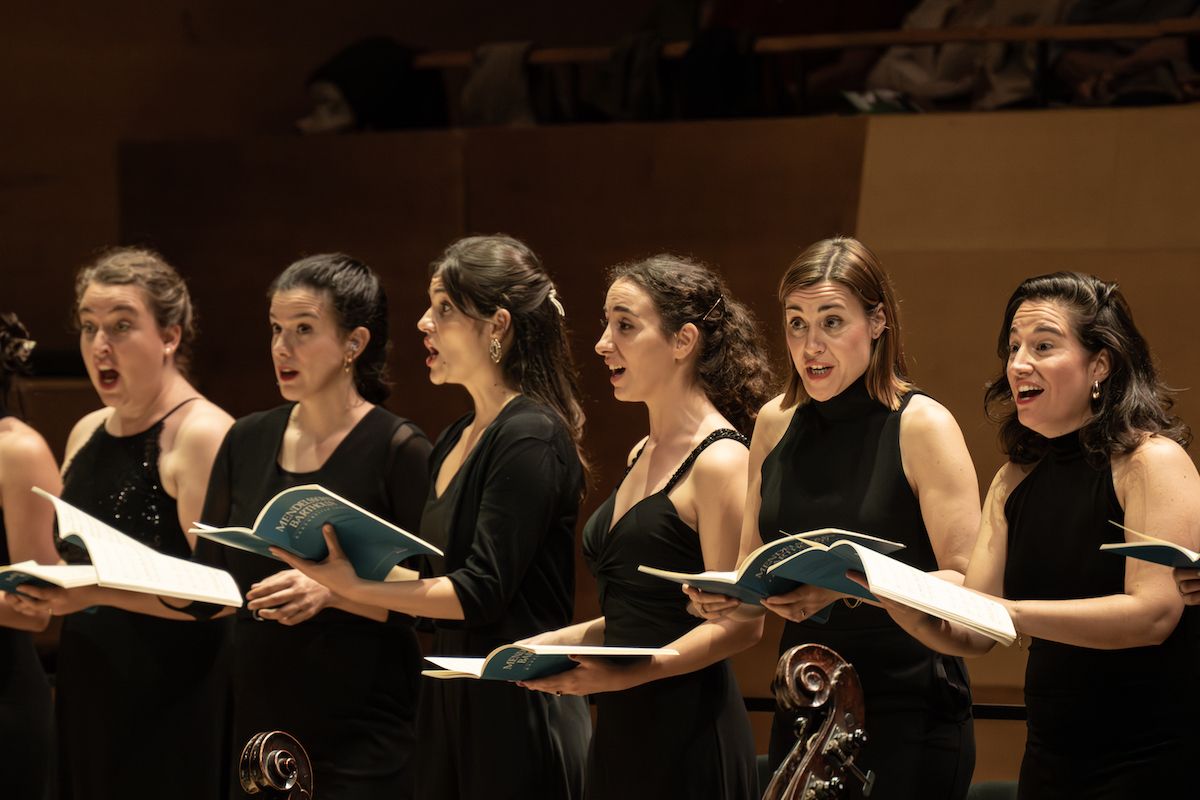
The fascination with pagan liturgies, exemplified in the 20th century by a work as disconcerting -at its Parisian premiere, at least- as The Rite of Spring, is already present in this work from 1833. At L'Auditori no hint of scandal was perceived among the attendees, but no one was left indifferent by the furious musicalization of ritual passion, in forms of religiosity perhaps primitive, but which seek a type of connivance with divine designs or the control of nature. As the sister of Savall's late wife, Montserrat Figueres, confessed to us after the concert, many "did not know this Mendelssohn."
A composer often labeled "classical" for his tendency towards balanced management of musical energies, typically unleashed in the Romantic era ---he was a strict contemporary of Schumann or Chopin---, and who rescued from oblivion capital works of the current repertoire such as Johann Sebastian Bach's Passions; but who also, after the death of his inseparable sister Fanny, composed works as harrowing as the Quartet in F minor, compared to those of late Beethoven and even Janacek, for its anguished expressionism.
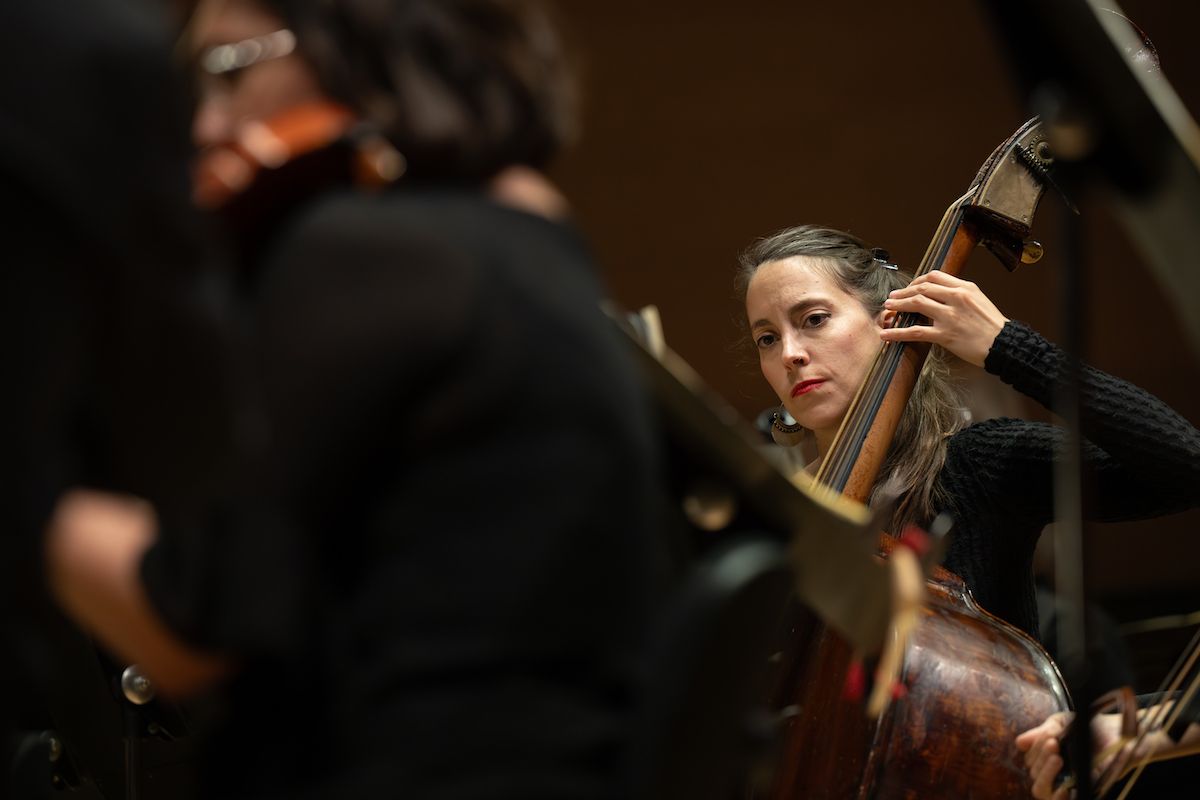
"The furious musicalization of ritual passion, in forms of perhaps primitive religiosity, seek a type of connivance with divine designs or the control of nature"Returning to L'Auditori, before Jordi Savall's recovery of this marvelous score ---in which ritual, religiosity, and spirit are re-signified, under the influence of the undeniable alchemy of musical affection--- an excellently worked version by the orchestra of the Symphony No. 3, "Scottish". As in the case of the choral ensemble, tutored by Lluís Vilamajó, is appreciated in The Concert of Nations a regeneration of its members, with the presence of a high proportion of young musicians, who offered outstanding performances; which makes us think about the continuity of the project developed by Savall for decades, and which currently has the assistance in direction of Luca Guglielmi, and with Lina Tur Bonet as concertmaster. Beyond the use of period instruments, historicist criteria could already be appreciated in the reading of the popular symphony: incisive attacks, agile inflections, and a "raw," shamelessly unvarnished sound. Mendelssohn considered that the work should be performed without interruptions in its four movements, and Savall did so.
A work that evokes rugged landscapes, subjected to the inclemency of the elements, as well as the disconcerting truth whispered by the ruins: the validity of a mythical past, that of timeless grandeur, in contrast to the experience of the perishable. On his visit to the British Isles in 1829, Mendelssohn, who had read Walter Scott and was familiar with the falsely historical poems of the bard Ossian, was imbued with all of this. The meditative Adagio that opens the symphony will be transmuted into Allegro agitato, in which passion is unleashed with a characteristically frantic rhythm.
"A work that evokes rugged landscapes, subjected to the inclemency of the elements, as well as the disconcerting truth whispered by the ruins"Between both extremes, some of the most intense states of the soul for the romantic mentality will unfold, until the delicate return to the primordial element - signaled by the clarinet - practically at the moment of closure. The capacity of music to move us is not an invention of the romantic mentality. If those landscapes are credible, it is not because they exist indeed, but for their metaphorical reality; because they explore and condition the nooks and crannies of our inner world, in not a few occasions difficult to identify and communicate with concepts.
If in The First Walpurgis Night we "see" the intervention of men and women to dominate or be aligned with the designs of nature or divinity ---as well as the conflicts generated by the disparity of criteria in the control of the uncontrollable--- in the "Scottish" Symphony the individual stands as both spectator and protagonist, seeing himself looking at a landscape that encompasses him -as in a painting by Caspar David Friedrich-; in the perfect mirror that nature holds up to him, and which exposes each of his affections to light.
Between the vigor of the initial movement and that of farewell ---a return to the matrix element--- Mendelssohn inserts a Vivace non troppo, which illustrates his tendency towards the scherzo and, above all, a slow movement that decants the essence of romantic drama with alarming efficacy. The main melody, light and even balsamic, is interrupted ---in critical caesura, repeatedly--- by the martial intervention of brass and percussion, which intone a funereal declamation. A celebration of a glorious "has been," typical of the hero who is no longer among us---nor, even more gravely, the possibility of being one--- but who, in accordance with the vibrational reality of the romantic Geist, endures forever.
Add The New Barcelona Post as your preferred Google source for free
Stay informed with the latest news.
