
Nelson Freire's fingers join Martha Argerich's to bring to life Franz Liszt's Hungarian Rhapsody No. 12, at the moment when the philosopher, writer, and researcher in Education theory Anna Pagès leans on the bar to order a glass of Port.
The author of volumes such as On the Edge of the Past: Hermeneutic Philosophy and Cultural Transmission, On Forgetting or Dining with Diotima: Philosophy and Femininity, smiles at the proximity of a Sant Jordi where she debuts as a novelist with Aquella nena de les paraules (Univers). The work addresses the courage and truth of words embodied in a girl who defies the silences of a post-war world full of latent pains, fragmented memories, evasive glances, and mutisms with pieces of shrapnel, those that never heal.
"Teaching fascinates me, but writing literature has been like crossing a mirror to see what's on the other side. And there's a lot of truth!" she explains while savoring her glass of fortified wine. And, perhaps, this foray into narrative is another way Anna has of transcending silences to explain our world and ourselves to us, to be honest and nuanced, looking beyond the absence of words. By communicating, we live lives and embrace otherness. We discover all those other worlds that are also in this one.
"Traveling has been an essential turning point for me, both geographically and between languages. I like to speak the language of the other and to know other ways of interpreting the world. In my daily life, I read in French, English, Italian, Spanish, and Catalan." Perhaps, educating, being educated, is above all, that. "In general, I like to ask," she says. And in the answers is the salt of a life with a thousand and one languages to be spoken and heard.
When teaching is not precisely bad
"I work with young people who are training in education and in physical and sports sciences at Ramon Llull University. I supervise some doctoral theses and also read theses supervised by others, so I formulate questions from the evaluation committee," argues this Barcelona native, author of several academic articles on Philosophy of Education for publications such as the Journal of Philosophy of Education of Great Britain or Le Télémaque, to which she adds a facet as an occasional lecturer and collaborator in general press. The point is not to be silent, not to allow silence to prevail and, with it, the lack of reasons, the lack of truths, the lack of words.
Pagès's first novel addresses the courage and truth of words embodied in a girl who defies the silences of a post-war world"In 2021 I was awarded the Premi Vicens Vives for university teaching quality. This award is a public recognition of my activity as a professor. "When they granted it to me, I thought that, maybe, teaching is something I'm a bit good at.", smiles.
— Well, you're not bad at it, no. And now, what are you involved in?
As it could not be otherwise, given who she is, the question has different answers. "I have started a fellowship with Emma Williams, a colleague from Warwick University, in the United Kingdom. She is much younger than me and is pregnant, speaks softly and gently, and is extremely kind. We are developing a shared project titled How to find one's own language?, a research halfway between mental health, art, and education," she replies.
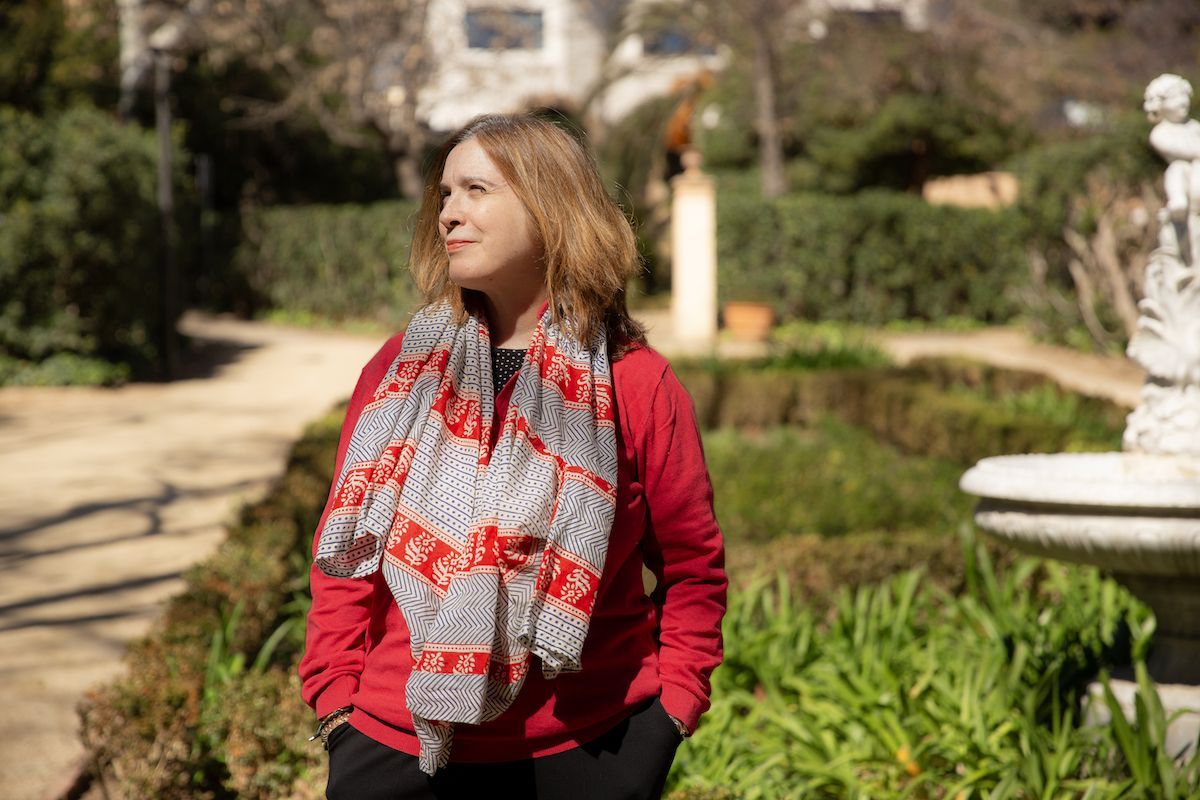
Anna Pagès adds that with her group of students in Education, they are designing "a project with the Espai Polivalent of Cáritas Diocesana, in Roquetes, to provide educational reinforcement in mathematics to children in vulnerable situations." And there are no two without three. "With my group of students in Physical and Sports Sciences, we are editing a podcast in which we address issues such as inequality, gender, biopolitics in current sports. In reality, the issue of sports as a symptom of cultural malaise."
The starting and returning point
Born and raised in Barcelona, the parishioner has never stopped considering it her city. "Barcelona sempre és bona", she recites cheerfully, although, as so often happens with those from here, there is ambivalence in her love for the city. "It has been a place from which to travel to other places. Sometimes I haven't wanted to leave. Other times I haven't wanted to return." Especially when she sees "so many people living on street corners and sleeping on benches. The inequality and poverty that can be felt in so many streets saddens me."
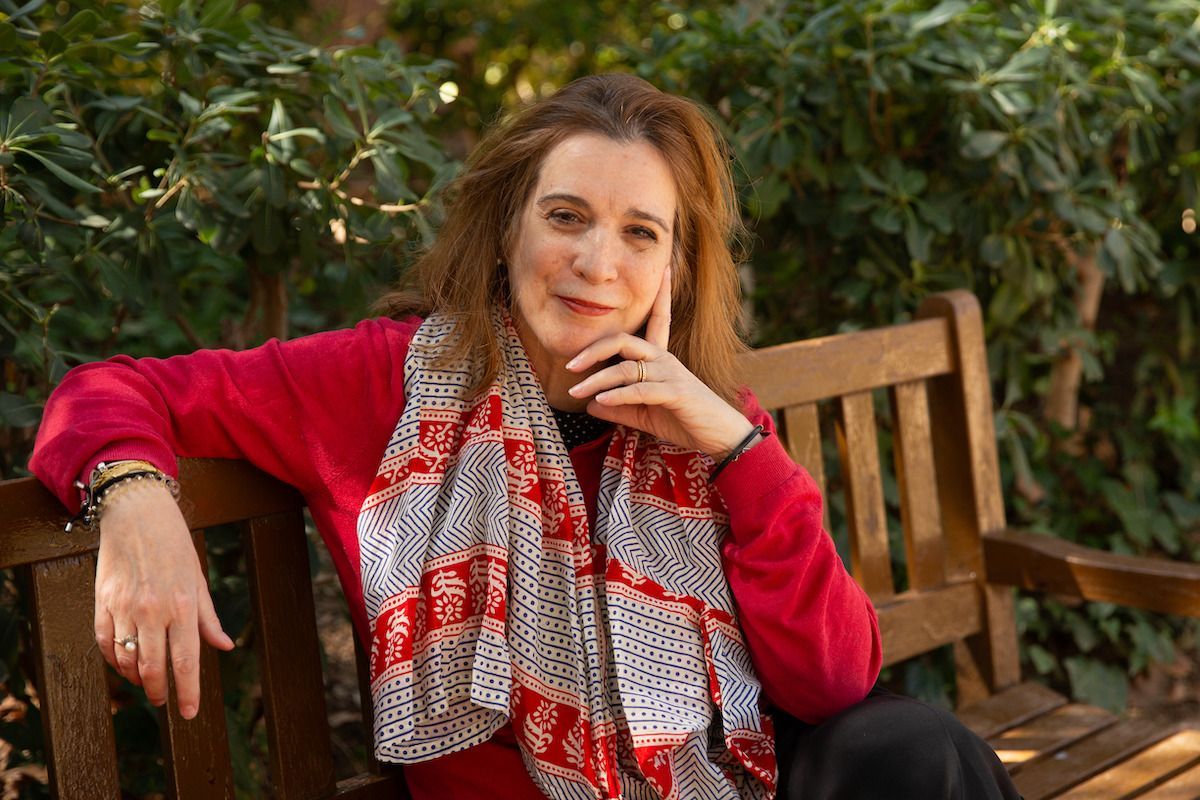
As an element that captivates her, she highlights the Capuchin friars' convent in Sarrià. "It is the place where, in March 1966, the famous Capuchinada took place, the confinement of the Democratic Union of Students of the University of Barcelona," repressed by the then civil governor (and future minister) Ibáñez Freire. At the same time, "at the entrance of that same church there is a square white stone that they say represents the cavalcade of Santa Eulàlia, that is, it indicates the point from which the saint, who is supposed to have lived in Sarrià in the 3rd century, mounted her horse." "Imagining the material side and the sacred side of the same place seems to me a way of better understanding some things about this city," she reflects, finishing her Port.
— Speaking of places where the human and the divine are combined, in this Bar we have a gastronomic offer with which you touch heaven... In case you fancy a menu, a sandwich or some tapas…
Anna Pagès then bursts out laughing.
"Tapas, no doubt," she declares, and lets a few brief seconds pass before adding: "And let it end with something sweet!"
Add The New Barcelona Post as your preferred Google source for free
Stay informed with the latest news.
