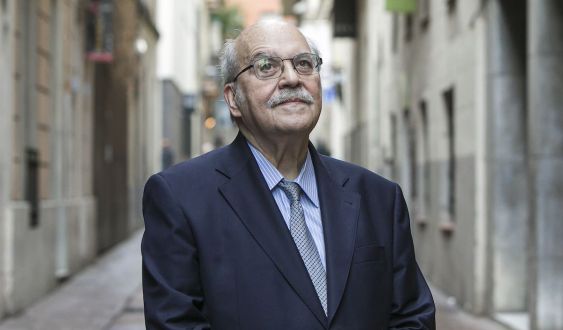
Andreu Mas-Colell (Barcelona, 1944) is above all a professor at Pompeu Fabra University, founder of the Graduate School of Economics (GSE) and promoter of the Institució Catalana de Recerca i Estudis Avançats (ICREA). He is also former minister twice over (Universities and Economy) in very different stages of the Generalitat, Doctor Honoris Causa of several universities and Creu de Sant Jordi. He also presides over the Banc de Sang i Teixits and the Barcelona Institute of Science and Technology. When 'also' says a lot.
Son of entrepreneurs with great political sensitivity, he was supposed to be a macroeconomist and became a microeconomist in Minnesota, where he remembers there weren't many evocations of Tom Sawyer and Huckleberry Finn playing the guitar. He entered university for the first time and decided he would spend his whole life there. Mas-Colell believes in strokes of luck, although the artist Pablo Picasso already said that inspiration should always catch you working.
Mas-Colell assures that he has never been worried about the Nobel Prize in Economics, although he has been a professor to several Nobel laureates such as Philippe Aghion and Abhijit Banerjee. "The value of a professor is the example, and that includes not being dogmatic and being able to change one's mind," he explains. He also adds that there are two types of politicians: those who have an agenda and those who solve the most complicated issues. He identifies himself, however, as a strategist who wants to reach a place, without ever knowing if he will get there. He is far from falling into a contemplative life and his dream is for "Catalonia to matter in a Europe that matters in the world."
— You are the son of entrepreneurs with great political sensitivity.
— The political sensitivity was more my mother's than my father's, who was a typical product of post-war Catalan businessmen. He had to do seven years of military service with the Republican side. My mother had worked very young in the Generalitat and then in the Port of Barcelona when it was full of Falangists. She was very conservative and very Catalanist to the point that she lived very closely the execution of Lluís Companys. My father tried to prevent politics from dominating family life.
— What was the best legacy of your parents?
— The work ethic. My father worked non-stop and was very careful with finances, and he did well in life. He had no debts. I am grateful that, being an only child, they did not put great pressure on me to continue the family hardware business.
"When I entered university, I already decided I would spend my whole life there"
— Did you ever consider it?
— I didn't focus too much on the future, but not really. When I entered university, I already decided I would spend my whole life there.
— Your whole life at university.
— The university was quite interesting and diversified and allowed everything: it was my environment and you had very good intellectual company. My parents proposed to a cousin of mine that she take over the family business until it was sold in 2012. I never truly got involved with the company, but it represented important support.
— What kind of support?
— I don't know if I would have been able to afford to return from the United States if I hadn't had an economic family cushion that gave me security until I was stabilized here.
— You also passed through Bilbao.
— I dedicated myself a lot to university politics, I wanted to go abroad to learn economics and I took the opportunity to read a lot. I was expelled a couple of months before finishing my degree for political reasons, so I went to finish my studies in Bilbao, which was a city with a lot of character.
— And Valladolid? -
— The Faculty of Economics in Bilbao was public and depended on Valladolid. So, my degree is from the University of Valladolid. Afterwards, I had to do military service, like everyone else, but I had a stroke of luck and got to go to the Navy instead of Africa.
— How was your time in the Navy?
— Given the bureaucratic incompetence of that time, my police record did not reach the Navy or perhaps they simply ignored it because the Navy was more aristocratic and less repressive, so I had no problems. I was able to pull strings to go to Cartagena and Madrid, which is where the largest ship was.
— And you met the chauffeur's son.
— In Cartagena, I socialized with Navy students who were passing through the Polytechnic fleet. One of them was the chauffeur's son, that is, Alfons Quintà. We shared a room we had rented for the weekends.
— You returned to Madrid.
— In Madrid, I joined Luis Ángel Rojo's group, who was the modern economist of the time and was able to attract many Catalans. Although my natural destination was the United Kingdom, I did the doctoral courses and the possibility arose of going to study in Minnesota (United States). They told me that the Mississippi passed through the university, but it was frozen and there weren't many evocations of Tom Sawyer and Huckleberry Finn playing the guitar.
"To understand something, I have to understand the logic of why it can happen, and if I don't understand why it can happen, then I don't quite believe that it happens"
— Good literature by Mark Twain.
— The scholarships came from American money and from Walter Heller, who was a professor at Minnesota and chairman of John F. Kennedy's Council of Economic Advisers and, therefore, responsible for the introduction of Keynesianism in the United States. Soybean oil also played an important role.
— Soybean oil?
— He was the king of soybean oil and Spain was a big importer. There were economists like Manolo Valera who were key in the regulation of soy, and Heller financed scholarships that in turn facilitated relations with Spain.
— You had to be a macroeconomist...
— Yes, and it turns out I became a microeconomist. In the end, one follows academic and professional life as a conjunction of environmental factors, surroundings, and aptitudes. In Minnesota, microeconomics was in the air then. To understand something, I have to understand the logic of why it can happen, and if I don't understand why it can happen, then I don't quite believe that it happens.
— That sounded very Cartesian.
--- I have a son who is also an economist and professor at Berkeley who needs to see the data to believe it. I have never written an empirical article, although I have co-authored empirical estimations with the economist Philippe Aghion, who has just won the Nobel Prize in Economics.
"Talent must be cultivated, captured, and retained. The best training is the world"
— You worked as a professor at Harvard and Berkeley.
— I started my career at Berkeley and then went to Harvard, until I returned to Barcelona.
— Why did you decide to return in 1995?
--- My wife Esther remembers that when we met, I told her I already wanted to return to Catalonia. At first, it always pays to stay in a very rich intellectual environment. However, theory leaves a lot of free time and you cannot dedicate more than three or four hours a day to it because your head boils. Therefore, I have always had time for other things such as, for example, being a magazine editor or organizing conferences.
— How was the return to Catalonia?
— To make this leap, you need to want to make it, to have an interesting project where you can promote knowledge and research and be able to open spaces. The truth is that I could have made this leap at 50 in Harvard or Barcelona.
— And why not Harvard?
— At Harvard, I was supposed to be head of department and, therefore, it was about leaving it as good as I had found it. This is not a triviality because the competition is fierce and staying at the very top is very difficult. I was dean of the Faculty of Arts and and Sciences Affirmative Action and I understood that in the American environment there were things that were culturally alien. All this coincided with the start of Pompeu Fabra University.
— And again, fortune.
— Exactly! I knew the first rector, who was Enric Argullol, very well, and he recruited me. To make the leap to return to Catalonia, you also need a minimum of economic security. I had saved a lot in the United States, Esther and I had three children, and the family business was very important to secure this bridge for me. When we think about attracting talent, we must also take all this into account.
"Santiago Ramón y Cajal made the discovery of the neuron from Ciutat Vella"
— Should talent be cultivated, attracted, or retained?
— We must cultivate, attract, and retain talent. Now you can do your entire career without leaving here, although perhaps it is not the most desirable and it is very worthwhile to spend long periods abroad. The best training is the world and perhaps there is no need to wait until you are 50 to return. We must keep the doors of our education, research, and university system open.
— Open doors?
— A large part of the hires at research centers are people from here who return home. We will have to see what our closest competitors like Italy do, which has positioned itself as a research power thanks also to the tax incentives they have created for attracting talent.
— And Catalonia?
--- It is not emphasized enough that Professor Santiago Ramón y Cajal explains in his memoirs that 1888 was the year of his fortune because he made the discovery of the neuron from Ciutat Vella.
"The first stage as conseller was one of growing budgets, where I was able to promote research policies, and the second stage was difficult due to decreasing budgets"
— How do you remember your experience as a double-term conseller?
— They were very different! The first stage had growing budgets, where I was able to promote research policies, and the second stage was difficult due to decreasing budgets.
— Let's go first to universities, research, and the information society.
— The research system could be approached from a closed or open model. With the arrival of democracy, there was increasingly more money for research in Spain, Europe, and the world. Public and private money that circulated and demanded talent. We were lucky and it worked.
— And yet another stroke of luck.
— Money for research in the European Union grew a lot. When an activity works, it then has a ripple effect. The Research Centers of Catalonia (CERCA) had aggregated budgets of 650 million euros, of which about 180 million were from the Generalitat, but the rest was public money from Spain, private, or from clinical trials, among others. The open research model has worked.
— What was done with the talent then?
--- It had to be put somewhere and it couldn't be in barracks, although I remember how President Jordi Pujol was very impressed with the Stanford physicists who worked in barracks. Infrastructures like the Alba Synchrotron had to be built. We brought the consciousness of science.
— Let's move now to economy and knowledge.
— The crisis hit us and the corresponding management was dominated by German moralism. It was imposed on us and we tried to preserve the most basic, which was health, education, and research. It was not pleasant at all, but the country's economy survived and is now in good condition to move forward.
— The economic crisis was a very hard blow.
— It took the savings banks down and luckily we were able to save the foundations.
"The main problem to solve is to debureaucratize the functioning of universities and research centers"
— You say that economists are useful for everything, but that in politics you cannot do everything you want. What else would you have liked to do in politics?
— We made a university law that has been very useful, but the truth is that I would have preferred to be able to promote a university law that was completely detached from the civil service structure.
— What is and what should be the civil service structure?
— There are competencies that only the State can exercise, such as justice or security, but there are others that it can finance, but it is not necessary for the State to do them, such as, for example, education, economy, university or research. The main problem to solve is to debureaucratize the functioning of universities and research centers.
— What does administrative law say?
— That it has a set of rules and the larger the State, the more it must cover, even if they are extremely different things, from firefighters to university professors or train drivers.
"In France, for every euro someone donates, the State puts in two, and this has created incentives for more donations"
— How can we make patronage a structural commitment to culture, research, and social cohesion?
— Two observations: one cultural and one fiscal. The best patronage system is not the American one, but the French one, which has the same qualitative structure as the Spanish one. In France, for every euro someone donates, the State puts in two, and this has created incentives for more donations. However, patronage in the United States is not from companies, but from shareholders or private fortunes that give the money.
— And what should we do here?
— Follow the French model and push for a Minister of Finance willing to raise the level of patronage. Here, the grassroots culture is less inclined to give. In the United States, there are enough rich people who believe that their children do not need to be left a fortune and that it is even better for their surname to sound like future donors in a foundation or to do good.
"We must applaud and not punish patrons"
— Do good and leave a legacy.
— Look at our environment and you will see that there is a very important bias towards patrons who do not have children compared to those who do. I have been proposing the 50-20 model for a long time, that is, 50% deduction from the quota and donating up to 20% of your annual income.
— Is there a lack of recognition?
— We should applaud and not punish patrons. It seems a bit absurd that when someone is donating, someone else comes out saying they should be ashamed to give so much money. I prefer that there are people who have money and give it to a cause rather than insulting them when they do.
"Socrates invented the interactive seminar to solve problems and Chat GPT still hasn't learned to do something imperfect enough to seem authentic"
— You have dedicated many years to teaching. What impact can technology, and especially artificial intelligence, have on the learning and knowledge process?
— Perhaps I am old-fashioned, but I think the brain doesn't change as much as learning technology. Reciting a lesson in a lecture hall with a thousand students is obsolete; now it's more like a live show. I liked to invite people like John Kenneth Galbraith and other masters of thought.
— What a great show!
— It's not the same to see a singer live as it is through an enlarged screen. Many years ago, Socrates invented the interactive seminar to solve problems. [He laughs]. Chat GPT still hasn't learned to do something imperfect enough to seem authentic. I believe that education, truly, will maintain an important component of presence and interaction.
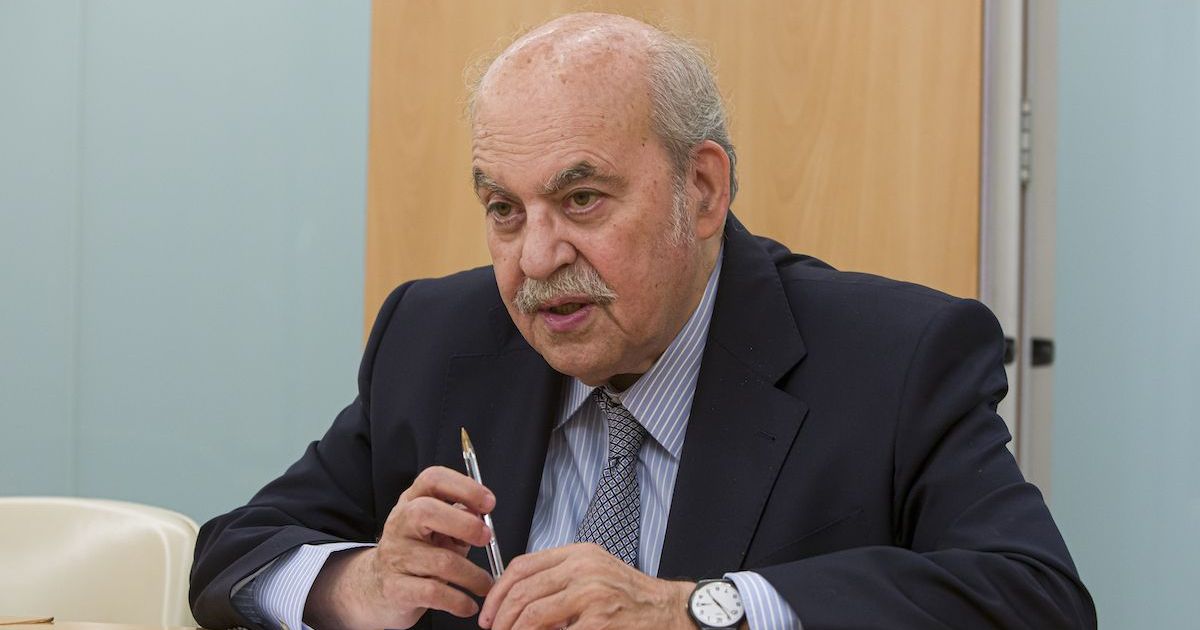
— How do you see the city of Barcelona?
— I am a fan of Barcelona because it is a city of great possibilities while also being a great asset to Catalonia. I even like the Font del Gat.
— You are also a great defender of public-private collaboration and civil society.
— Housing or research can only be done through public-private collaboration. However, it is important that the public sector interprets public-private with generosity. I believe the public sector is wrong when it thinks it has to have an opinion if it contributes a not insignificant amount of money.
— Give me an example.
— The State is the main financier of the Catholic Church and it doesn't occur to it to comment on its dogma. In the case of the Generalitat, it is relatively new and is still asserting itself, and that is why it wants to be present everywhere.
"Housing or research can only be done through public-private collaboration"
— And what do you think?
— That includes me. 25 years ago we created the research centers at the Institut de Ciències Fotòniques (ICFO) and I think it was a mistake for me to be the president of the board of trustees of the foundations by virtue of being a conseller, because then one takes on too much responsibility.
— Excessive responsibilities?
— I am responsible for the virtues that the centers may have and for the good work they may do. It is already taken for granted that the public promoter will take the credit, but there is no need to be too on top of things or err on the side of caution.
"The Generalitat does not need to be visible everywhere. I defend both public and private, and I like the Fira de Barcelona model"
— Without haste, but without calm.
— At that time, it had to be seen that the Generalitat was doing things and wanted to promote. However, the result is that it can stifle the private sector. And the Generalitat does not need to be visible everywhere.
— You are a great defender of public-private collaboration.
— I defend both public and private. For example, a good public model is that of Fira de Barcelona, with basic funding from the Generalitat and the drive of the private sector. It is not an abuse, but rather how it should be and it has worked spectacularly well. No one questions the leadership, the impulse, and the merit of the Generalitat.
— What role should civil society play?
— In Catalonia we have a strong tradition of civil society and a very intense associative life. Even so, we have a pending issue with the social headquarters and the companies that think and direct from here.
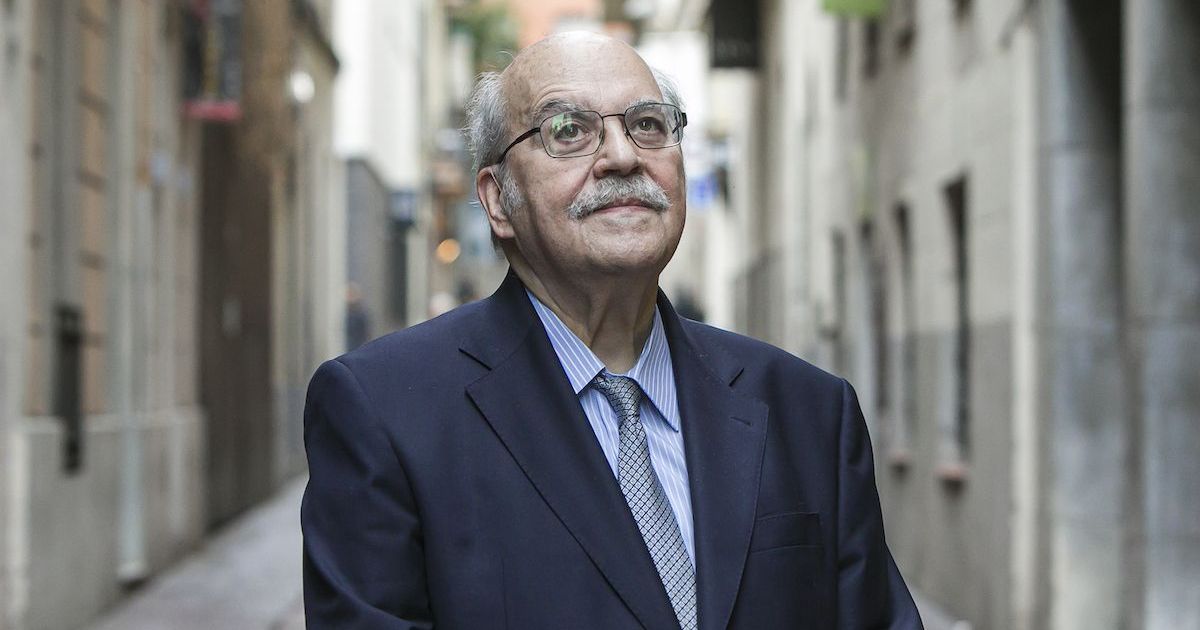
— Deciding from Catalonia.
— Exactly, we are talking about important corporate centers like Seat. I am especially sorry that Sónar is owned by a multinational and that some hotel investment fund let it slip away.
"We have a pending issue with the social headquarters and the companies that think and direct from here"
— You say that economists are useful for everything. What do you have left to do?
— I have nothing left and I don't have much time anymore... I can have small hobbies and dedicate myself to new things. As long as I have strength, I will not stop. I am on almost a dozen boards of trustees such as the Miró Foundation, the Institute for Advanced Architecture of Catalonia or the Institute of North American Studies, and I am also president of the Blood and Tissue Bank and the Barcelona Institute of Science and Technology. I write in newspapers and have my inclinations.
— You have also been mentioned as a candidate for the Nobel Prize in Economics.
— I don't think so… My research is good, but I don't think it reaches the level of the Nobel Prize. It hasn't worried me too much. The Nobel Prizes are very good because they have always chosen well.
— What if they had chosen you?
— [Laughs]. It would be a catastrophe, because being a Nobel laureate gives you a lot of influence and it's better not to give young academics an "all or nothing" perspective. You have to be in the right place, at the right time, and make the right discovery.
— What was the right place or time?
— It is said that I gave it up by coming back here, but that makes no sense. Nobel Prizes are often awarded for contributions made years ago. My most cited work is on game theory and I did it in Barcelona in collaboration with Sergiu Hart, from the Hebrew University of Jerusalem. And it wasn't groundbreaking enough to aspire to a Nobel…
"To be a good politician you have to have qualities that I don't have: having an agenda or solving complicated issues. I consider myself more of a strategist"
— You know many Nobel laureates in Economics.
— I am very satisfied to have been a professor at Harvard to three students who are now Nobel laureates, and I still maintain a strong relationship with Philippe Aghion and Abhijit Banerjee. This is mainly due to the fact that Harvard and MIT bring out the best in students and then they stand on their own.
— The previous interviewee, Borja Molina-Martell, asks you the following questions: What qualities must someone have to be a good politician?
— To be a good politician you have to have qualities that I don't have, like relating to people or spending weekends holding meetings in towns. I think there are two types of politicians: the one who has an agenda, wants and knows how to do something; and the one who solves complicated issues, but who doesn't really go anywhere in particular. That is, the first must have vision, ideas and convictions, and the second must have behavior and a good way of doing things. This second group serves to do politics in a country or internationally. And I suppose now I should add being honest and friendly. All this helps, and I'm afraid that today being media-savvy is also a requirement.
"The value of a teacher is example, and that includes not being dogmatic and being able to change one's mind"
— And what kind of politician have you been?
— The strategist has a long-term objective and, therefore, I consider myself more of a strategist. Politics is taking a complicated problem and solving it.
— As a professor, what is the most valuable thing a teacher can leave their students?
— That they can see how you reason, sometimes you torture yourself and change your mind. It is very educational to see a professor who exercises judgment and changes their mind. The value of a professor is the example, and that includes not being dogmatic and being able to change your mind. I have dedicated myself to microeconomics, although I failed the microeconomics course three times because of a very dogmatic book.
ANDREU MAS-COLELL'S SEVEN LIVES
Referent: Gerard Debreu, in my professional life.
Book: Just William (the adventures of William), in my pre-adolescence.
Movie: Casablanca.
Song: Veles e vents.
Favorite spot: Plaza de Sant Felip Neri.
Life motto: Not to fall into the contemplative life.
Dream: That Catalonia matters in a Europe that matters in the world.
Add The New Barcelona Post as your preferred Google source for free
Stay informed with the latest news.
