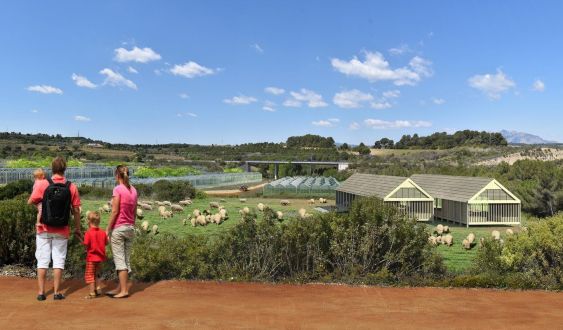
"Being able to produce food without generating emissions will place us, as a company, at another level." This phrase by Josep Ametller, CEO and co-founder of Ametller Origen, summarizes the objective that the chain has set with the Agroparc Penedès project, presented this Wednesday at the headquarters of Foment del Treball. It is an initiative that will require an investment of 180 million euros and will allow the launch of "the first agro-industrial district of positive energy and negative CO2", in reference to the fact that the productive complex will generate more energy than it will consume and will fix or capture more CO2 than it will emit into the atmosphere. Specifically, Ametller Origen's idea is to avoid the emission of 1,400 tons of CO2 per year.
The Agroparc Penedès will occupy an area of 258 hectares between the municipalities of Gelida and Sant Llorenç d'Hortons, in Alt Penedès. The company hopes to be able to start construction in early 2023, with the challenge that the first phase ---the logistics and production area--- will be completed between 2025 and 2026, and the entire project will be finished within five years. Ametller Origen plans to finance part of the investment with Next Generation funds from the European Union, as it considers that part of this public money should allow private companies to face "the transition costs" that "the paradigm shift" that the company wants to carry out entails.
"In 2027 we want to be an emission-neutral food group. This agro-park will help us achieve this thanks to an intensive use of technology that will allow us to carry out a paradigm shift both in the techniques applied to agricultural crops and in the food production system, which will be 100% sustainable and based on the circular economy," explains Josep Ametller.
Coinciding with the chain's 20th anniversary, the businessman is very excited about this initiative, which lays the foundations for the future growth of Ametller Origen and has implications that go further, as it will allow Catalonia to also be a reference in the agritech sector, today dominated by Israel and the Netherlands. "Our agriculture is very inefficient; we need more technification. The Agroparc Penedès wants to be a meeting point for agritech in Catalonia and develop a model that is an example of agriculture connected with industry," says Ametller.
To minimize its carbon and water footprint, Ametller Origen has forged an alliance with two technological partners, the Agbar group and Carburos Metálicos, who will also contribute to the project's financing with about 25 million euros. It is estimated that the 180 million investment will generate an economic impact of 433 million in productive activity and create 3,300 direct, indirect, and induced jobs during the works.
With a workforce of 2,700 employees, Ametller Origen currently has a network of 116 stores in Catalonia specialized in the sale of fresh and processed products. In the last three years, the company founded by brothers Josep and Jordi Ametller has doubled its size, going from registering a consolidated turnover of 162 million euros in 2017 to 310 million in 2020, a year in which it grew by 24% despite the pandemic. If the aggregated sales of the entire business group are included, turnover reaches 370 million. In its cultivated fields ---located throughout the Mediterranean arc---, the company self-produces 60% of the fruits and vegetables it sells.
Ametller Origen's strategic plan foresees investing 50 million euros in three years to have a network of 160 points of sale by 2024, when it expects to reach a market share in large-scale distribution of over 4.5% in Catalonia.
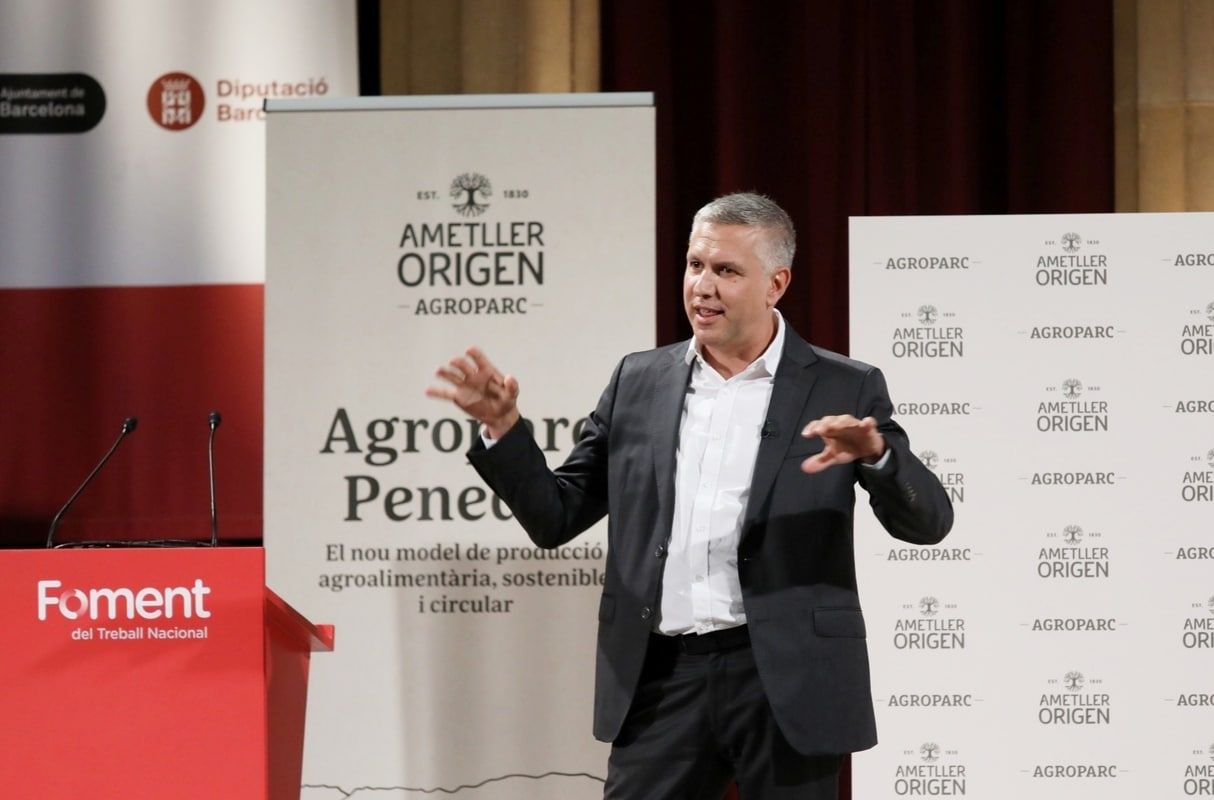
But what does Agroparc Penedès consist of? The idea of having a complex that unified a good part of agricultural production with logistics and processing areas is not new at Ametller Origen. In 2016, the company already presented a project that could not go ahead due to the strong opposition presented by environmental groups and several entities in Penedès. The main criticism was that Ametller wanted to carry out industrial activities on rural land, and the landscape impact of the buildings it wanted to construct was also criticized. Now, the company has completely reformulated the project and is convinced that this time it will have local support to make it a reality. "We have learned, we have listened to the territory, and we have found the solution; today we present a much better project and I can say that we will do it well," emphasizes the CEO.
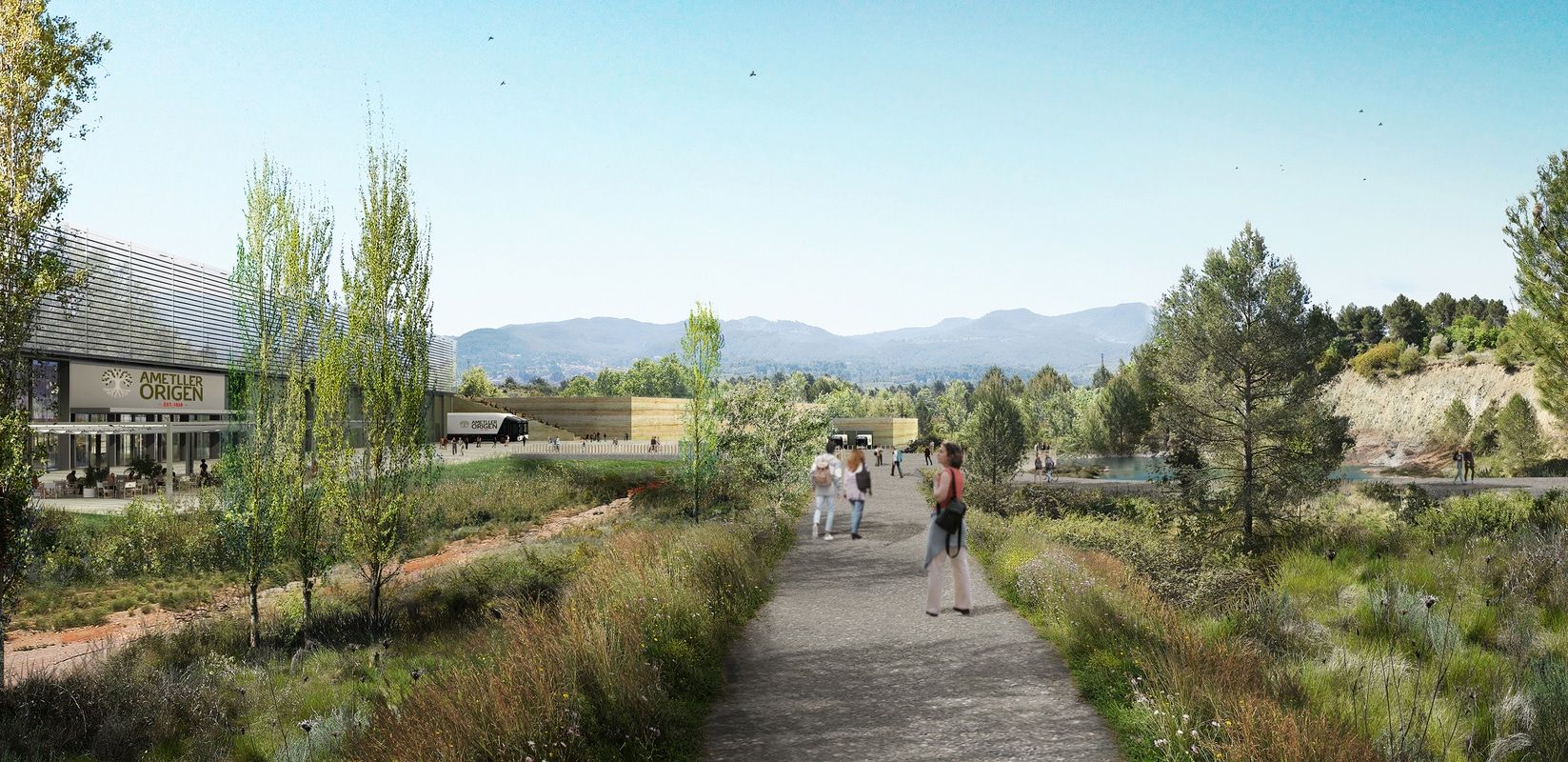
In this regard, to conceive the new agroparc, Ametller Origen has hired the architecture firm Batlle i Roig, which has designed a proposal fully integrated into the landscape and respectful of the environment. To minimize visual impact, the buildings will be constructed in the deepest parts of the land and will be equipped with green roofs. The other "great virtue" of the new project, the company assures, is that all agro-industrial activity will be built on land classified for more than 15 years as an industrial park, but which is currently disused. Ametller Origen has purchased the land of this industrial park, located in Gelida, in an area known as Can Joncosa, between the AP-7 highway and the AVE high-speed rail line, which divides the agroparc in two.
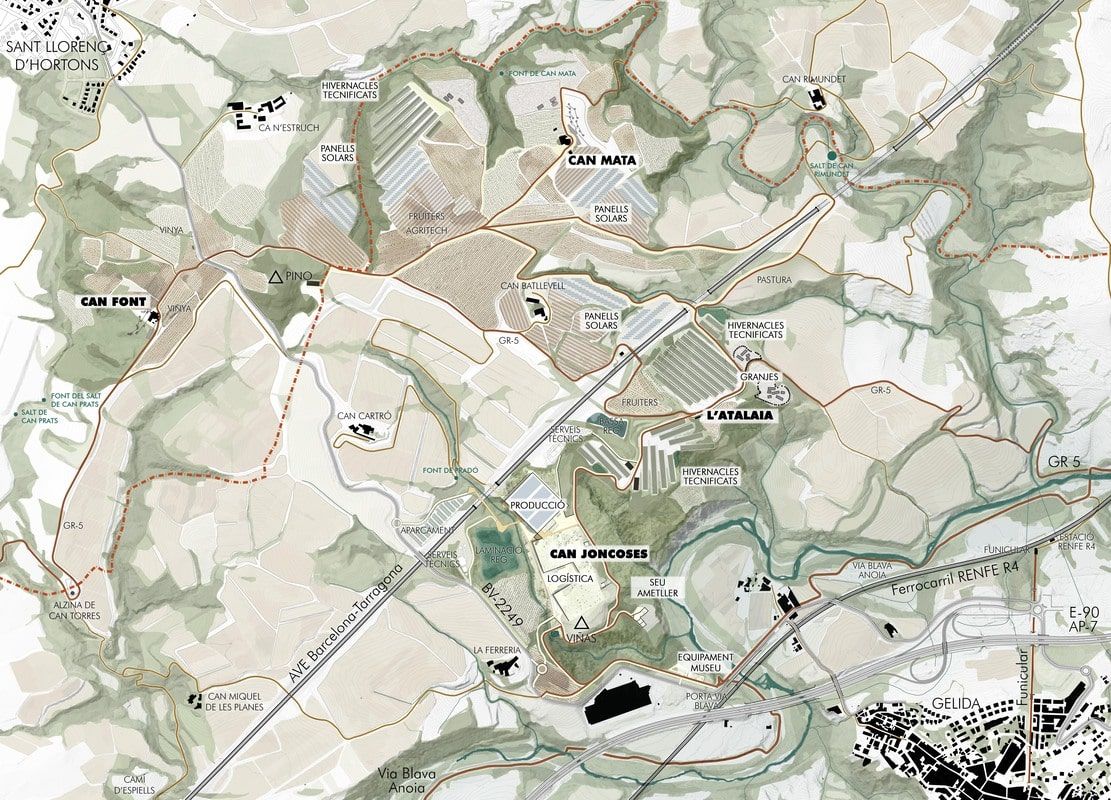
The number of hectares has been expanded from 160 to 258, an area that will be distributed among cultivated fields (90 ha), greenhouses (10 ha), photovoltaic panels (12 ha), two sheep and goat farms, a workshop for the production of processed foods, a 40,000 square meter logistics warehouse, the building that will house the group's offices and corporate headquarters, a municipal facility, and a biofactory for the treatment and recycling of wastewater. The logistics center —one of the elements that generates the most suspicion in a territory heavily impacted by infrastructure and industrial parks— will be C-shaped to adapt to the topography and will be practically buried and hidden by a green roof.
The Agroparc Penedès plans to generate 13 MW of photovoltaic energy, 10.2 MW of renewable energy from biomass, and 1.6 million m³ of biogas, with a total green energy produced exceeding the consumption of the facilities (15 MW), meaning surplus electricity will be fed into the grid. Thanks to the technology developed by Carburos Metálicos, organic waste generated by farms, the workshop, and fields will be transformed into biomethane and then into green hydrogen (175,000 kg / year), which will be the fuel used by all trucks in Ametller Origen's delivery fleet. In parallel, as a result of this process, more than 1,000 tons of CO2 will be recovered and applied to the greenhouses to aid plant growth. Vegetable waste will also be used for compost production and to feed a biomass plant that will produce steam and energy for industry and greenhouses. In addition, geothermal energy will be produced.
Along with energy, the other major key to the agroparc is water. The project aims to minimize consumption thanks to the introduction of precision agriculture, micro-drip irrigation, and the reuse of 100% of the water used in production processes. Thus, with the technology provided by Agbar, the complex and the cultivated fields will be self-sufficient thanks to three types of water: rainwater, underground captures, and reused water (110,000 m³).
Ametller Origen plans to adopt the most innovative agricultural technologies in the greenhouses, which will apply machine learning techniques to adjust production to real sales forecasts and thus avoid waste. The technified greenhouses will control light, temperature, water dosage, and soil and plant humidity to ensure optimal growth. Thanks to this system, 51 liters of water are expected to be saved for every kilo of tomato.
According to the company, to ensure that its food is "100% sustainable and 100% circular," no artificial fertilizers will be used and all packaging will be 100% recyclable. In addition, the chain wants to implement a system for collecting its own packaging in its stores, which will then be processed in the agro-park: they will be shredded to give them a new life, with the purpose of reducing or recovering 2.5 million kilos of plastic per year. Finally, Agroparc Penedès will have a training and research center in agreement with universities to train agricultural technicians and will have a small rural hotel in one of the farmhouses located on the premises.
Add The New Barcelona Post as your preferred Google source for free
Stay informed with the latest news.
