Finding large premises in the center of Barcelona where a supermarket could be installed has always been a difficult challenge for large distribution chains. In recent years, for example, the opening of supermarkets in spaces where there had traditionally been a parking lot has multiplied, as the owners of these properties have seen that, with this type of tenant, profitability could be higher. Many of the commercial galleries in the city and even some cinemas have also ended up being transformed into supermarkets. The transformation of Cine Urgell —the largest cinema in Barcelona— into a Bonpreu chain establishment is the best example, but not the only one.
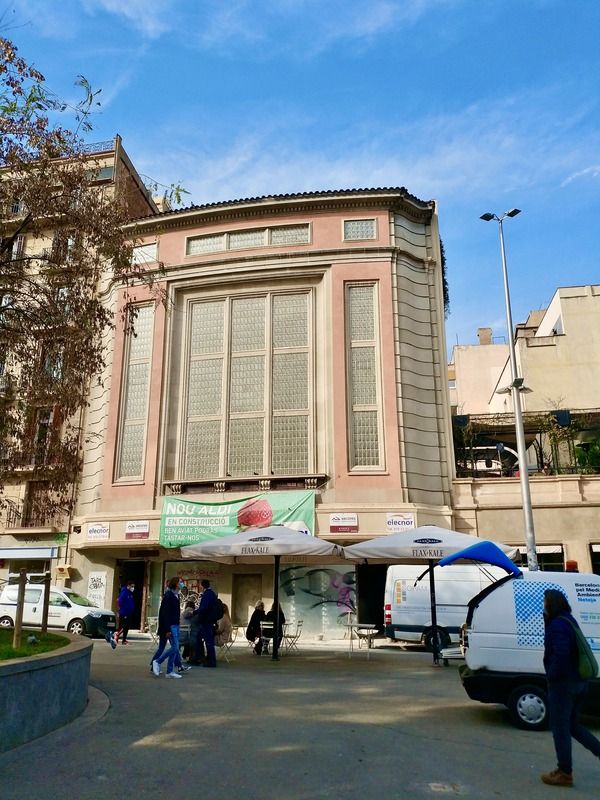
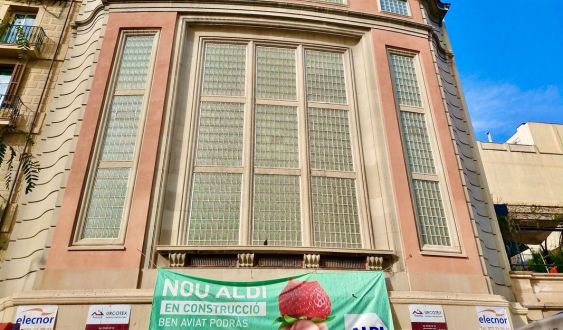
The German distribution group Aldi is finalizing the opening of a large supermarket in the building that housed the former Petit Pelayo cinemas, at Tallers street number 74. After months of construction, Aldi plans to inaugurate this new store in May, according to Jordi Filiberto, the chain's expansion manager. The executive does not yet want to give details of the establishment's characteristics, but it is expected to have two floors, a basement, and an area of about 2,000 square meters.
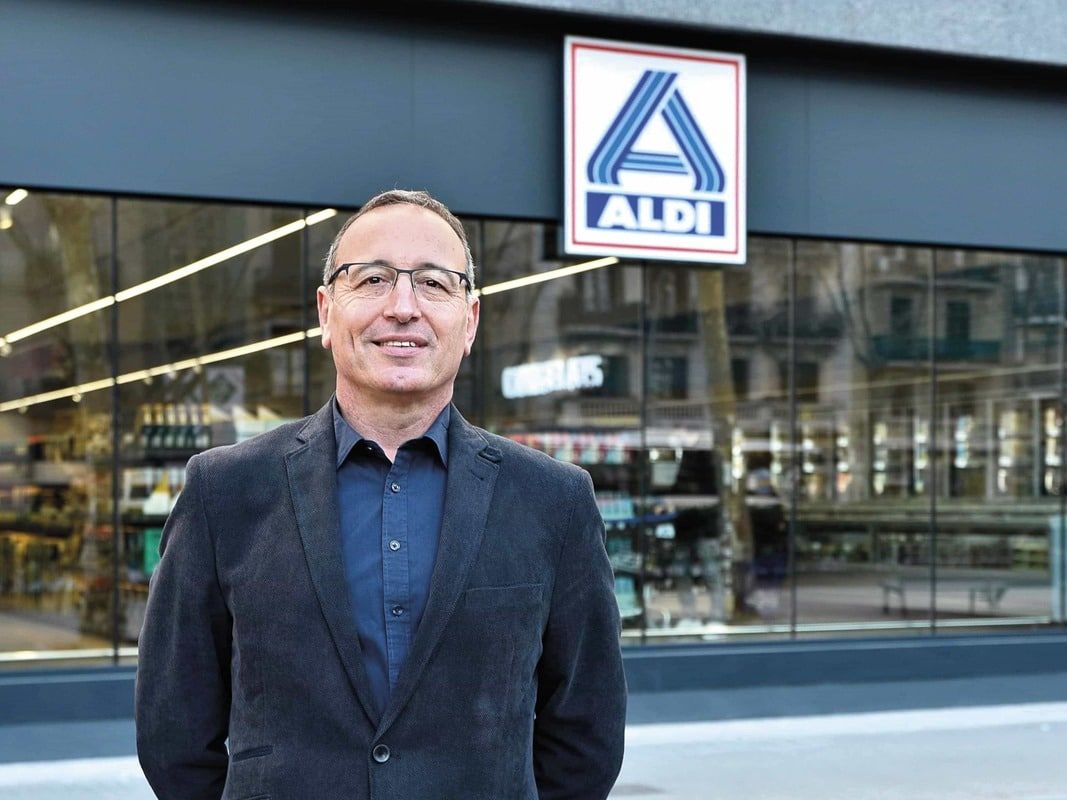
"Within the framework of the expansion plan in urban centers and nuclei, some of the new establishments we open are located in buildings that had not been used for a long time and that could even have been abandoned for several years. With the new openings, we help rehabilitate the image of the area and create new jobs," explains the Aldi executive in an interview with The New Barcelona Post.
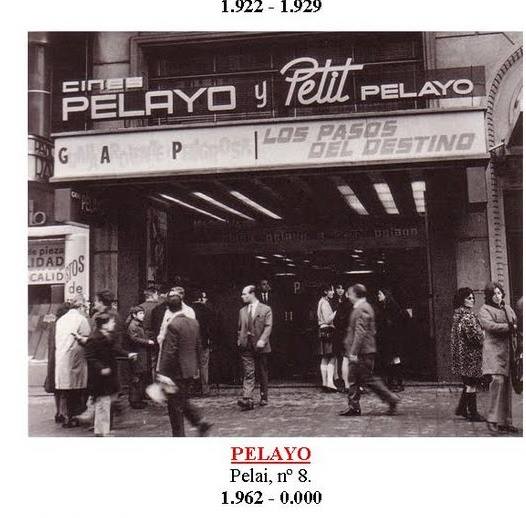
The new supermarket on Tallers street will occupy a building located next to Plaza Castilla characterized by not having windows, but large stained-glass windows. This is the old Petit Pelayo cinema, which was an extension of the old Cine Pelayo, which in the 90s was converted into the Lauren Universitat. The Petit Pelayo opened in 1962 to screen less commercial films than those shown in the main hall; it had a differentiated entrance and operated with its own billboard until 1985, when it became just another hall (Pelayo 3 hall) of the Cines Pelayo, according to the blog Barcelofília. In 1993, the entire complex was remodeled and transformed into a five-screen cinema, the also now defunct Lauren Universitat.
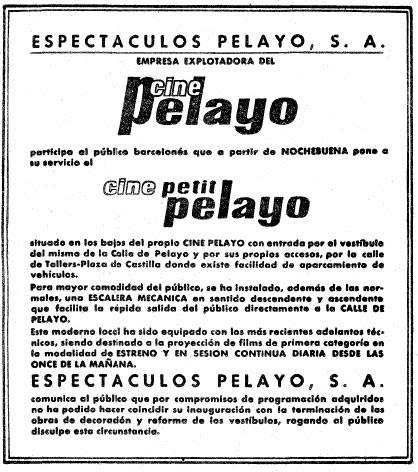
The Petit Pelayo screened its first film on Christmas Eve 1962, in a snow-covered Barcelona. For the premiere, John Ford's western Two Rode Together, starring James Stewart and Richard Widmark, was chosen.
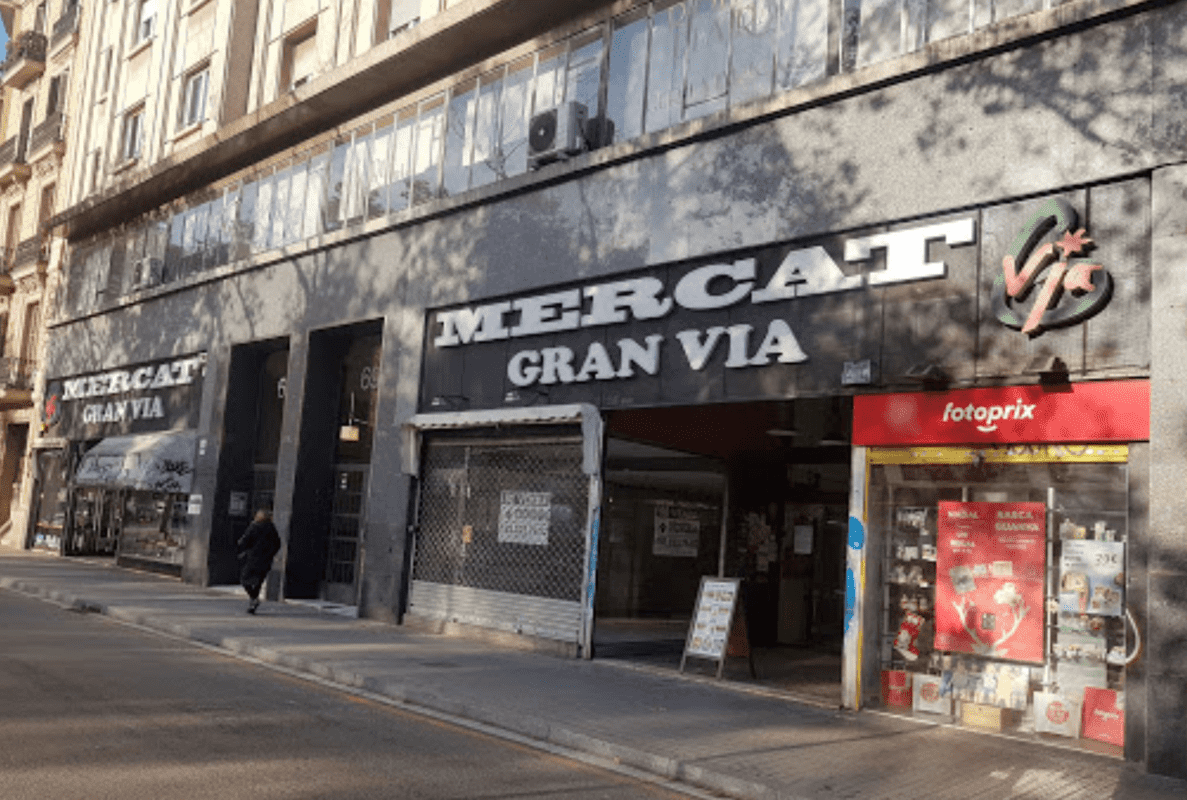
The transformation of Petit Pelayo into an Aldi is not the only conversion of a unique space recently carried out in Barcelona by this multinational. On March 10, it opened a new 1,100 square meter supermarket located at Gran Via 691, next to Plaza Tetuán, in a premises that until two years ago was occupied by the Mercat Gran Via, which was not municipally owned, but private.
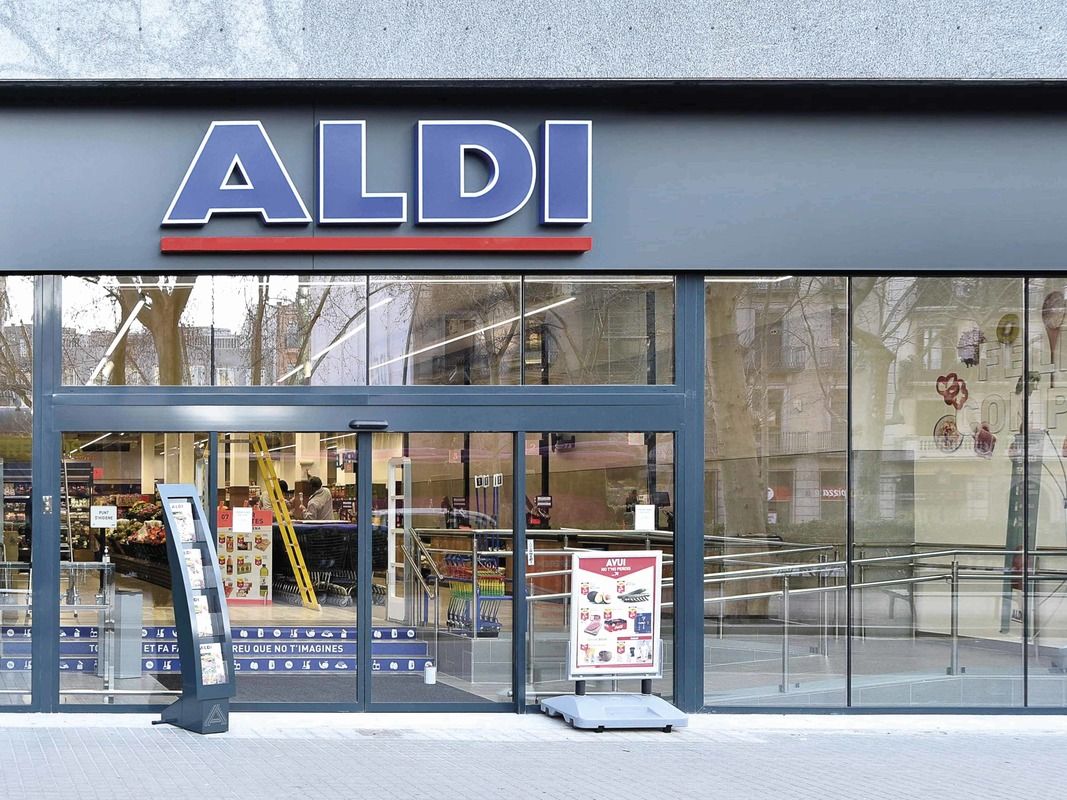
With these two new establishments, Aldi will have ten supermarkets in Barcelona city, double the five it had just a year and a half ago. In recent months, the brand has opened stores in the Eixample (on Muntaner street), Sants (Plaza de Joan Pelegrí) and in the Maragall area (Ramón Albó street) and "the objective is to continue growing in the capital in the short term to get closer to different areas and neighborhoods of the city," highlights Filiberto.
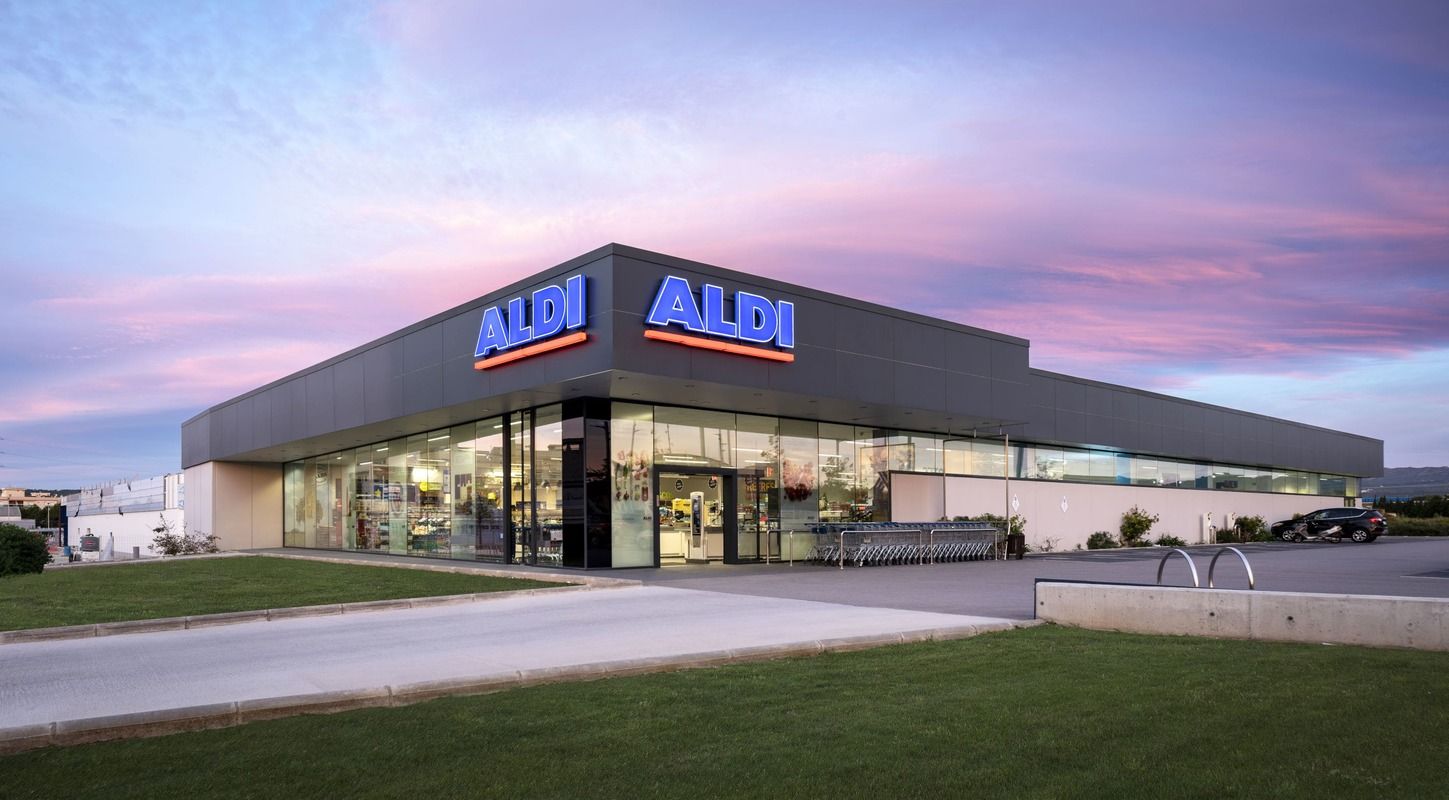
The permanent search for spaces with reconversion possibilities within the urban fabric responds, according to the executive, to the desire to get closer to the client and facilitate the purchase process. This commitment to "locating where the customers are" represents a shift in the original strategy with which Aldi entered the Spanish market in 2002, since during its first years it carried out all its implementation by installing isolated chalet-type stores in commercial parks located on the outskirts of cities. According to Aldi's expansion director, now both formulas are compatible: growth in the urban centers of large cities and openings at the entrances of smaller towns.
This week, Aldi has opened a new supermarket in Tarragona and now has 74 points of sale in the Catalan market, 46 in the province of Barcelona. The company does not want to quantify the number of new stores it plans to open in Barcelona in the coming years, but emphasizes that Catalonia is a priority growth area. "Catalonia is one of our strategic areas; our commitment is to continue investing and working on the expansion plan," explains Filiberto.
Creation of one hundred jobs this semester
In Spain as a whole, where it already has more than 330 points of sale, Aldi plans to open close to 40 stores this 2021 ---double that in 2020---, of which 23% will be in Catalonia, the community where there will be more inaugurations along with Andalusia. This expansion plan will mean that in this first semester alone, the company will create one hundred jobs in the Catalan regions. Throughout Spain, a thousand workers were hired last year and today the total workforce amounts to 5,500 people.
In parallel to the 74 points of sale, in Catalonia Aldi has the headquarters of its Spanish subsidiary. Specifically, the offices from which it directs this ambitious expansion plan are located in Sant Cugat del Vallès. In addition, the group has a 29,000 square meter logistics platform in Masquefa from which it supplies the stores it has in the Catalan regions and in the Balearic Islands. In total, between corporate offices, the warehouse and the stores, Aldi employs 1,300 people in Catalonia.
Aldi's Spanish subsidiary belongs to the so-called Aldi Nord Group, which also operates in Germany, Belgium, Denmark, France, Luxembourg, the Netherlands, Poland, and Portugal. The business model of the company founded by the Albrecht brothers, which does not provide turnover figures, is encompassed in the so-called hard discount, a concept that has softened over the years, but which is based on offering basic products at very competitive prices and with the supermarket chain's own brands, also known as white labels. Specifically, at Aldi, 86% of the assortment is made up of private label products and the remaining 14% are items from major brands that customers are not willing to give up.
With the aim of adapting to local tastes, Aldi, as its great rival, Lidl, has also done, buys 80% of the items it sells in its stores in Spain from 400 Spanish suppliers, of which 26% are Catalan companies. According to Kantar Worldpanel, Aldi now has a market share of 1.3% and last year it was the chain that most increased the number of customers, with an increase of 6.1% which means reaching 30% of Spanish households. According to Kantar, Aldi is also the national chain with the widest range of organic products, which translates into 24% of its customers including an eco product in their shopping basket.
Add The New Barcelona Post as your preferred Google source for free
Stay informed with the latest news.
