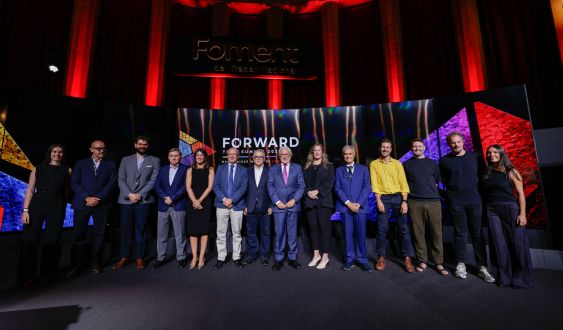
Artificial intelligence (AI) is on everyone's lips. On an individual scale, it has been perfectly integrated into human routines, but what happens in the business ecosystem? In many cases, companies still don't fully see all the capabilities that AI has. The lack of trust, the immeasurable investments needed, and the lack of clarity in European regulations make it an outsider in offices; the lover that an employee uses from time to time, away from the furtive gaze of the employer, who, due to lack of knowledge, sees no benefit in it. To lose this fear, Foment del Treball organizes the Forward Tech Summit congress, a meeting between entrepreneurs and experts in the field of technology and AI to demonstrate that integrating innovation could change the business world; for the better.
"If everyone implemented AI well in their companies, we would gain time," explains Sasha Rubel, Director of Public Policy for Generative AI in EMEA, AWS. In her speech at the event, Rubel was clear: AI is a reality and companies must embrace it. For her, the effect of artificial intelligence is not only economic, it is not about optimization to achieve more productivity, but it can cause a social and cultural change. "It's not about working more, it's about getting more time for ourselves," repeats Rubel, who, with data in hand, reminds us that with the implementation of AI, processes are completed 30% faster.
However, the fact that AI has proven and confirmed effectiveness does not mean that all companies find it easy to adapt it. For Rubel, there are three key aspects: talent, integration into public administration, and European regulations. In the first instance, technology specialists are scarce and the selection process takes about seven months. Rubel argues that it is necessary to find professionals and train them much more effectively to face the business opportunities generated by AI. The same opinion is held by Daniel Calleja, Director of the Representation of the European Commission in Spain, who, among the clear priorities that the state has regarding AI – which he has put on the table in his speech at the event – includes the hiring and training of professionals.
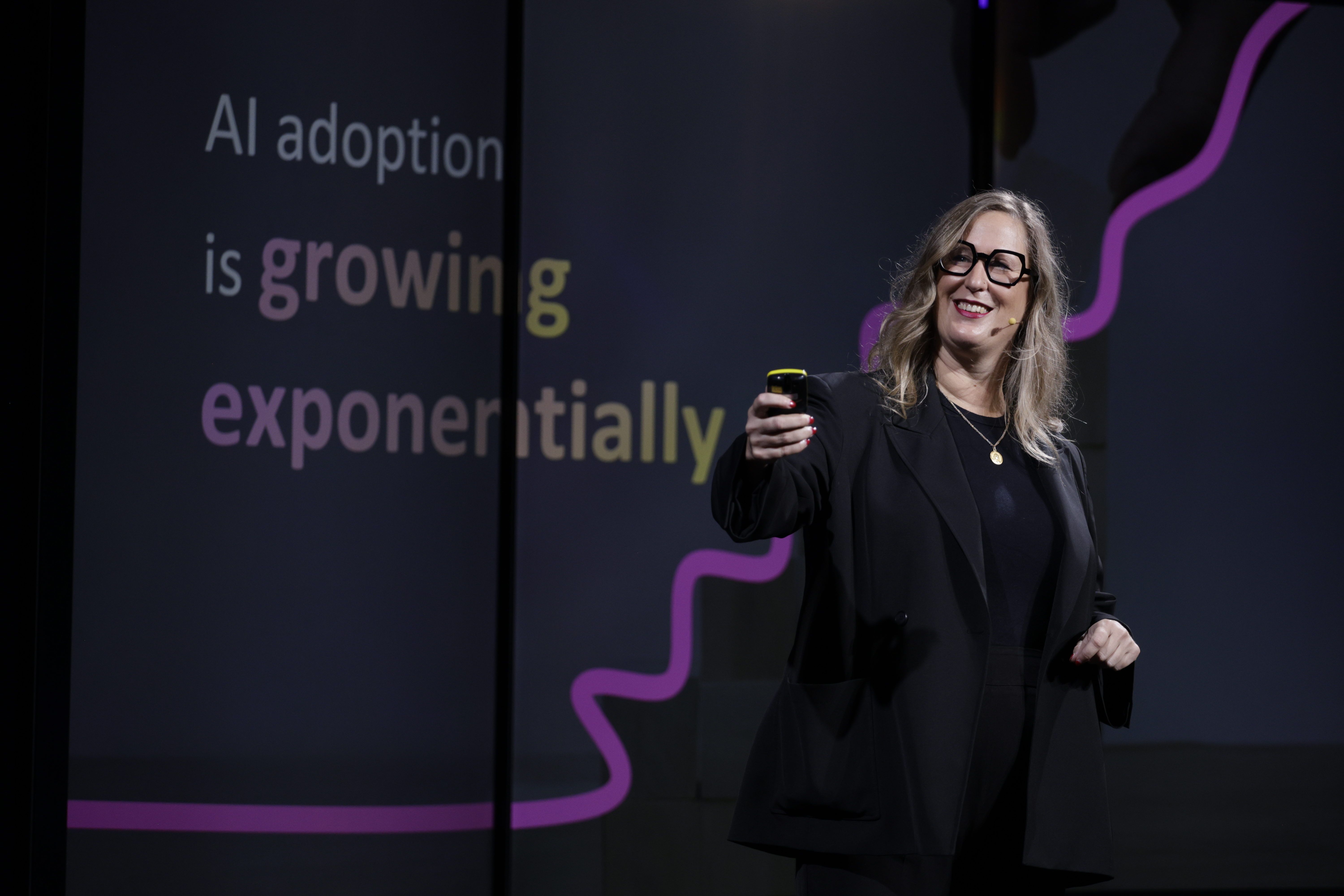
“Barcelona bets on AI”, remarks Jordi Valls, Fourth Deputy Mayor, Area of Economy, Housing, Treasury and Tourism, Barcelona City Council. For him, the city is prepared to integrate these new technologies, although he reminds that “integration should not be fast, but balanced”, referring to moving gradually, without making false steps or “losing ethics”. The reality is that according to Rubel, public administration must also play a role in this transformation. The expert recognizes that if the government endorses and champions a change, it is very likely that companies will view it favorably and it will generate confidence. That is why she makes a general call to Catalan administrations to start truly adapting it in their processes.
A cautious Europe at the center
Undoubtedly, however, the regulations of the European Union are the most repeated mention throughout the day - and not only on stage, but in the corridors, in the conversations of many experts having coffee. Europe is cautious and does not work in the same way as the United States or China, where AI is already reaching very high levels. Here, the rule demands patience and the fragmentation of rules between countries makes unification in a single market more cumbersome: “We have a single market for toothpaste, but not for AI”, Rubel ironizes. However, Calleja maintains that “a common, strong and responsible policy is needed”, therefore, “we must go slower”.
In addition, the director of the Representation of the European Commission in Spain reminds that “it is not only a matter of regulation” and adds that more business capacity is also needed, that is, more investment and more companies. “Barcelona has the possibility of becoming one of Europe's AI hubs”, says the expert. An opinion that also hovers over the president of Foment del Treball, Josep Sánchez-Llibre, who, in turn, at the opening event of the event, specifies that companies “with sufficient dimension” are needed to be able to compete in the “new stage” of AI.
In short, AI is an unmovable reality and as such, space must be made for it within companies. Experts have reflected on all the possibilities for business growth that this new technology can offer, but they have also agreed to emphasize that human capabilities must also be present: “It is not about thinking that AI will take away our jobs, but that it will change our way of working”, concludes Rubel.
The dangers of AI
Enthusiasm for artificial intelligence is easily contagious. It's no secret that, in about three years, everyone has integrated it into their lives. However, not all experts view this technology with the current widespread optimism. Lluís Pareras, partner at Invivo, takes the stage at Foment del Treball to state that we must stop development at such a high speed. With an argument similar to that of Jacob Coxon, the engineer who a week ago assured that AI could kill us before the end of the decade, Pareras explains that AI is already beginning to program itself and that this autonomy is the key to its possible disengagement from human decisions. "My biggest fear is that the agent we work with in the office will one day send an email without notifying me," says the expert. Beyond the anecdotal fact, Pareras regrets that, if technology continues to advance at this speed, AI could get out of control.
Add The New Barcelona Post as your preferred Google source for free
Stay informed with the latest news.