--- We have had dinner and lunch many times, but, on the other hand, there are many things about you that I don't know.
--- Of course, because we know each other from these get-togethers with friends, but we don't talk much about other topics.
--- For example, I don't know if you are a believer.
--- I am not a believer. I went to a religious school, I am baptized, I have made my communion, my confirmation, and in the confirmation, they confirmed to me that I was not a believer. That's what confirmation is for, right? But, on the other hand, I do pray!
--- As a habit?
--- Of course! Think that I was accustomed to praying every night "jesusito de mi vida," "ángel de la guarda dulce compañía," and "padre nuestro."
--- Every night?
--- My mother was a believer. And my father, a complete agnostic, but at home, we had the habit of praying every night before going to sleep. We didn't do it out loud, mind you? But when we were younger, we did.
--- Did the nuns know you weren't a believer?
--- I don't think so. Anyway, in COU we no longer had religion and the nun we had was a very modern nun.
--- Were you a good student?
--- Diligent but chaotic. It was very hard for me to organize myself. I think I must have ADHD because it was very hard for me to concentrate and I would get distracted by anything. But over the years, I became more focused.
--- Would you say you had a good childhood?
--- I have good memories, but I wouldn't say I had a blissful childhood. I remember sometimes feeling envious when my friends went to their village for holidays, because we didn't have a village. Being from Tarragona, we didn't have to go look for the beach elsewhere, but for me then it meant staying at home.
--- How did your interest in becoming an actress begin?
--- In a very natural and inherent way. I always said it at home and when I played with friends, I directed the games. Deep down, I was theatricalizing and assigning the roles each one had to play. And I have memories from a very young age of climbing onto a chair and impersonating Montserrat Caballé. My grandfather was also an actor, and even though I never saw him on stage, because he left theater very young, it surely also had something to do with it.
--- Your maternal grandfather?
--- Yes, Josep Maria Tarrassa. He worked at Radio Tarragona doing little voices. He played the children's character Maginet Pelacanyes and there must have been something that influenced me.
--- At home, therefore, they always saw it as a good thing.
--- Don't believe it. I had the support of my grandfather who played in my favor. But at home, they knew that I liked to dabble in everything: now I want to dance, now I want to play the piano, now I want to do theater, and I remember my father telling me: "you want to do this to show off, the acting career is for showing off." And parallel to taking the entrance exams for the Institut del Teatre, I took those for Audiovisual Communication at the Universitat Ramon Llull. Because, besides, I had entered History and I thought: "what the hell am I doing in History?" It didn't interest me at all. In the end, I only went to the Institut del Teatre.
--- What's the best part of your job?
---It's not a job.
--- It's not a job?
--- No. It's a vocation. And I also have an endless amount of luck. Maybe I don't do the kind of theater I'd like? Maybe, and now we'd open another can of worms. But I also do another kind that I enjoy very much and make people enjoy very much. This doesn't mean that it doesn't make me suffer, thinking about whether it will end, whether they won't call me anymore, but come on, like any other job.
--- The extra instability that more artistic professions have.
--- Artistic or simply self-employed. I don't want to give it this romantic patina of artistic work. A guy who is a plumber will be suffering just like me.
--- Faucets always break. And age in his case, I don't know if it's as decisive as in your job.
--- That's true. In my case, you have to constantly prove that you are capable. But if the plumber does a bad job the day he comes, or makes a big mess, or is an imbecile, you won't call him again either.
--- Would you say you've become the actress you wanted to be?
--- No. I saw myself doing a Chekhov at the Lliure and I still think about the day when I hope the labels fall off and they give us this opportunity.
--- What prevents you from doing a Chekhov at the Lliure?
--- That the labels of comedic actress or humorist don't fall off. And sometimes without the word "actress" because they directly call you a comedian. We are actors and actresses who can do many things.
--- How do you remember your first day at the Institut del Teatre? Was it similar to what we saw in Fame?
--- No (laughs). And I would have loved for it to be similar. In fact, I had a friend who acted a lot like she was from Fame, because she wanted it to be Fame and she dressed like the characters from the series.
--- "Fame costs, and here's where you're going to start paying, with sweat." I know the phrase by heart.
--- Suddenly you realize that that (Institut del Teatre) is not like on TV. It was much more earthly and practical than we thought. I always say that if you had put those of my promotion in front of the Faculty of Industrial Engineering, we would have fit in perfectly because we were anti-glamour and anti-showbiz. Cesc Casanovas, David Olivares, Pau Miró, Òscar Muñoz, Xavi Serrano. We were super normal and zero "show-offs".
--- With many of them you ended up working on Polònia.
--- But I think it has been by chance because we come from doing very different things. And besides, at the Institut del Teatre we didn't do anything that resembled this. Perhaps the one who came closest was Cesc, who imitated. We coincided in Polònia by sheer chance and look, we've been together for half our lives!
--- Is the audience's applause better than an orgasm?
--- No. Orgasm is much more physical. I think the closest thing to a metaphorical orgasm is nailing a line and having people laugh at it, much more than the final applause. Because there are always applauses, more or less strong, even if they are out of protocol or commitment. But hearing people laugh or get emotional during the show is much more gratifying. For me, the audience is much more pleasurable when I have sung than when I have acted.
--- I didn't know you sang.
--- I had such a good time! I sang jazz. First with a pseudo-amateur group of friends called Blue Crepe Jazz Band and then I met Clara Luna, Santi Careta, Dani Comas, Santi Serratosa. We lived in the Gracia neighborhood and we liked jazz. And we started to sing. And this is what musicians have, they are so generous and don't go with as many airs as actors. We formed a group called Les Voisins, because we were all neighbors.
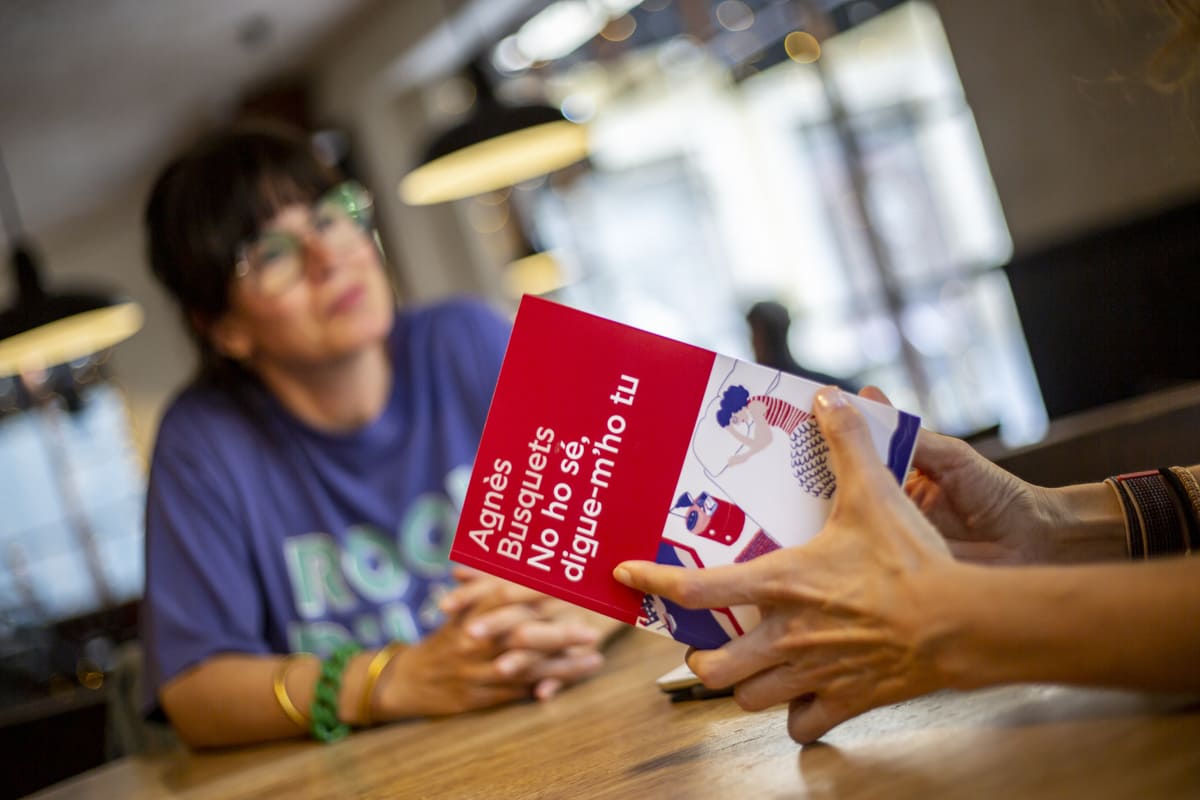
--- You have just debuted as a novelist with the book No ho sé, digue-m'ho tu (Navona). You say it is auto-fiction.
--- Because the germinated is me.
--- The protagonist is a woman, a mother, in a separation process, whose mother dies and a grandfather like yours appears. Sounds familiar.
--- The grandfather is the only one whose name, profession, or place I haven't been able to change.
--- When did you start to be aware that people lie?
--- (sighs). That lies hurt and that you can hurt by lying, I suppose in adolescence. When you enter adulthood and use lies as a weapon of mass destruction.
--- The protagonist lives permanently in lies and self-deception and there is a moment when she wonders if one starts by lying first to others or to oneself.
--- I wanted to talk about that feeling that often invades us of saying: "I am a fraud" because of the way I am, the way I do things, that you are a bluff, that you deceive people, that you pretend to be something you are not. And all this arises from a lack of self-esteem.
--- And to what do you attribute that lack of self-esteem?
--- Studying theater makes you compare yourself a lot with others. Being judged. And if you don't have your self-esteem very well placed and because of your ego you believe that in your micro-world you are "the best," suddenly that world opens up and you see that there are more people. Then you start to compare yourself on many levels. And the novel is born from wanting to discover if by lying to myself, what I am doing is lying to others. I don't know how you're going to transcribe that (laughs). It's a bit of paranoia.
--- Are you in favor of telling someone that they are being deceived?
--- Ugh, I am in favor of explaining, but sometimes I haven't felt capable of telling it. I suppose out of fear of getting splashed. In certain areas it is perhaps easier to warn than in others.
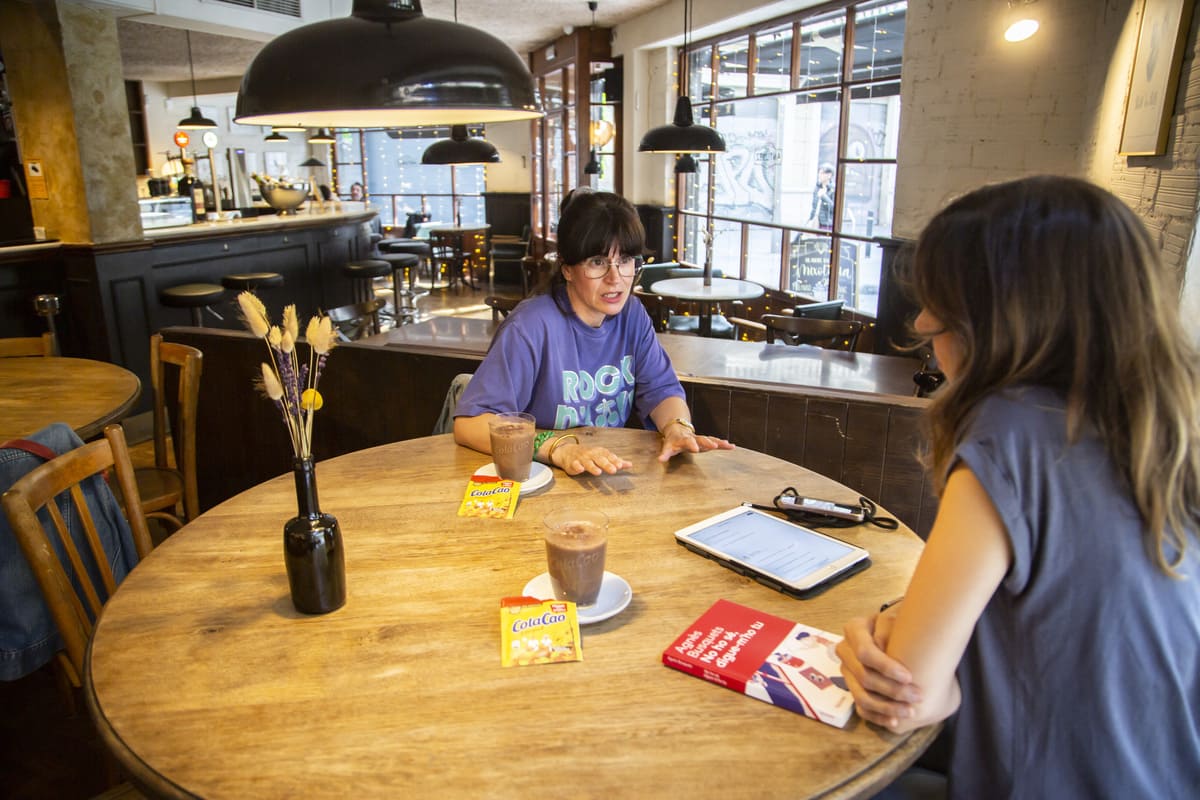
--- Who was the first person to read the book?
--- I sent it directly to Ernest Folch (the editor) because I was in a real mess. I delivered it at the last minute!
--- Before Ernest, no one read it?
--- Marta Bayarri, Marta Buchaca, Mireia Portas had read some things...
--- Has your son read it?
--- No. Nor do I think he will read it for many years.
--- Why?
--- Because he told me: "I won't read it." I also think he is not yet ready to read this type of literature. First, let him read lighter things.
--- I loved how it is written.
--- This makes me blush a lot. But when I handed it in for them to read, I always thought I had written something that wasn't so bad (laughs). Because also, since I'm not risking anything professionally, it doesn't distress me.
--- Your mother, Menchu, died almost a year ago unexpectedly. You hadn't finished the book yet. Do you think she would have liked it?
--- I was very scared. I thought, when they publish it, let's see how she takes it. Let's see if she understands that there is a lot of fictionalized stuff. Although nothing comes out that I hadn't already talked about with her.
--- It must not have been easy to have to finish the book in the middle of a grieving process. How did you manage it?
--- It has served me as therapy and, furthermore, my mother's death has transformed the book.
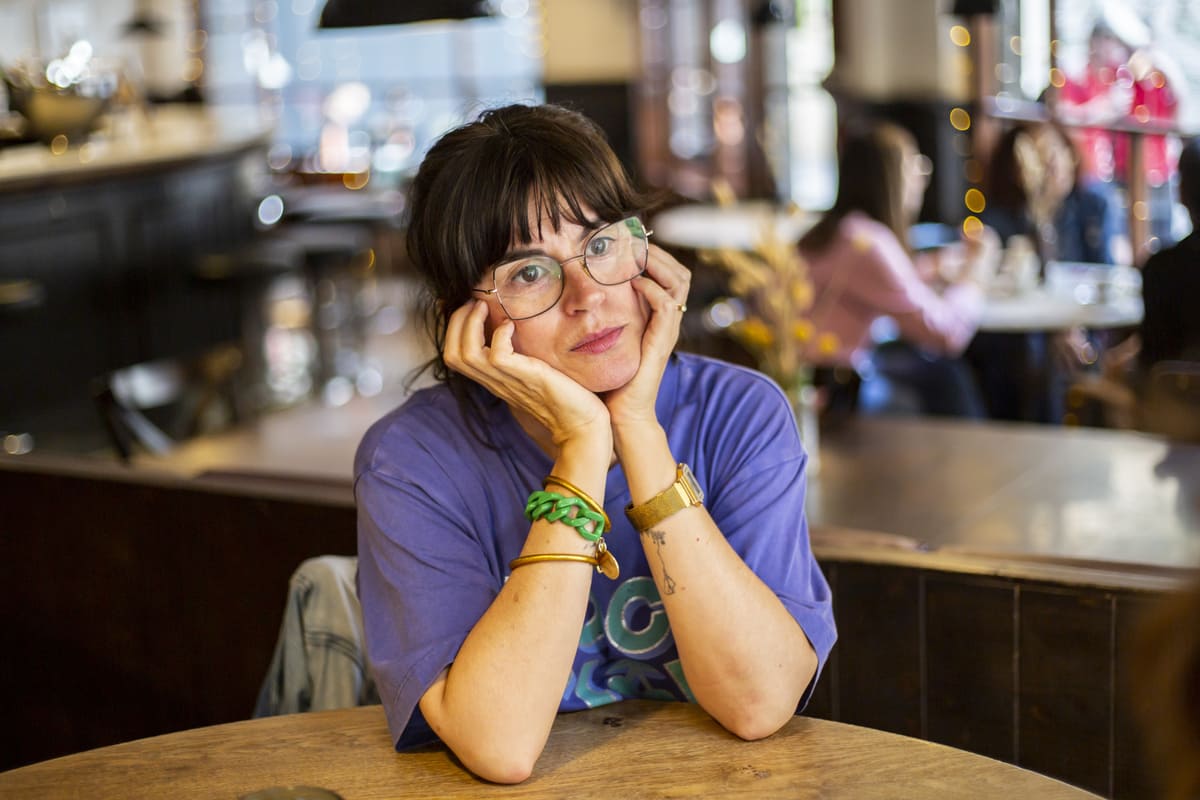
--- Yes, because this also happens to the protagonist.
--- The figure of the mermaid that has to keep coming out. And I discover that it is probably my mother. It has all been very intuitive.
--- A friend once told me that mothers never die.
--- It's true (she gets emotional)
...
With her, it was very hard for us to say "I love you" to each other, but lately we had been saying it. And now I say it a lot to my father. And I have already taught my son that this must be done and he already tells me naturally.
--- We are children of a generation for whom saying "I love you" was very difficult.
--- Because they have been the generation of practicality, of not showing feelings because life is about getting to the point. And there's also the Catalan thing of being closed off, of "let's not bother with bullshit." And then you would watch American movies and they were constantly saying "I love you" and it all seemed very strange to you.
--- The mother's influence on the protagonist is very important. Is it hard not to repeat patterns?
--- We learn by imitation and emotions are also learned by imitating. That's why it's sometimes hard to re-educate oneself.
--- Has being a mother been as you had imagined?
--- Now that I have a teenage son, I think I understand what adolescence is through the memory of my own experience; however, the chaos of when they are babies is another thing. I had a very hard time during that period. Probably because we are a generation that doesn't suffer much.
--- The book also touches on the difficulties we have when making decisions. If I ask you about the most difficult one you've made?
--- I am a person who finds it very difficult to make decisions, and if it's something that affects my son, don't even get me started. I would tell you that I am convinced that I made a very bad decision when, while I was doing a play with the company Menudos, the production company El Terrat offered me to go to Madrid and I went. And I believe that this decision penalized me a lot artistically.
--- What did you go to do in Madrid?
--- The show La última noche, which was supposed to be a kind of Saturday Night Live and which was a piece of shit, because they canceled it and the whole team had put a lot of enthusiasm into the project. Luckily, they themselves rescued me and I went back to Barcelona to do 7 de notícies with Toni Soler. The experience in Madrid didn't give me any visibility or repercussions. I earned money and that's it. And I feel bad because I made very good friends, but I believe that, if I had stayed at the Teatre Malic doing that play, my career at a theatrical level would have taken another path. It's the only decision I sometimes think: I screwed up here.
--- If it's only this one, it hasn't gone so badly for you either.
--- No, it hasn't gone badly at all.
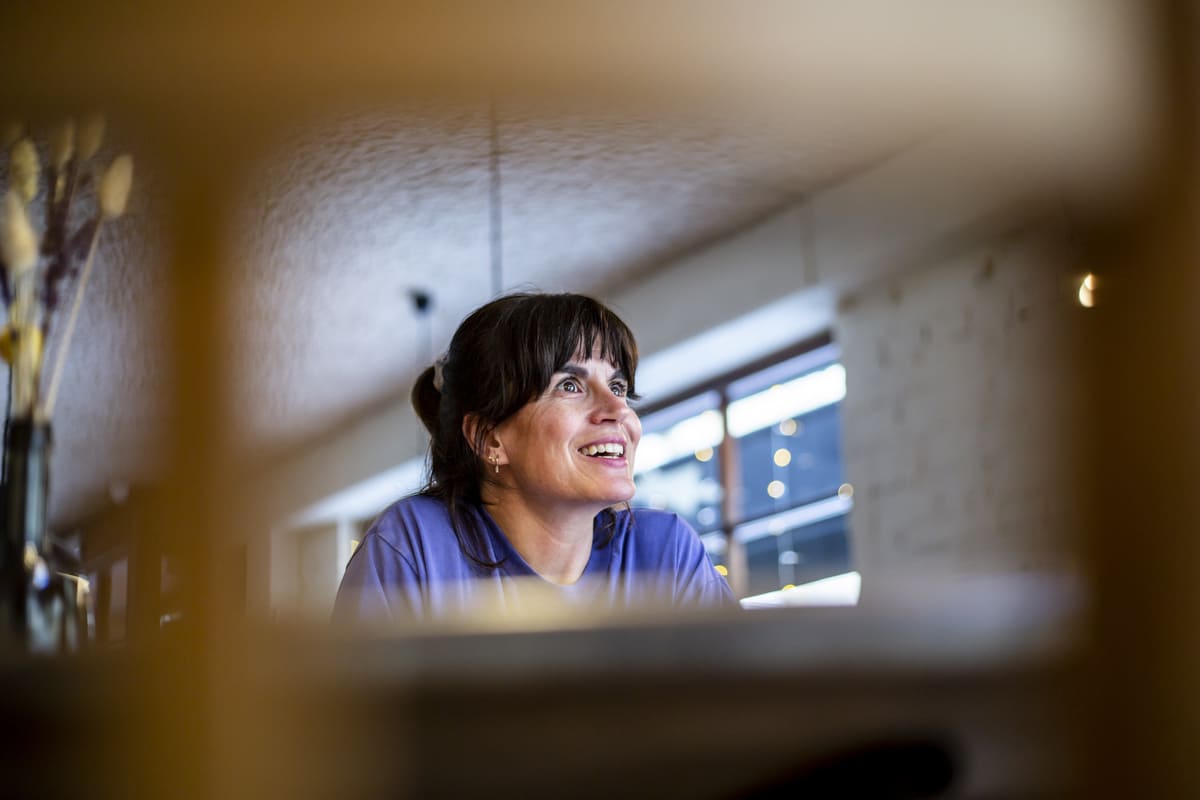
--- What are you like when you get angry?
--- Very visceral, I'm dynamite. I also tell you that it lasts relatively little. Now is when everyone starts: "What are you talking about! You hadn't spoken to me for a week!"
--- Do you care what people think of you?
--- Less and less.
--- Do you have a sense of humor?
--- Yes. A selective sense of humor, but I try to surround myself with things that make me laugh.
--- Is there a song that always makes you cry when you hear it?
--- My Favorite Things from The Sound of Music. When the harmony change came, I couldn't keep singing and I would burst into tears like an idiot.
--- You've been doing Polònia for almost 18 years. You're on your way to getting the Guinness record like your grandfather.
--- No, because my grandfather got it for being 50 uninterrupted years at the helm of a radio show.
--- That's why I say it, you're on your way.
--- No, man, no! At 70, I don't see myself doing Polònia. I see myself retired.
--- In one word, what has this show meant to your professional career?
--- Stability. Family.
--- Success?
--- I don't put it. I don't consider myself a person who has had success. The show has had success, but not me. And it's not false modesty.
--- Your son who doesn't read your book, does he watch you on TV?
--- Now he's starting to get embarrassed. He's a teenager, it's normal for him to start being ashamed of me, that's what's expected.
--- What are you preparing for after the summer?
--- Well, I'm very happy because I'll be doing Escape Room, with Borja Espinosa, Paula Vives and Joel Joan and we'll be at the Condal in December.
--- How do you like to drink your ColaCao?
--- With vegetable drink, rice or oat and very cold, with a lot of ColaCao.
Add The New Barcelona Post as your preferred Google source for free
Stay informed with the latest news.