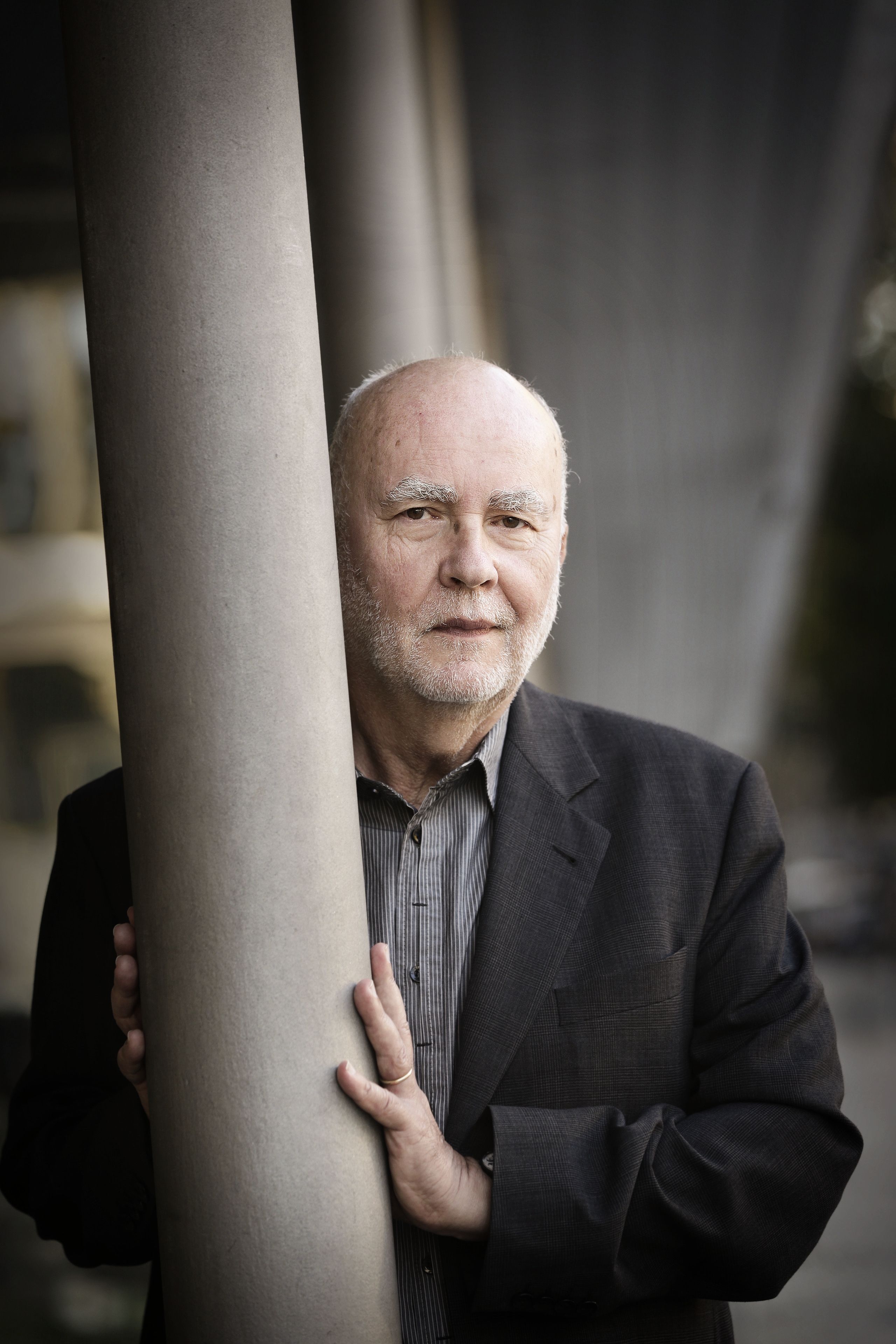
Adam Zagajewski looks out onto La Rambla from the Santa Mònica Art Center. The crowns of the yellow-leaved plane trees converge on the silhouette of the Columbus statue, with its bronze finger pointing to the sea. The Polish poet has always lived on shifting sands. Born sixty-nine years ago in Lviv, the Yalta Conference, which gave half of Europe to the Soviets, forced his family to move to Gliwice. In 1945, his cousins, grandmothers, uncles, and neighbors reunited in that city that had just been Prussian: "At school I studied Russian and Latin; in addition, I took private English and German classes. The fact that my family had moved —forced to do so— from Lviv to Gliwice well illustrated the great transformations that had taken place. My elders lost their memory, saddened in that ugly city where they were going to die...".
After Gliwice came Krakow: the young Adam Zagajewski studied Philosophy. In the seventies, he joined the opposition movement against the communist regime: "I felt good as a person, but I didn't quite feel like a writer. It was difficult for me to reconcile politics and literature...". Co-author with Julian Kornhauser of the impactful manifesto The Unrepresented World, in Poland he is identified with the Generation of '68, but his rebellion has little to do with the Sorbonne. In the Warsaw Pact countries, he points out, "we protested because tradition had been betrayed, but not in the sense of museums or bourgeois customs, but in what concerns human decency. In contrast, the students in Paris only fought tradition."
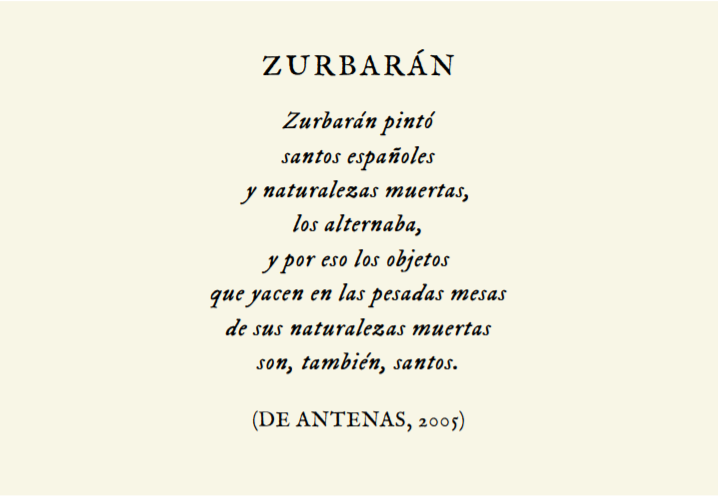
His signing of the Letter of 59 in 1975 led him to exile in Paris. The poet's gaze unfolds in more cities: Berlin, Houston, and Chicago, where he teaches literature at the university. He remembers West Berlin in the early eighties as "a very strange synthesis of the old Prussian capital with a frivolous city, fascinated by Manhattan and the avant-garde: sometimes I had the feeling that local intellectuals and artists saw the Wall as just another Marcel Duchamp happening."
In Paris—where he currently resides—, Zagajewski experiences the secret of eternal youth. In Houston and Chicago, the American passion of his youthful readings. When the 9/11 attacks occurred, the poet pays tribute to the victims. On that page of The New Yorker, where humor cartoons normally appeared, the 69-year-old writer and professor recovers verses from a childhood also marked by destruction. Those days of ash inspired an unprecedented epic of compassion: "Try to praise the mutilated world / Remember the long days of June / And the wild strawberries, the drops of rosé wine / The nettles that carefully covered / the abandoned estates of the exiles."
Although his works had been translated into English, Zagajewski was not yet a well-known poet. When editor Jaume Vallcorba included him in the Acantilado catalog, his collection of poems Deseo became one of the best sellers. The poetry collections Ir a Lviv, Lienzo, Tierra del fuego, Deseo, Antenas and Mano invisible are combined with the essays—literary or memoiristic— Solidaridad y soledad, En busca del fervor and Dos ciudades. Against the "every man for himself," the author vindicates a certain solitary heroism; a lyric tinged by memories: he composes a poem with entries from an encyclopedia of tragic European paradoxes. Having been born in Poland ravaged by totalitarianisms leaves its mark. Again, mutilation… "In autumn you picked acorns in the park and the leaves / swirled in the scars of the earth. / Praise the mutilated world, / and the gray feather a thrush has lost, / and the delicate light that errs and disappears / and returns."
When his editor, the late Vallcorba, faced his last summer, Adam Zagajewski dedicated "Chaconne" to him, a poem included in his latest book, Asymmetry, which was released a few months ago. The poet imagines Bach "in the stale air of a dark church / solitary like the pilot of a mail plane" playing the organ keyboard. Solitary and supportive, in this collection of poems he continues to recount losses as in his previous work, Invisible Hand. Toponymies in Polish, French, English, German... The four cities of a life, four periscopes to survey the world: "The first, in Poland, shows me my family tradition. The second, Berlin, opens me to German literature, to its poetry and its —already forgotten— yearning for the infinite. The third, Paris, the landscape of French culture, with its keen intelligence and its Jansenist morality. The fourth, Houston and Chicago is Shakespeare, Keats and Robert Lowell, to literature in particular, of passion and conversation...".
"Language, like the sun, can comfort many human beings. The enchantment of the world is a poet's duty"The Marx who inspired barbarities with a human face is imagined in the last winter of a humid and icy London: "He suspected he had proposed to the world / only a new form of despair," writes Zagajewski. Faced with the left-wing populism that keeps the author of Das Kapital alive, he responds with the authority of one who suffered "real socialism." Returning to Marx seems to him "a reactionary idea because it merely resurrects old utopias, a mechanical repetition of systems that already failed." The Europe that hesitates before a Putin with his hands on Ukraine and the gas tap has not made him lose hope. His poem "Europe is already falling asleep" is an antidote against banner anti-Americanism: "When Europe finally sleeps deeply, / America will watch / over the poor and silent world, / with suspicion, like a little sister." Growing up among the embers of the Holocaust, Zagajewski refused to believe that after all that it was impossible to write poetry: "Poland became an immense Jewish cemetery, the country of the Shoah. After the capitulation of the ghetto, what remained of the population went to the extermination camps and the Wehrmacht turned Warsaw into an ocean of ruins. Nature reconquered the city: among the rubble of the buildings birds nested and plants bloomed: A true paradise for ecologists!" To decorative poets, he opposes the transparency of his admired Herbert and Milosz: "We do not live for it, but to listen to another human being. It is a vehicle that should not be praised and even less, God forbid, lauded..." Poetry as survival: "Instead of marble, we have metaphors and similes. Ruins often serve to build a new city. Language, like the sun, can comfort many human beings. The enchantment of the world is a poet's duty. When we stop naming the world, it disinherits us and then all that remains is empty rhetoric, a hollow sound..."
Zagajewski again casts his gaze over the Rambla. We point out that opposite, hidden by the trees, is the Cuatro Naciones hotel: Chopin stayed there with George Sand on their Barcelona stopover en route to Mallorca. We talk about Spain. His poem "Flags" describes "wrinkled sheets of heroes" that cover our eyes... For this wandering poet, the boat people are the only nation without nationalism: "I find it difficult to analyze the degrees of patriotism. Nor can I condemn good-faith patriots, although there is a thin red line between that well-intentioned patriotism and the madness of nationalism that proclaims that we are the best...".
Awarded the Europe Poetry Prize in 2010, a regular in the Nobel pools, Adam Zagajewski enters the room where he will recite his poems. A slight clearing of the throat. The poet is eight years old again... "I had no talent for music. / Better to study languages...". After that unsatisfactory class, the child-passerby of the city of Gliwice returned home dejected: "And he thought with bitterness, with satisfaction, / that only language remained for me, only words, images / only the world...". The world, no less.
Add The New Barcelona Post as your preferred Google source for free
Stay informed with the latest news.