
From the curly cord telephone to smartphones and WhatsApp. Changing technology, but maintaining the essence and purpose: to support those who need it through active listening and immediate guidance, with the telephone as the channel. The objective of the Fundació Ajuda i Esperança is to offer social assistance from anonymity and confidentiality, to improve the mental health and emotional well-being of those who suffer from situations such as loneliness and lack of communication. The foundation has various specialized services, such as the Teléfono de la Esperanza (Hope Line), against unwanted loneliness; the Teléfono de Prevención del Suicidio (Suicide Prevention Line), and the chat for young people, which in 2022 totaled 43,000 calls.
The foundation was established in 1986 from an initiative launched two decades earlier in Barcelona. This initial project handled calls through the Teléfono de la Esperanza de Barcelona, which followed in the footsteps of the first organized emergency telephone assistance structure, founded in 1953 in the United Kingdom. Seventy years later, the service continues to operate in the Catalan capital, adapted to technological evolution and society's communication demands. And it has not only adapted, but has added services and technologies in recent years. In this context, it recently received support from the Institut Català de Finances (ICF) of the Generalitat, with a loan of nearly 300,000 euros, through the Crèdit Circulant line. The ICF works to ensure that entrepreneurs, freelancers, companies, and also entities like this one can promote their strategic projects. With this loan, the foundation improves its treasury to continue putting its telephones at the service of the citizenry.
Through its telephones, volunteers from the entity answer calls at any time of day, every day of the week, and offer support and guidance to whoever needs it. A team of a total of 400 volunteers and eleven foundation workers make this possible. Thus, it is an entity with a "small, but globally reaching" internal structure, according to the foundation's general director, Enric Morist. He warns that "having an emotional health problem or feeling alone is a ticking time bomb."
Telephone assistance to prevent suicide is the foundation's most specialized service, and has prevented 283 suicides that would have occurred immediatelyWhen one of the 400 volunteers receives a call to the Teléfono de la Esperanza, they offer active listening, and also guidance. They usually advise going to a health center, social services, or the administration. "We are complementary to the public system," and the Teléfono de la Esperanza provides initial care of people who initially rule out going to other services, explains Morist. In large part, they pick up the phone for the guarantee of anonymity: "Confidentiality is a strength" of the service, which is accessed by dialing 93 414 48 48.
Morist confirms that mental health problems have increased, and that this is a collateral effect of the pandemic. The data indicates this: the Teléfono de la Esperanza (Hope Hotline) attended to more than 34,000 people last year, a figure that represented an 8.3% increase compared to 2019, the year prior to Covid. This figure shows a progressive return to normality, after a 74% increase in 2020 compared to the previous year, and a 36.8% increase in 2021 compared to pre-Covid figures. Now, mental health problems "are the pandemic of the 21st century," warns the foundation's general director.
Covid not only represented a turning point for mental health, but also for the Teléfono de la Esperanza. Until then, all calls were answered from the Portal de l'Àngel in Barcelona, where its headquarters are located. The lockdown and the increase in demand led to the articulation of mechanisms to allow remote telephone assistance, and this has continued to function until now. Being able to answer calls from anywhere has allowed the network of volunteers to expand, regardless of where they reside: "It opens up the world to us."

This was not the only change the pandemic caused in the foundation. In the autumn of 2020, in collaboration with the Barcelona City Council, the entity launched the Suicide Prevention Hotline. This is the leading cause of death among men aged 15 to 44 in Barcelona, and the second among women, after breast cancer. Telephone assistance for suicide prevention is the foundation's most specialized service, and it has prevented 283 suicides that would have occurred immediately, according to Morist. They have achieved this through active listening and direct connection with emergency services, which are activated in cases of imminent risk of suicide.
The Suicide Prevention Telephone, at 900 92 55 55, handled nearly 6,000 calls in 2022, a 3.6% increase over the previous year. Among these calls, 86 were for imminent or ongoing suicide. Another 263 people had attempted to take their own lives during the month prior to the call, and another 482 had done so at some point earlier in their lives. The figures break the stigma that links a suicide attempt with a cry for help, and indicate that suicidal thoughts can return throughout life if adequate care is not received. Given this situation, volunteers selected through interviews receive specific training, complete internships, and have psychological support and supervision services.
A chat to reach young people
The pandemic brought to light mental health problems in a large part of the population, including young people. "We only see the tip of the iceberg," either due to growing emotional distress or because it is externalized more, after taboos around mental health have been broken. In the case of younger people, maintaining active listening by phone was not an option: they are reluctant to calls. Thus, the foundation and the Barcelona City Council launched in July 2022 the emotional support chat for young people, aimed at people between 14 and 25 years old. It was the first service of its kind channeled through the Whatsapp application, and has handled more than 2,000 conversations until October. The chat, which is activated with a message to 679 33 33 63, aims to combat the growing emotional distress in young people, after an increase in depressive states, feelings of loneliness, and suicidal and self-harming behaviors: these occur in 38% of girls between 13 and 19 years old, and in 20% of boys, according to a 2022 City Council survey.
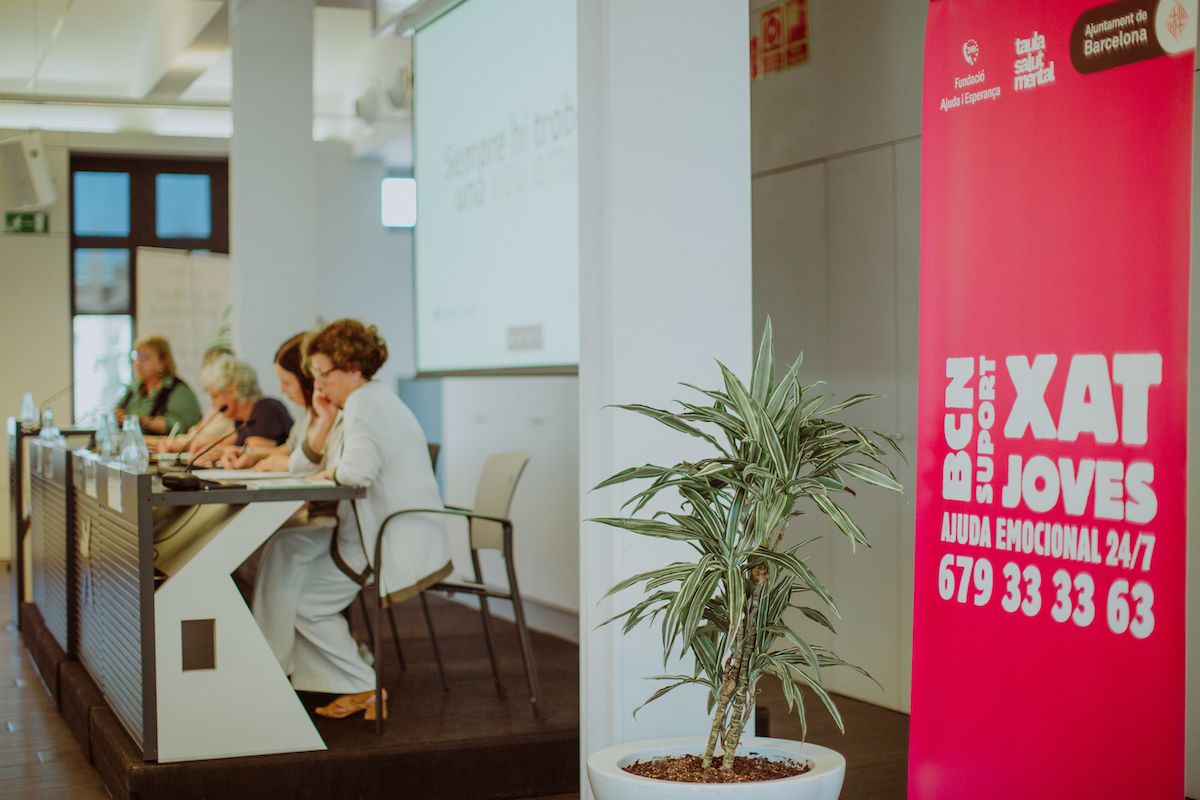
With 70% of the total contacts, young women are the main users of the chat, which can also be accessed by people in the environment of these young people and adolescents. Throughout the first 14 months of operation, the service has alerted emergency services on 25 occasions, due to the health and safety of the minor or young person being at risk. After the experience in Barcelona, the service is now expanding. The Generalitat and the foundation have activated the Obro Feel chat to offer emotional support to adolescents and young people between 14 and 29 years old. The project, as a pilot test, will also serve to early detect mental health problems such as depression, suicidal ideation, and eating disorders. After adding and expanding these services, the foundation now prioritizes making them known among young people. Among other channels, it will do so with dissemination and prevention campaigns in high schools, with the purpose of improving mental health in a society with growing emotional distress.
Add The New Barcelona Post as your preferred Google source for free
Stay informed with the latest news.
