ABB's innovation center is positioned to be a logistics 'hub'
The engineering team that the multinational has in Sant Quirze del Vallès is already responsible for four global robotics centers that develop technological solutions for the entire group
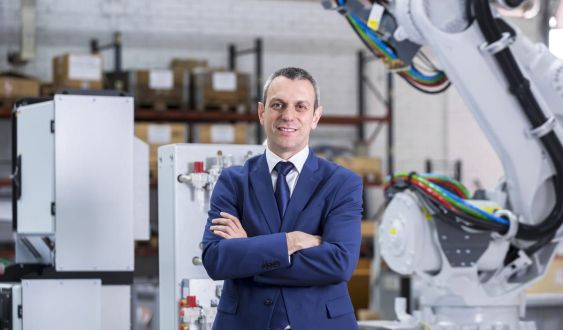
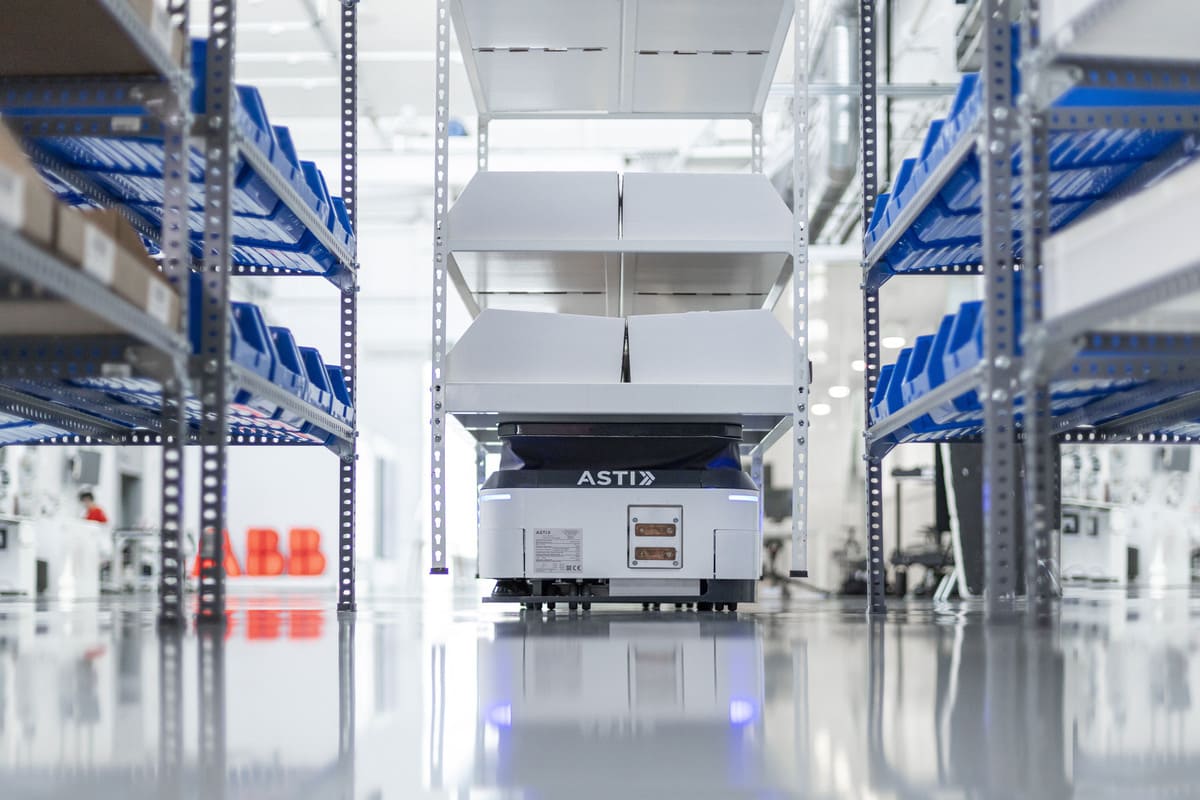
The engineering surrounding robotics, often custom-designed for the client, is what determines the efficiency and effectiveness of its application in industry and, at the same time, is the added value provided by robot manufacturers, such as the multinational ABB. This group, of Swedish-Swiss origin, develops global solutions for clients worldwide with the specialized work of regional teams, one of them located in Sant Quirze del Vallès. "Our facilities cover four of the fourteen advanced technology solution centers that the multinational has worldwide," explains Sergio Martín, general director of ABB Robotics and Discrete Automation for Spain and Portugal, because"we are the future of flexible factories and intelligent machines providing value-added solutions in robotics and automation of machines and factories""Our integrated automation solutions, our application experience across a wide range of industries, and our global presence offer tangible value to the customer," adds Martín. Currently, more than 50% of the projects developed by ABB in Vallès are destined for the automotive industry, but other sectors such as food and beverages, theretailand logistics are gaining ground. "Logistics is growing 20% annually, while the activity of other manufacturing sectors increases between 6% and 9% annually, therefore, it is a segment with a lot of growth potential, to which we will dedicate all our efforts," specifies the executive. This would allow the management ofSant Quirze opts to lead a new global solutions center for the entire multinational specific to robotics in the field of logistics,and even more so after ABB Spain incorporated, through acquisition, Asti Mobile Robotics Group, a global manufacturer of Autonomous Mobile Robots (AMR), based and manufactured in Burgos, in 2021. With this purchase, ABB has a complete portfolio of solutions for the next generation of flexible automation. "Between the two teams we create synergies ---the 250-person workforce of ABB Spain has been joined by Asti's 200 employees, who will reach 300 by the end of this year--- and we will be able to expand into other sectors," adds Martín, although Asti is more focused on manufacturing, but also has an R&D team. To the point that, given the global demand for collaborative robotics, the multinational is analyzing the implementation of Asti in China, with a robot factory that would be added to the three that the group already has in Sweden, the United States, and China. The incorporation of Asti marked ABB Spain's results in 2021. With four business areas (electrification, robotics and automation, motors and automation processes)the group managed to mitigate the impact of inflation and supply problems with sales of 564 million euros, 17% more than in 2020.The engineering for collaborative robotics is installed in the Customer Innovation Center (CIC).
Four of the 14 global innovation centers
For the development of the global collaborative robotics division, the know howof Sant Quirze in R&D will be basic. In this sense, Martín details the global solution centers he directs and which, in terms of investment, are nourished by the almost 21 million euros that the multinational allocates to its assets in Spain, mostly located in Catalonia. First, with a long history, in Vallès is located the R&D area for industrial automation and motion technologies mainly aimed at the automotive sector(press section), but with applications in many other manufacturing segments such as pharmaceuticals and food.
The multinational invests around 21 million euros annually in Spain
To this end, innovations do not cease. The engineers of Sant Quirze have advanced in another global solutions center, dedicated to the development of the necessary software to perfect the final finishing and assembly in the production lines and have specialized in offering complete assembly equipment solutions. "Our value chain includes intralogistics, pre-assembly, final assembly and quality inspection for automotive customers, adapting to existing lines or starting from scratch in new factories because, for example, the manufacturing of electric vehicles will require significant changes in assembly lines," says the head of ABB. Martín specifies that "car manufacturing lines have very little human interaction, but it is at the end of the chain where the vehicle is customized and where there is worker intervention and here we can contributeour specialized final trim and assembly solutions". "It is a very new and advanced technology that we adjust to automotive manufacturers and that gives us the capacity to apply it to other segments because it will be essential in aeronautics or food, among others." Robotics with solutions for large industry was Sant Quirze's first bet. In Sant Quirze there is also the company's 3DVM global 3D metrology applications center. A scanning technology for 3D white light sensors, using digital scanners, to optimize inspection and quality assurance in manufacturing, as it can detect defects in components manufactured with a very high level of precision. The fourth global center is theDigital Acceleration for Autonomous Mobile Robotics (AMR) with Artificial Intelligence (AI) and 3D Vision Mapping Technology, which began five years ago; a task to which it dedicates one of the company's most internationalized teams in Sant Quirze, with 15 engineers of seven nationalities.
Artificial intelligence and 3D vision have brought new solutions to the field of industrial robotics
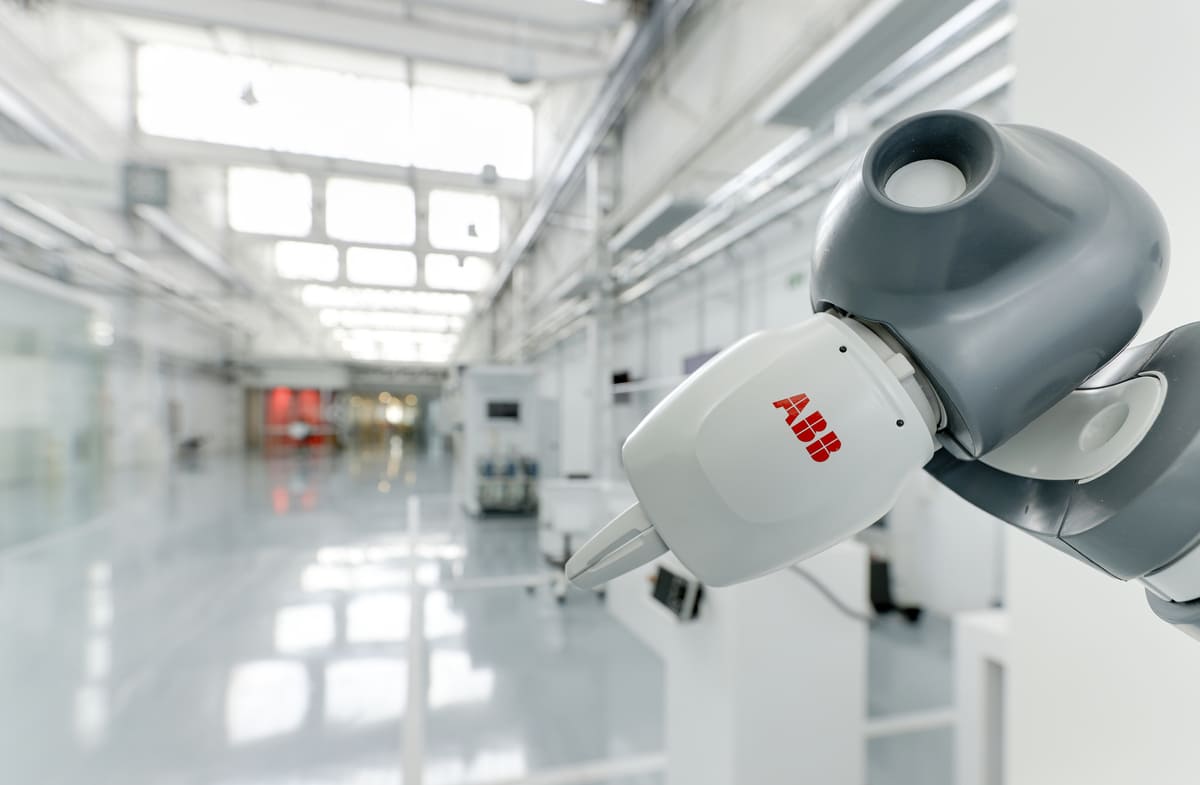
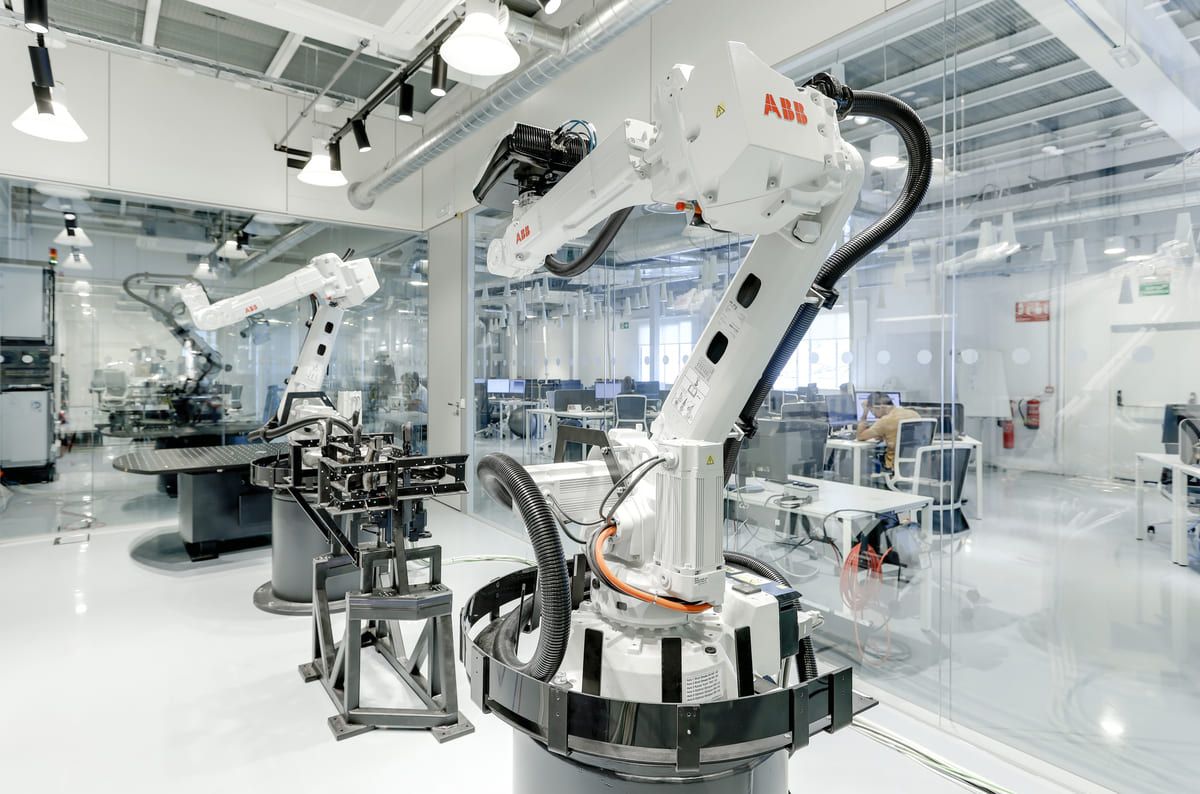
With the experience acquired, since January 2020, it also hasABB's collaborative robotics innovation center in Europe (Customer Innovation Center), in which it invested 15 million euros, with the aim of offering digital solutions in robotics processes, which helps unlock the potential of global digital manufacturing and industrial robotics and streamline the digital transformation of the industry. About 40 people work there. This collaborative robotics area is open "to all industries and SMEs that have an industrial challenge in any sector of activity," in fact, "the experience we are acquiring in this field allows us to enter into solutions for new sectors by designing technologically very sophisticated but compact and simple engineering, very easy to use and program, which can coexist in the production chain with the worker without generating any safety risk." But it also wants to be useful to individuals and public bodies, universities, sectoral clusters, startups, and technology centers, so that Spanish industry can accelerate the development of the next generation of robotic technology and automation."It is an ecosystem that contributes a lot to ABB counting on Sant Quirze to advance in technology and innovation",concrete Sergi Martín. Collaborative robotics is essential for improving competitiveness in SMEs.
Add The New Barcelona Post as your preferred Google source for free