To speak of Perifèria de la nit and its creator is to speak of the periphery of cinema, of that which always moves on the margins, outside the conventional and, undoubtedly, far from the commercial. And it is there where, apparently, one must look when the finger points to the possible and uncertain future of cinema, as Werner Herzog ventured in one of his conferences. The German director spoke of third-world cinema, of a peripheral cinema, of a more stimulating cinema, of a more innovative one, and a cinema that, definitively, on a planet dominated by Netflix, Marvel, Disney, and the universes of merchandising, did have something to say.
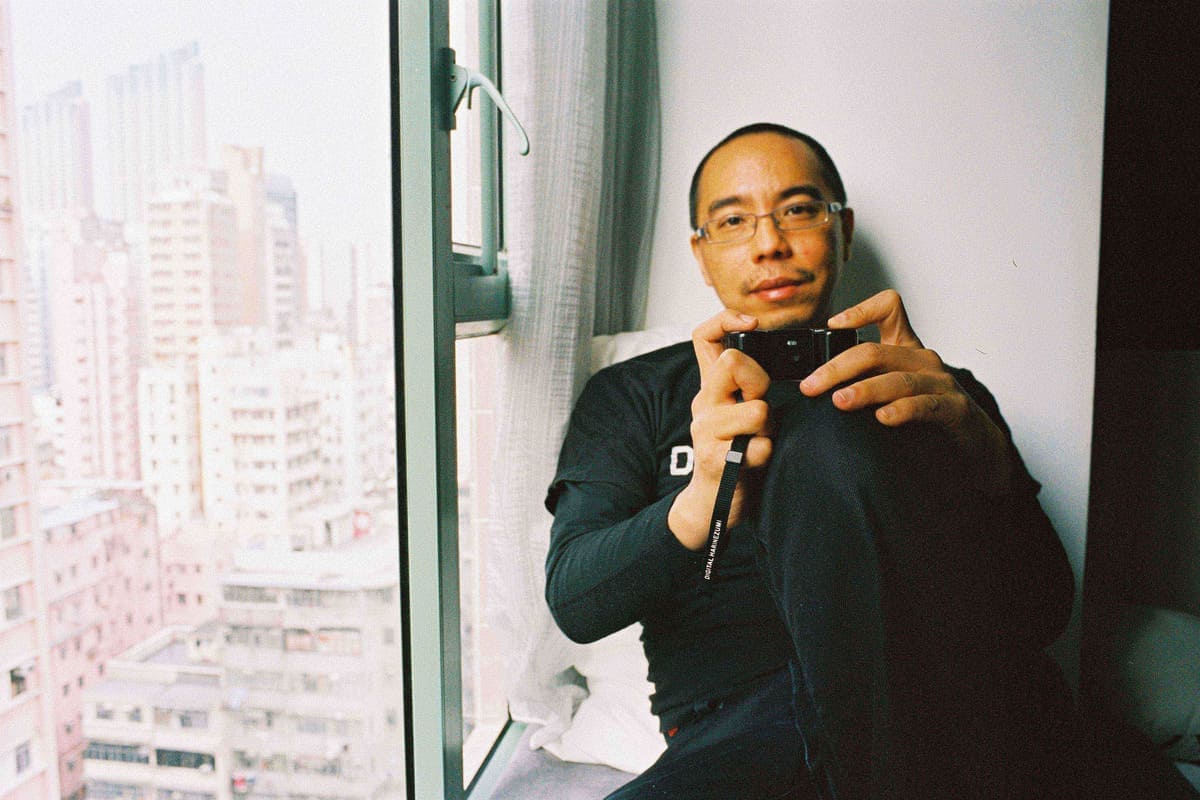
Apitchapong Weerasethakul (artist, film director, producer, and screenwriter) was born in Bangkok in 1970 but grew up in Khon Kaen (Thailand). He graduated in architecture and obtained a Master of Fine Arts from The School of the Art Institute of Chicago. In 1997, he co-founded the Bangkok Experimental Film Festival with Gridthiya Gaweewong, which he presided over three times until 2008. To distance himself from commercial and genre Thai cinema, he founded the production company Kick the Machine in 1999. In 2002, he won the Un Certain Regard award at Cannes for Blissfully Yours and in 2004 the Jury Prize for Tropical Malady. International recognition came with his work Uncle Boonmee Who Can Recall His Past Lives, with Spanish production, and with which he won the Palme d'Or in 2010, being the first Thai to achieve it.
His subsequent cinema has been widely acclaimed by European and international critics, participating in the Venice, Sharjah, Istanbul, Busan, and Liverpool Biennales, as well as dOCUMENTA 13 in Kassel (2012). His solo and group exhibitions have been shown at the Haus der Kunst (Munich), the Walker Art Center (Minneapolis), the New Museum (New York), the Irish Museum of Modern Art (Dublin), and the Musée d'Art Moderne de la Ville de Paris. His latest film, Memoria, starring Tilda Swinton, won the Jury Prize at Cannes (2021) and can be seen at the twelfth edition of the D'A Film Festival Barcelona.
The emergence of Weerasethakul's cinema can only be understood with the simultaneous revolution of digitally shot cinema, that is, with video cameras. A type of cinema that uses a more spontaneous language, in which it is easier and cheaper to shoot, where effects and tricks are often done with a home computer and in which the texture of the image is different, the length of the work, the editing process, etc. A cinema where it doesn't make much sense to try to emulate the result of 35mm film neither in planning, nor in framing, nor in the themes to be addressed.
A path that has made filmmakers like Albert Serra, Aleksandr Sokurov, Ulrich Seidl, Hong Sang-soo, Lisandro Alonso, or Pedro Costa, among others, famous. A way of understanding images that seduced Lynch in Inland Empire (or rather his producers), a cinema that moves away from documentary to delve into fiction without reservations and taking advantage of its limitations to create tension, a tension that can take us from the costumbrismo of a false documentary, to the limit of representing a fantastic or unreal event treated with the aesthetic of a television report.
We understand Periphery of the Night as an extension of Apichatpong's cinema. In the exhibition, which displays 13 works on 3 floors and covers almost 1,200 square meters of the Centre d'Art Contemporani de Barcelona, columns and windows are used for projections. The filmmaker reflects on the night, a common and absolute place where things happen, things that are always interesting.
The night recreated by the artist establishes a dialogue between nature and the very nature of the human being. Figures wander like phantasmagorias in the darkness as if they held the secret of an ecology of relationships, a supernatural balance that justifies our existence and our temporary passage through life. A non-linear time in the hands of the artist that leads to a primitive, yet postmodern, cinema.
The projections and photographs focus on a vigil, on a transition between dream and reality, between night and day, between life and deathOn the ground floor we findHaiku(2009), a journey through the rural areas of Thailand that becomes a political portrait,The Palace(2007), where abandoned dogs become guardian spirits of Taipei,Ashes(2012), where the artist denounces censorship in his country through images obtained with a camera that chops up the movement of the characters andSakda (Rosseau)(2012), a tribute to Jean-Jacques Rosseau for his third centenary.
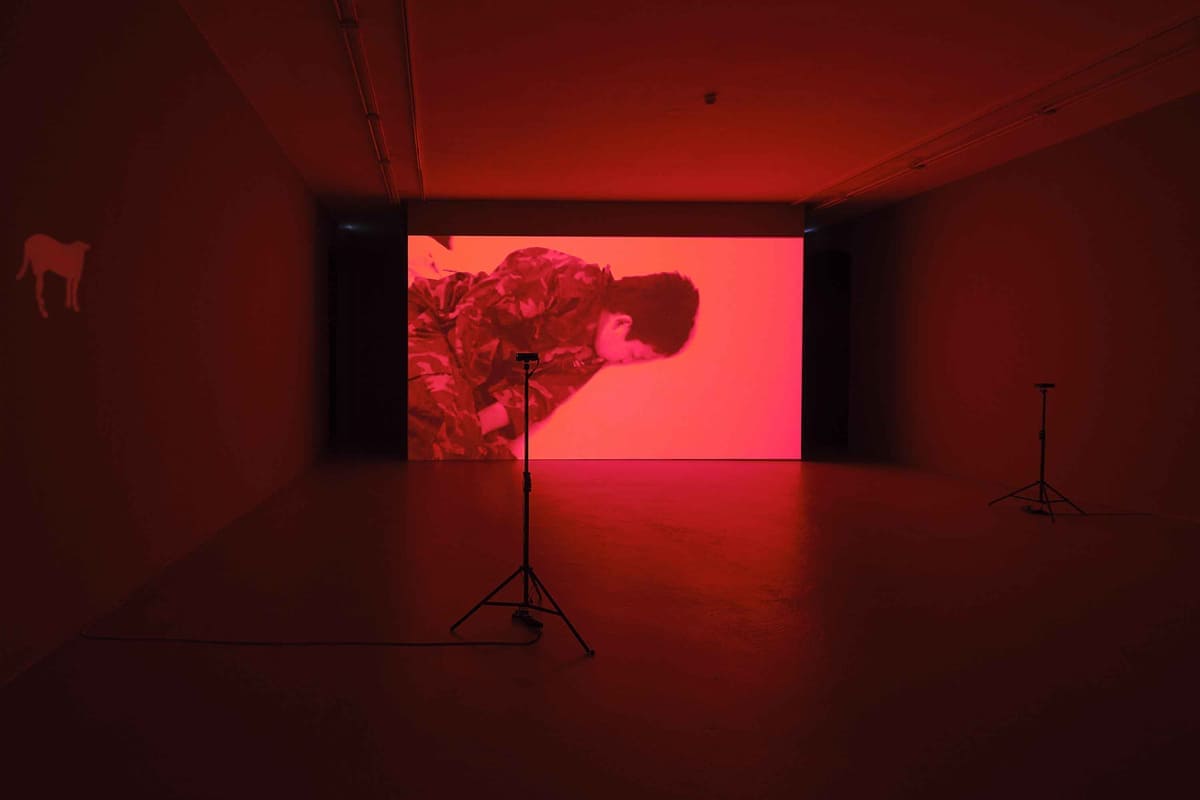
On the first floor, darkness and the sounds of nocturnal animals envelop the viewer, disorienting them. There we can see Phantoms of Nabua (2009), with the phantasmagoria resulting from political repression, Blue (2018), where a flame appears superimposed on the image of a sleeping woman, Fiction (2018), in which insects appear on the hand writing about sleep and time, and Fireworks (Archive) (2014): statues come to life as a symbol of political resistance to the central government.
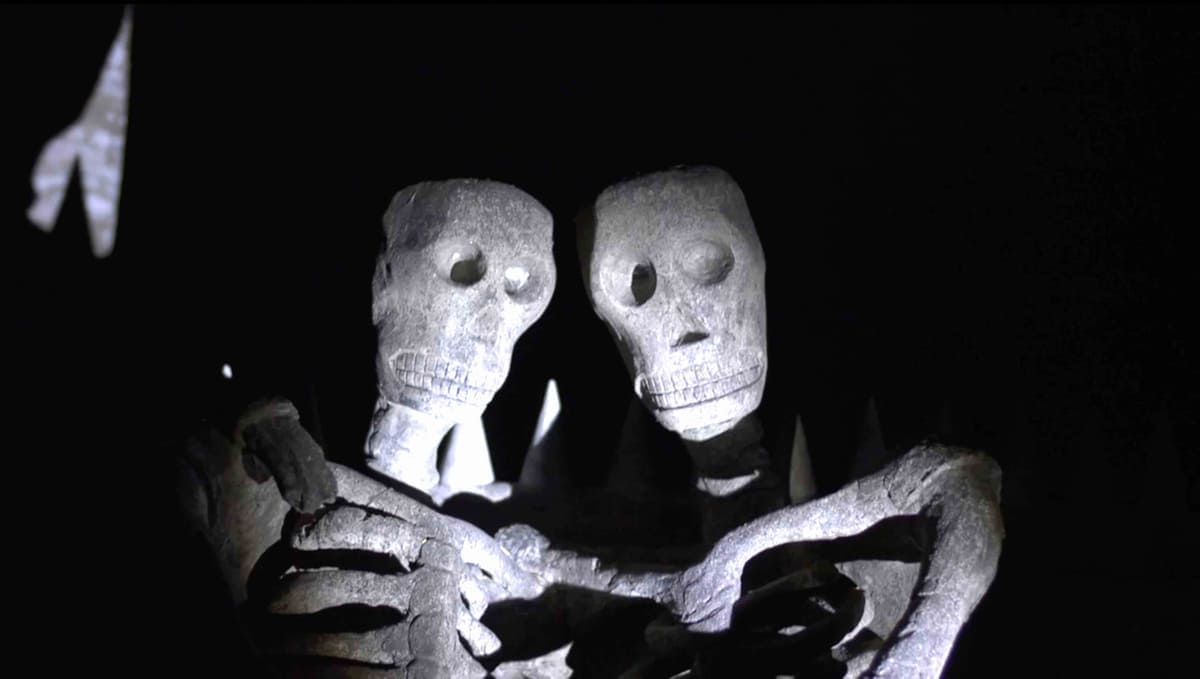
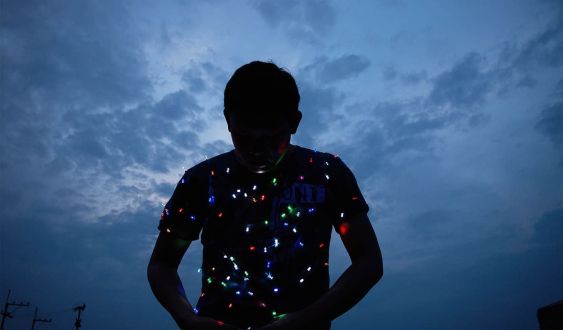
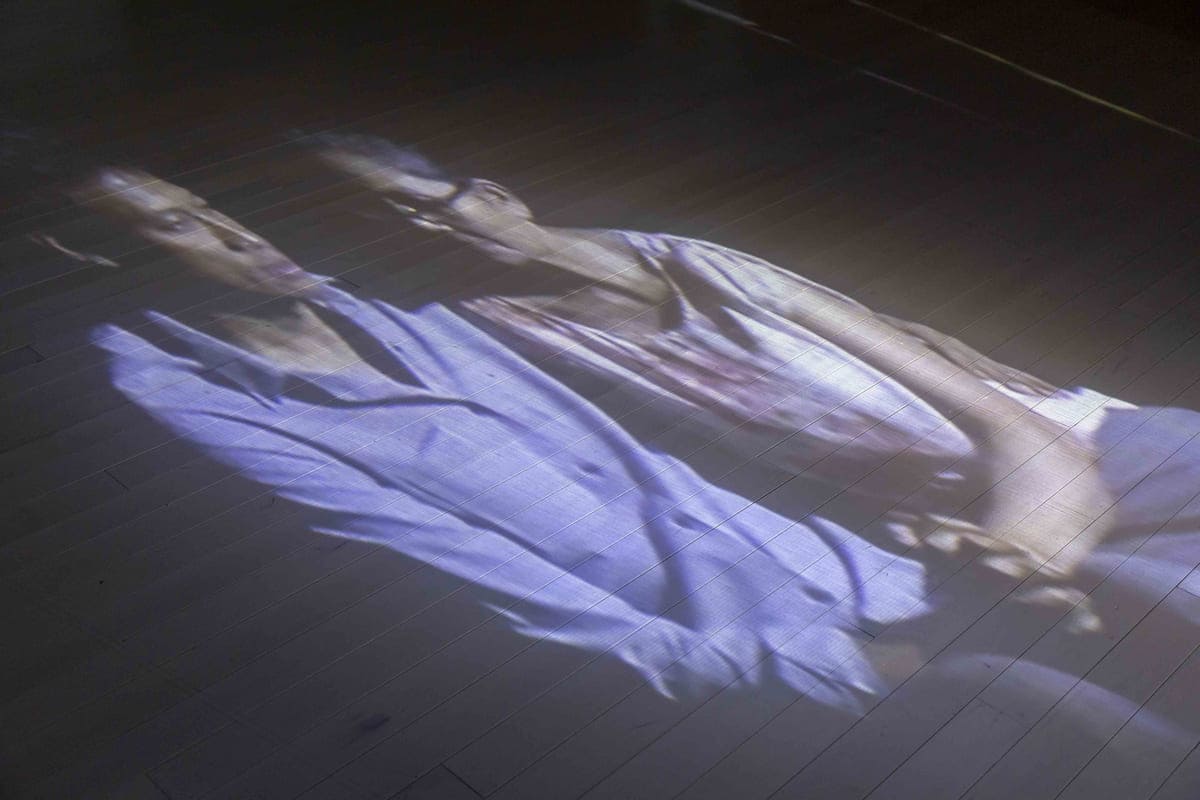
On the second floor we see Video Diaries (2001-20), 11 short memory videos with a cameo by Tilda Swinton, the photograph Power Boy (Villeurbanne) (2021) and the piece Durmiente (2021), in which the director again films Tilda Swinton sleeping on two simultaneous screens that separate reality and dream, with music by Ryuichi Sakamoto, and where David Sylvan recites Arseni Tarkovsky's poem Dreams. To finish, Teem (2007), in which the director records his drowsy friend preparing to hibernate on three screens, and Memoria, Nuquí (2017), where the nape of an actor with injuries, under the reflection of a red filter on a window, reminds us of a constellation or skin abrasion.
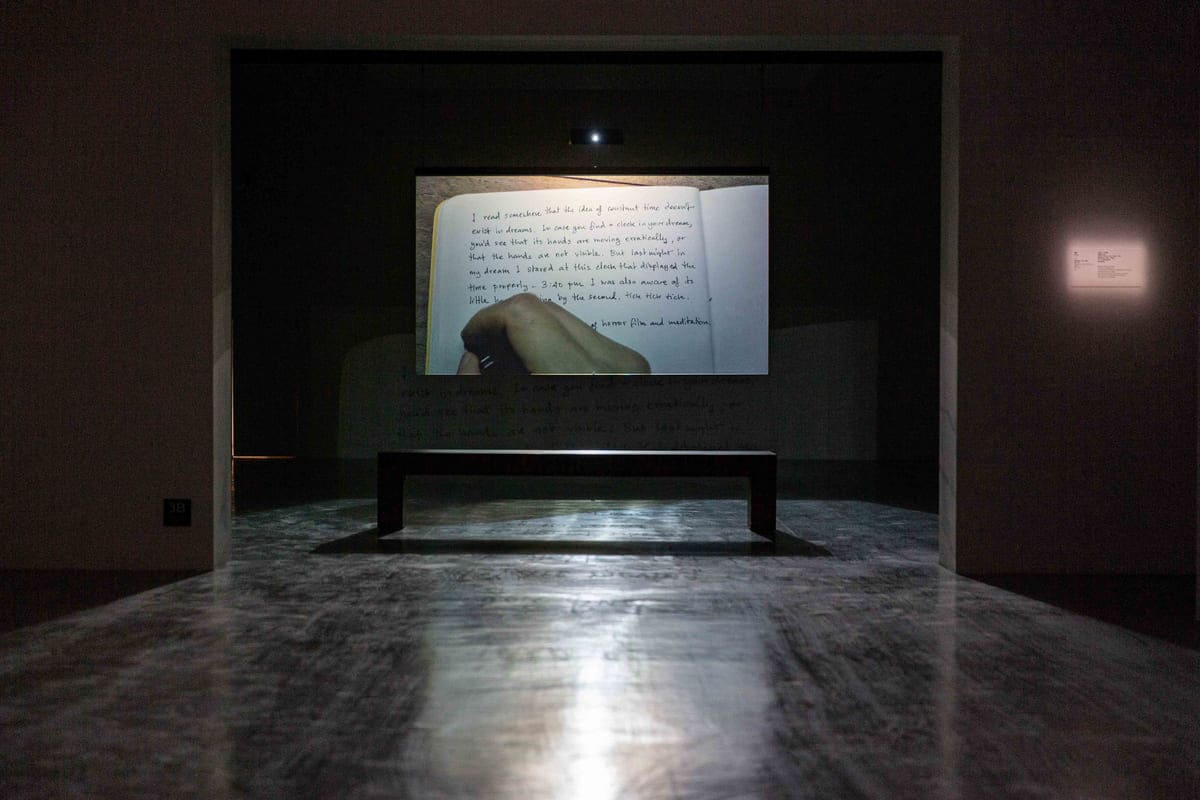
The recurring themes in Weerasethakul's cinema are fully represented in the exhibition: spirituality, old age, illness, love, family relationships, tradition, animals, ghosts of the past, the forest, the jungle... as well as the more political and protest-oriented aspect that the director contextualizes with the anti-communist repression that left a trail of victims and disappeared between 1960 and 1980 in Thailand.
The project, produced by the Institut d'Art Contemporain Villeurbanne/Rhôbe-Alpes (IAC) and with the collaboration of Fabra i Coats: Centre d'Art Contemporani de Barcelona, can be visited until May 22 and is the beginning of the cycle "Cinema beyond cinema", the center's proposal to address the relationship between art and cinema, which will include monographic exhibitions by Reinjelle Tepstra, Lúa Coderch, Albert Serra and Marine Hugonnier.
Add The New Barcelona Post as your preferred Google source for free
Stay informed with the latest news.