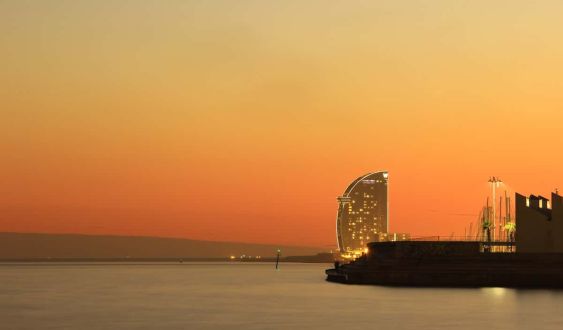
I returned to Barcelona almost ten years later and with a friend we rented a penthouse in Gràcia, next to Travessera de Dalt. The day before yesterday, going down Torrent de les Flors, a few meters from the corner with my street, I found a person coming out of a doorway. I'm going to call this person Q. With Q we had lived a spring and part of a summer in a town in Osona, in a secluded house on the outskirts. The other part of the summer we lived in Rome. In the middle of the dog days. The most intense hours of sun we spent locked in a room that I hope to always be able to evoke, and in the afternoon, we walked through one of the most pleasant street networks on the planet.
The encounter with Q surprised me. It had been more than a year since we had practically said anything to each other. And I was stunned when he confirmed what I most desired at that moment: Q lived on the first floor, first door, of the building where the encounter had taken place. That suddenly chance made us neighbors made me feel subject to the will of capricious gods. Perhaps it was a sign. Perhaps it was about recovering the relationship we had left behind and which, during this period of distancing, I had longed for on several occasions. The conversation was short. We were both in a hurry. We hugged and, before saying goodbye, he invited me to his birthday. It would take place two days later, on Friday, from seven in the evening on Nova Icària beach. The food was at the expense of the attendees.
On Friday at noon, upon leaving the office, I went to buy the ingredients to prepare hummus. While we lived together we often challenged our culinary capacity, and one of the most disputed dishes was hummus. This time I prepared it following his formula because, that way, incidentally, I recognized what I had never accepted: his hummus was always better than mine. I prepared it conscientiously. So conscientiously that I placed in it the expectations of a second origin in our relationship. On Friday, a few minutes past seven, I crossed half of Barcelona by bike.
Icària had been an old working-class neighborhood located on the road that connected the city with the Poblenou cemetery. The neighborhood fell into decline and was eventually absorbed by the urban plan of the Vil·la Olímpica. Icària, which is the name of a Greek island, was also the idyllic place that Etienne Cabet, a French philosopher and utopian socialist, used to contextualize the novel Voyage en Icarie, which more than a novel is a very long manifesto of social denunciation. And despite being first published in 1840, it is disconcertingly current. The novel also incorporates self-help concepts. In this case, however, outdated concepts, despite being, probably, more valid than much contemporary literature on the subject.
But Cabet, who in addition to being a philosopher had the makings of a mass leader, was not content with merely portraying the ideal community in a book, and seven years later, in 1847, he issued a call to build a real Icaria... in Texas. A large group of expeditionaries followed him, among whom were some Catalans led by the Barcelona doctor Joan Rovira. But expectations were frustrated when the promise of a large tract of land next to the Red River turned out to be an inhospitable terrain four hundred miles from said river. The feat ended with several schisms and a life marked by the economic hardship of a good part of the adventurers.
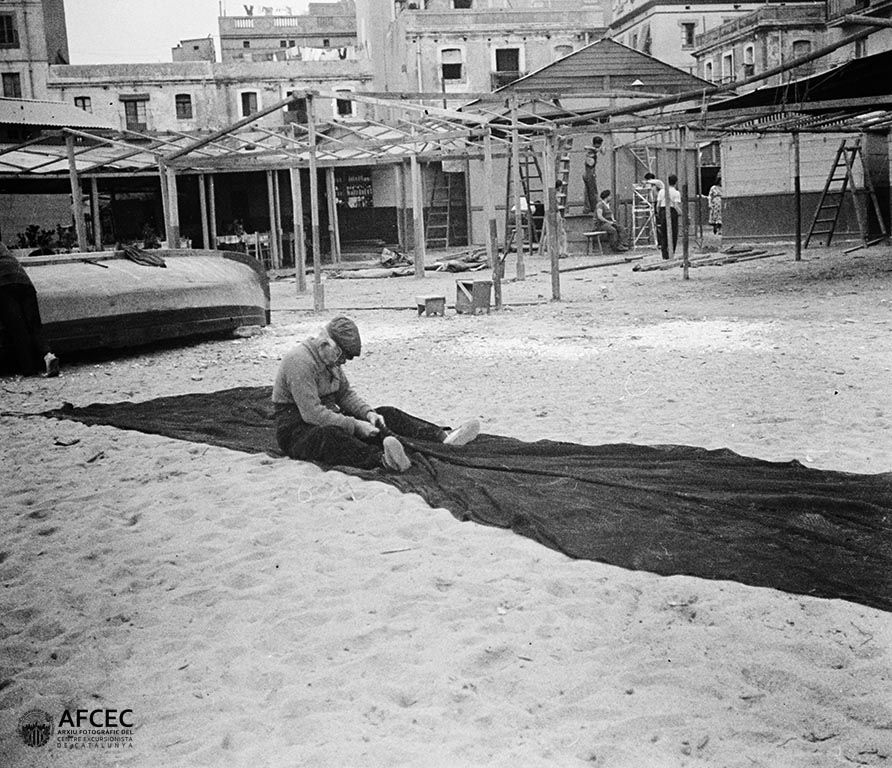
Meanwhile, on that same 1847, a few Barcelonians organized themselves into a community and settled in the lower part of Poblenou, specifically in the square known as Plaça de Prim (Fishermen's Square). This community of followers of the French thinker called themselves Icària. The Icarian postulates advocated for an egalitarian, peaceful society that supported social and economic progress. They trusted in the revolutionary potential of human faith and in the advances of modern industry. The vocation of the Icarian community in Barcelona aimed to eliminate inequalities and curb the then incipient capitalism. Some illustrious followers of the movement, apart from Rovira, were Narcís Monturiol, who had even financed the weekly La Fraternidad to disseminate the ideas, Abdó Terrades, Josep Anselm Clavé, or Ildefons Cerdà. In memory of this movement, in the Parc de la Nova Icària, also known as the park of bridges, there is a lake that has the shape of the Greek island.
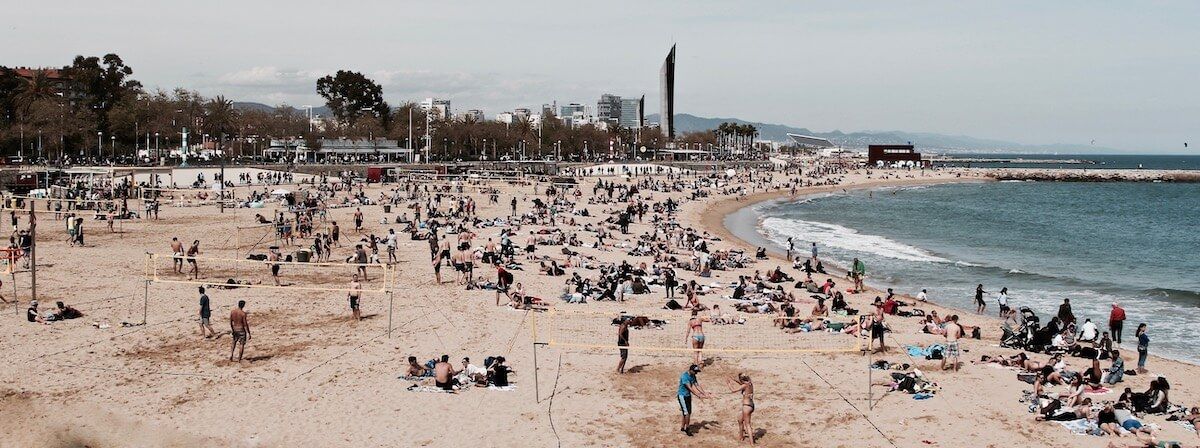
Once I arrive at Passeig Marítim, I park my bicycle and prepare to walk on the sand. On the beach there are various groups. They look like tribes. Each in their own world, with their rituals, their conversations, their laughter. The breeze is just enough to cool down without forgetting summer. I contemplate the beauty of the bodies, shining from a touch of the sea. I locate the group I'm meeting with when I think I recognize a friend of Q. I say hello and introduce myself to the rest. I'd say we're not all here yet. I take the lunchbox with hummus from my bag and some drinks and place everything on the cloth that serves as a picnic blanket. Little by little, the others arrive. I don't know anyone. I feel strange. The blanket starts to fill with more lunchboxes of hummus. Someone comments that Q is one of the people playing volleyball a few meters away. And yes, I soon recognize Q and am overcome by the same sensation I had felt two days earlier at the entrance of Torrent de les Flors.
A little over a century ago, very close to where we are, Barcelona was beginning to tiptoe into the sea. A still strange factor, that of bathing, which would gain popularity and end up deploying a good number of businesses. Some, as is the case of the Sant Sebastià baths, would even incorporate a restaurant and casino. Later, the recurring influx of the public to the beach led some fishermen to offer weekend menus in desolate shacks and tables arranged on the very sand of the beach. The dishes, homemade, economical and fish-based, soon became a tradition and the maritime beach bars gained notoriety. The contrast between those lean times and the current Barcelona along the Passeig Marítim is so marked that it shrinks the soul.
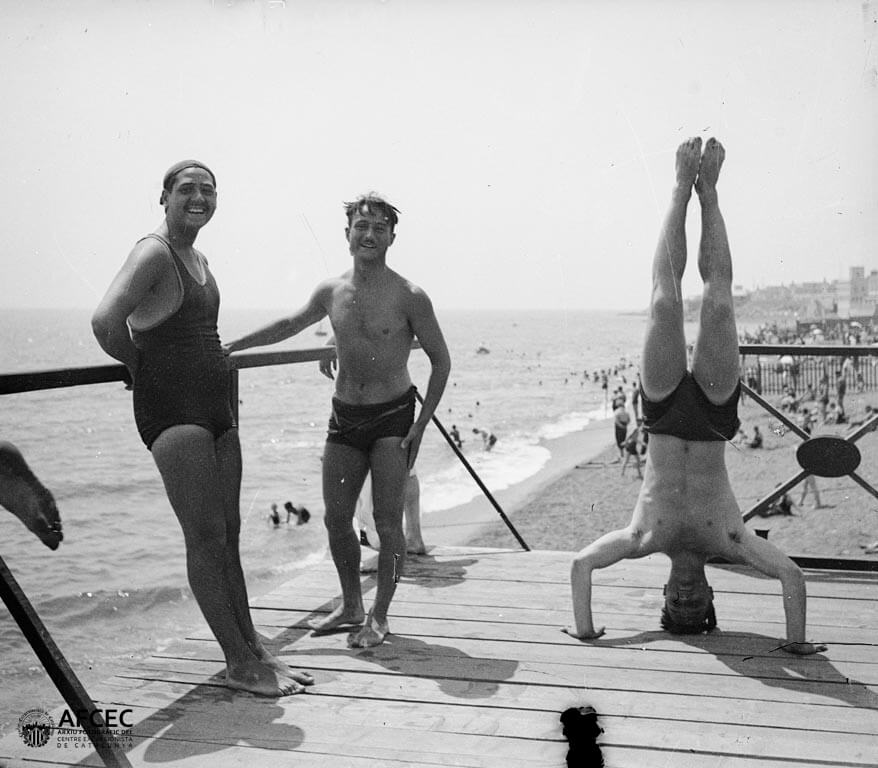
The volleyball game ends and Q approaches the diners. He greets some, apologizes and says he's coming, that he wants to get the sand off. I watch him go into the water and dive in. And how he comes out of it and how, with both hands, he wrings his hair. I can't help but remember us in a piece of paradise near Portlligat. Now, he approaches, smiling, and greets everyone one by one. He thanks me. Some have already started with the feast. I try to socialize but I do it clumsily because I'm too focused on Q and the hummus. And finally the moment arrives. He takes a julienned carrot stick and dips it in my lunchbox. He puts it in his mouth. He savors it, and then someone special appears. Special for Q.
Q, the person who insisted that I go out to see the full moon and I told him no, that I had to write. And why don't we go for a walk on the back road, he asked me. And I told him I couldn't, that I had to finish a budget. And have you seen what a stormy sky? He told me. And I replied yes, but that I was preparing a meeting...
Q and the special person for Q kiss. He must still feel the carefully prepared taste, I tell myself. I decide to leave discreetly. In a corner where some gifts have been deposited, I leave mine. And I think that ideals should be fulfilled more often. Even if only to save us the way back.
Add The New Barcelona Post as your preferred Google source for free
Stay informed with the latest news.