
In the Marina de Port neighborhood, on a street like any other, stands what was the home of writer Paco Candel (1925-2007). It is one of those homes where the vast majority live, with a facade of green awnings and clothes hanging out to dry. A staircase without an elevator, where the murmur of a TV turned on, even a reprimand, can be heard, leads to the apartment where his family lived during the sixties. Later, it served as an office and library for the man known as "the voice of the voiceless" and author of more than 50 books, among them, undoubtedly Els altres catalans, but also Donde la ciudad cambia, Dios, la que se armó, Ser obrero no es ninguna ganga, Historia de una parroquia. Los avanguardistas en la guerra, Los que nunca opinan and Un charnego en el senado.
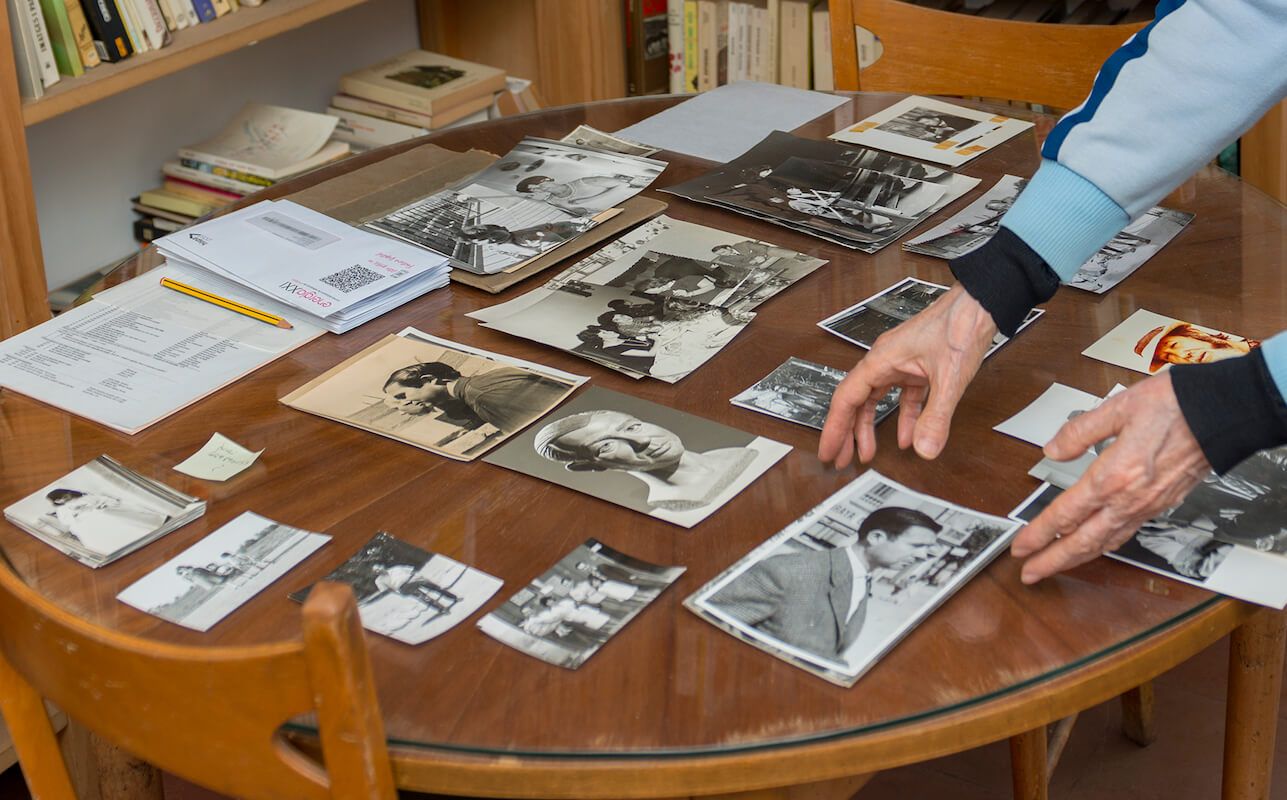
His daughter, María Candel, has preserved everything within its four walls, with countless books, many photographs, and even cowboy hats and some paintings the writer made when he wanted to be a painter. "Nothing has been touched, it's just as he left it," she says as she shows the snapshots that are part of the family archive, most of them taken with her father's Berlisa on the small balcony overlooking the living room. "We came when the neighborhood was being built. You pick up one of my father's diaries from those years and he explains what is being built in front, if the swallows are nesting or if it's raining on the tiles," María Candel recounts.
The apartment is not very big. Upon entering, the living room, with shelves full of books and sofas like those of yesteryear, never too comfortable. On the wall, hung paintings, including a portrait made of the writer, also some tongs he brought from his Valencian village, Cases Altes. There is the recorder he used, the pipes he smoked, and also a collection of knives, "some neighborhood quinqui would bring them to him," his daughter says. Then, through a small hallway, you reach the office, on the right, with a Torpedo typewriter and even more books. A little further on, the master bedroom, with a dress still hanging in the closet. And, along the way, a bathroom and a kitchen that have not been used for years.
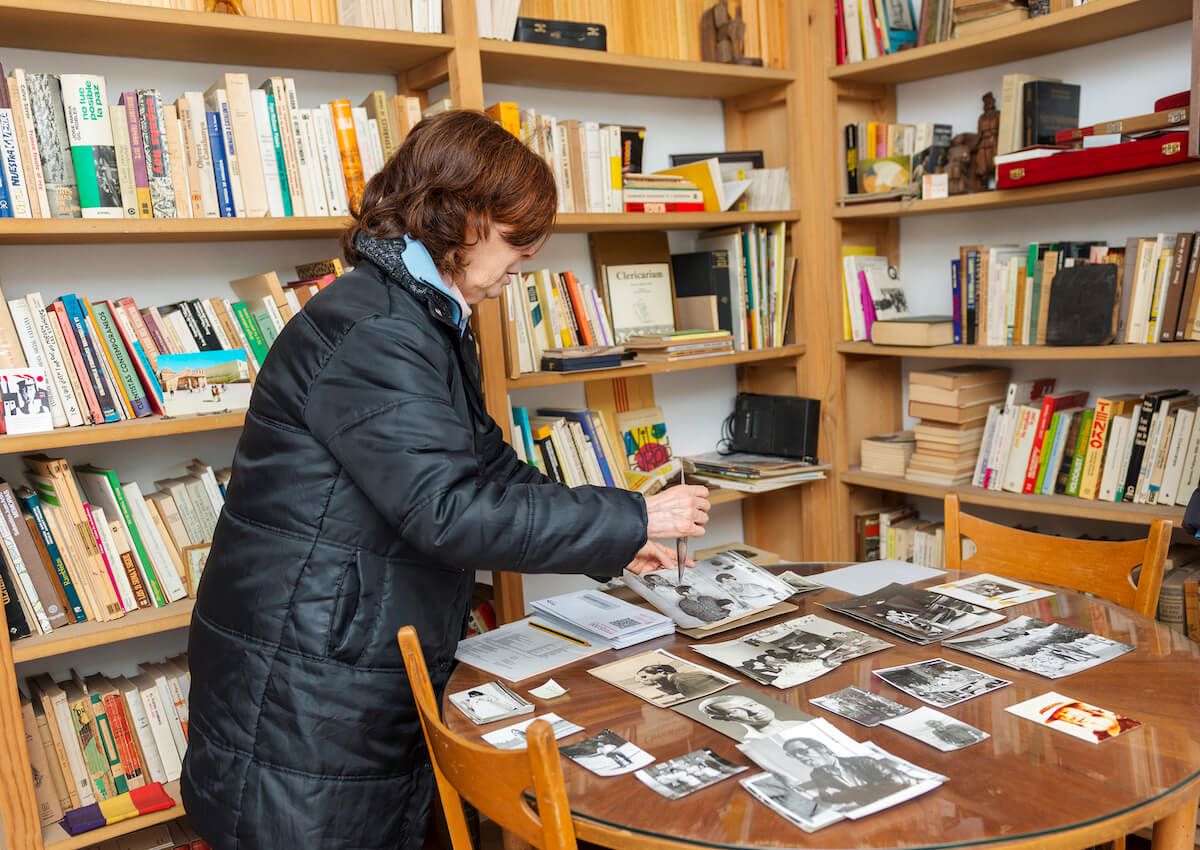
"These are the traces of what the writer lived literarily and socially," defends his daughter, engrossed for years in the arduous task of making this corner of Marina de Port become Paco Candel's house-museum, as so many other writers have around the world. "It's a way to preserve memory, defend his work, and reclaim immigration. You can understand an author in many ways, but this would be the vital one because you know that here he read and wrote, but also ate and slept. It's the most vivid way to have him," she maintains. And she remembers her father's friends who have re-entered the apartment years later and have acknowledged that "his atmosphere can still be breathed." "It's not made for show nor is it adulterated to display it sumptuously, but rather it is presented with humility and reality. You see that it's real," she emphasizes.
Paco Candel's house-museum, which does not require major renovations "being a humble house," only specific repairs, can be integrated into the literary routes that follow his steps through Montjuïc and the Zona Franca. The search begins for the vestiges of the shacks of Can Tunis where he lived in hardship when he arrived in Barcelona at barely two years old, with his father breaking his back in the Montjuïc quarry.
Then, one goes to where the disappeared Casas Baratas were, near the Parish of Mare de Déu de Port. It was there that Paco Candel's father worked as a sacristan and his son was able to soak up an imaginary of characters that he would end up portraying in his novels, often too faithfully and angering his neighbors. "They were a goldmine for his work: immigration, people with their problems, the shacks around, the progressive priest, the teacher... All of them were his little Macondo of a popular writer," María Candel remarks.
Afterwards, it's time to visit the house-museum, very close to the impressive mural recently dedicated to him by artist Roc BlackBlock coinciding with the 15th anniversary of his death. And without forgetting the Francesc Candel Library or the gegantó Paco Candel, from the Marina de Sants colla.
The Paco Candel school, in L'Hospitalet de Llobregat, a city where he was Culture Councilor (1979-1983) with the PSUC, is a bit off the route, but it would surely make for one of his books, having been in temporary buildings for 13 years. "He dealt with all the problems of the people in these neighborhoods, which are reproduced in a game of mirrors in all neighborhoods. He spoke of housing, transport, garbage, schools, nurseries, health services... He had a special sensitivity for those who are outside. He had the sensitivity to detect anyone who was marginalized, and then to defend them no matter what. How can we turn our backs on a person thanks to whom the neighborhoods have grown?", reflects his daughter, recalling that when he was seen sad and worried at home, it was not for anything personal, but for some story he had been told about someone who was having a hard time.
"My father had a special sensitivity for those who are outside. How can we turn our backs on a person thanks to whom the neighborhoods have grown?""Now, I think he would still see the world a bit as always, he wouldn't be too optimistic. Of course, he would still be concerned about what he would consider the great issue, poverty. Also the rise of the right, which is exacerbated and is trying to destroy the delicate balance that my father and other people created and that cost so much," ventures María Candel, who still has not lost the strength to make that house-museum a reality, one that vindicates a side of the city that is often ignored, waiting for institutional support to materialize to carry it out"This house-museum is in the heart of the peripheral neighborhoods, more culturally unprotected. It is not a sumptuous dwelling in the center, it is in an enclave that we have to defend," he emphasizes.
What will also have to wait is to see the promenade that the city will give him with his name. After years of not knowing where to locate it, no less, since 2008, the Barcelona City Council gave the green light last March to the future Paco Candel Promenade. It will be in the Marina de Prat Vermell, on a newly built road that will go from Metal·lúrgia street to Paseo de la Zona Franca, between Plom and Foc streets, nestled in a neighborhood that is growing with new blocks and hotels, far from the shacks that the writer suffered, but again forgetting many who remain voiceless.
Add The New Barcelona Post as your preferred Google source for free
Stay informed with the latest news.
