
Two years of government, a city that doesn't stop, and a mayor who walks. This could perfectly be the unofficial (but descriptive) subtitle of what was experienced at Casa Seat in a new session of the Moments Estel·lars cycle. Again, to close the course, alongside Jaume Collboni, mayor of Barcelona, in a relaxed but substantial format.
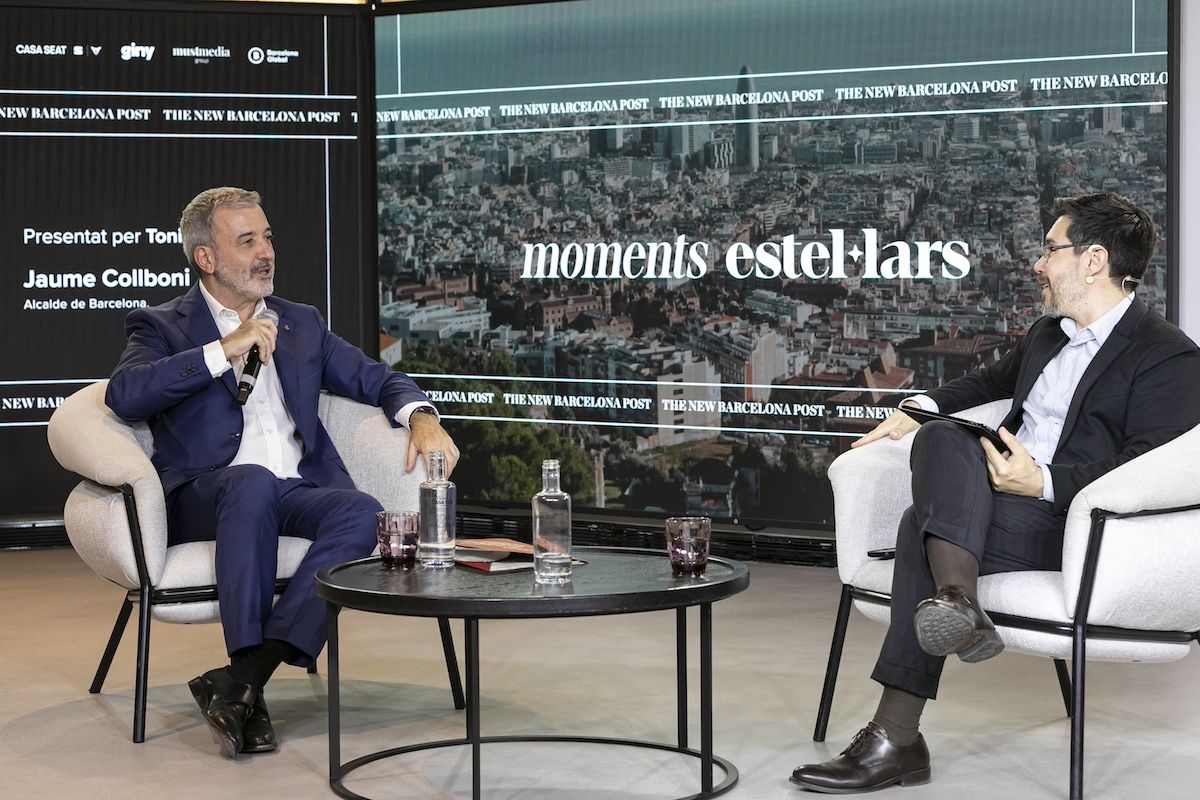
I led the conversation in the only way I know how: by asking questions and at the same time fostering complicity. And so it became a journey through the various lanes of this municipal politics that, being so everyday, we sometimes forget how strategic it is. And yes, there was talk of seagulls and pigeons, but also, and seriously, there was talk of political prisoners in Turkey and how local politics can be a global loudspeaker when discussing, for example, LGTBIQ+ rights and the need to defend them in cities like Budapest. "When Barcelona speaks, the world listens," the mayor likes to remind us.
But let's not kid ourselves: the golden minutes, for the audience, come when one descends from the sky to the asphalt. And specifically to the asphalt of Barcelona, with construction, bicycles, and the cleanliness (or lack thereof) of public space. Bus frequencies, more or less punctual subways, and a 2035 horizon that sounds like a science fiction movie but is already being governed from today.
Another prominent issue also emerged in the conversation: the awarding of the city's Gold Medal to all mayors, male and female, who have held the position. A gesture of transversal recognition that Collboni dropped casually... and which, as seen this very week, was not just a headline, but a fact.
Perhaps the best summary of this dialogue is a phrase overheard among the audience: "It's the first time in a long time that, being in the audience, in an hour, I haven't looked at my phone." That's not insignificant. This, today, is a communicative and political victory. Because talking about politics and managing to maintain interest is also a way of governing.
Collboni, "a mayor who walks," as he would like to be known, once again demonstrated, like so many others who, like him, work on the asphalt, that municipal politics is not the younger sister of anything, but rather the place where the most important things of everyday life are managed. That one can go from Budapest to the bus stop without losing the thread. And that, if the city does not stop, perhaps it is because, in some way, those who work for it do not either.
Add The New Barcelona Post as your preferred Google source for free
Stay informed with the latest news.