
Pasqual Maragall turned 80 this past week. The media dedicated a series of unanimously laudatory articles to him, and politicians of different stripes tweeted affectionate messages of happy birthday president. By his own merits, or perhaps also because he has been living with Alzheimer's for years, Maragall is one of the few living politicians who is practically no longer an object of partisan struggle. He has become a reference for the city and the country.
[subscribe_newsletter_esp]
For all these reasons, I have decided to dedicate this week's article to the man who was mayor of Barcelona between 1982 and 1997. Fifteen years as mayor is a long time, even more so if we compare it with the duration of leaderships and legislatures in these accelerated times of ours.
Walking through Barcelona, no one can doubt that Mayor Maragall left his mark. For this reason, now that the pandemic forces us to spend weekends in the city, it occurred to me that it might be interesting to choose some of the Barcelona settings that have been important in his career and recommend visiting them. Even, to link them in a kind of itinerary that can be done, all or in part, on foot or by bicycle. A kind of Pasqual Maragall route, you know.
Shall we start?
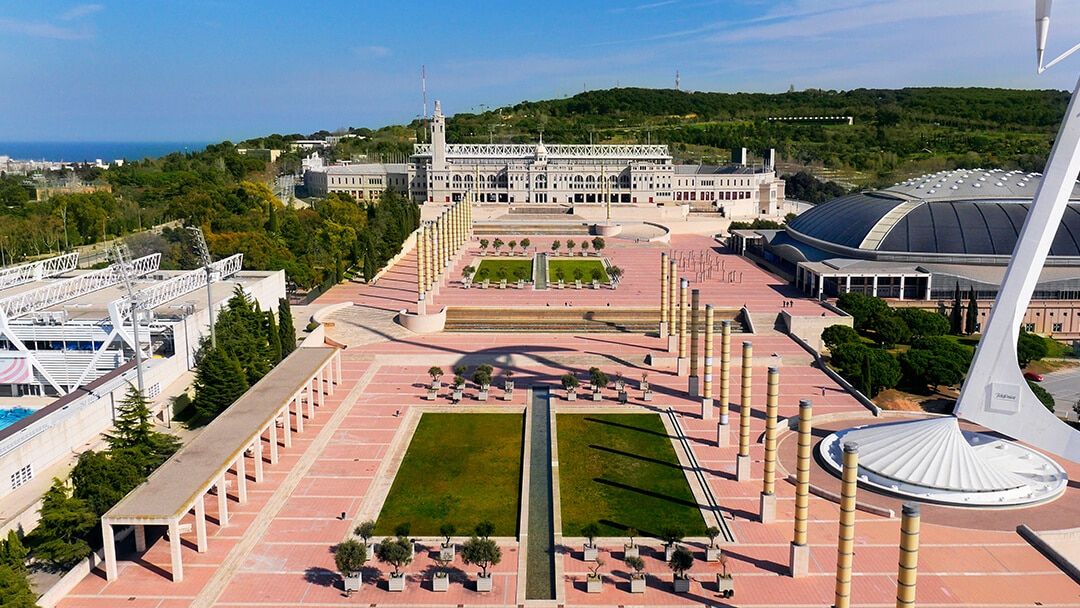
I propose that we start the walk on Montjuïc mountain, the main setting for the 1992 Olympic Games. We could say that Barcelona and Maragall staked their success or failure on the Olympics and, certainly, they were propelled forward. The world rediscovered the city and fell in love with it, and Barcelonans voted for Maragall again and again. I like to think that the Olympic Ring is a bit like our modern Acropolis. Among its components are the Palau Sant Jordi and the Estadi Olímpic Lluís Companys, an original work by architect Lluís Abellán Aynès profoundly remodeled for the Games, also Santiago Calatrava's Telecommunications Tower and the Bernat Picornell pools, built by Antoni Lozoya and Antoni Ricard, a delight for summers. It is as if the Olympic transformation of the city had been inspired by those verses by Martí i Pol so overused by our politicians: "Everything is yet to be done and everything is possible."
Shall we continue?
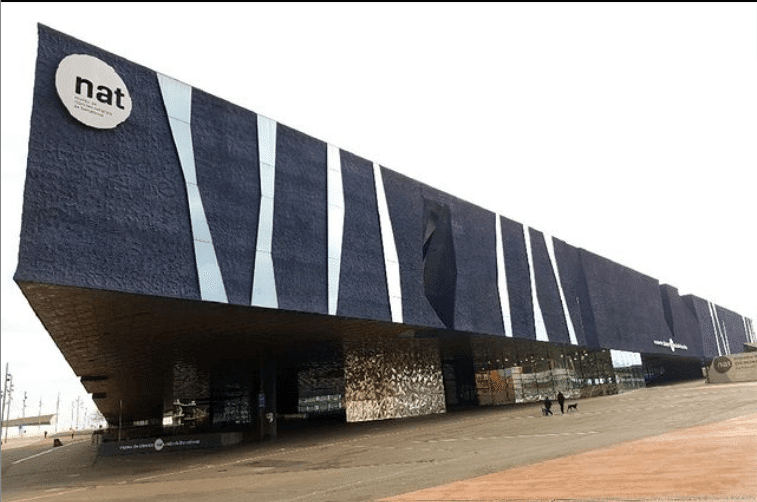
I don't want to be a party pooper, but now we will get to know a bit of the flip side of the Olympic dream. That is, the nightmare of the Forum of Cultures. We are in front of the Edifici Blau of the Fòrum. Do you remember the maragalladas thing? Well, you have a colossal one in front of you. I've gone a bit too far, haven't I? Agreed, perhaps that event wasn't so disastrous and, on second thought, the city gained quite a lot with the transformation of the Besòs river mouth sector, but it is evident that, in 2004, Barcelona did not manage to repeat the masterstroke of the Olympic Games. In any case, I recommend you visit the Museu de Ciències Naturals de Barcelona which currently occupies the Herzog and Meuron building.
How's the tiredness going? Perhaps we'll have to stop for a break at a Diagonal Mar terrace because now it's time to sweat. We're going to Collserola!
Here, we find another testimony of the Olympic legacy: the Collserola Tower, a communications infrastructure designed by Norman Foster. In 1998, from its viewpoint, located 115 meters high, Maragall announced his intention to run for the presidency of the Generalitat. It would cost him dearly, but he would achieve it.
We are in front of the Edifici Blau of the Fòrum. Do you remember the maragalladas thing? Well, you have a colossal one in front of youShall we go down?
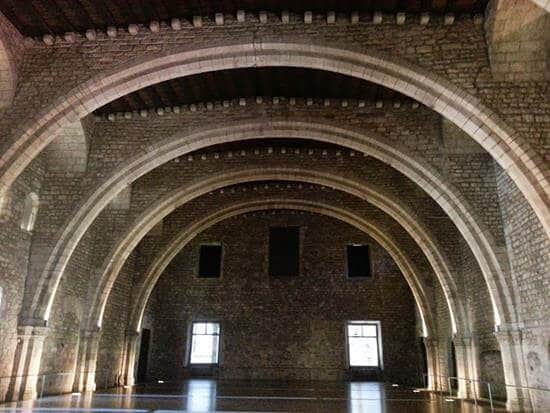
We are going to the city center, to Plaça del Rei. Here, we find one of the most important settings in Maragall's entire political career: the Saló del Tinell, where on December 14, 2003, the Pacte del Tinell was signed between the PSC, ERC, and ICV-EUiA, which led to the first tripartite government, with him as president. The Saló del Tinell is a magnificent example of Catalan Gothic. Commissioned by Peter III the Ceremonious, it is one of the three buildings of the Palau Reial Major de Barcelona along with the Capella de Santa Àgada and the Palau de Lloctinent. Currently, the Saló del Tinell is part of the Museu d'Història de Barcelona (MUHBA). I recommend you take advantage of the lack of tourists to visit it.
It's getting late and we still have one last setting on this kind of Pasqual Maragall route we are doing.
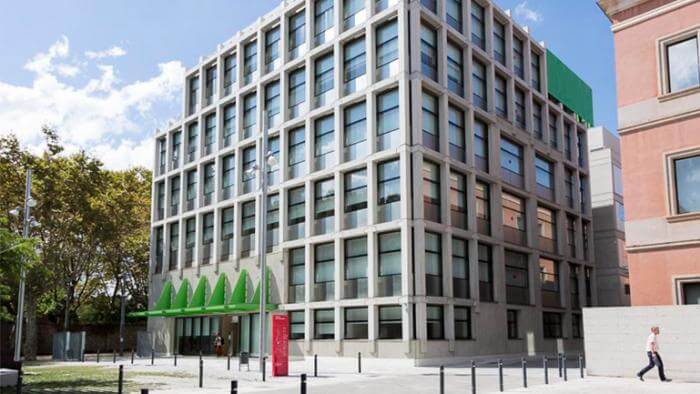
The Pasqual Maragall Foundation is the last major project promoted by the former mayor in the city and possibly the most ambitiousWe headed towards the Ciutadella, went around the perimeter of the park and on Wellington street,a few meters from the Parliament, we find the headquarters of the Pasqual Maragall Foundation, the last great project promoted by the former mayor in the city and possibly the most ambitious: to defeat Alzheimer's and achieve a future in which aging is associated with positive experiences. "I want to help defeat this disease. Nowhere is it written that it is invincible," said Maragall, and the valuable work that the researchers and professionals of the Foundation and its Barcelonaßeta Brain Research Center (BBRC) are doing shows that he is fulfilling it.
Add The New Barcelona Post as your preferred Google source for free
Stay informed with the latest news.