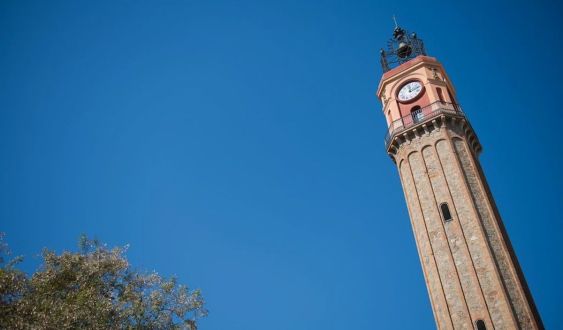
The clock tower in Plaça de la Vila de Gràcia is a relatively austere construction, compared to the many Barcelonian wonderfuls, but a physical and imperturbable symbol of a former independent town and its own spirit. It represents the trace of an alternative Barcelona, of a village, that which seems to be at risk of disappearing under the pressure of expats and the homogenization of global urbanism. The neighborhood that does not conform, that whistles at councilors and mayors if necessary, that recovers names and adorns streets or hangs flags, has a square and a tower with a clock so that no one forgets: the checkered tide of the Eixample, up to here, does not reach. Perhaps that is why the tower was made by the great urban planner alternative to Cerdà, Rovira i Trias, who does have a proper monument in the city. In the town, pardon. In the town.
Gràcia was a working-class, popular, highly politicized town with a strong self-awareness. Among convents, workshops, low houses, and still semi-rural streets, the town went its own way while Barcelona exploded outside the walls and broke the containment dike. Many workers, artisans, and middle classes settled there looking for space and a certain autonomy from the big city, just as viceroys and vicereines previously built summer towers or barons with grab bags made long excursions. In this context, the town square became the great political and social center. In the mid-19th century, it was called Plaça d'Orient (because it is located at the eastern end of the town). When the Town Hall building was installed there, it became Plaça de la Vila, and later Plaça de la República or Plaça de Rius i Taulet (until 2009, when its current name was set). It was around 1864 when the clock tower was erected in the middle of this square, this civil bell tower in Renaissance style, with a four-dial clock, which doubled the height of the houses and whose author is Antoni Rovira i Trias.
The Gràcia native Rovira i Trias is known above all because he lost (via "order and command" from Madrid) the most famous competition in Barcelona's history. When it was decided to urbanize the Eixample, his alternative project to Ildefons Cerdà's respected the paths and torrents, offered a less grid-like and much more monumental appearance, that is, with hierarchies, with various organic centralities, more similar to the great European capitals (and at the same time more similar to a capital with origins). A radial conception, with large avenues converging in centers of social and patrimonial value. The competition was won, as is already known and by cheating, by the grid-like genius of the borders.
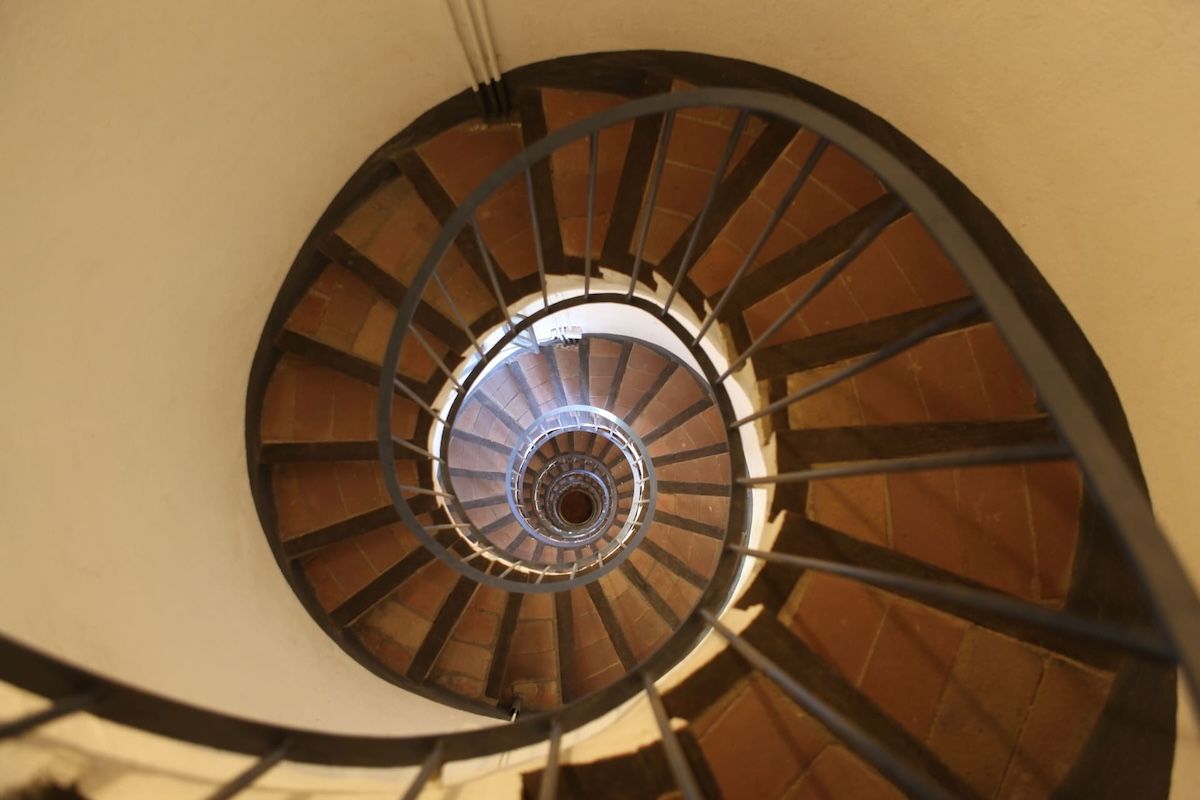
The Bell Tower of Gràcia (or Torre del Rellotge) is about thirty-three meters high and has an octagonal plan that gives it a very characteristic presence. It is a severe, rebellious, republican civil architecture, as if suddenly its bells had to ring for a somatén or announce the civil baptism of a baby. On the four faces of the base appear the coats of arms of the town of Gràcia, of Barcelona, of the Principality of Catalonia, and of the arms of Queen Isabel II. On the base panel facing the Town Hall building, there is a fountain with two faces from whose mouths water flows, and the cornice is decorated with twelve sculpted plaques representing the zodiac.
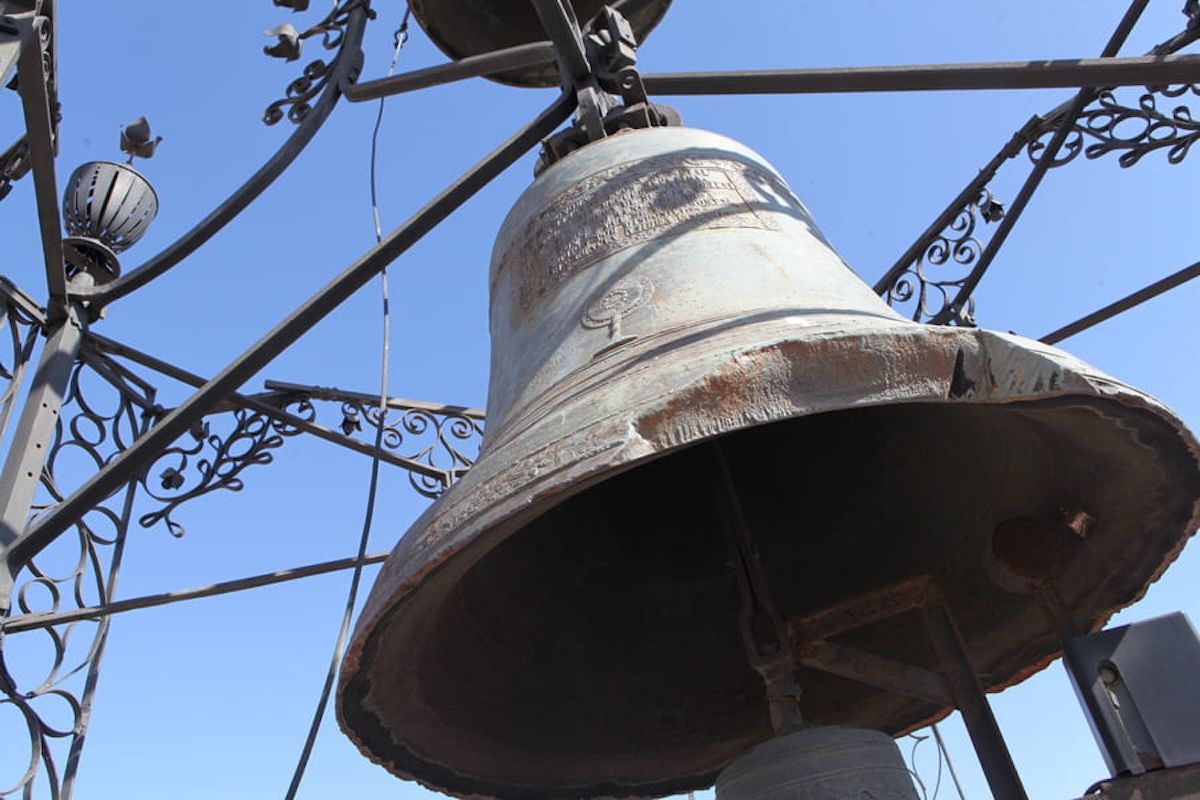
The municipal clock also functioned as the temporary heart of the town, as if the hours marked by the tower were different from those of the convents. The Marieta is the great bell of the tower, and it acquired an almost legendary value as a result of the Revolt of the Quintas of 1870, probably the most famous episode in the town's history: the system of quintas forced many young men to join the army, and the popular classes perceived it as an enormous injustice (since the rich could often pay to avoid military service). The indignation erupted strongly, and Gràcia was filled with barricades and popular resistance. Finally, the army bombed the town to quell the uprising. The bell became such a powerful symbol of resistance that the authorities ordered it to be silenced. Subsequently, in 1929 and in the midst of the dictatorship, popular pressure managed to restore the bell to its place after an attempt to melt it down for uses of the International Exhibition.
When Gràcia was annexed to Barcelona in 1897, the tower remained as a physical reminder of the old municipal autonomy. And it even gave its name to publications such as the republican satirical weekly "La Campana de Gràcia" ("it will strike a blow every week") or later "l'Esquella de la Torratxa" ("It will give at least a few cowbells every week"), as well as giving its name to a figure of the gegantera group: the gegantó Pepitu Campanar.
Now, with its particular jet lag (if it isn't the rest of the planet that has jet lag), the clock of the villa de Gràcia seems to remind new international residents that there is a real life here. A time, a rhythm, a perspective, and a worldview of its own. It is not just a heritage asset, but also a watchman or a night watchman who seems willing to keep gentrifiers at bay. Them and Ildefons, who had to stop in Còrsega (street G) and negotiate with the layout of the promenade that connected the old villa with the city. Whether they want to see it or not, Barcelona, in addition to being a city, is the capital of a people. Gràcia, with its tower, is the trace of a people within the capital.
Add The New Barcelona Post as your preferred Google source for free
Stay informed with the latest news.