A brief, but magnificent, analysis in book form titled Proyecto Barcelona, edited by Libros de Vanguardia and by journalist Miquel Molina, one of the most involved figures in recent times to help the Catalan capital regain the pulse and projection it had shown since 1992, has recently appeared. Molina, deputy director of La Vanguardia, makes the book's subtitle, Ideas to prevent decadence, a declaration of intent and a clue to the reader about what they will find in its pages.
Barcelona is currently dominated by a certain state of discouragement, in a generalized public opinion that opportunities are being lost and its presence in the leading group of cities has been ceded. Several factors contribute to this state of mind, from political conjunctures, debated urban planning and mobility actions, and, above all, the effects that the pandemic is having on the economy and society in general.
Molina speaks lucidly about all of this. Not everyone may agree with what he presents and proposes, but, even so, it is important to read what he says. This week he was supposed to have given one of the book's presentations, but Omicron prevented it. I haven't been able to hear him live, but I have been able to chat with him and share some reflections.
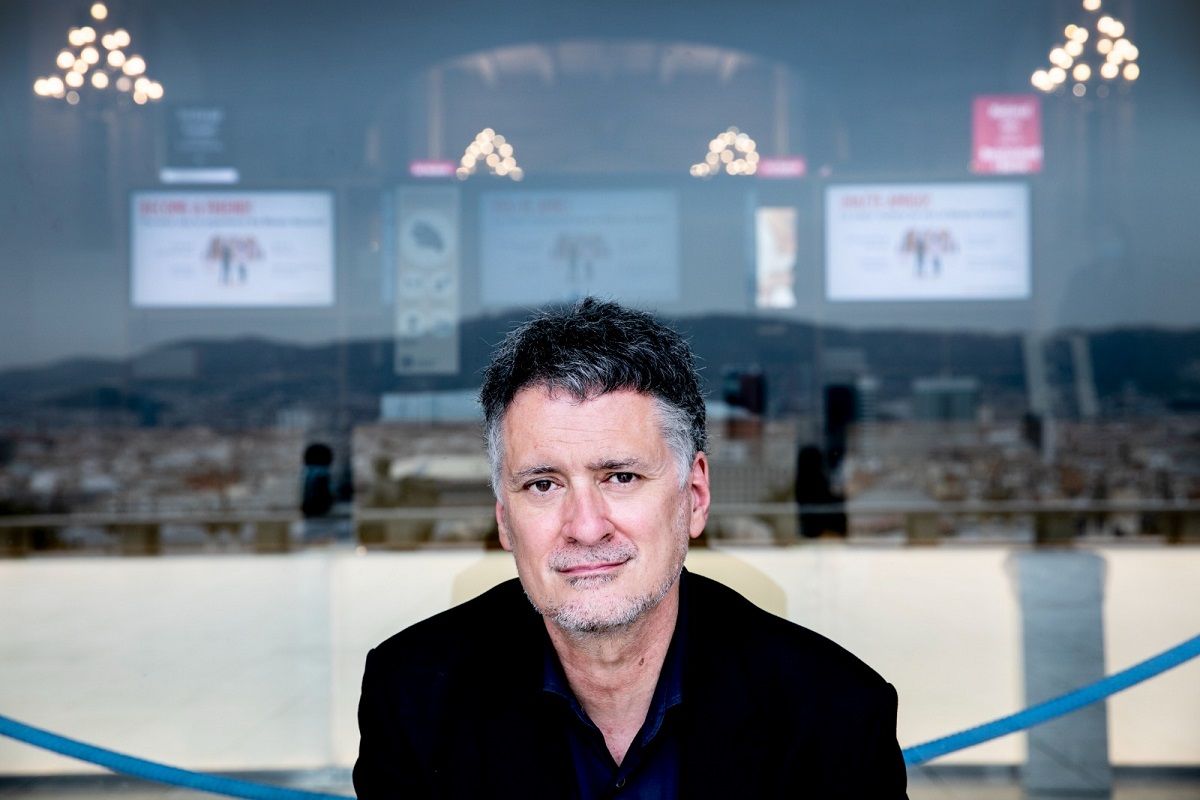
Molina maintains that the year 2023 will be key for Barcelona to take the step forward that will place it back in the top ten of the world's cities and that in this "transition" year 2022, what is needed are "stimuli." Barcelona, like many other European cities, has suffered "a terrible blow to its economy, its social balance, and its self-esteem, so it needs all kinds of stimuli to create a dynamic of projection and future," says the author, who adds, however, that it is "unfair and can be misleading" to compare Barcelona's situation with Madrid's. The correct comparison would be ---he says--- Madrid-rest of Europe, among other things because the Spanish capital has taken different anti-covid restrictions and because it is already "hyper-stimulated."
Despite a critical background, Molina has reasons to be optimistic. The deputy director of La Vanguardia maintains that there is "a will to reactivate the city, both from institutions and from society itself." What happens, he adds, is that perhaps "we are not sufficiently aware of the situation of weakness in which we find ourselves." He refers to the lack of a clear economic model and with the previous one, based on tourism and the service sector, very affected by the pandemic. "I believe that the models from before the pandemic are no longer useful and we must move to more exceptional frameworks of reactivation," he emphasizes. And for this, he proposes to provide more facilities for the development of private initiatives and, in the public sphere, to explore more consensus formulas, "such as those that have allowed the approval of budgets."
Molina is openly critical of the recent trend towards an initial no, as has happened with the Hermitage project in the port and the airport expansion. For this reason, he advocates "exhausting all possibilities of agreement before saying no." In this sense, he warns that "rigid approaches from the past no longer make sense and we must be more flexible and more willing to explore possibilities of agreement."
The author has great confidence in what may happen in 2023, as a series of circumstances will arise that will invite Barcelona to take a step forward and promote its potential again. "We have the anniversaries of Picasso (50 years since his death) and Miró (40), which will be celebrated with a large joint exhibition that will then travel to the Picasso Museum in Paris. The 100 years of Tàpies and Victòria dels Àngels. The 50th anniversary of Cruyff's arrival in Barcelona and the 100th anniversary of Einstein's visit," Molina enumerates. Not to mention that by then the Fira is expected to have recovered its full activity.
Hopefully Molina's forecast will come true, but everything will depend, as is known, on the institutional and social will of the city and other circumstances.
Add The New Barcelona Post as your preferred Google source for free
Stay informed with the latest news.
