When thinking about Parkinson's, the first image that comes to mind is that of people affected by tremors. This is one of the symptoms caused by this disease, but not the only one. Less known are others such as loss of smell, constipation, violent night terrors, sleep problems, depression, anxiety, or memory failures. In addition to not being associated with this neurodegenerative disorder, they manifest much earlier than mobility problems arrive ---up to 20 years earlier---, which can be key to advancing research to find a cure.
Currently, about 140,000 people in Spain suffer from Parkinson's, a pathology whose cause is unknown and which usually appears from 60 to 65 years of age. It has a considerable impact on the quality of life of patients, but it is not fatal. Symptoms can be treated and alleviated, although no medication has yet been found that provides an adequate response. Risk factors are age, being male, not smoking or drinking coffee, and having an affected family member. It is the second most widespread neurodegenerative disease, behind Alzheimer's, which affects 800,000 people in the country.
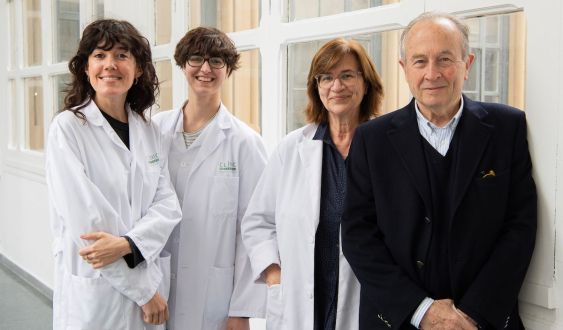
The Parkinson's and movement disorders unit of the Neurology Service of Hospital Clínic, supported by the American Michael J Fox Foundation, is participating in a European study with which it wants to find 10,000 people residing in Catalonia to help it better understand this disease in its preclinical phase. The Barcelona center has known this foundation for years, as they have been jointly developing a study for a decade to identify disease markers but, in this case, focusing on already sick patients.
According to Eduard Tolosa, one of the researchers of the study Healthy Brain Aging, Parkinson's has a gradual progression: it appears when between 50% and 70% of neurons, dopamine-producing cells, have died and the available amount of this neurotransmitter, essential for mobility, has decreased. Although the death of neurons begins many years before the first motor symptoms appear, the disorder is diagnosed when these manifest.
For this reason, Tolosa emphasizes, analyzing how the body evolves before Parkinson's manifests irreversibly must serve to diagnose it at the earliest possible stage, listing the non-motor symptoms and risk factors linked to this disorder. Having an early diagnosis can help develop better treatments and cures, including preventive treatments, managing to slow down, stop, and even reverse its progress.
The study at Clínic comes after clinical trials with possible drugs have not obtained the expected results. For the researcher, the problem has been that they have been tested on people in whom the disease had already advanced significantly, a phase characterized by the lack of dopamine production, as well as the excessive accumulation of a protein called alpha-synuclein. In this sense, one of the open lines of research focuses on drugs that try to curb alpha-synuclein levels. If, by knowing the preclinical symptoms, people at high risk of developing Parkinson's are detected, medications can be tested on them and their effectiveness assessed.

Without having to travel to the hospital
The study Healthy Brain Aging, led by Dr. Maria Jose Martí, began in June. So far, it has already received about 1,000 responses and expects to obtain the remaining 9,000 in what is left of the year. One of its characteristics is that it is carried out entirely remotely: those interested in contributing to the research only have to answer a simple online questionnaire, lasting about 40 minutes, without having to travel to the hospital. For professionals, this mechanism also allows evaluating information quickly, economically, and effectively. It has not been easy to develop this approach, Tolosa emphasizes, taking into account legal issues and the technological difficulties that had to be resolved to make it accessible to all users.
Once 10,000 responses have been obtained, researchers will contact a maximum of 2,600 participants to conduct an at-home olfactory test ---90% of Parkinson's patients lose their sense of smell---. In a final phase, 300 participants will be called to go to the hospital for a medical visit and tests such as a memory or concentration test. In total, the study is expected to last about five years.
One of the characteristics of the study is that it is conducted entirely remotely: participants only have to answer a simple online questionnaire, lasting about 40 minutes.To participate in the study, one must be between 50 and 80 years old, have internet access, and reside in Catalonia. They must be neurologically healthy individuals, excluding those diagnosed with a neurodegenerative disease, whether Parkinson's or Alzheimer's, or other neurological movement disorders, dementia, stroke, or amyotrophic lateral sclerosis (ALS). People taking medications that may increase or trigger symptoms associated with a neurodegenerative disease also cannot participate.
Barcelona is not the only city where the study is being conducted. It is also being carried out in Luxembourg, Innsbruck (Austria), and Kassel (Germany). According to Tolosa, a similar study is being conducted in the United Kingdom, and as it was prior, some of its researchers have been incorporated to homogenize protocols and thus be able to reconcile and increase the results obtained.
Add The New Barcelona Post as your preferred Google source for free
Stay informed with the latest news.
