It is not common for a restaurant group born in France with a strong Italian identity to reach a dimension like Big Mamma's: 30 restaurants spread across more than seven European countries and a staff exceeding 2,000 people. In each new city, Big Mamma has managed to adapt its proposal to the environment without losing what defines the group: a very Italian way of understanding cuisine and enjoying oneself around the table.
In Barcelona, the group has already been operating for over a year and has two restaurants that have managed to carve out a niche in the city's gastronomic scene: Gloria Osteria and Circolo Popolare. The first anniversary of the latter establishment offers a good opportunity to review the group's journey in the Catalan capital and explore the novelties marking this stage: the autumnal renewal of its recipes and the launch of its online store in Spain, with which its Italian universe transcends the doors of its restaurants and also reaches private kitchens.
Although Big Mamma's history in Barcelona spans over a year, its origins go back much further and have their starting point kilometers away: in Paris. It was there, in 2015, that two Frenchmen, Victor Lugger and Tigrane Seydoux, decided to turn their passion for Italian gastronomy into a restaurant project. Before opening the doors of their first establishment, both embarked on a two-year journey throughout Italy. They traveled the country from north to south, from Emilia-Romagna to Puglia, to familiarize themselves with its culinary traditions, discover recipes, and, above all, meet the producers behind their ingredients.
From that trip emerged a way of understanding restoration that, over time, would become the group's hallmark: Italian-rooted cuisine, with local producers and spaces designed to surprise not only the palate but also the eye with their careful decoration, from the tableware to the lighting. Since then, the group has expanded its international presence to include 34 trattorias in seven European countries —France, Spain, Italy, Germany, United Kingdom, Belgium, and Portugal—, in addition to La Felicità, a 4,500 square meter gastronomic market in Paris.
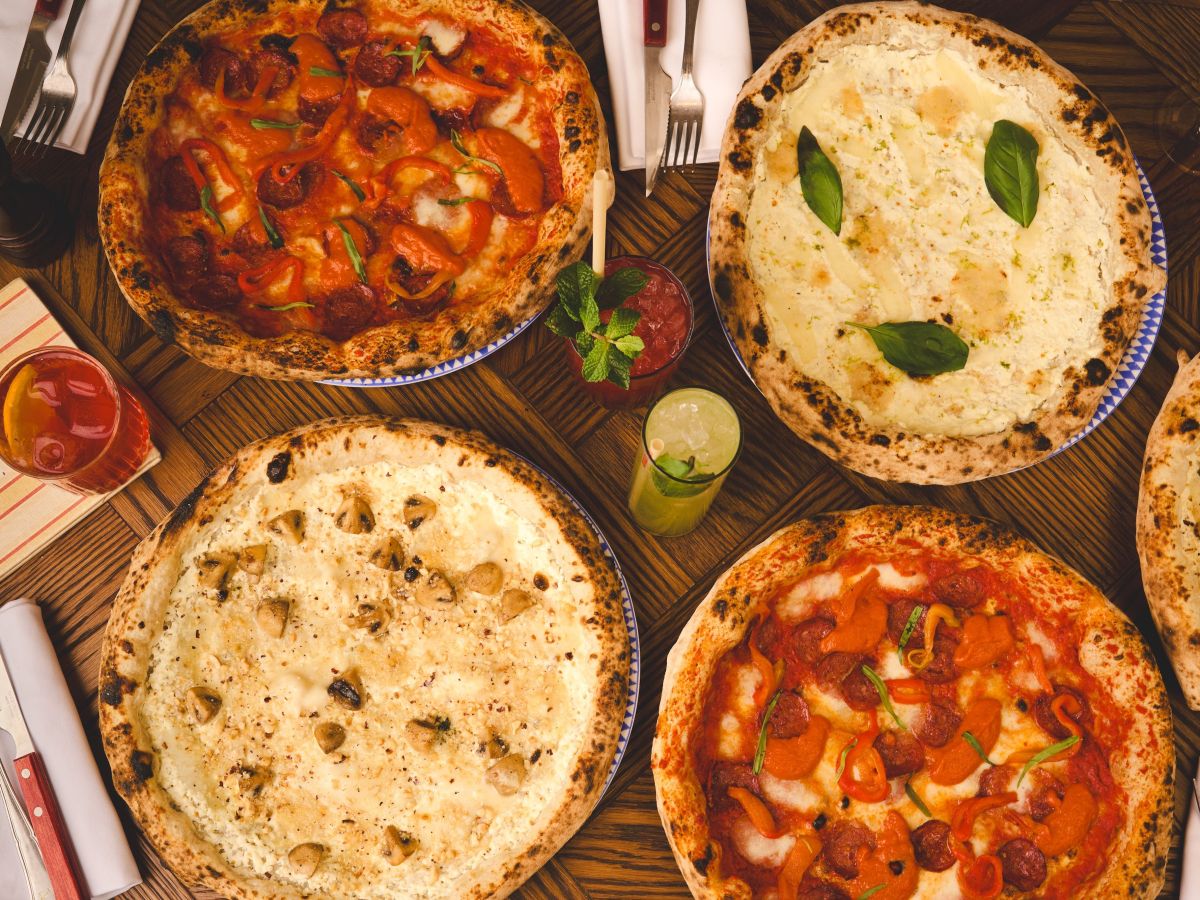
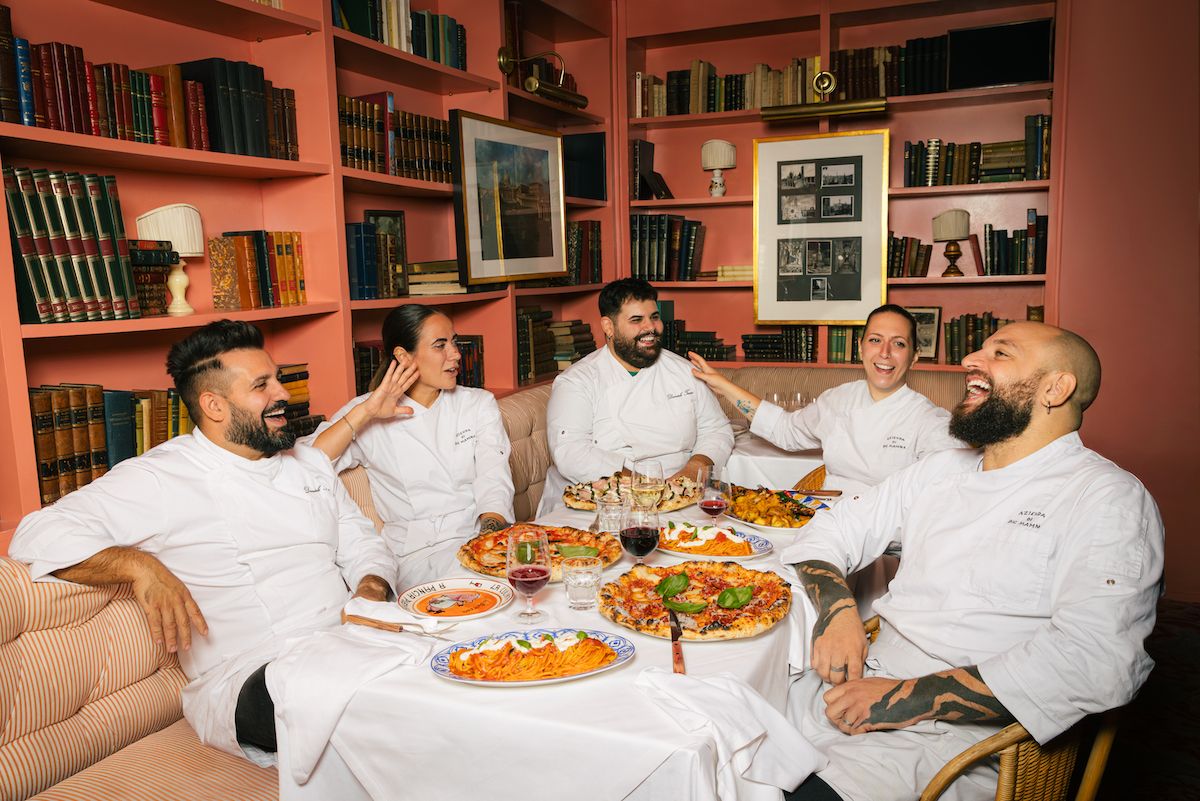
That universe first arrived in Barcelona in April 2025, with the opening of Gloria Osteria on Enric Granados street, in the heart of Eixample. The restaurant, spread over two floors and with nearly 1,000 square meters, is inspired by Milanese osterias and mid-20th century Italy. Its decoration combines classic elements and ornamental details, while the menu offers a more refined version of traditional Italian cuisine. A few months later, Circolo Popolare opened on Passeig de Gràcia. In this second restaurant, Big Mamma leaves behind Milanese elegance to approach the other end of the boot-shaped country: the more informal and colorful Italy of the south, with Sicily as its main inspiration. In this second establishment, the idea is to share dishes and enjoy a leisurely meal, with fresh pasta and pizzas as the main protagonists.
Although both establishments catch the eye from the first moment with their decoration, meticulously cared for down to the last detail by Studio Kiki, the experience is not limited to the visual: it is also built around the cuisine and the service. As soon as you cross the door, the team greets diners with a 'buonasera' (good evening, in Italian), a greeting that makes the character of these restaurants clear from the outset. And the Italian presence goes beyond the ambiance: of the nearly one hundred people who work in the two establishments in the Catalan capital, at least 70% are Italian. So are a good part of the producers who supply their kitchens, with around 170 suppliers spread throughout Italy and deliveries twice a week.
Seasonal flavors in an Italian key
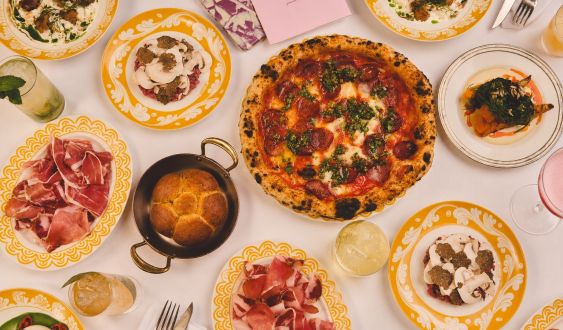
Beyond the decoration and the Italian atmosphere that permeates its two restaurants, cuisine occupies a central place in Big Mamma's proposal. In Gloria Osteria's refined menu, with a higher ticket price than Circolo Popolare, pasta is one of the great attractions, from classic recipes like Cacio e Pepe or Paccheri al Ragù to more unique combinations, such as Spaghetti with tartare di scampi (scampi tartare) and lemon cream. The same attention is given to Neapolitan-dough pizzas, where traditional flavors coexist with nods to local products, such as the Ibérica Real, with 100% Iberian acorn-fed ham, or the Looking for Truffle, designed for truffle lovers.
Although Italian gastronomy is often associated almost exclusively with pasta and pizza, Gloria Osteria's cuisine shows that there is much more to discover. Meats also play a leading role, with dishes such as Filetto di Manzo al Pepe Verde and a 1.2-kilo tomahawk of La Finca beef, designed for sharing. The sweet section is not left behind either: the house's classic tiramisu arrives at the table on a large tray, from which it is served directly to the diner. And it is that, when it comes to this dessert, there never seems to be enough: that's why it is also available in XXL format, designed to be shared among five people.
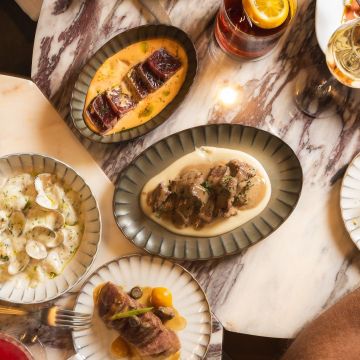
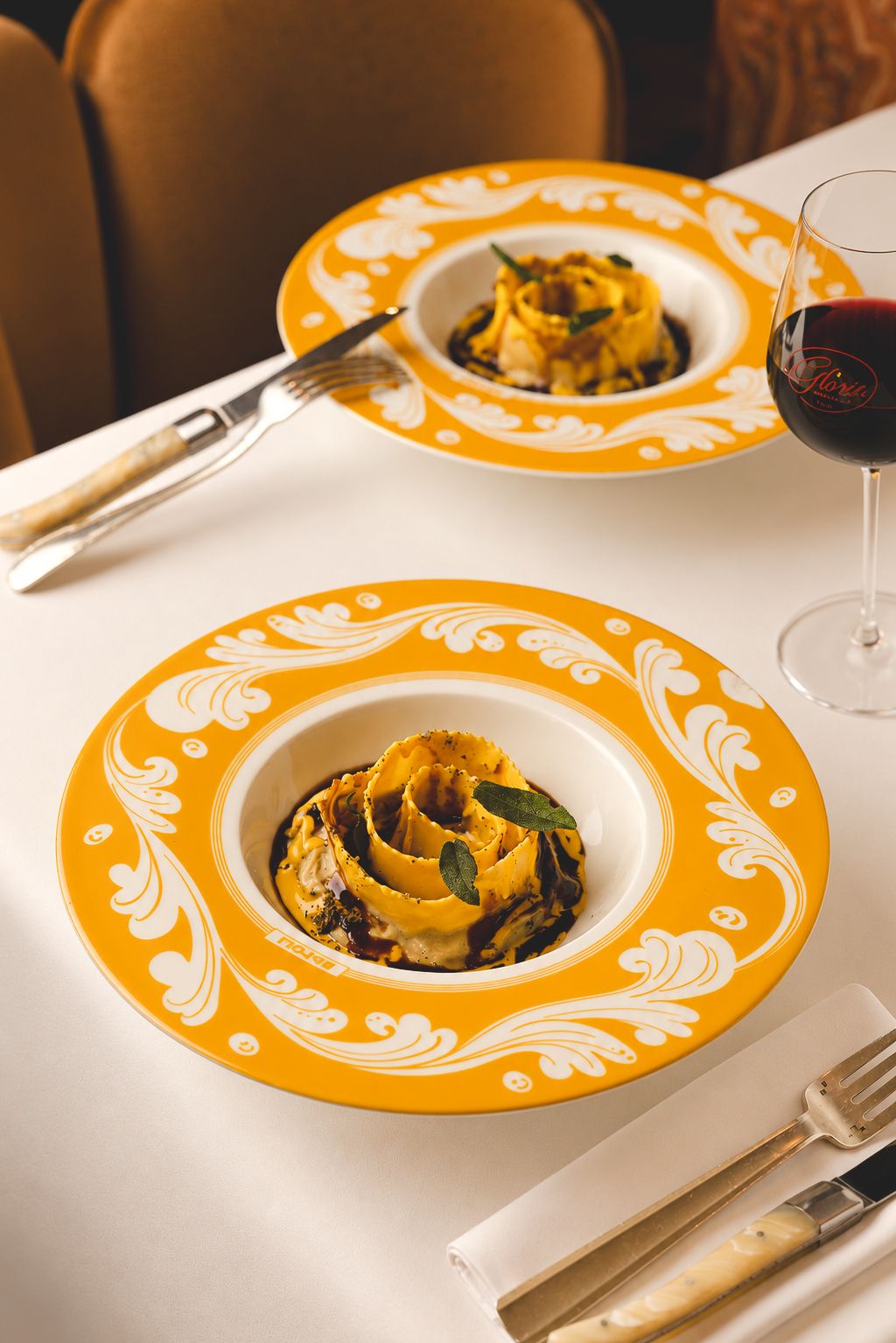
With the arrival of autumn and after a first year in the Catalan capital, Gloria incorporates new dishes in which mushrooms, pumpkin and other seasonal products gain prominence. This is the case of the Zucca Arrostita, with roasted pumpkin, and the Girolles & Stracciatella, which combine mushrooms with the creamy texture of this Italian cheese. In the pasta and rice section, the Tagliolino al tartufo and the Risotto ai funghi porcini e finferli, made with different varieties of mushrooms, stand out. One of the most striking creations is the Girella di Ossobuco allo Zafferano: a fresh handmade pasta, filled with slow-cooked ossobuco and ricotta, and served with saffron sauce and gremolata. Its flower-shaped presentation also makes it one of the most visually appealing dishes on the menu.
Coinciding with its first anniversary on Passeig de Gràcia, Circolo Popolare also renews its menu with new seasonal proposals. As in Gloria Osteria, autumn makes its way into the kitchens, without altering the restaurant's relaxed character or its commitment to sharing dishes. Among the novelties there is space for classic Italian cuisine recipes, such as Spaghettoni alle Vongole, with clams, or Casarecce al Pesto, along with somewhat more original combinations in the pizzas. This is the case of the Zola e Funghi, which brings together blue cheese and mushrooms, or the Formaggi Lime e Pepe, where cheeses are combined with lime and pepper.
And, for the first time, the Italian experience proposed by Big Mamma does not end when leaving the restaurant. If the tableware is one of the elements that most attract attention in their establishments, now diners will be able to take home a part of that aesthetic. The group has just launched its online store in Spain, where it brings together Italian-inspired tableware and table objects, many of them handmade. With these novelties, Big Mamma expands the reach of a project that was born more than a decade ago around Italian cuisine and that already has a year of journey in the Catalan capital.
Add The New Barcelona Post as your preferred Google source for free
Stay informed with the latest news.