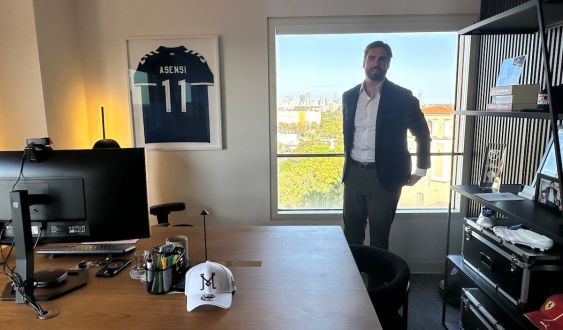
Born in Barcelona, from Sabadell and lived all over the world. From 1981. Xavier Asensi is the business president of Inter Miami, which is a private club owned by the Mas brothers and David Beckham. He was distinguished as executive of the year in Major League Soccer. Former handball player from La Masía de Can Barça. Very Mediterranean, with a German mentality and a great curiosity for the why of things. He liked philosophy, but decided to study International Business.
Entrepreneur by definition between China and the United States. Xavier Asensi worked for almost a decade at Barça, organizing the first USAP rugby match at Camp Nou, opening the club's first office outside Catalonia, and serving as Chief Commercial Officer (CCO), among other roles. He was the club's revenue man and refused to accept and pay I3 Venturas' invoices. One day he received a call from the United States to go live and work in Miami. They say he was one of the great architects of Leo Messi's high-profile signing by Inter Miami. A romantic of sports art who lives to the rhythm of Manel and Lluís Llach. A dream? "May good people never stop dreaming."
— He was a handball player.
— I played handball and ended up at Barça. My parents are not entrepreneurs, nor from the upper class. To be or not to be professional? I am very Mediterranean, but also very German. I would have liked to study philosophy, but I chose Economics.
— You studied International Business at ESCI-UPF.
— I went to Sant Nicolau school in Sabadell and they handed me a flyer about the Escola Superior de Comerç Internacional (ESCI) of UPF. I remember that the classes were in English and I chose Mandarin Chinese, although in truth I wanted to study Russian. I liked to understand how the economy works.
— What do you remember about your first work experience in China?
— I have always been very entrepreneurial. My experience in China began because my first travel companion did an internship at Astral ---now owned by Fluidra--- and started importing Chinese products in the early 2000s. I went to live in Shanghai and worked in a venture capital firm, so you can imagine what my memories are like... Very intense! I don't regret anything, but I wouldn't recommend it to anyone.
"I would have liked to study philosophy, but I chose Economics to understand how the economy works"
— What was China like at the turn of the century?
— No calls, social media, or whatsapps... All technology was very controlled. I remember a rather picturesque feeling of isolation and people taking photos with me, as there were hardly any foreigners to be seen.
— You worked for a decade at Barça.
— I returned to Catalonia after my journey through China and worked on a project called Connecting Dreams, with wireless chargers to eliminate cables. That's when I met Dídac Lee, Jaume López, and Enric Ordóñez, who proposed that I help Barça.
— A good scrum!
— Exactly, I really liked rugby, and I proposed holding a USAP Perpignan match at Camp Nou. Pere Gratacós and Jordi Córdoba gave me their full support. Sandro Rosell won the Barça elections, and Antoni Rosich and the Cierco brothers contacted me to do what they had promised in their election campaign.
— A promise is a debt... And what did you do?
— We homologated Camp Nou to play rugby matches with the International Federation and the French Federation, hosted the TOP14 final, and celebrated the Catalan rugby festival with Lluís Llach singing L'Estaca. It was then that Antoni Rosich asked me what I would do with Barça in China, and I proposed a project with great growth potential throughout Asia Pacific.
"Barça needed headquarters in Asia Pacific and to be present in Hong Kong, Tokyo, or Singapore"
— Growing by making others grow, says consultant Xavier Marcet.
— We were talking about 60% of the world's population, emerging economies, different idiosyncrasies between countries... Barça needed headquarters in Asia Pacific and to be present in Hong Kong, Tokyo, or Singapore, which was a good capital market very well connected to Southeast Asia. Toni Rosich accepted my proposal, but with one condition: that I be the one to execute it.
— And back to Asia!
— I returned to Asia from 2012 to 2017. First, as Barça's global commercial manager and, later, as Chief Commercial Officer (CCO). And I became responsible for all the club's revenues.
— What is your assessment of your decade at Can Barça?
— It was a wonderful era with Guardiola, Vilanova, Luis Enrique, and Valverde. It was the era of Messi, Xavi, Iniesta, Puyol, Piqué, Valdés, Villa, Pedro, Busquets, Abidal... Spectacular! I am fortunate to have been able to experience the best football team in history from within, but it was also very intense.
— Intense?
— I am a big fan of the Philadelphia Eagles, but I don't know if I would work there, because I like them too much. The same with Barça, which has a very blatant political functioning about what people will say, and this has a lot to do with Catalan culture.
— In fact, you define Barça as "a political institution" and "Catalonia's unarmed army."
— It was a wonderful period as a Catalan and a culé coinciding with the procés from 2010 to 2017. Whether we like it or not, our mood often depends on futile things.
"I was faithful to my way of doing things and said no to the I3 Ventures invoices because I didn't understand it, because the answers didn't satisfy me and because I wanted to stick to my budget as much as possible"
— What do you mean?
— If Barça is doing well, it seems like everything is going well. That is, Barça determines the mood of many Catalans.
— You refused to accept and pay the I3 Ventures invoices.
— That was a great learning experience! I have an almost unhealthy curiosity and I need to understand the why of things. I had an assigned budget and they told me I had to spend about 5% of the budget on these invoices. I said no.
— Why?
— Because I didn't understand it, because I asked and the answers didn't satisfy me, and because I wanted to stick to my budget as much as possible. Don't explain it to me, show it to me.
— Show, don't tell.
— Have we achieved the objectives? Well, the same thing. Those invoices are not in my budget, I haven't asked for them and therefore, I don't execute it because I don't understand it. As simple as that, with all that this could imply. I was faithful to my way of doing things: if I don't understand it, I don't do it.
— And what happened next?
— I received a call from the Mossos d'Esquadra years later summoning me as a witness to testify voluntarily. Some emails were leaked where I told the club's CEO that I would not pay the I3 Ventures invoices. A chain is only as strong as its weakest link.
— How do you see Barça right now?
— There are many things I don't understand, but I wish the club to be as strong as possible on and off the field.
— Why did you leave the club?
— I saw the seams of Barça and thought that perhaps my time at the club had passed. People leave because of their bosses, but not because of the companies they work for if the project is encouraging. I saw too much of the political institution accent, the struggle of 'isms', and I also got frustrated by the public scrutiny of disclosure and the daily grind. They say that in life you have to be in the right place at the right time.
"I saw the seams of Barça, the accent of a political institution or the struggle of 'isms' and thought that perhaps my time at the club had passed"
— They called you from Miami.
— The United States had always fascinated me, but I wondered what I could contribute there given that the NFL or the NBA are full of lawyers. In baseball I can't contribute too much either and FIFA is very political. The pandemic put the world on pause, but a headhunter from the United States proposed an interesting project in Miami with David Beckham.
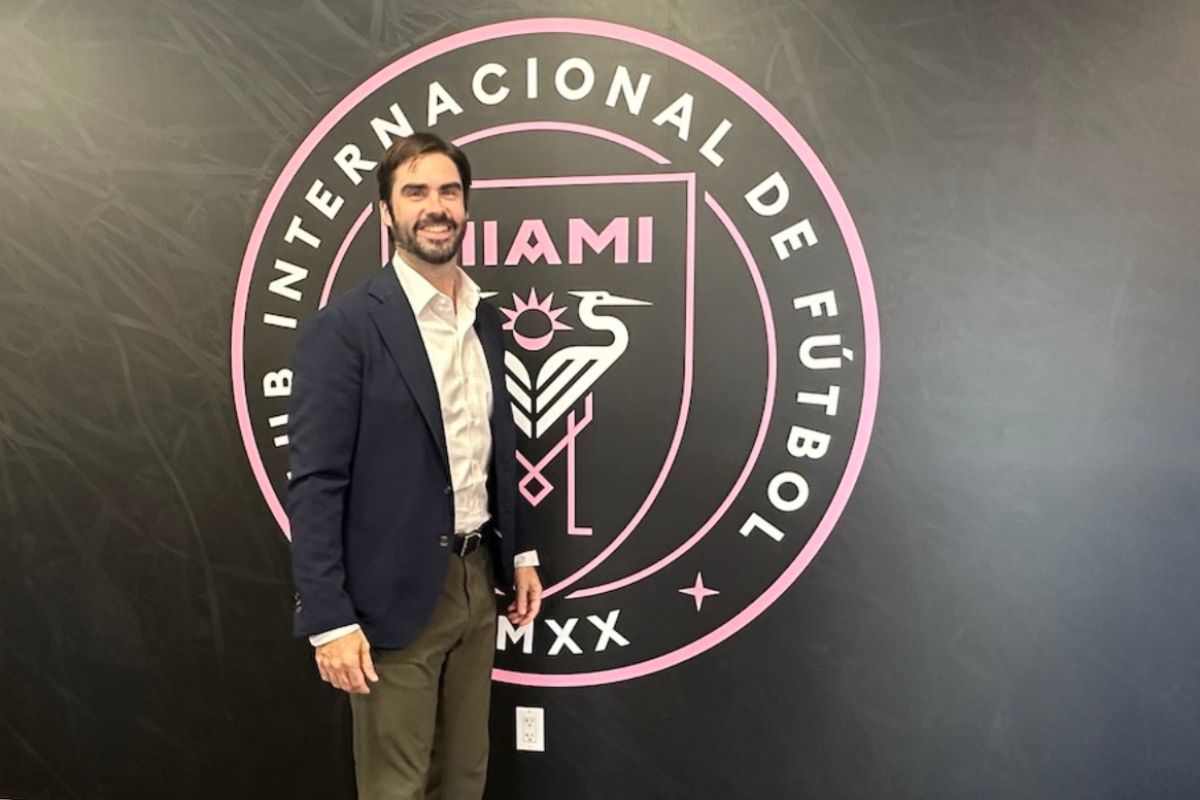
— Soon it will be five years since you started working at Inter Miami: co-president and Chief Business Officer.
— I told the headhunter that I didn't want to be pigeonholed as a commercial executive and that I preferred a position as president or CEO within a club. He told me that Jorge Mas, owner of Inter Miami, wanted to talk to me. Do you know his story?
— The truth is, not too much yet...
— He is the reflection of the American dream. His father fled Castro's Cuba and went into exile in Miami to sell milk and make arrangements with telephone cable. He founded MasTec, which is a publicly traded company that bills 14 billion dollars, has thousands of workers and is part of the Fortune 500. With Jorge Mas we understood each other immediately, I spent a weekend in Miami to outline everything and I talked about it with my wife.
"Jorge Mas is the reflection of the American dream"
— All that was missing was the signature on the paper napkin.
— [Laughs]. I submitted my resignation at Barça, we said goodbye and this is the fifth season we are here in Miami.
— What did Leo Messi's signing mean for Inter Miami?
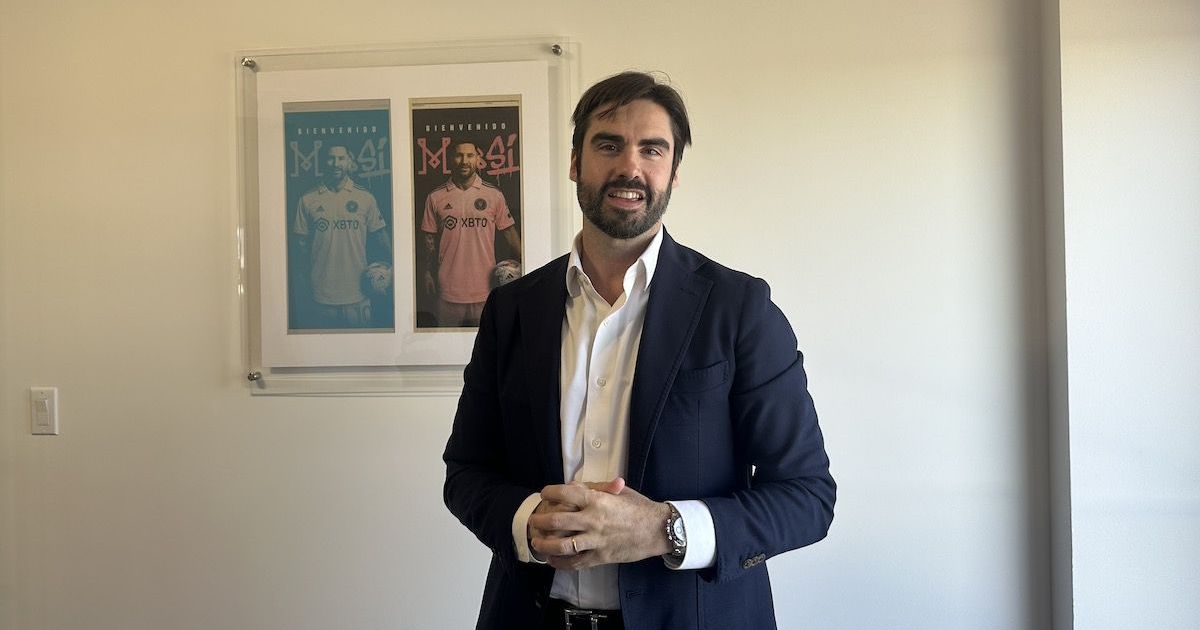
— The data is cold, but it often says a lot. Leo Messi is a before and after for Inter Miami, because he is the intangible that positions the club in the world. When people think of football in the United States, they think of Inter Miami! There is a lack of role models and geniuses like Messi in a world of so much technology and constant gratification. Messi is here and now.
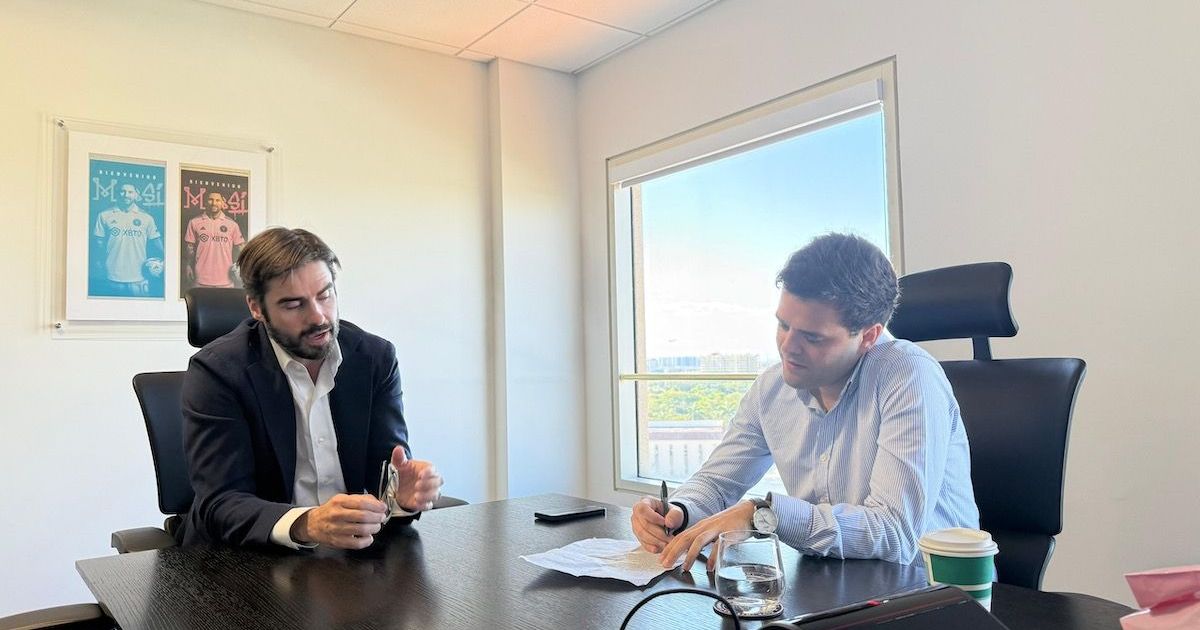
— Here and now.
— It's the perfect storm! The explosion of a very well-surrounded genius coinciding with the growth of social media, with his nemesis playing in the state capital, he wins absolutely everything and becomes world champion. We could also talk about golfer Rory McIlroy.
— A good swing!
— Yes, it's very hard to find stories like that.
"Leo Messi is a before and after for Inter Miami because he is the intangible that positions the club in the world after the perfect storm"
— Inter Miami's valuation is close to 2 billion dollars.
— Messi is a genius beyond doubling the club's valuation, tripling its revenue, or becoming a retail benchmark in jersey sales. He also boosts the brand of the club and the city of Miami.
— Messi tourism is also talked about.
— We come from an era of Woods, Jordan, Phelps, or Bolt, but Messi's legend is the number 1 in sports because there is no person who has been so determining doing art for so long. We are contemporaries of a genius who has no possible comparison.
— Long live the genius!
— I am a romantic, and when I see Messi train, I think we are watching an artist. He is history of this sport, of this country, and wherever we play, we break the record for people watching a soccer match. Incredible!
— What are Inter Miami's main objectives, purpose, and vision?
— A soccer club has three ordinary sources of income: television rights, money generated on match day (tickets, food, drinks, or parking, among others), and commercial income (sponsorships, retail, etc.). Unfortunately, our league is based mainly on Game Day income. We bill 200 million, but we don't even have 2% from broadcasting, and this makes the miracle even more incredible.
— Without television rights, it's hard to play the game.
— The money from the NBA or Major League Baseball comes mainly from television, but we receive almost nothing. In the United States, there is a deeply rooted sports culture, and therefore, Game Day revenues are, on average, higher than in Europe. We are also limited commercially, because we cannot choose which brand dresses us, nor do we receive royalties for selling jerseys. Life deals you cards, and you have to play them.
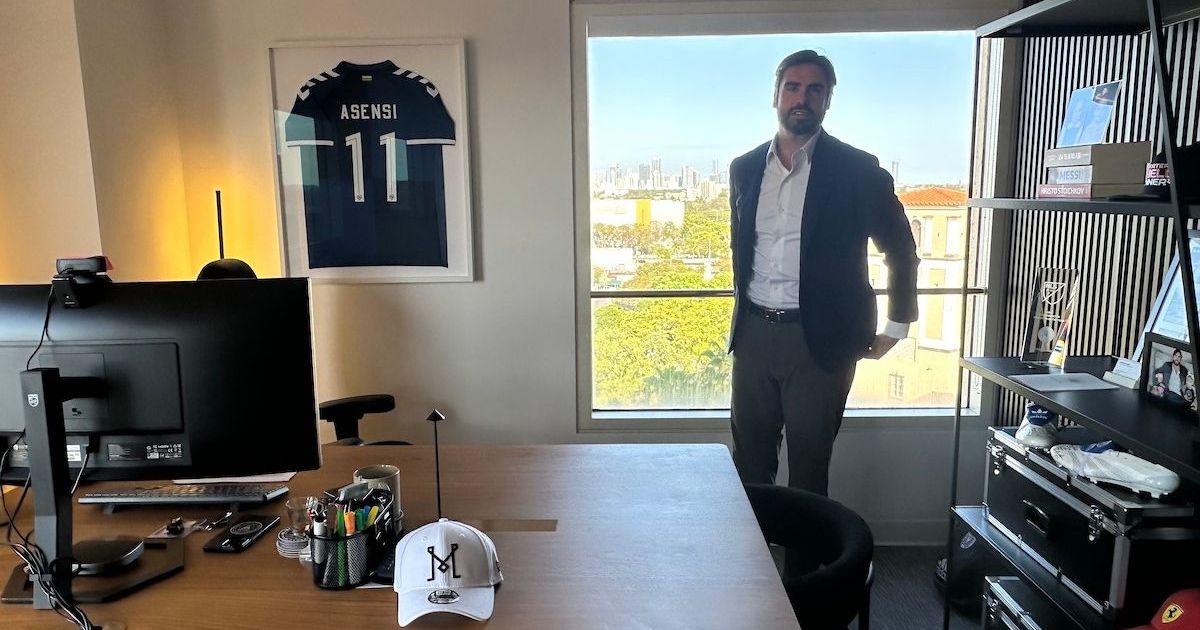
— The famous cards of the philosopher Arthur Schopenhauer.
— I don't like to complain about the cards, I prefer to play the best possible game and get ahead.
— What impact does the new stadium have for a club like yours?
— The current stadium is temporary, it has a capacity of 21,550 people and does not have the finished services of a modern stadium. Jorge Mas says that the stadium by itself is an elephant, because you only play 40 games each year and you have 325 free days. That's why we have created a district around the new stadium with office buildings, hotels, restaurants, shops and a kind of Sant Jordi to hold concerts. This transcends the Inter Miami brand.
— How far does this brand reach?
— The stadium has to be the epicenter that gives meaning and also reason to the district. Messi has helped us get out of the hole of the closed league structure because he is the only person who can do it and at the same time it is a perfect moment for us. We change stadiums and we have Messi.
"Barcelona and Miami can have many synergies, but this depends on people, on politics, on business relationships, on the desire to do things and to make things happen"
— How do you see Barcelona from the other side of the Atlantic?
— Barcelona is the capital of Catalonia, a place of reference and also a fundamental brand. However, I have disconnected quite organically and by will from the day-to-day of Barcelona. Surely, also for mental health. Robin Sharma gave a conference and advised me not to read newspapers or watch news. I try to apply it as much as I can.
— Are there good opportunities between Barcelona and Miami?
— A brand is nothing by itself, because it is above all a matter of values. Barcelona and Miami can have many synergies, but this depends a lot on people, on politics, on business relationships, on the desire to do things and to make things happen.
— The previous interviewee of Persona a Persona, Antoni Esteve, asks you the following questions:
— How do you see the More than a club model in an environment where culture, shared values and history have less roots?
— The More than a club applies and will always apply, because that is how I perceive the club. Barça represents something beyond a football club, due to political, national, ownership issues, La Masía, values... Starting from the basis that culture, shared values, and history truly have less roots, this will depend above all on the people that the members vote for to lead and represent the club, and also on the character that they want to give to the institution.
— According to your experience in the United States, Miami specifically, what would you like us to try to import from Barcelona? Without tariffs, of course!
— What, in part, I like about the United States is the mentality and the few inferiority complexes. I say this in a well-understood and not arrogant way. I doubt this can be imported, given that these are matters of character, education, or tradition... But, there would be no harm in trying. If, as Lluís Llach says, when we are far from home, we become smugglers of feelings, we could certainly also try to import things like that.
XAVIER ASENSI'S SEVEN LIVES
1. Role model: Anyone who has achieved their goals, has fought, and is at peace with themselves. Not everything goes. 2. Book: Sapiens by Yuval Noah Harari. 3. Movie: The Shawshank Redemption by Frank Darabont. 4. Song: La cançó del Soldadet by Manel or any by Lluís Llach. 5. Favorite spot: The path from Éller to Meranges (Cerdanya). 6. Life motto: Life is very short, let's make the most of it! 7. Dream: That good people never stop dreaming.
Add The New Barcelona Post as your preferred Google source for free
Stay informed with the latest news.
