
Talking for a while with Rosa Ribas (1963), you leave with a couple of recommendations for eating in her native Prat de Llobregat, where she grew up behind the bar of a defunct tapas place run by her grandparents, discovering the diversity of origins of the neighbors of a town that was agricultural and industrialized very quickly. The writer celebrates the peripheral feeling that has always accompanied her, even when she went to live for almost 30 years in Germany, where she didn't say she came from Barcelona, even though nobody knew El Prat.
Graduated in Hispanic Philology and with a doctorate in Linguistics from the University of Barcelona (UB), Ribas worked as a professor for years at the universities of Frankfurt and Heilbronn. Since 2008, she has dedicated herself solely to writing, making a name for herself as a crime novel writer, with characters such as Commissioner Cornelia Weber-Tejedor and the Hernández detective family. Now, for the first time, she uses the first person singular in Peces abisales (Tusquets), where she explains her narrative beginnings, filtering them through humor to leave nothing unsaid.
--- How do you start writing?
--- First, I have an idea that I know will be the engine of the story. Then, you start shaping it. Many times, scenes and dialogues occur to you that you know will have to appear in the novel. You leave them in the manuscript, but you don't yet know where they will end up, and they remain like floating dots. Meanwhile, you build the story, thinking about what will happen and where it will take you, although I have to say that I'm not one to plan excessively because I get bored. Also, since I write by hand, with a pencil, this slower writing allows you time to have new ideas, changing the original plan a bit, especially in the secondary stories. It's a very organic process, where there isn't phase 1, phase 2, and phase 3, but rather the different stages mix a bit, and at some point, you think you've finished and start reviewing, cutting, and removing.
--- And you'll have to make a clean copy.
--- I do it at once. I write with a pencil, especially in the morning, which is my good time, and I clean it up in the afternoon. That's when you know if it's worth it or not. Many times, when I write it on the computer, I realize that all that could have been said in one sentence. When I have a bit of text on the computer, I really like to print it and work on paper. I always keep the first pages, where I've been writing everywhere, on the back, on the sides... It's very physical. The computer is the part where it gets fixed, you save it so it doesn't get lost, but nothing so interesting happens there. Besides, in front of the computer, ideas don't come to me. I work more comfortably with paper and pencil. I always go with my pencil case and notebooks. And the sharpener.
--- In case ideas come to you on the street?
--- I always go with all the equipment. If I don't want to carry a bag, I take a very small notebook. Many times I don't use it, but if I don't carry it, something is sure to come to me. And the mobile phone makes me very lazy.
"I work more comfortably with paper and pencil. I always go with my pencil case and notebooks. And the sharpener"--- Since when do you write?
--- Writing, I think since I can remember, but, writing without shame, showing what I do, I started around 2004 with my first novel. I remember that, once I came to give a talk at a school in El Prat, a lady greeted me and gave me regards from her husband, who had been my teacher. And I thought, "gosh, Don Juan, it was him." In class he got tired of listening to me because I always talked a lot and one day he told me, "Ribas, I'm sure what you're telling is very interesting, why don't you put it in writing?", and I started writing. He always asked me to write stories and made me read them in front of the class, and mind you, I was very shy. I think that's where I started to see that I knew how to do something that made everyone listen to me. The day I liked the most was when I wrote a very sad story and saw that the boy I liked, the strong one in the class, got emotional. I thought, "holy cow, what power!" I think it was at that moment that I knew that was what I wanted to do.
--- But first you studied Hispanic Philology and were a university professor for years in Germany.
--- I held myself back a lot. I was very scared because it was what I liked the most and I thought, "what if I jump in and it doesn't work?" You study a degree, you get your doctorate, you become a teacher... It's very good, but there's always one thing that's what you really want to be and there comes a time when you say, "hey, if I don't do it, I'll be the annoying aunt who will say 'I wanted to be a writer'", and the others will think, "here's that bore again." So, with a little more reflection, but with this horrible image in my head, the day came when I thought I had to do it.
--- And, how was the leap?
--- The first novel I wrote, El profesor visitante (The Visiting Professor), was returned to me by all the publishers I had sent it to. But this meant it was bad. I have only kept one printed copy of those they returned to me and I keep it like a treasure. The first one didn't work out, but the second one did, El pintor de Flandes (The Painter of Flanders) (Roca Editorial). A few years later, around 2008, I thought I had to dedicate myself only to writing and I left the university. When I went to the unemployment office, it was funny because they told me it was the first time a tenured professor had left and they warned me that they wouldn't be able to find me work at the university again. But, I thought, try it, and if it doesn't work out, I'll teach Spanish and that's it, there's always work for that in Germany and I really like it. But, luckily, it wasn't necessary. I always say I've just started, but I've been at it for a few years now.
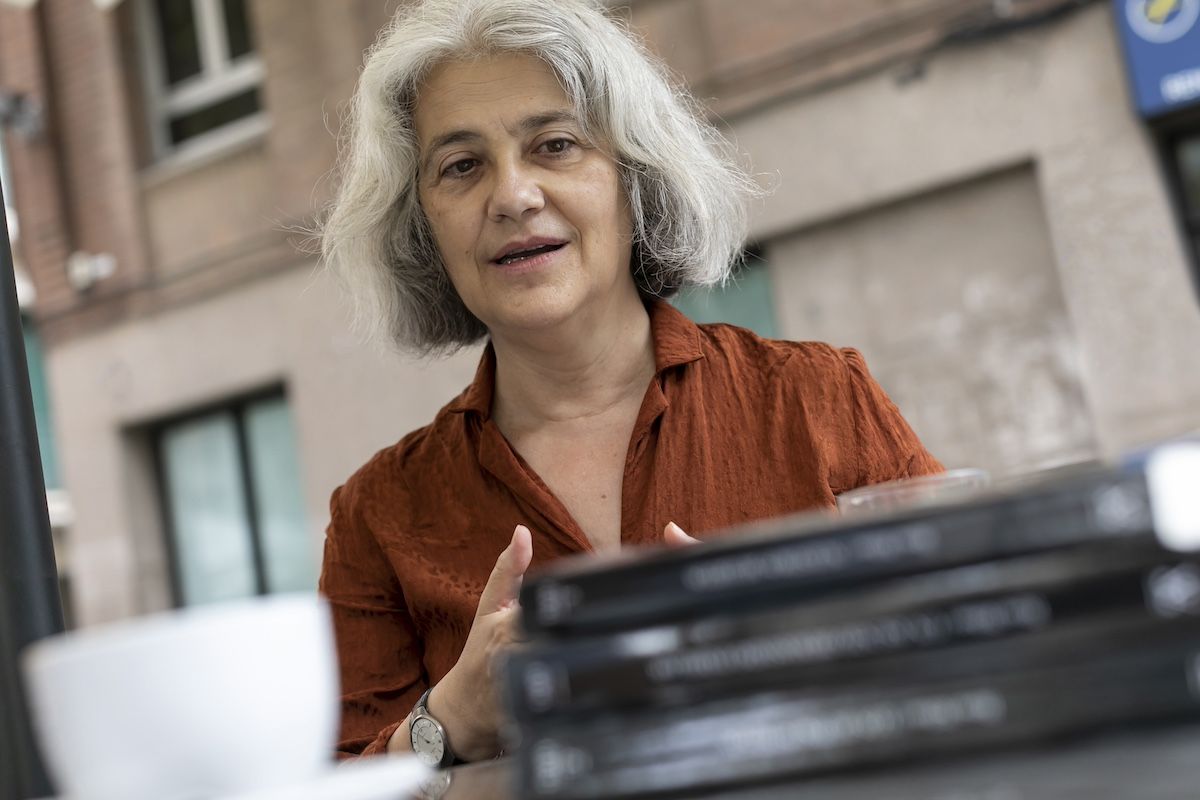
--- Everything you explain is very present in your latest published book, Peces abisales (Abyssal Fish) (Tusquets), a kind of autobiography as a writer.
--- It's a very personal book, it's the first time I've written from an "I." I think it was when I returned to Barcelona, after living abroad for 30 years, that I started to review what I had been doing and how I had become the writer I am. Small texts started to emerge, some I had published in columns in El Periódico, and I saw that it was a topic that was asking for another format, it needed much more space. My editor, Juan Cerezo, gave me carte blanche to write this Peces abisales. Everything has emerged in an almost organic way, one text led to another, the anecdotes were linked, which are always the starting point of each chapter, and all the reflection on writing, literature, reading...
--- Why this type of fish?
--- They are the ones that swim deepest, where light never reaches and only these strange and very resistant beings live. I liked to imagine that with this book, stories that were very hidden come to the surface, illuminating them with humor and irony, which is what allows you to explain them.
"Peces abisales is a very personal book, it's the first time I write from an 'I'"--- How have you handled the first person singular?
--- I am always there, the only thing is not so openly. I really like to always defend fiction as the freest place to write because by creating a story you can talk about the most difficult things, you can put everything in there. This time I went without the mask that fiction gives you, but I talk about memories, which are also stories that are already very changed because when you explain them you create them as you go.
--- Abyssal Fish arrives after the last installment of the saga starring the detective family, the Hernández. Will there be a continuation after Nuestros muertos (Tusquets)?
--- This is the million-dollar question. When I started writing the first book, Un asunto demasiado familiar, I thought it ended there. I never thought I would do a series. But I realized that it had a lot of potential and that it was a shame not to give them more rope. Halfway through the novel, I already saw that I would do a series. So, I changed the structure of the story and left some threads open, especially from the family history, to be able to continue them later. The second, Los buenos hijos, I was already very clear that it was not the last, that there would be a third. When I started Nuestros muertos I was very convinced that it would be the last, but, as I was writing it, I realized that no, that it is not the end, that I have many more things to explain about them. I feel that there will be another novel, at least one more.
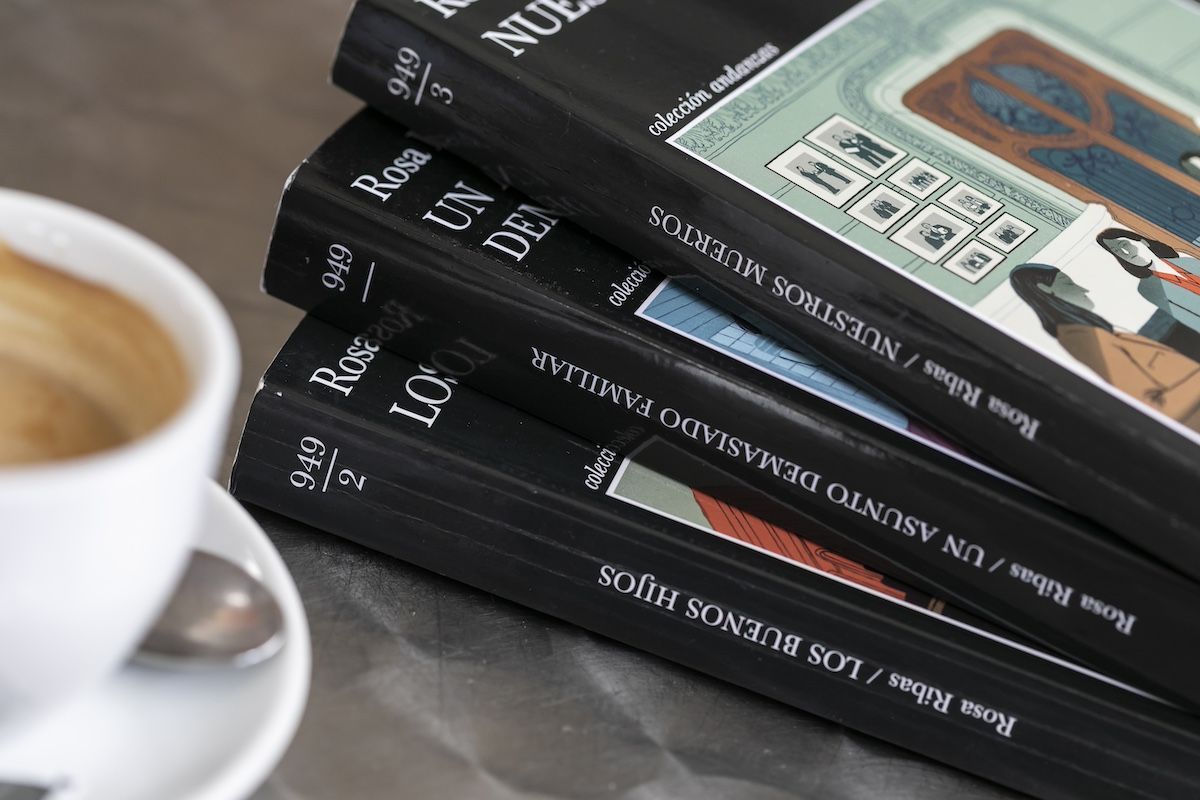
--- Why did you decide to narrate the life of a family of detectives?
--- I wanted to write about family and, above all, I had the instruments. It's a matter that interests me a lot, but it seems very, very complex to me. I wanted a novel that talked about a family, about their relationships, and then I moved on to secrets, which are almost automatically associated with this topic. This is when I had the idea of making them detectives and playing with the paradox that they are specialists in discovering secrets, but they don't know the ones in their own home. Then I had to decide how I would build this family and what conflicts it had. The case and the family usually go hand in hand. I know I have a new novel when I have an idea for an investigation that will touch on some aspect of their relationships.
--- She is from El Prat de Llobregat, but the Hernández live in Sant Andreu.
--- I set it in Sant Andreu because I couldn't set it in El Prat. In a novel I wrote, La detective miope (Debolsillo), one of the cases took place in El Prat. It was the story of a man who noticed his physiognomy was changing and his features were becoming larger. He was a director of a bank branch, I didn't specify which one. Suddenly, one day, my sister tells me: "What a mess you've made. I was in the square and there were some women who had read the novel and didn't know if it was the one from Banco Sabadell or La Caixa." What happens? These cities that haven't been written about, there's no tradition of things happening here and people think you're speaking in code about real people. So much has been written about Barcelona that no one thinks you're talking about this person or that one.
"These cities that haven't been written about, there's no tradition of things happening here and people think you're speaking in code about real people"--- In Abyssal Fish, there is indeed a lot of Prat.
--- If you tell a story about your childhood, you cannot change the place. This has to happen here, it's not the same to have grown up in El Prat as to have grown up in Barcelona. It's very different. It's not the same to be peripheral as to be from the capital.
--- Why?
--- It's a feeling of not quite belonging. I found it very well reflected in Paseos como mi madre by Javier Pérez Andújar. You've spent your life going in and out of Barcelona, but you are not part of this city. It's very difficult to be so because you grew up on the periphery, with the feeling of living outside. You feel that you haven't lived in the place where things happen, all the interesting things were in Barcelona and you had to go and then come back. You were like a strange being and Barcelona, in some way, made you notice this, you didn't know how, but you always felt that you weren't from there, you hadn't been born in any of the neighborhoods, not even in the peripheral neighborhoods. You came from another planet and at night you went back there. Now everyone wants to come here, but, when the Paper Mill was still there, you would come back by train from university, tired and half asleep, and people would wake you up saying, "Oh, what a bad smell! We must be in El Prat!". I think all this greatly marks your way of being in the world. That said, I put that I am from El Prat even on my ID card and with great pride. In Germany it was much more glamorous to say you were from Barcelona, but I couldn't bring myself to do it, I said I was from El Prat de Llobregat and they looked at me very strangely, thinking, "where is that, in Turkey?". For me, this peripheral feeling is very important. Although I have now moved to Sants, I am a girl from El Prat who lives in Barcelona.
Add The New Barcelona Post as your preferred Google source for free
Stay informed with the latest news.
