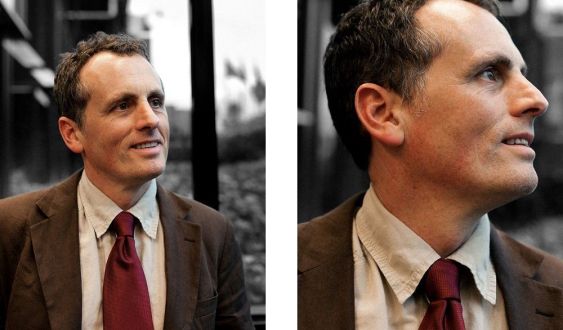
What happened to Young is similar to what people suffering from the unknown anti-LGI1 encephalitis experience. It is a disease from the family of autoimmune encephalitides where, once the acute phase has passed, many patients leave the hospital presumably cured but with slight memory and skill losses that, in some way, tell them they are no longer the same as before. To change this reality, a group of researchers led by Dr. Josep Dalmau is studying the phenomenon thanks to the health research aid they received from Obra Social "la Caixa". Albert Compte, a researcher at the August Pi i Sunyer Biomedical Research Institute of Hospital Clínic de Barcelona, works on this team and today tells us what life is like for people who lose their memory.
What are the symptoms of anti-LGI1 encephalitis? In the acute phase, patients suffer epileptic seizures and are unable to form new memories. This makes them live solely in the present. Everything is immediate, novel, and unexpected. The last memories are from weeks or months ago. I imagine they feel a continuous sense of surprise and an inability to anticipate what will happen, unless it is a very established and systematic routine. I believe only routine gives them peace of mind. When treatment ends these symptoms after two months, they recover much of their memory and leave the hospital. But for a period of one or two years, many continue to have mild memory problems and loss of skills. This means they cannot regain control of their lives as they did before the illness.
What do you want to achieve with your research? We want to monitor people going through this process to understand why it happens and, thus, prevent future patients from experiencing such debilitating moments. Healthcare does not address it as a very serious problem because functionally they are capable people, but they are not well. Suddenly, they might say they don't remember something that just happened.
How does this affect their daily life? Managing their routine can be irritating for them. Not remembering everything and losing some skills means that, for example, some cannot continue with their usual work or their colleagues leave them aside. Others cannot take their university exams because they don't retain anything they study. This causes them self-esteem problems and, therefore, they may even drop out of their studies. If it happened to me, I would have to quit my job!
And their emotional relationships? The book Brain on Fire by journalist Susannah Cahalan, who suffered from autoimmune encephalitis, tells how her partner stopped understanding her when she was discharged. He was not experiencing the same thing as her, and he did not understand why she did not remember certain things and saw inconsistencies. This ended up making him think that she was distracted, that she was not paying attention to him. Once the illness was overcome, theoretically, the relationship broke up...
Why do you think these disagreements occur? Being apparently normal, their symptoms can create conflicts with other people because people, in general, feel empathy for those who are sick, but not for those who are sick without showing it.
What do these people need? Their families are usually the ones who fight so that they don't throw in the towel with their studies, work, or relationships. They are also the ones who inform them of what happens during the acute phase, when they cannot retain any information. One of the methods is, for example, for the patient's partner and children to each write a diary of everything that happened. In this way, they will later be able to know what became of their life while they were a person living without retaining anything.
The first time an autoimmune encephalitis was described was in 2007 by Dr. Josep Dalmau. But, in 2000, Christopher Nolan had already shown us in the film Memento a disease with similar particularities. Could the director have anticipated what medicine had not yet named? In reality, similar cases had already occurred. There is the classic case of Henry Molaison. The tremendous number of epileptic seizures he suffered led him, in 1953, to undergo experimental surgery to have his hippocampus removed, which is where memories are encoded. He lived about 20 years without being able to form new memories. Exactly the same problem to which the protagonist of Memento is subject. What differentiates him and H.M. from patients with encephalitis is that their disease was irreversible.
Let's put on the table a dystopian future in which, suddenly, we all forget what we lived after 10 minutes. How do you imagine the world would be? There could be no justice (no one would remember anything or could be responsible for anything) or politics (a debate to negotiate or approximate positions would make no sense), and it is not easy to imagine a stable family structure either. Society would have to be based on technology capable of maintaining a collective memory, so the control of this memory would be the basis of the power of this society. It would be an interesting argument for a novel!
Interview: Alba Losada Photography: Anna Pla-Narbona
You can read more stories like these in ALMA, the social social network, a digital space dedicated to the social sphere that offers a new perspective on the present and future of society, from an optimistic and diverse voice, and all the initiatives promoted by the "la Caixa" Social Project.
Add The New Barcelona Post as your preferred Google source for free
Stay informed with the latest news.