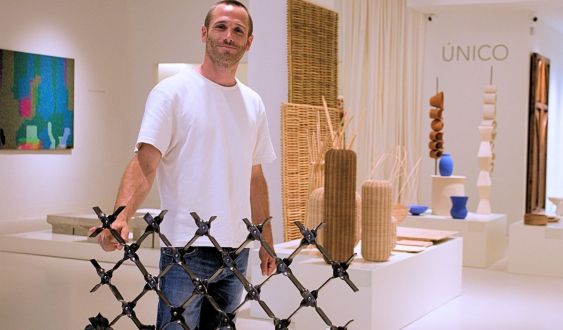
"To lose trades is to lose memory." This idea runs through the entire project of ÚNICO, the first arts and crafts gallery in all of Spain—and possibly the world. The Barcelona space is born with a clear purpose: to work so that artisan trades, which in the past played a leading role and beautified architecture, today regain the recognition they deserve and do not disappear tomorrow. It is not an exercise in nostalgia, but a bet on the future: "we must reclaim artisans and masters as essential allies of contemporary architecture," defends its promoter, Ramon Comelles—who has created the project together with Claudia Divo—.
A purpose that materializes through a space of 400 square meters in the technological and creative district of the Catalan capital, Poblenou. In a context where traditional trades are disappearing—from blacksmiths and ceramists to stonemasons—due to the lack of generational replacement, this objective is presented almost as an urgency. Especially in a discipline like architecture which, as a consequence of digitalization and the demands of time and budget, tends towards uniformity and standardization. "Against soulless pieces, produced systematically and impersonally, craftsmanship defends human contact, attention to detail, and creative freedom," insists Comelles.
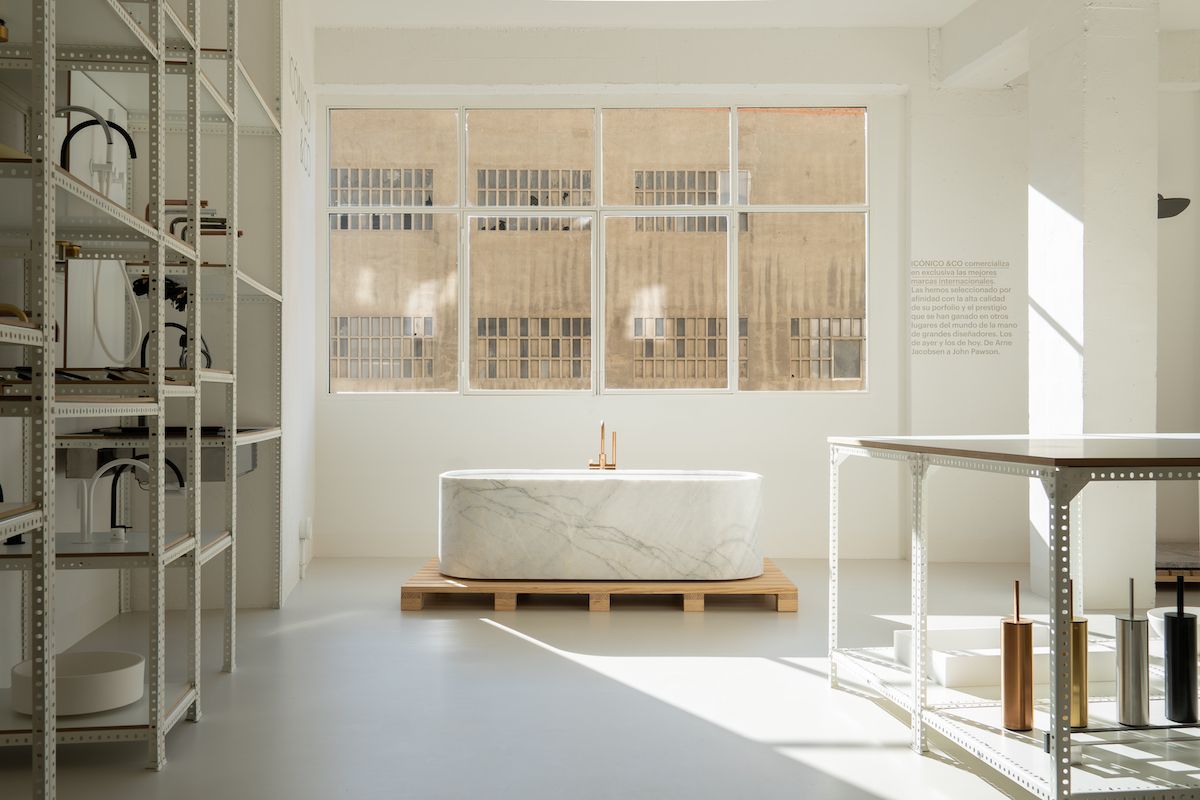
And this vindication is, precisely, the central axis of ÚNICO. However, to understand this gallery, it is necessary to first know ICÓNICO, its parent company. Withheadquarters in Cardedeu and a staff of more than 60 people,ICÓNICO was born with the idea of equipping architecture and interior design projects with the best faucets, sinks, bathtubs, showers, sanitary ware, drains, hardware, or switches.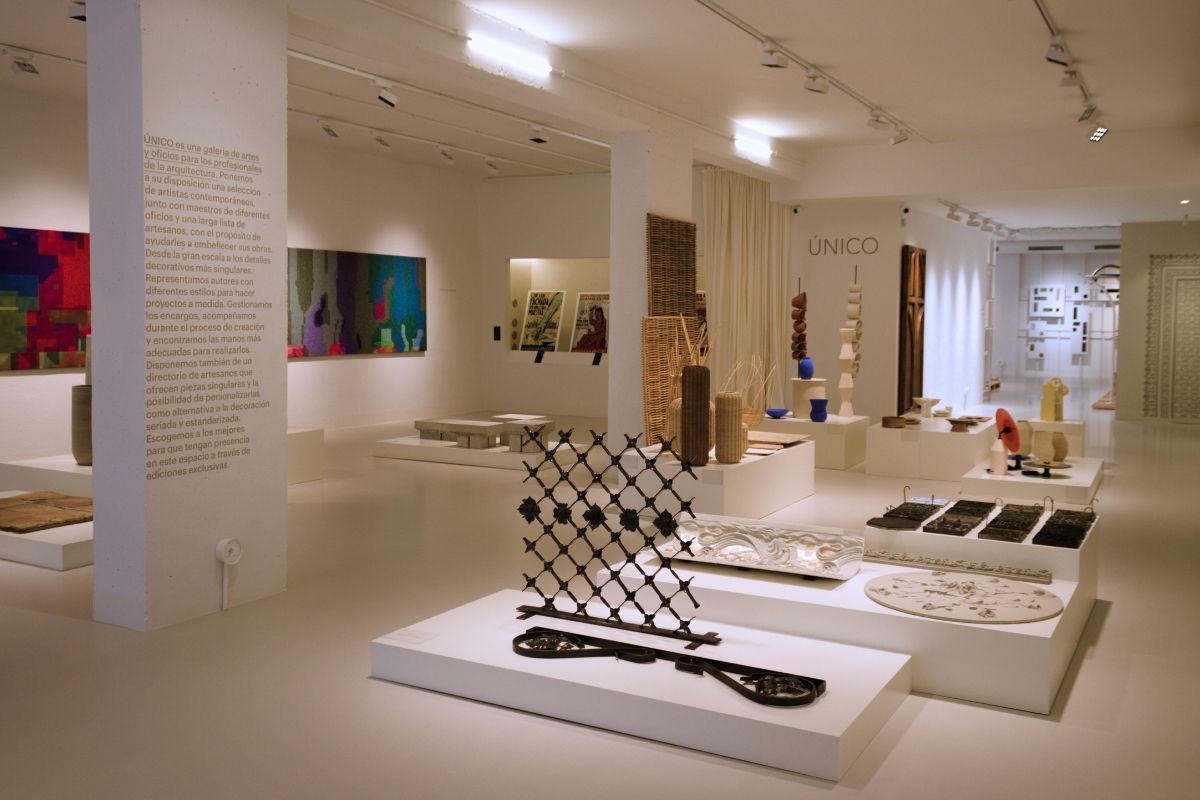
However, the seed of this company dates back more than thirty years. In the nineties, Ramon Comelles and Paqui Ricós were pioneers in introducing bathroom design culture in Spain through the brand ArtQuitect. From this firm, they imported designs such as the famous Danish VOLA faucets —which they distributed exclusively—, but soon they also opted for their own production of these elements. In 2008, the project was reconverted into ICÓNICO, led by the second generation: Ramon Comelles and Claudia Divo.
"One of the keys to ICÓNICO's success has been consistency," explains Comelles. This consistency translates into very specific decisions: few collections, timeless design, and a homogeneous range of finishes for faucets, switches, handles, and accessories. "The most difficult thing is not to create a new piece every year, but to ensure that a piece that was popular in the early 2000s still works today," he adds. A consistency that is reflected in good results: this year they expect to close the fiscal year with a turnover exceeding twelve million euros.
And the forecast is that turnover will increase even more in the coming years, as in recent years they have begun a process of international expansion, creating a specific department for internationalization. After a long trajectory focused on the Catalan and Spanish markets, ICÓNICO is now looking to France and Portugal to, little by little, continue expanding throughout Europe.
From digital platform to physical space
And it is precisely this same coherence that drives the ÚNICO gallery. "Every day, the team contacts more than 400 architects across the country: we know their needs and urgencies, and we have detected that, when these professionals look for more artisanal or special solutions, they often don't know where to find the right masters or how to articulate the professional relationship between both parties". This is how ÚNICO was born: as a platform that connects artisans from all over Spain —from sculptors to cabinetmakers— with professional architects for shared projects, whether in the construction of private homes or in large luxury hotels or restaurants.
However, as often happens with great ideas, ÚNICO did not arise from a premeditated strategic plan, but from an everyday anecdote. "My partner gave my mother a piece created by an artisan friend of ours," Comelles recalls. "And I remember spending nights where I could barely sleep thinking: how does this artisan manage to survive? How does she manage to sustain such a traditional business in such a digitized world?".
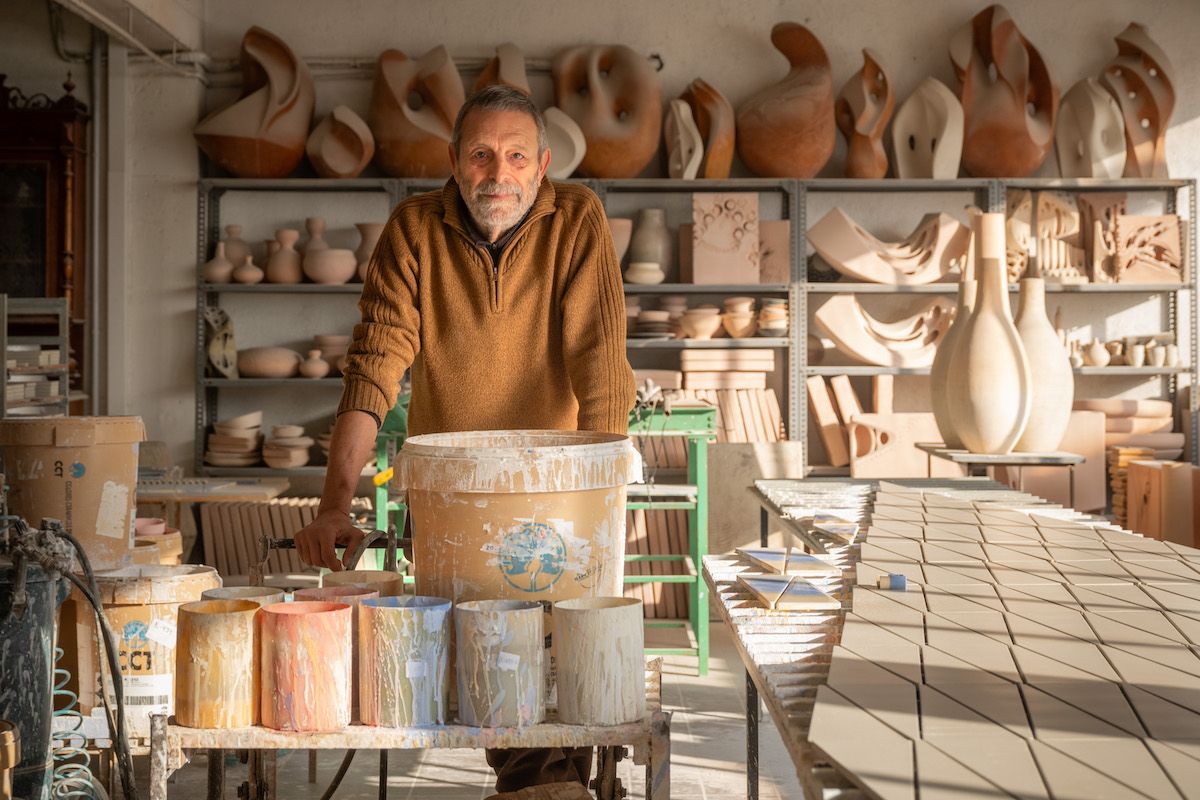
"It was at that moment that I felt the responsibility to become a loudspeaker for these small artisans, who do very dignified work, but are rarely valued," says Comelles. Helping small artisans connect with relevant projects, to make a living from their craft and to facilitate the connection with architects and interior designers to turn each architectural project into a masterpiece.
Because, as the promoter of this initiative reminds us, "betting on artisanal pieces, handmade, with attention and love, does not necessarily have to be more expensive, but it is more dignified and ethical." "As in fashion, the decision is up to the consumer: to opt for the cheap option, but often ephemeral, or for that which endures, which has history, which is made with conscience," says Comelles.
Initially, this concern of Comelles translated into an online platform, a directory of artisans from all over Spain and of all types of disciplines. "Like a yellow pages focused on the defense of trades, with more than 1,200 artisans located and available", explains Comelles. But they soon realized that visibility was not enough. "They not only need to be seen; they need structure, coordination and accompaniment throughout the process of relationship with the architect", argues its promoter.
Inspiring architects, dignifying artisans
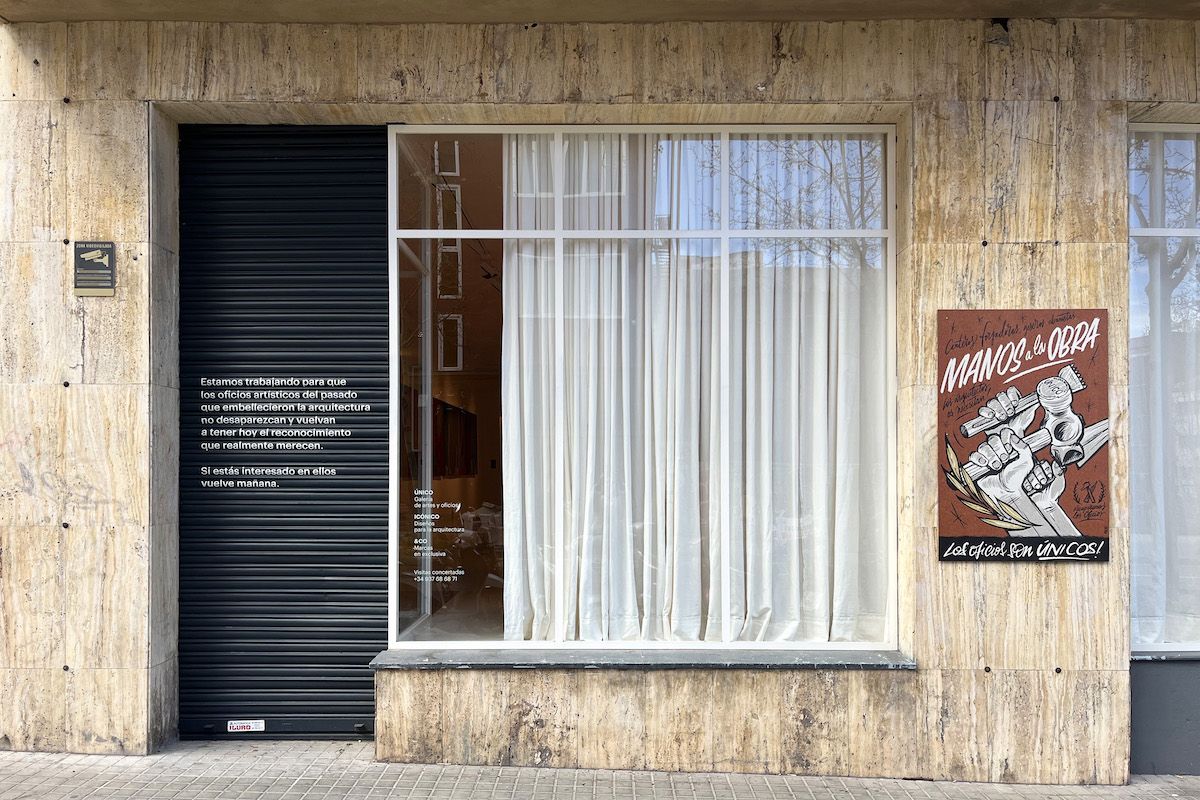
"The goal is not to show finished pieces or specific artisans, but to show the different possibilities that these crafts still offer," insists Comelles. Because the space is not a conventional gallery: here, pieces are not exhibited as final products, but as possibilities.The focus is not on the object, but on the technique and manual skill of these artisans. It is not the result, but the process. "Perhaps upon entering, professionals can be inspired by a specific technique for some of the projects they are working on or will work on in the future," argues Comelles. Although the space is primarily designed for a professional audience, such as architects or interior designers, it also allows visits from students, artists, interested individuals, or those curious about the subject."Society continues to reward professions that require university degrees and specific training, forgetting about trades with ancestral knowledge"
All of this in an open space that allows objects housed in this gallery to be observed from the street. Modernist flowers, stained glass, wooden doors, mosaics, wrought iron, stone, ceramics, or concrete coexist in this space as a sample of a handcrafted way of producing that is increasingly being lost. This is also claimed by a propaganda poster, created by graphic designer Mr. Zè, hung on the exterior of ÚNICO: "hands on. Architects need you."
Especially in a social context that tends to undervalue these professions: "there is not enough recognition or regulated training to dignify them," laments Comelles. "During the pandemic, a large part of the population reconnected with these more artisanal hobbies, but now it seems we have forgotten them again. We must assert that these hobbies can become a trade," adds the promoter of the initiative. Because, as he warns, if these masters disappear, it is not due to the lack of value or quality of their work, but to the absence of generational replacement and the scarce social recognition of these professions among young people. "Society continues to reward professions that require university degrees and specific training, forgetting about these trades with ancestral knowledge."
Add The New Barcelona Post as your preferred Google source for free
Stay informed with the latest news.
