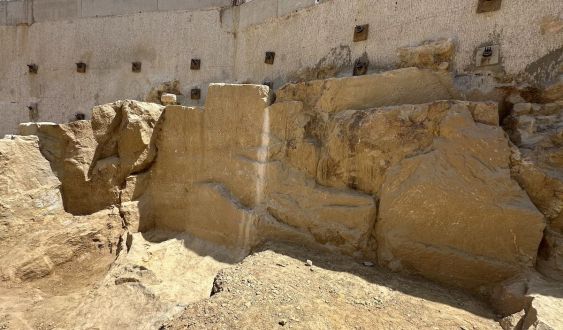
The buildings that project the Barcelona of the future are built on the foundations of a city with a millennial past. The construction of one of these new homes in Montjuïc, between the streets of Ferrocarrils Catalans and Vilageliu i Gavaldà, has unearthed a part of this ancient city, specifically a Roman-era quarry. Dated between the 2nd and 1st centuries BC, it is one of the oldest quarries in Catalonia and even in Europe.
The archaeological find is not only relevant for being one of the oldest with confirmed archaeological dating on the entire continent, but also because it is directly related to the founding of the city of Barcelona. In fact, archaeologists point out that the first stones for the construction of Roman Barcino could have been extracted from this quarry, and even other large nearby settlements, such as Baetulo (current Badalona) or Iluro (current Mataró), making it a key piece in the Roman urbanization process of Hispania.
Once these stone blocks were extracted from the quarries, the most common practice was to transport them by boat across the sea or via river routes, as the great difficulty in transporting them was their heavy weight. Thus, this unearthed quarry not only would be one of the main supply areas for Barcino, but also for the entire territory of current Barcelonès and even Laietània (which extended through the current regions of Vallès Oriental and Occidental, Maresme, and Baix Llobregat).
This quarry, therefore, is a sample of an urbanistic change that occurred with the arrival of the Romans on the Iberian Peninsula, when large cities began to be founded, in contrast to the small settlements that the Iberians had built. "It is at this moment that cities emerge, with infrastructures that need much more stone than the Iberians had needed. The quarry, therefore, is the initial point of this urbanistic change," emphasized the head of the Archaeometric Studies Unit of the Catalan Institute of Classical Archaeology (ICAC), Anna Gutiérrez.
For all these reasons, Gutiérrez believes that the find "will end up being an international reference point in the study of Roman quarries." Especially due to the fact that quarries are "a type of site that is little known and rarely excavated, as they often go unnoticed or are masked in the landscape."
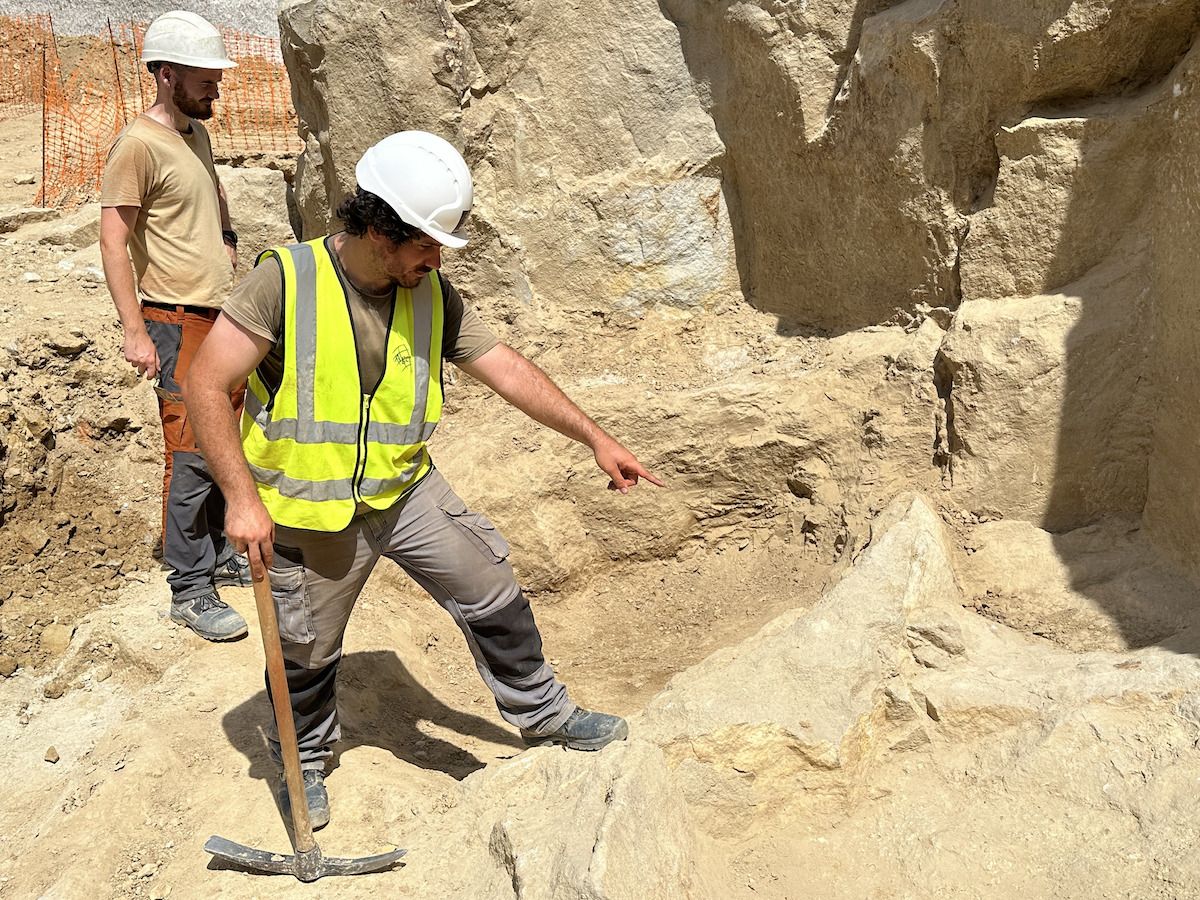
The discovery represents, in fact, the continuity of another quarry face already documented in the 1990s, when a 50-meter long and 10-meter high section was unearthed. Now, the works on this building have identified a new section of Miocene white quartzitic sandstone, 30 meters long, 5 meters high, and 4.5 meters wide. Despite being the continuation of the quarry face found at the end of the previous century, current, more advanced excavation techniques will allow new information to be obtained about Roman construction practices, such as the type of tools used or the strategies followed.
Likewise, the site also provides insight into aspects of the people who worked there, such as their diet. Furthermore, within the framework of the excavation of this site, a wide variety of materials have also been found, such as items made with Campanian pottery, imported from the Naples area, or an incense burner with the relief of the goddess of agriculture Demeter.
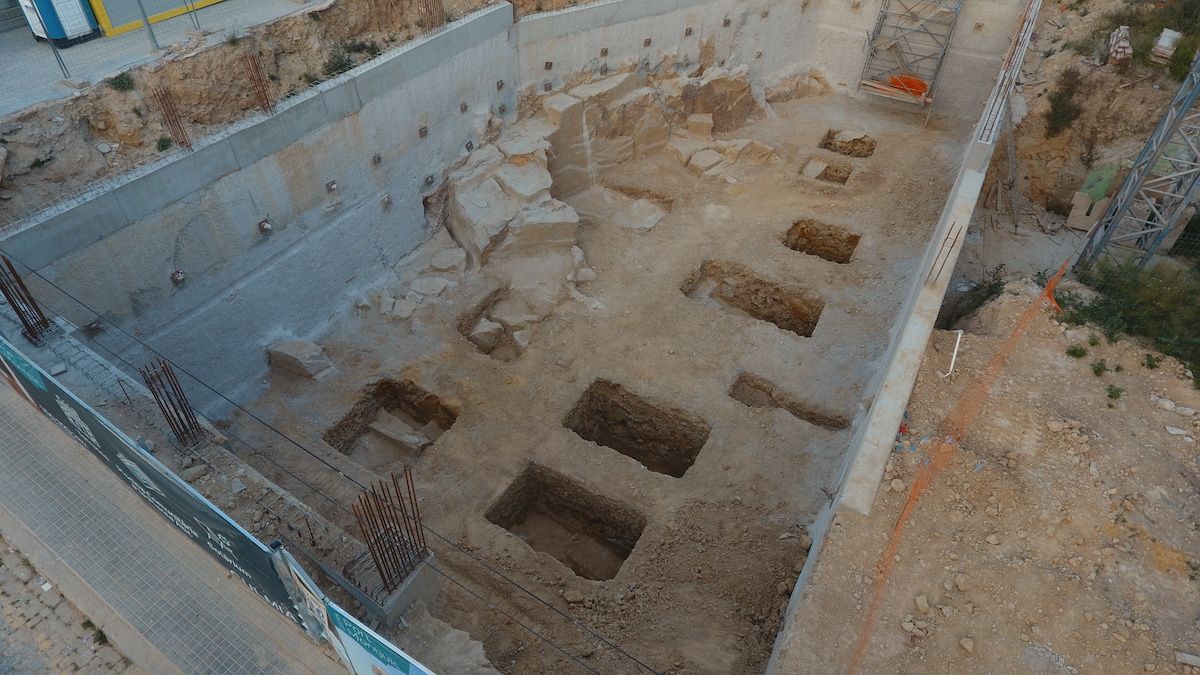
In order to reconcile the preservation of this discovery with the interests of the private developer who is erecting the new building, an agreement has been reached that an 8-meter long section of the quarry will be preserved on the second underground floor of the building, which will be visible within the property. The rest of the site will be dismantled for preservation and so that the works, which began last autumn, can continue. On the other hand, photogrammetry work will also be carried out to generate a 3D model of the complex. In addition, in the coming months, the team of archaeologists, led by Andrew Kelly of the AGER company, will carry out studies of ceramic materials and complementary analyses to confirm their dating and provide more data on the construction techniques of the era.
Add The New Barcelona Post as your preferred Google source for free
Stay informed with the latest news.
