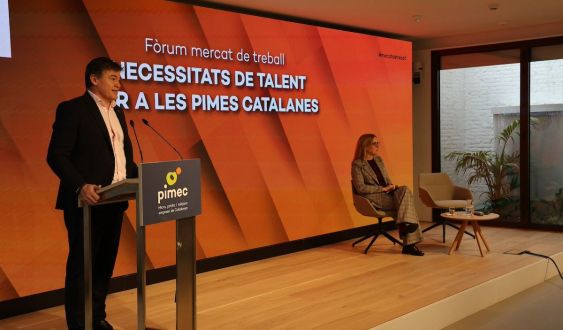
The Catalan business fabric is looking for workers, but cannot find them. At least, not easily. Half of Catalan SMEs that open selection processes have difficulties filling their vacancies: "There is a very important gap between the hiring needs of SMEs and the labor market," said the president of Pimec, Antoni Cañete.
And the fact is that 66% of these Catalan SMEs that open a selection process take more than three months to close it ---5.4% of them extend beyond a year---, while only 37% close in less than three months, according to a study by the Universitat Oberta de Catalunya (UOC) and Pimec, through the Baròmetre de Competències i Ocupacions de Catalunya.
Thus, the study, which analyzed 520 selection processes over a period of 18 months, concludes that there is a significant imbalance between labor demand and supply. And this imbalance occurs in a context where companies are actively looking for workers: during these 18 months analyzed by the study, 91% of the micro-enterprises and SMEs studied have opened selection processes.
"That you are looking to incorporate workers and you cannot find them with an unemployment rate of 8%, means we are all doing something wrong," warned Cañete. The rector of the UOC, Àngels Fitó, has proposed working together to narrow this "gap that exists between supply and demand" for employment. "Companies want to hire; people want to work; universities want to train, and administrations want wealth to be generated. From this will and from this responsibility, is where we have to generate an opportunity."
And the general secretary of Pimec, Josep Ginesta, went further: "There is a cry to heaven: companies cannot find people to work." It is a problem that, moreover, has been occurring for years uninterruptedly, without having been solved, according to him. To advance in this regard, he called for the application of measures, also linked to Vocational Training, with the aim of "resolving this paradox of having opportunities but in return the highest unemployment rate in the EU." Thus, he agreed to warn that, "with this unemployment rate, it cannot be that there are difficulties in finding people to work; we are doing something very wrong."
The scarcity of candidates, the first hurdle
The main reason why these processes are delayed over time is the lack or scarcity of suitable candidates for the vacancies, a factor that has represented a difficulty in 77% of these processes. The lack of technical knowledge also influences, by 33%, and transversal competencies (27%), in addition to the required educational level (15%).
The difficulties in finding professional profiles with the right competencies have more weight in sectors such as construction, where 65% of vacancies are considered difficult to fill. With 50%, sectors such as manufacturing and education follow.

The most requested profiles by the analyzed companies have been transversal professions, such as administrative support ---10% of the total---, and commercial representation, with 4%. However, the jobs with the most difficulty in coverage have been those linked to human resources management, accounting, and cleaning staff.
The most demanded qualities have been changing, and "soft skills are now more important than hard skills", such as the ability to work in a team and a proactive attitude. In this sense, the most demanded competencies in the vacancies offered by the participating companies have been customer service, communication, and proactivity.
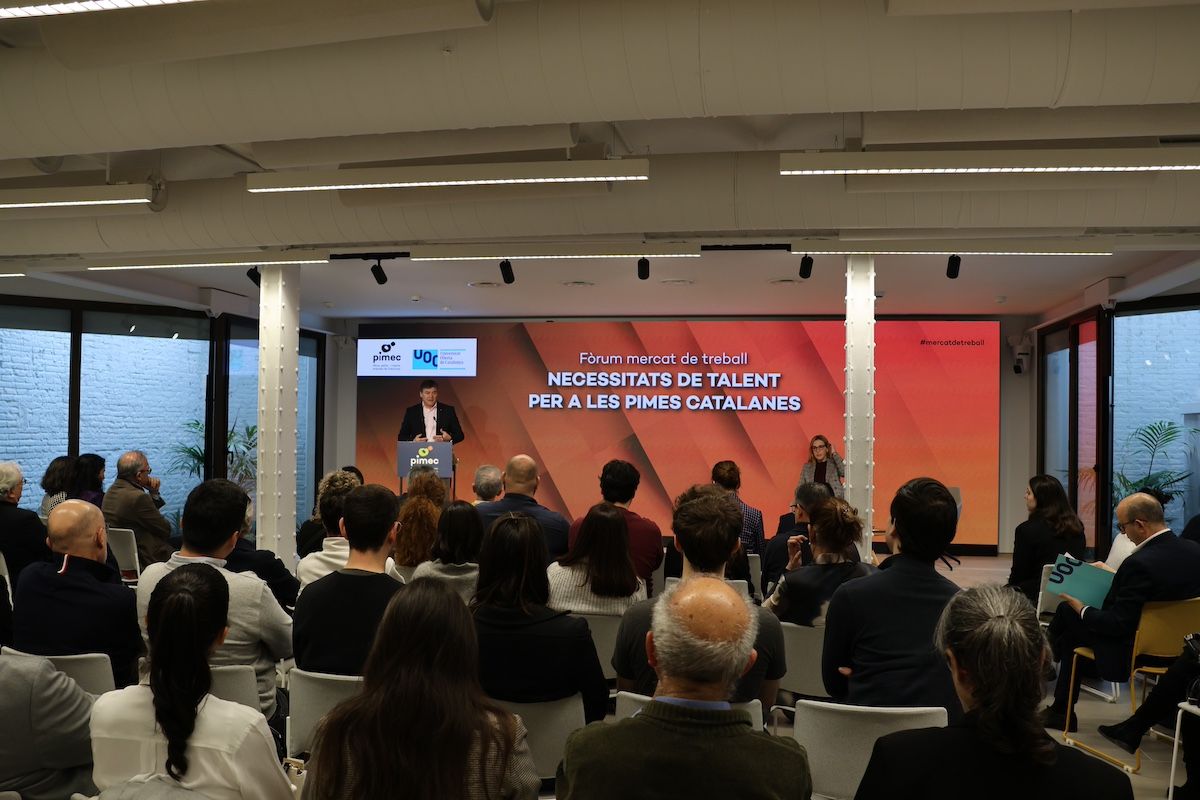
Regarding the educational level required by companies, the most demanded have been ESO, Bachillerato, and FP, and companies that have required a higher level represent 17% of the total. On the other hand, nearly 20% of vacancies have not required previous experience, while 17% have focused on candidates with more than one year of experience, and 51% have asked for between one and four years in a specific sector.
The role of young people
And the focus, in large part, is on young people, given difficulties that occur while the youth unemployment rate stands at 22% in Catalonia. "We have to know how to inspire young people", highlighted the promoter and director of the Qstura training center, Sílvia Castelló, in a round table during the day. In this sense, it is crucial to encourage workers and potential employees by transmitting the differential values of the brand, as defended by the founder of Sighore, Jorge Juárez.
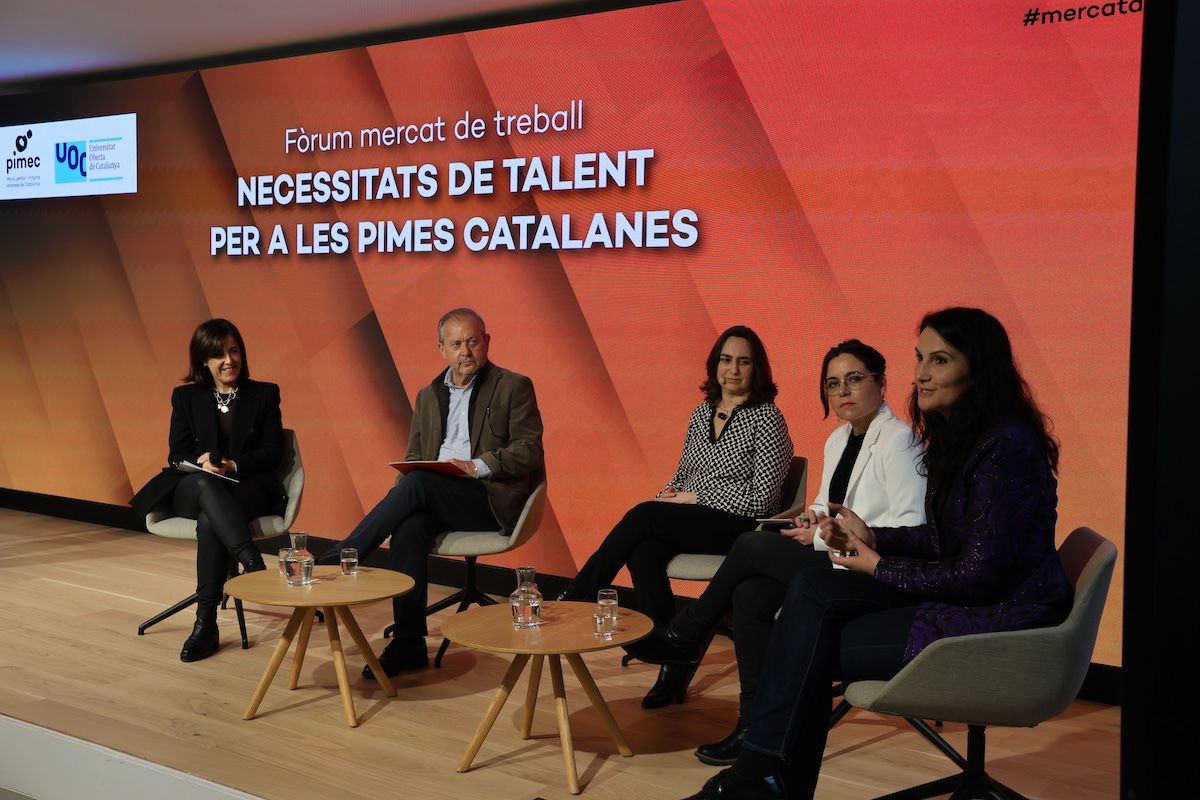
Making these values their banner and by making their project known in universities and by motivating workers in the environmental field, DAC Enviro is one of the companies that has not gone through those difficult selection processes, as stated by its head of administration and human resources, Montserrat Serra.
Motivation and the need to stimulate young people to work and to link themselves to a project is a transversal need and commitment that Dicomol also shares from the industrial sector. The general director of the company specializing in molds, Estela Sánchez, agreed in offering the same recipe: "We have to encourage young people to work, fostering commitment and involvement."
Add The New Barcelona Post as your preferred Google source for free
Stay informed with the latest news.
