The Almanac is a temperate luxury hotel, a business and conference pattern, a reception of dark reflections, walls in a vertical blind style, and a uniform zebra crossing floor. It doesn't look, not by a long shot, like a hotel destined to host an art exhibition that occupies up to three floors of its rooms and that has already hosted the Loop fair for more than six editions. As is already known, the festival will last until the 22nd, but the fair, located in the hotel, has only lasted three days and is a true gem in the midst of the meager and sometimes repetitive offering of contemporary art in Barcelona. Under the artistic direction of Filipa Ramos, this year's edition is divided between Fair, Festival, and Symposium, and its common thread is Mirages, specifically proposing a reflection on contemporary artists' cinema.
The fair itself is an endless corridor of impacts: during the tour of three entire floors, we witness a laboratory of global unease, true chambers of poetic urgency, a kind of artistic occupation in spaces normally reserved for business people or furtive couples. Now the doors do not close any intimacy, but remain open to different worlds as if they were other dimensions in a very long fairy tale. All these artistic worlds vibrate with the same diagnosis: something, on the planet and in society itself, is breaking.
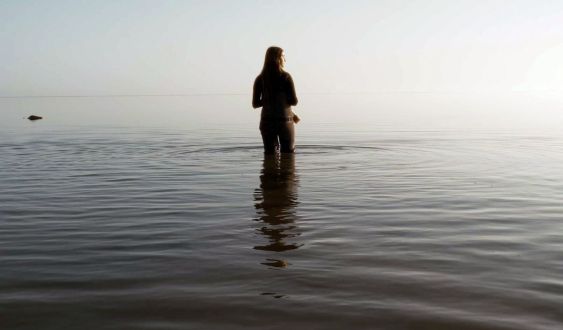
It is very difficult to summarize all the offerings exhibited among well-made beds, ephemeral furniture, and cava glasses yet to be filled: in room 304, Anna Moreno's work, Rondalla 99 (House of Chappaz gallery), narrates an Ebro delta where climate change portrays a loss that has already begun: beauty that does not console, memory that cracks. Outside, the corridor is full of the murmur of dripping visitors trying to speak in a low voice, and one feels like hanging an elusive "Do not disturb". Beyond, Zhang Xu Zhan (Project Fulfill Art Space) films giant termites eager for cables because the wood in the forests has run out. Again here nature, once infinite, now falters.
Everything in LOOP vibrates with this feeling of transversal alert; there is no gallery that does not exhibit, in one way or another, a world that trembles like a leafThe political temperature rises from room to room. In Rebels, the piece by Gabriela Golder(Rolf Art Gallery), workers expelled from a factory recreate the lithographThe Internationalof 1935, with an unreal hyperrealism of fluid and updated movement, present, in high definition. Along the same lines,Glenda León(SENDA gallery) evokes an AI incapable of obeying the artist's orders and which offers as a result a back and forth of images from one side to another, sufficiently illustrative by itself.
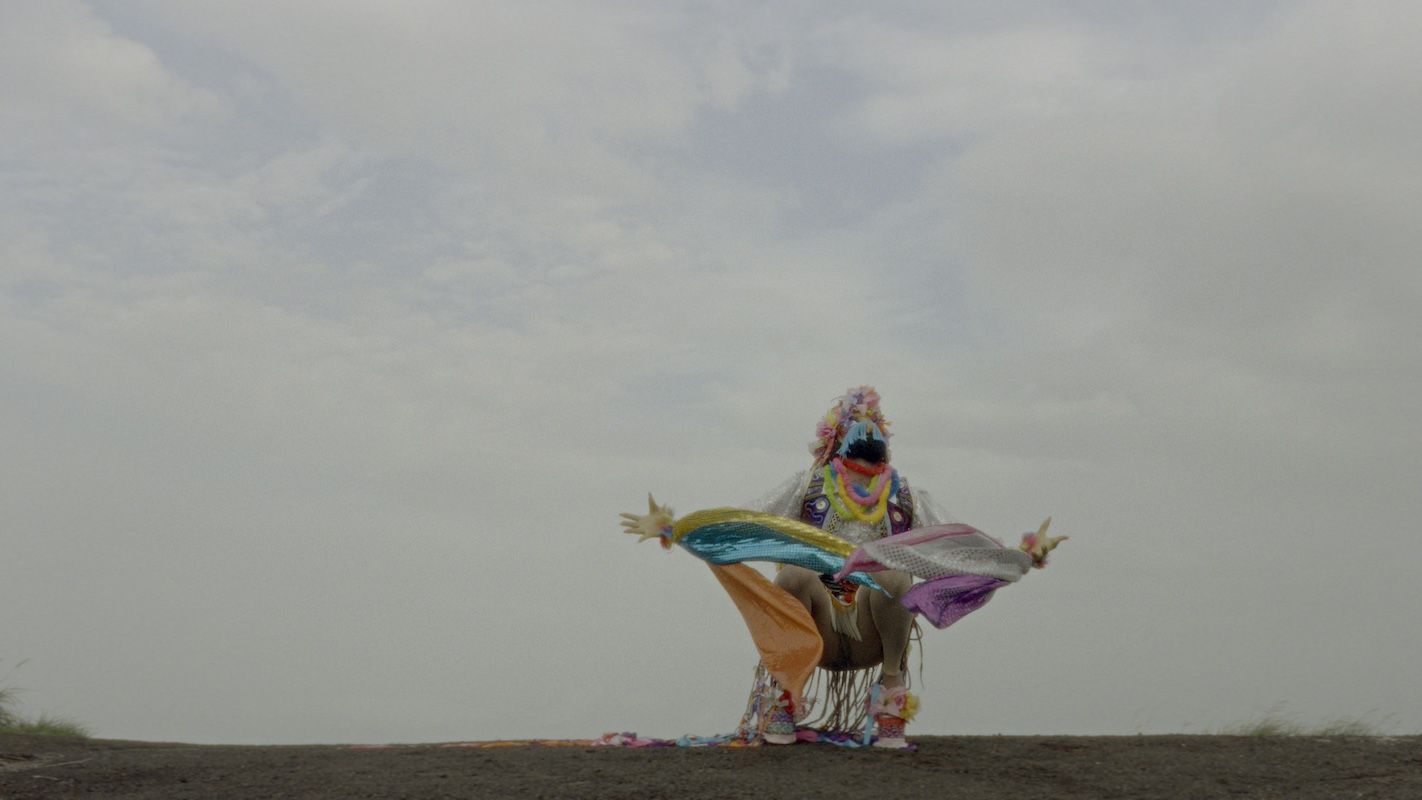
Indigenism finds its flag in Obsidian Dream (Proyectos Ultravioleta gallery) by Edgar Calel or in Rumbling Earth by the queer artist Elyla (Barbara Thumm gallery), where the volcano is the epicenter in which nature reclaims the unforeseen, the different, the rebellious. Nelson Bourrec Carter, with his Teen Spirits (Galería Alain Gutharc), takes us to a scenario of half-queer, half-racialized teenagers performing a kind of choral ritual, evoking the author's own adolescence (as well as the soundtracks of films aimed at that audience).
As it is impossible to tour and describe all the rooms, I stop at 211. FUGA Gallery, Can the leaf be spelled?, by the Venezuelan Valentina Alvarado Matos. This artist explains her diaspora during a three-month stay at Matadero de Madrid, where she was often able to visit the archive of the Royal Botanical Garden. The result is what she saw inside and outside the archive, filmed in 16 mm (a format that is appreciated among so much digital) and a demonstration that, indeed, a leaf can be spelled if done with poetic language: obsessive rhythm, repetition of syllables, reading the palm of the hand as one reads precisely the palm of a leaf. The strange vision of Europeans before tropical leaves, reading, learning to read again.
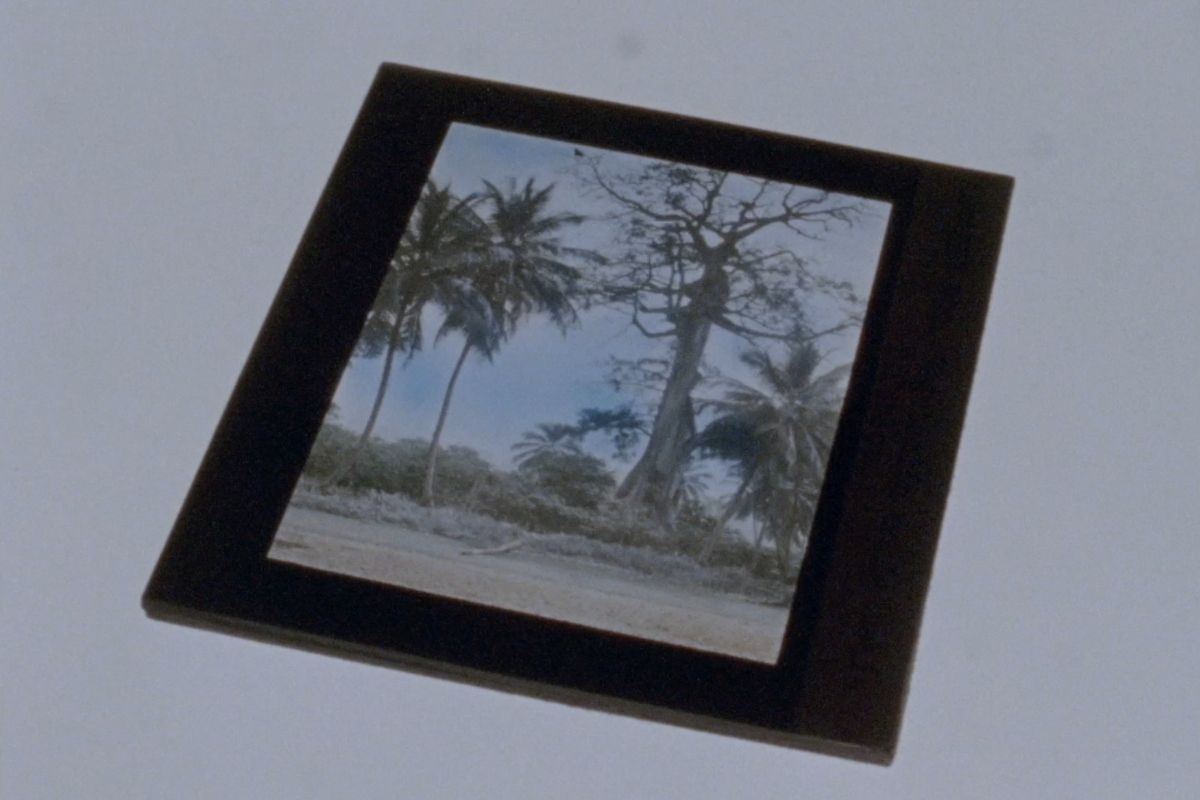
"The petal approaches the camera like a tiny arm trying to wave." A small cut on the fingertip, bleeding as if to adorn. A whispering, almost ASMR, tone of voice that repeats "branch, plant, bush, bug, earth, tree, bush, plant, bug, mountain, leaf, earth, tree." The hand, already between the archive walls, appears covered by a glove as it turns the pages of prophylactic biology. The leaf blinks, and the room also does so at its own pace. A beautiful and intimate reflection on nature and language.
Everything in the LOOP vibrates with this transversal sense of alert. There is no gallery that does not exhibit, in one way or another, a world that trembles like a leaf. When I finally go out into the street, the hotel reception seems much more poetic to me than when I entered, and the noise of the Gran Via seems excessively material, frivolous, provincial. The LOOP always leaves this side effect: you have spent two hours inside worlds that are falling apart and, suddenly, Barcelona smells of normality. The city continues with its own with all its strength, yes, but the problem is that not even the beach under the cobblestones seems like a safe place anymore.
Add The New Barcelona Post as your preferred Google source for free
Stay informed with the latest news.
