[dropcap letter="V"]
ociferates Medea, in Emma Vilarasau's superb characterization, left and right. Spite, the rejection by her lover Jason -more interested in Creon's daughter, Creusa, whom he is to marry- produces a corrosive anger, and the spectators must be aware of it. More than dramatic, the opening scene oozes pathos. Without time to acclimate ears, the key of expressiveness is pressed hard, causing a state of perplexity; a mismatch between the one involved in the tragedy and the spectators, who can hardly empathize from the start. There are no nuances in the almost automatic and artificial declamation, Medea is possessed and so she will remain, in the progressive modulation of a discourse that the more it seems to hit the mark, the more it goes astray. Although the first tragedy to popularize her myth was that created by Euripides in 431 BC, there is no doubt that the imprint of Seneca's version, almost 500 years later, is very present in the version by Alberto Conejero and Lluís Pasqual, directed by the latter at the Teatre Lliure.
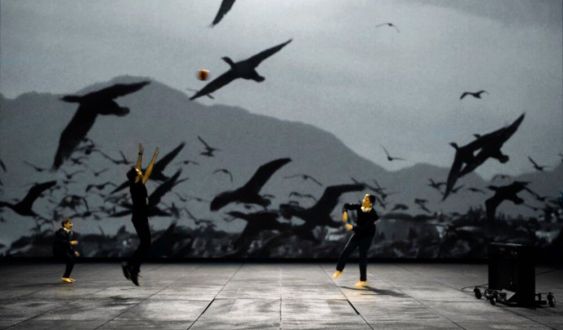
The protagonist's voice reverberates and overrides those of the other characters, including Creon, king of Corinth. Her powerful word cannot be silenced, Seneca reminds us in his tragedy. To stage the helplessness and paradoxical privilege of the priestess, the staging relies on minimal resources, but -yes- with passages of well-employed technical artifice: both the water curtain at the beginning and end, and the pond of water that opens, emerging from nowhere under the actors' feet and allowing Medea to materialize the cruelest and most unacceptable idea -to kill her own children-, or also video passages that reflect a bogged-down Barcelona, in black and white. These phantasmagorical visions of the city -very different, fortunately, from its usual appearance- alternate with the unreasoned reality of birds and birds of prey, which survive from the destruction of other lives, with no law other than instinct. The mythical figure of Medea, through her knowledge of the dark side of the natural order, participates despite herself in that lawless drift. And therein lies her tragedy: not being completely animal -even if she knows and participates in the inscrutable mysteries of nature- makes her guilty, a victim of the moral principles she transgresses and vindicates with equal vehemence.
The actress herself warms up and believes the character. It remains incomprehensible -little or nothing reasonable, in her inspired career- but the viewer has appreciated that internalization. Vilarasau's total exposure coincides with the role of victim; a self-imposed role, which Medea seems to choose against her own interests. She is not content with her reality as a foreigner, nor of course does she tolerate expulsion. She plunges into Creon's punishment, aware of her sorceress's arts, and perhaps trusting in the ultimate complicity of the numen, deus ex machina who will save her to the perplexity of Jason, who loses what was to be his future wife and children, because of Medea's action. A character who does not embody evil, in a Manichaean sense, but who in Pasqual's version is not endowed with modern psychology either. With which the unreason that characterizes her is brought to the forefront, it remains in suspension like fine rain. An almost poetic, but uncomfortable vapor. It does not allow one to see through.
Add The New Barcelona Post as your preferred Google source for free
Stay informed with the latest news.
