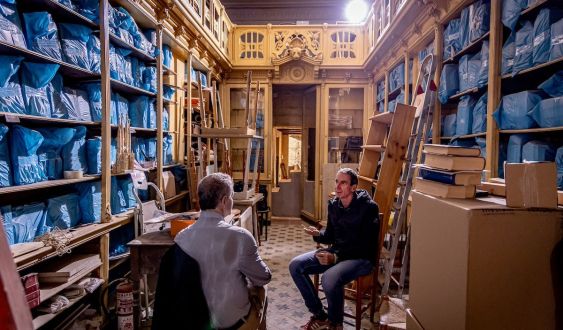
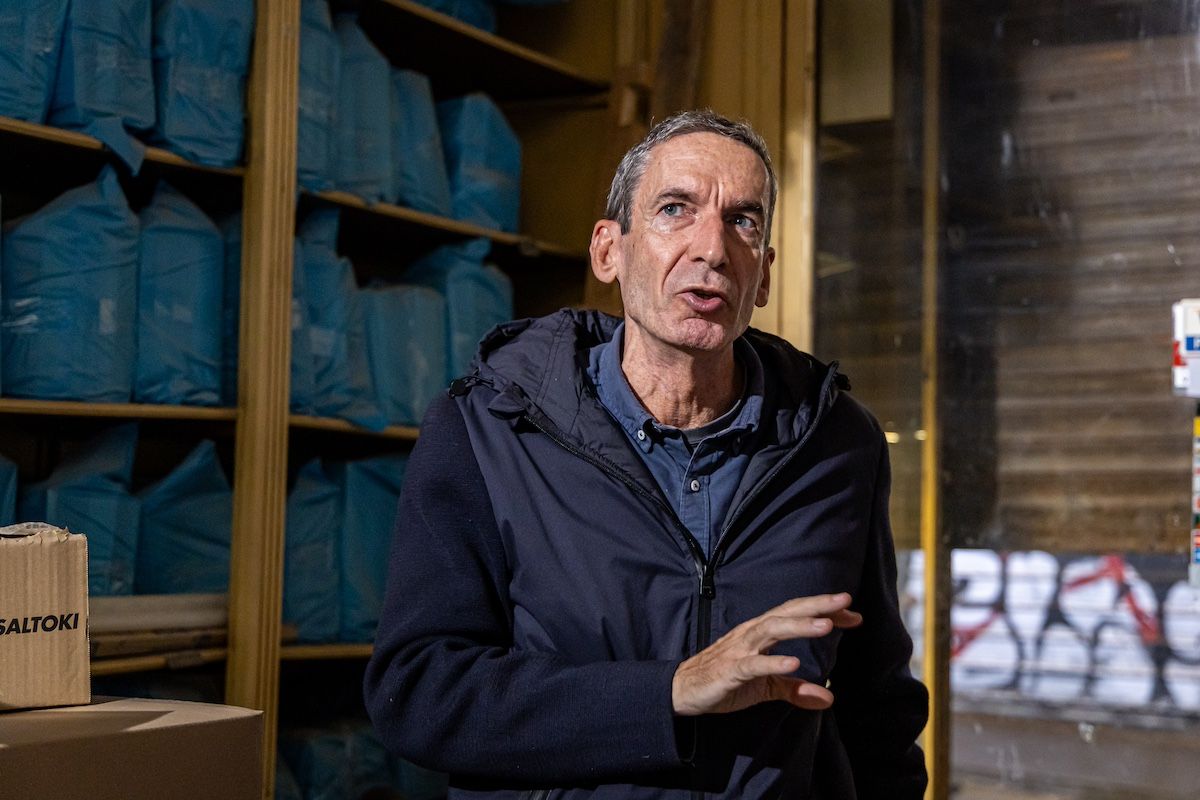
Rafa Serra comes from the world of travel agencies, but he already has experience in recovering emblematic spaces in the city to bring them back to life. First it was Espai Quera, and now he intends to save the Llibreria Sant Jordi from a closure that seemed inevitable.
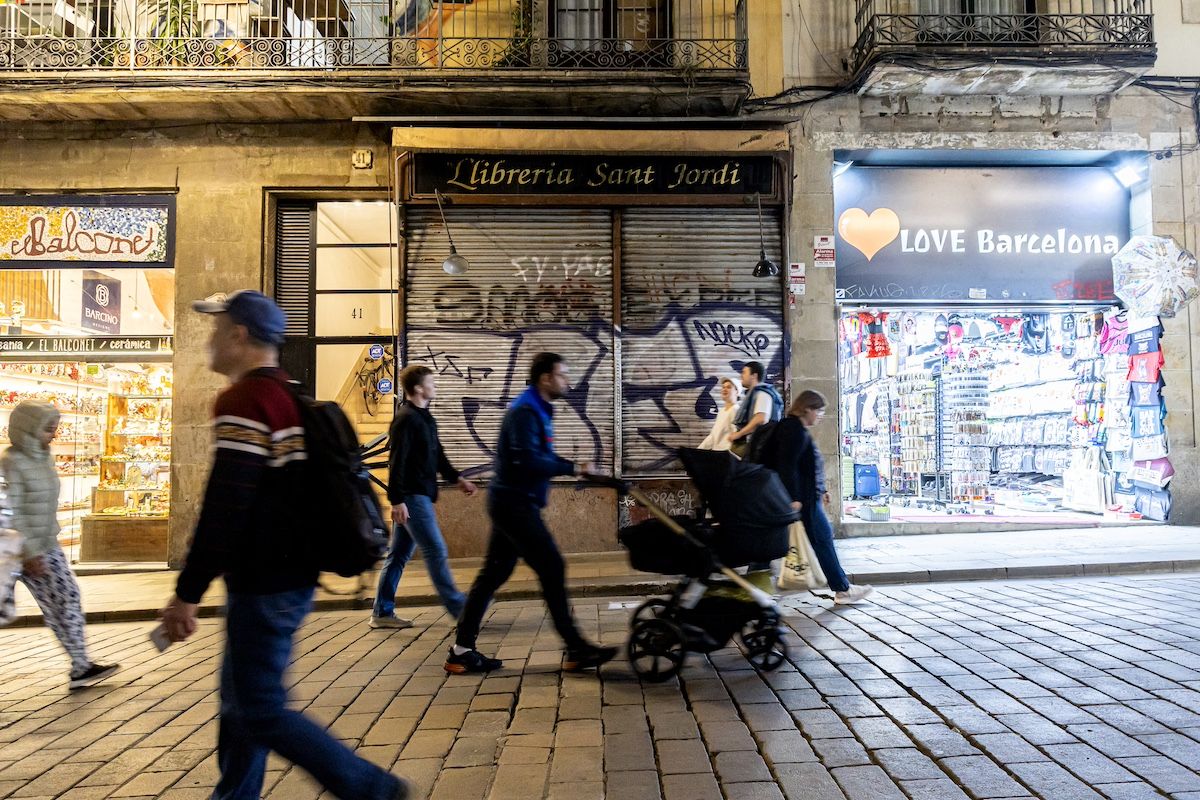
Serra's message is that, if creativity is found to update business models towards more viable formulas, the usual spaces have a future in Barcelona. One wonders if this spirit—the creative, the disruptive—would also serve to save local access to housing. But, for now, commerce: no, not everything will be empty facades. There is hope. Sant Jordi can kill the dragon.
— To begin, thank you very much for being the person capable of saving an emblematic establishment in the city that seemed lost.
--- I do it with a lot of affection, a lot of enthusiasm, but it's also a pain, huh?
— Now we'll talk about that. But thank you. I suppose the protesters are also grateful.
--- Well, look, you know something similar happened to us at Espai Quera, which was also a coincidence. In that case, one of the brothers called me, saying they had to close the bookstore, that if the rent went up they would have to set up another business, and they proposed it to us. I said: why not do a complementary activity, which the Ciutat Vella land use plan allows, and with a small backroom space, maybe the business balances out and works? Then, Raimon, the son who was in the bookstore, told me: "Look, I'm burned out, I've been here for 10 years, and now I want to do something else." Well, come on, let's go, I told myself.
— When was that?
--- That was in November 2019. The usufruct belongs to the father and there are four heirs. But the one who has been in the bookstore since he finished military service is Raimon. The thing is that we reached an agreement, we went through the whole process, we worked with the City Council, we recovered the original hydraulic floor, we restored the exterior sign, and we set up the complementary tasting space (with the complexity that these small spaces have).
— Similar to this one in Sant Jordi.
--- Exactly. I already know the process, you know? With Espai Quera we managed to overcome Covid and now it's a sustainable business. Without public contribution, we managed to make an emblematic space self-financing, maintaining the old bookstore and preserving the entire premises exactly as it was in 1910. And that, for me, is the great challenge.
— And now you want to do it here.
--- I imagine that, like you, I received four WhatsApps from four different people: "Hey, they're going to close Sant Jordi, if you want to go buy…". And then Cristina Riera says she can no longer take care of the bookstore, because they were raising her rent. And that they wanted to sell the inventory.
— It was a solidarity movement by the citizens of Barcelona.
--- Yes, it reached me like any other citizen. But then I received a second call, more serious, knowing my experience at Espai Quera. I came here, even bought a book, introduced myself, explained who I am… And, after not reaching an agreement with a foundation that had been interested first, I told her yes. That I was taking the plunge.
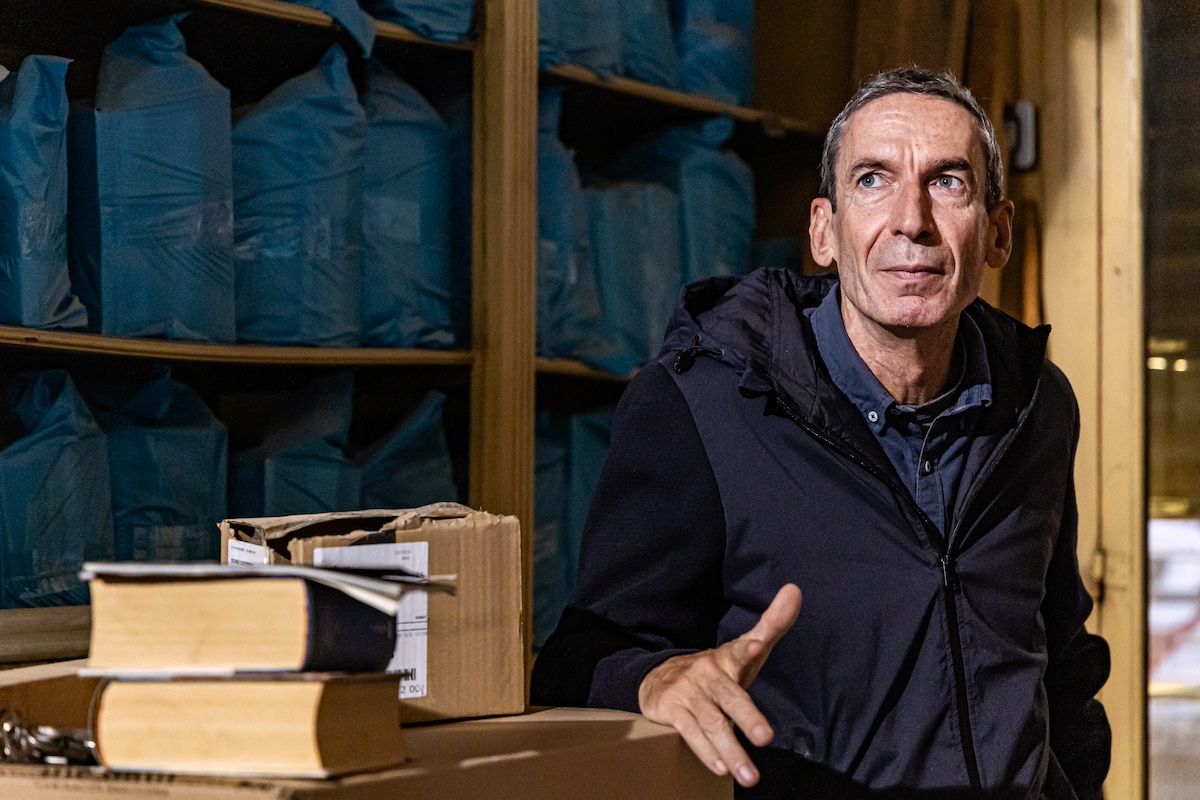
— You had already lived through the previous process.
--- The Stations of the Cross, yes. And then something very special happens, like one of those signs of life…
— Which one?
--- We go to the real estate agency, to the property administrator, to sign the contract and make the transfer… And then the power goes out, it's the day of the famous blackout. Therefore, I can't make the payment, and Cristina and I stay in a bookstore next door… and we run into Quim Monzó, who lives nearby.
— Wow!
--- It was he who said: "This is a sign!". We took a photo and he signed the contract as a witness.
— How good.
--- "Let's see what you're making me sign!", he said.
— And then…
--- Then, it's no one's fault, but the regulations are very strict. Here the shop window, the entire bookstore, and the building's facade are protected. And if for a normal bookstore they would give you an activity license in two minutes, this is a bit more complicated, because we were asking for complementary activity.
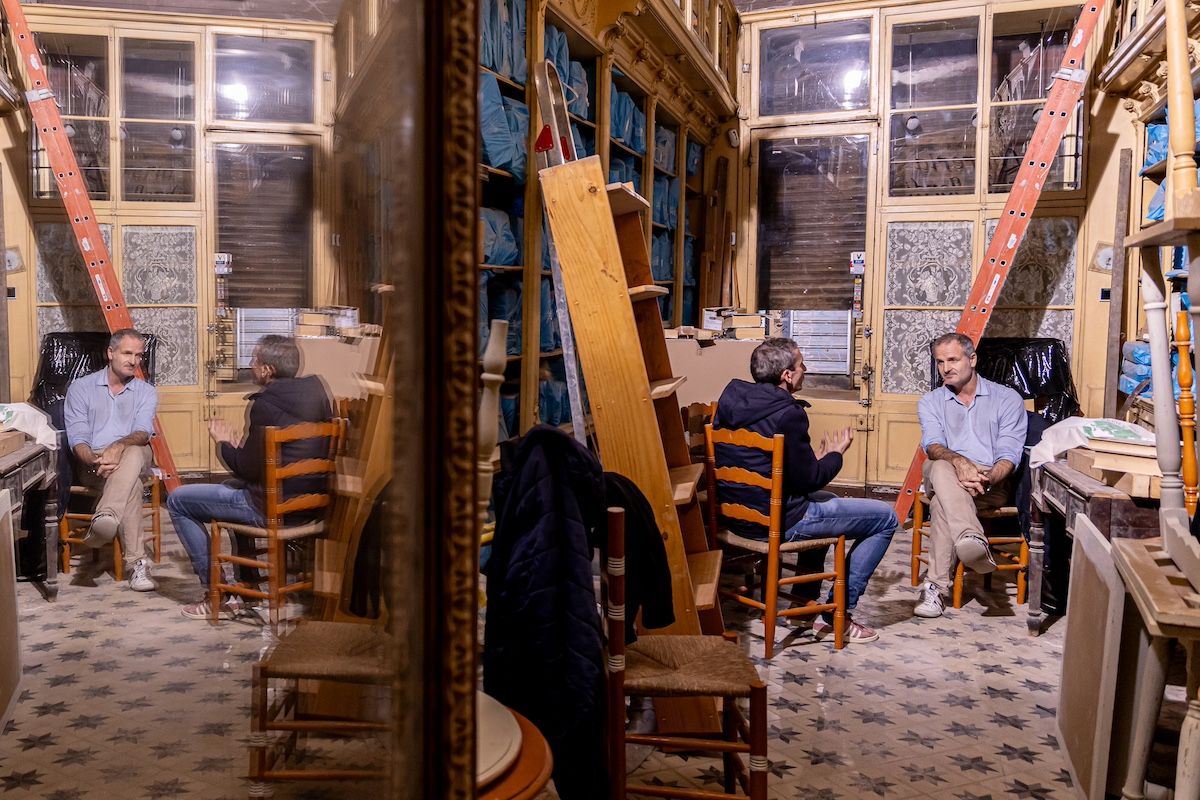
— You already had the bookstore one.
--- Of course. And then all the bureaucracy arrives, which is psychologically costly. And the days that pass, you pay for them, of course. While you get all the work started.
— Is it the same as in Espai Quera?
--- Not exactly, here we have three main axes: the bookstore as such, practically intact; the tasting area, which is the interior part, complementing the bookstore, and then we have requested what is called Cultura Viva from the Barcelona City Council, a license model that allows you to do a minimum of 40 cultural activities a year. Dinners, colloquiums, presentations… With these three pillars, we think, hope, and wish that this can be sustainable. Even one of the two main publishing groups in Catalonia came to tell me that, seen only as a bookstore, the numbers would not work out.
— No?
--- We are on a very commercial street in Barcelona, the rent is adjusted, etc., but the business model of a bookstore today is very complicated. I am a bit enlightened, I am optimistic, I believe in things, and I think we can save it. It won't be easy. I think it will be less complicated than Espai Quera: this is Ferran street, here you can get to the door by car.
"We will continue the line of architecture, painting, photography… and we also want to focus on the Barcelona theme"— What is the idea?
--- We want this to be a unique space in Barcelona. It already is now, as you see it, at the worst moment of the film. Now comes the fun part: putting up the lamps, the decorative elements, assembling the kitchens, the tables, the books... that point where you say: "I don't know if we will recover the investment, but it's worth doing."
— When do you foresee it?
--- I want us to be open in the first half of December, before the fifteenth.
— And hey, one thing... who are you?
--- People quickly identify you as a bookseller or a restaurateur, and I am neither of those things. I am an entrepreneur, I come from the world of tourism, I have three travel agencies: one located in Africa, another in Barcelona (Temps d'Oci), and a small group of hotels on the Costa Brava, Salat'SHH, which are boutique hotels in Llafranc, Tamariu, Sa Riera, Begur, Sant Feliu...
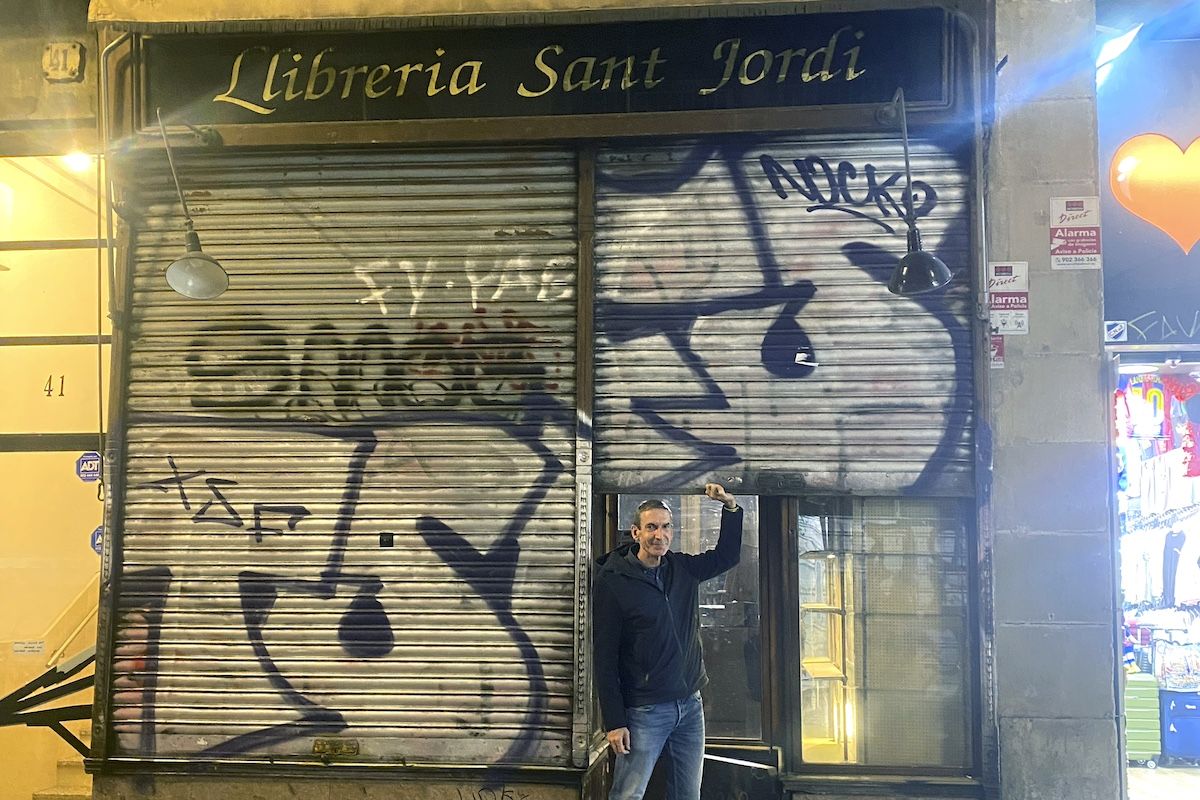
— Do you outsource the gastronomic part?
--- We spoke with Judit, from Bodega de Palma, one of Barcelona's emblematic places, and we quickly reached an agreement. Here in the neighborhood, we are like Asterix and Obelix's Gaul, there are four, five, six of us left. It gives me the peace of mind that the tasting part will be of quality and with a team behind it. Few products, but good ones. Four cheeses, but impeccable. So that no one can say that the food is bad.
— What year is the premises from?
--- From the late 18th century. At first, it was a glove and umbrella shop, and the shop assistants lived here. Then it quickly became a bookstore, I suppose.
— And the books that were there?
--- Cristina sold many books, those that were piled up in the back room, you could barely even enter. Two-thirds of what was there was sold, now there are about 2,500 volumes left. With the transfer agreement, we have kept them all. Therefore, we will follow a bit of her line, which was architecture, painting, photography... We also want to focus on the Barcelona theme, for me it is very important. And that you also find new releases.
— Have we achieved a victory against gentrification?
--- Emblematic establishments cannot absorb price increases. It's no longer just that the next generation doesn't want to, it's that, furthermore, they can't. Because the numbers don't add up. But I believe it's possible, and that our model is very replicable in most emblematic venues in Barcelona. I sincerely believe it is, and it's not just me saying it, I can prove it with the case of Espai Quera. This space is so beautiful, so magical, it's like a small museum, like a small Sagrada Familia.
— Has the City Council been flexible?
--- I've learned that it depends on the civil servant you encounter. Some are very rigid. Luckily, we found a flexible one. So, perhaps they allow you to do a catering activity that doesn't have to meet standard conditions, but meets others.
— What's the trick to not ending up like so many other emblematic venues that haven't worked out?
--- If you create an artificial product, it ends up dying. That's how it is. It's not enough for the City Council to help you because it's emblematic. Something authentic, with meaning, is needed. People from the neighborhood must be able to come in here and enjoy this space.
— So, does Barcelona have hope?
--- Absolutely, absolutely. The Sant Jordi Bookstore has become an icon. No, I am not protected: I have created a viable and authentic model.
Add The New Barcelona Post as your preferred Google source for free
Stay informed with the latest news.
