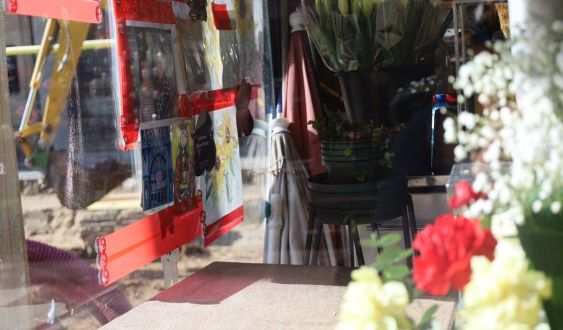
An installer places the awnings that in a few weeks will be shading flowers and plants. He installs them high up in spacious, glass-enclosed cubicles with white furniture, which will soon contrast with the vibrant colors of roses, carnations, and everlastings. The light and water still need to be installed; by the end of the month, everything will be ready for the florists of La Rambla to leave their Rambla behind and look at it for a year from a little higher up, from Plaza Catalunya, while the works that are updating the city's most universal promenade last.
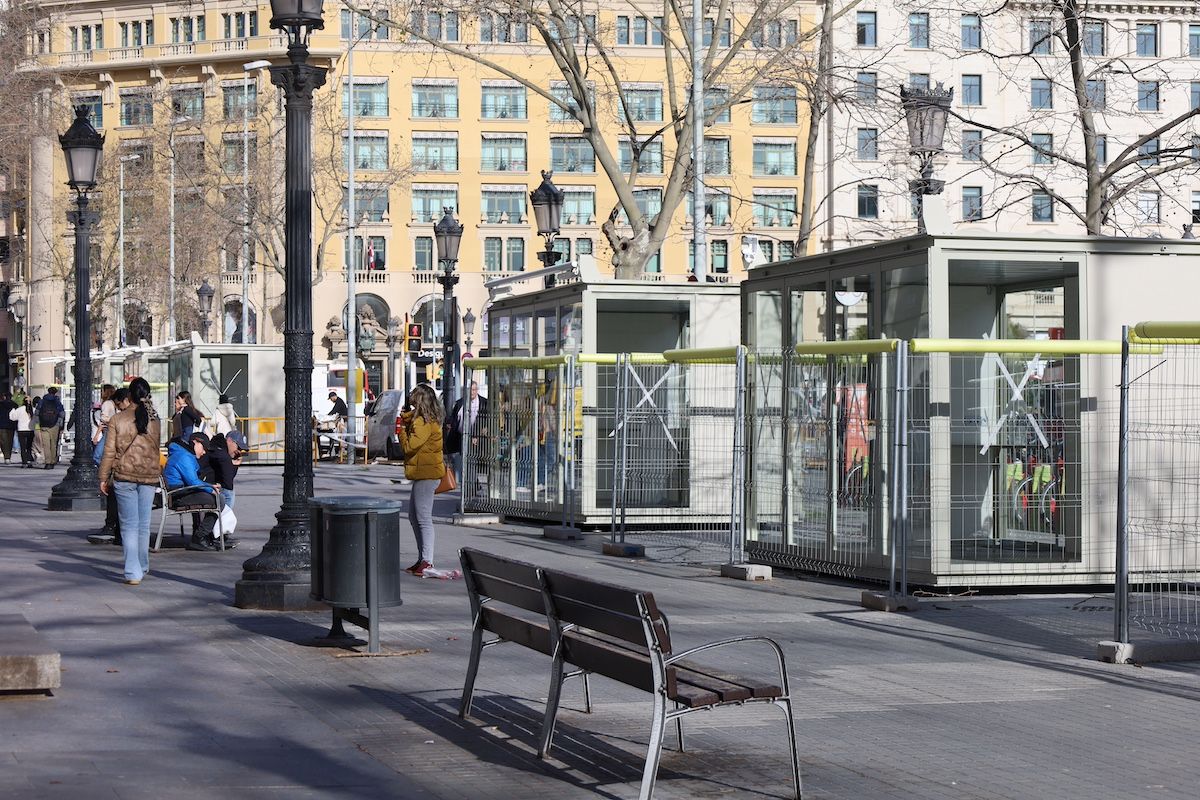
Still in their usual spots, tourists look at the flowers and their more souvenir-like versions as always, oblivious to the change that is to come, while Barcelonans who approach the stalls arrive with the same question: "Are you still here?" The announcement that the florists were leaving La Rambla after Valentine's Day had been taken literally — with a farewell visit from the mayor included — but the date was somewhat broader: the flowers will remain on the city's best-known avenue for at least a couple more weeks. Then they will move the flowers to the side of Plaza Catalunya, starting behind the Zurich terraces and extending to Bergara street, in a busy stretch, with people simply strolling and many walking quickly looking for public transport connections or to reach their destination.
The move, scheduled for early March, will not be complex, but neither will it be easy or quick: the transfer will be carried out one by one, with a maximum of two stalls per day, in a process in which the City Council will provide transport facilities. Thus, the complete operation could take about a week, until all eight stalls are located in what will be their place for the next year. Afterwards, they will return to their original location on La Rambla, although they will do so keeping the new kiosks they will soon debut. All, except one. The more than centenary Flors Carolina will return to its same stall, which was recognized for its design, different from the rest of the stalls. In any case, they will not return exactly as they left it: the stall will be renovated, to update it and to repair the damage caused by the works, which are already touching the flowers.
"We are relocating to a very nice space, but we will long to return to La Rambla," explains the fourth Carolina to run the stall, which her great-grandmother opened in 1888. "It will be quite an experience" to move away from La Rambla for the first time, especially for a stall that has accumulated stories and anecdotes with Salvador Dalí and Federico García Lorca. So much so that, for Carolina, one of the challenges of the move will be to find space for all the photographs that bear witness to these more than 135 years of history. With her sister Mercè at the stall, Carolina emphasizes that they have maintained a business that started so long ago with a small wooden table thanks to local clientele, and not passing visitors: "Now, the grandchildren of people who also got married with our flowers buy flowers for their wedding. If we are here, it is because of the local clientele."
And the role of the local buyer is key for most of the flower stalls that continue to give color and charisma to La Rambla. "I don't live off tourism," claims Laura, also fourth generation at the helm of the business, while attending to a woman who asks her how much some lilies cost. In fact, Laura sees tourism precisely as the main reason why Barcelonans have stopped coming down to La Rambla as they used to. "People don't come down because of the tourists, not because of the works," she emphasizes. For that very reason, the new location does not seem like a panacea to her. "Many people pass by there, but I don't know if they stop to buy. To take photos and to ask about the Sagrada Família, for sure, but to buy, I don't know." Meanwhile, others are impatiently waiting for the moment of the transfer and to see how flower sales work there: "We want to go up with the flow of people. No one is more eager than us," they highlight from another of the colorful stalls.
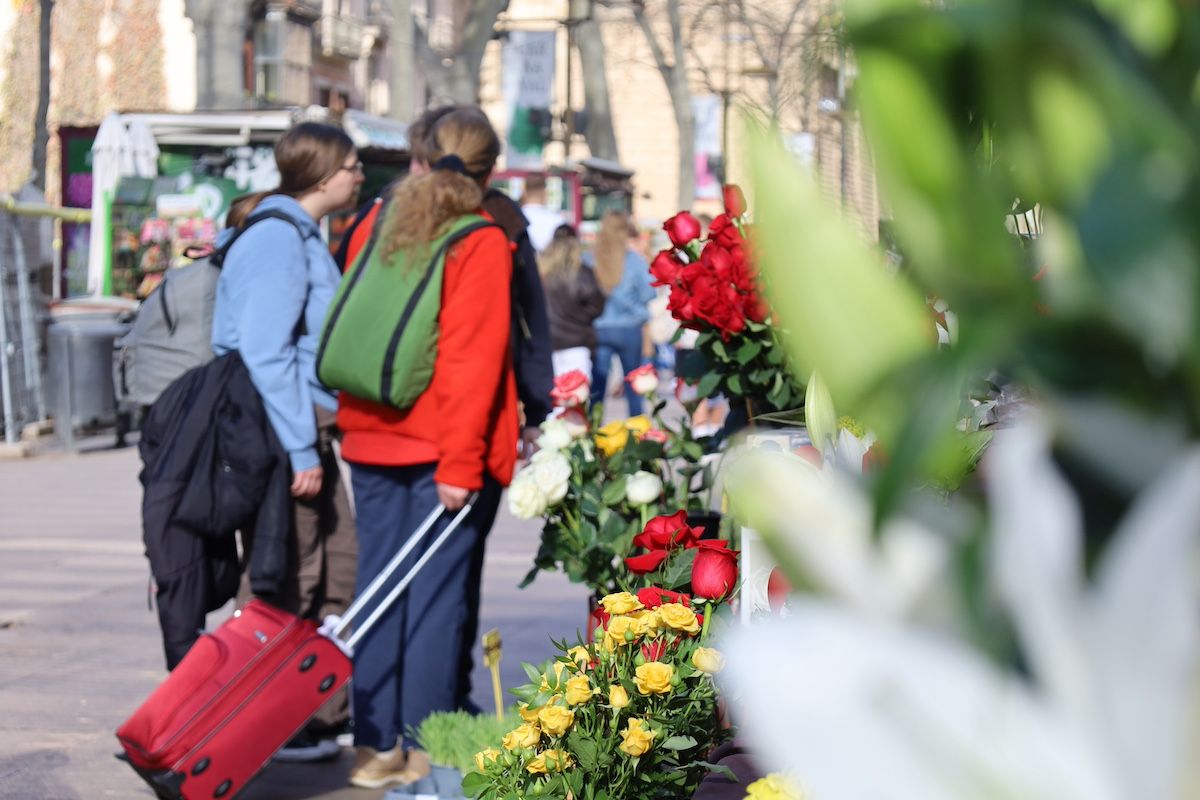
This unknown is a common denominator for the different florists; the desire to solve it is more varied. Jose Moya, a historic florist on La Rambla, is clear: "What I want is for the works to end." And the works have caused such a decrease in passers-by that his turnover has been reduced by more than 30%. "Few people pass by, and people pass by quickly," he says, raising his voice above the noise of the excavator moving earth under La Rambla a few meters from his stall.
"In Plaza Catalunya I think we will be better than here, with the works, but it is not our place. We, in the end, are Rambla," highlights Moya, who was once president of the association that the florists used to have. "I'm not excited to go up to Catalunya, but I am expectant, to see how it goes." The florist, who has been on the Rambla for 40 years, already witnessed the remodeling of the stalls in the 90s, in a process marked by disagreement with the City Council, in contrast to the current process. "Now they are giving us many facilities," he explains, while charging a woman in English who is taking a couple of colorful mini-cacti. For the first time, Moya will place his flowers beyond the avenue, eagerly and expectantly, but always with his sights set on returning to his natural location. They haven't left yet, and they already want to come back.
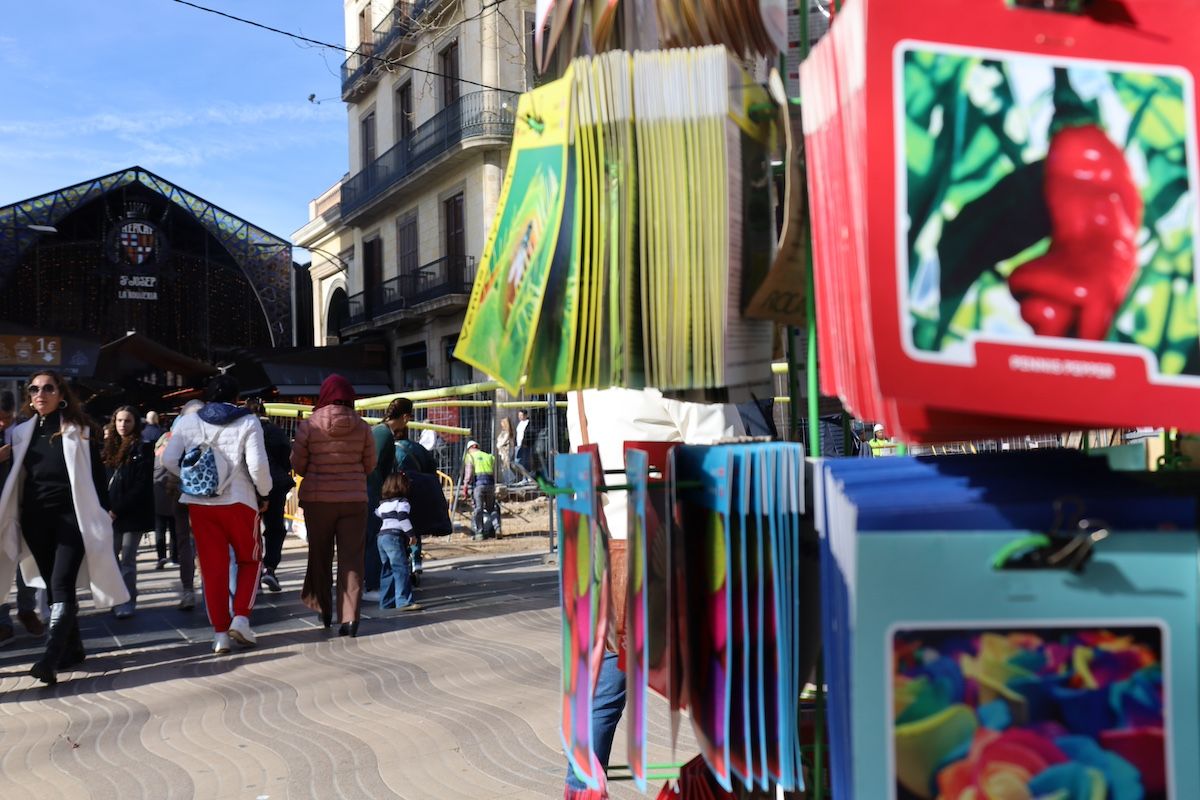
This feeling is also shared beyond the florists: "We will miss them, they are the essence of the Rambla." This is said by Xavier Masip, manager of Amics de la Rambla, who impatiently follows the progress of the works: "They are taking a long time and are hard, but when a section is finished and you see it without concrete mixers, it's a pleasure to see." Taking the florists beyond the Rambla, according to Masip, can also be an opportunity for them to gain visibility and bring them closer to people who do not usually go to the Rambla, to invite them to return when the renovation is finished and the florists return to their original location. Thus, with more or less enthusiasm, the works are seen as a necessary evil to create a greener and friendlier Rambla, and to contribute to this desire for Barcelonans to once again make their own a gesture that was once as common as going down to the Rambla.
Add The New Barcelona Post as your preferred Google source for free
Stay informed with the latest news.
