Maintaining teleworking a few days a week, reducing the square meters allocated to offices, creating new areas where workers can interact when they go in person, contracting different co-working spaces to be closer to where employees live... These are some of the trends that are emerging in the post-coronavirus office world. As of September, companies are not expected to return massively to in-person work and will opt to start testing which of these new models suits them best, according to the director of CBRE in Barcelona, Xavier Güell, with the intention of applying it structurally by early 2022, provided the pandemic does not worsen again.
The uncertainty that covid still causes in the short term is postponing this generalized return. "Companies do not want to rush, there is still not enough information to make definitive decisions. Furthermore, there is no magic recipe, each sector, each company and each job are different," Güell points out. Despite this, CBRE does believe that, when the crisis passes, an average of one to two days of teleworking per week will be established. If before the coronavirus this modality was already present in Spain, but in a residual way and in very specific sectors, such as technology companies and startups, now it is expected to become widespread.
"It will have an impact on the world of offices, but less than one might think," indicates the executive. With one or two days of teleworking of free choice, which he believes will tend to be Monday or Friday, companies will not be able to consider reducing the contracted square meters because they will continue to have peaks of attendance the rest of the days. It will be different for those companies that decide to regulate it, distributing among employees the days of the week they work from home, who will be able to reduce them if they have it planned.
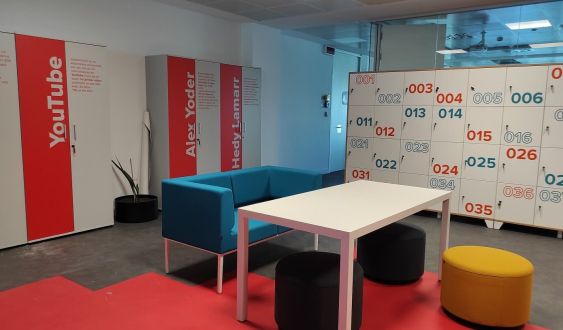
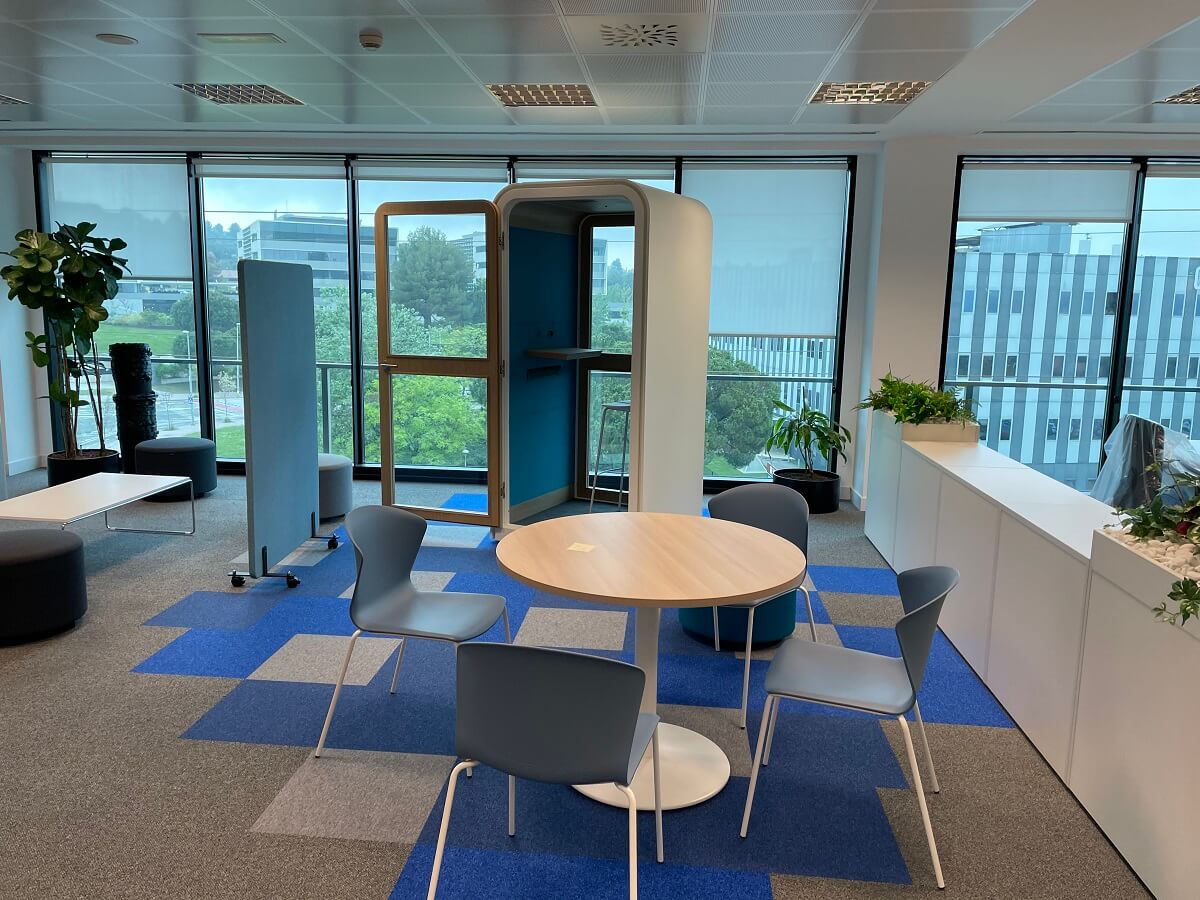
However, Güell adds, it is also being considered to expand spaces to guarantee safety distances and take more care of activities such as video calls, which were not so essential before, as well as incorporating areas that did not exist. For example, more spaces will be created where workers can socialize, with sofas or shared tables, ensuring that when they go in person they take the opportunity to interact and work as a team.
As a result, CBRE estimates that the reduction in contracted office square footage will be 7% on average, a figure that Güell does not see as concerning for the sector. In fact, he emphasizes that this scenario was expected by 2025, replicating an office concept that already existed in other countries.
Flex spaces
The pandemic has also allowed for saving the time spent commuting from home to work—the national average is 40 minutes. After months of lockdown and teleworking, gaining the time previously reserved for public or private transport commutes, companies are opting to move closer to where their employees live by renting coworking or flex spaces. During the first quarter of 2021, this type of transaction grew by 85.4% in Barcelona and Madrid, according to CBRE, with 2,521 operations closed in the Catalan capital. Savills Aguirre Newman has also detected this dynamism in the demand for flexible spaces, with 20,000 square meters contracted in both cities during the same period, a figure that represents more than double that of a year ago.
After months of lockdown and teleworking, gaining the time previously reserved for public or private transport commutes, companies are opting to move closer to where their employees live by renting coworking spacesFor Güell, this trendit also means that companies will tend to rethink where they locate their offices, with the aim of preventing the staff from having to make long commutes. This can translate into planning them in the area where most of their employees live or having more than one office in the city, which are smaller and widely distributed by areas, thus reducing travel times.
The multinational GFT, fewer desks with computers and more interaction
An example of these new office trends is the technology consultancy GFT, located in Sant Cugat del Vallès. The German multinational, specialized in advising and accompanying businesses in their transformation towards virtuality, began to implement teleworking in its Catalan headquarters before the pandemic arrived, allowing its employees to work from home two days a week. When the COVID crisis erupted, more than 30% of the staff had already joined this plan. Currently, all workers telework and no date has yet been set for their return.
When they do, GFT employees in Sant Cugat del Vallès will be able to choose how many days they want to continue working from home ---between one and five, according to individual preferences--- and will find completely different offices. Seeing that teleworking worked, the management decided to halve the office space, going from about 9,200 square meters to about 4,800 ---Fluidra has taken over the vacant space---. Likewise, the headquarters has just been completely renovated. Desks with computers have lost prominence in favor of common areas for talking with colleagues or holding meetings. In fact, there will no longer be fixed seats for everyone and they will have to be reserved the day before through an app.
Add The New Barcelona Post as your preferred Google source for free
Stay informed with the latest news.
