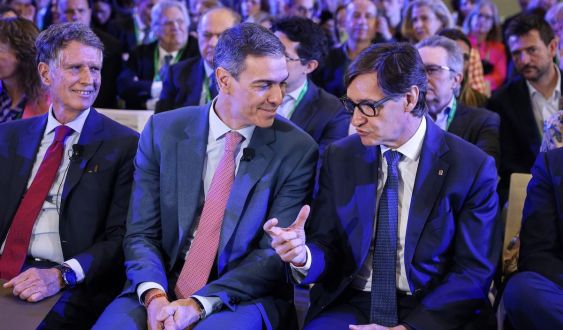
The Cercle d'Economia Meeting is always a very good thermometer of what is brewing in Catalonia's civil society, with an eye on Spain and Europe. So much so that during three days in May ---with more or less rain--- almost all possible topics appear: Trump's mandate and tariff policy, the awakening of the European Union, the takeover bid for Banco Sabadell and BBVA, the movements in the CriteriaCaixa universe, the death of Pope Francis and the conclave, or even Hansi Flick's Barça, among others. I would not like to repeat myself on everything you may have already read these days, but let me just give a brief overview of some reflections that I found particularly interesting at this 40th Annual Meeting of the Cercle d'Economia, held at the Palau de Congressos de Catalunya.
Let's start with reflections cited with a special focus on the business and economic sphere:
- "It is totally critical to understand the risks, opportunities, and circles of influence"
- "In life there are no decisions, but transactions"
- "In truth, there is never a definitive version or last-call"
- "Where to invest? Where there is a market; if there is no market, there is no business"
- "The right to read cannot be eliminated"
- "We have to escape the sprayed ant syndrome: everyone runs, without knowing where they are going"
- "The management of uncertainty will be part of our business DNA"
- "Football puts cities on the world map"
- "The external challenge is defense and the internal challenge is housing"
- "If there is no shared prosperity, can everyone live freely?"
- "If Europe wants strategic autonomy, it needs scale and, therefore, European technological champions must be created"
- "Europe is a herbivore in a world of carnivores. We have to be omnivores, that is, be leaders without losing our DNA, because we have a market of 450 million consumers"
- "Perhaps the EU is a bit like the Sagrada Família, which is an enormous, idealistic project of historical dimensions, with complex and perpetually unfinished architecture, where each generation contributes its grain of sand to face the challenges of its time"
- "There's a saying that goes: the United States invents, China copies, and Europe legislates"
- "This Donald Trump thing is the chronicle of an announced Administration"
- "War has become Vladimir Putin's main business model"
- "What happens in Ukraine determines the limits between the United States and Russia and the geopolitical balances in Europe"
- "Raw materials and trade have become a weapon of war. And what happens to the middle class?"
Meanwhile, the music of the executive chair dance continues. Undoubtedly, the most talked-about move has been the signing of Francisco Reynés as executive vice-president of CriteriaCaixa, after the blatant departure of Àngel Simón, which caught more than one by surprise. They say that, beyond a question of rapport or chemistry with the almighty Isidro Fainé, it is mainly about "disagreements" in Criteria's strategic plan regarding the potential entry into the capital of Celsa.
Another key name is Rafael Vilaseca who, from now on, will combine his position as president of Celsa with that of non-executive president of Veolia in Spain, which is the owner of Agbar, where Àngel Simón had precisely built a high-level executive career. You can see that in the Catalan business world almost everything is connected and any movement, however small or large, triggers a good domino effect among executives. Another significant operation in Barcelona has been the acquisition of the consultancy Lead To Change, by Sarah Marlex with Xavier Marcet and Marc Francès at the helm, with the premise of applying common sense to management, sharing talent and growing by making others grow.
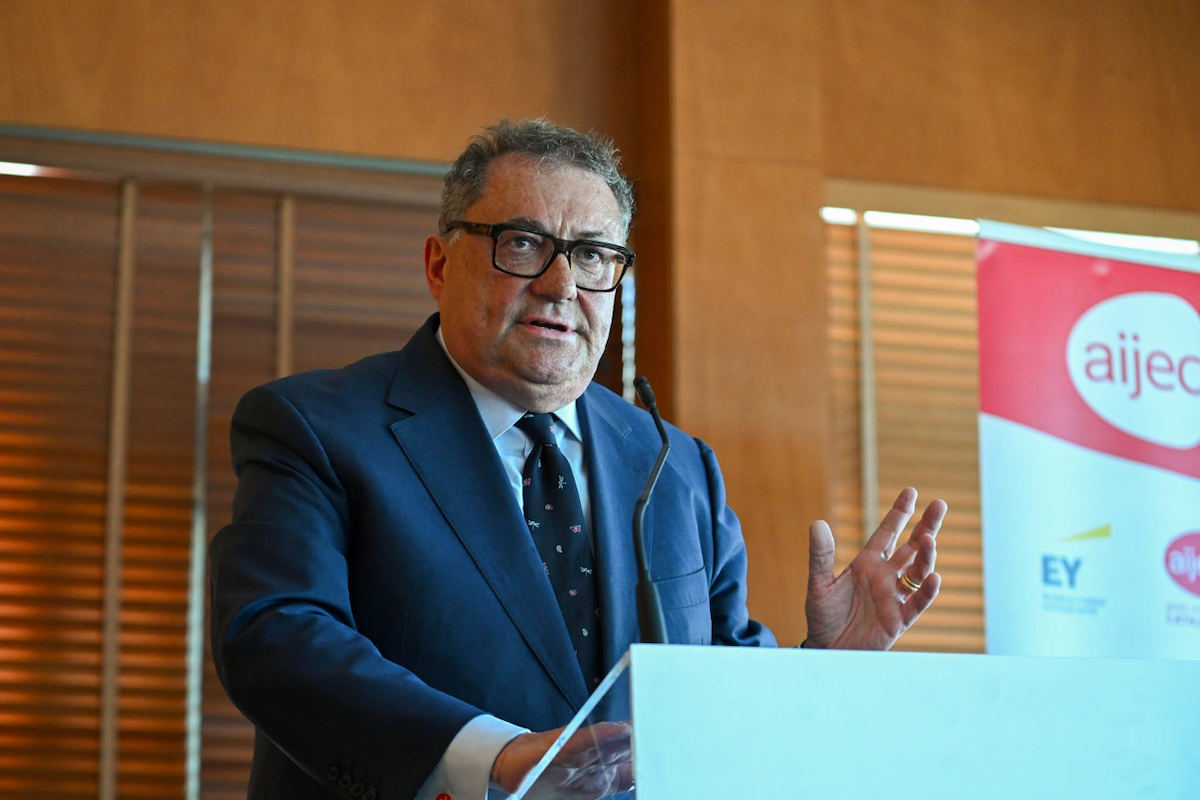
The president of Barcelona Global, Ramon Agenjo, pointed out, after 46 years in the Damm family business, that "Catalonia is a country of patronage and associativism," and that "working hard is not always synonymous with a business doing well." By the way, Damm has a turnover of around 2,000 million euros, employs 6,000 people and can boast of having a leading factory in Europe and never having lost money, not even during the pandemic, when they had to reinvent themselves. Agenjo is very clear that, to reach the top, you have to work hard, be in love with the company, take risks, adapt to the times and think a lot about the people who work. "When the company is doing well, the family is doing well. Everything works if there is a dividend. We are used to eating little and digesting well," he assures.
What turns life takes. Colvin has gone from being the best startup of the year to laying off a large part of its staff and being left with about twenty workers. It was one of the great promises of the Barcelona ecosystem, it raised more than 60 million euros and some even praised it as a possible unicorn (valuation exceeding 1,000 million euros), but it has barely just emerged from bankruptcy proceedings courtesy of Claret Capital. Paraphrasing an interview I did years ago with its co-founder and then CEO, Andrés Cester, "Colvin's story has not been a bed of roses and entrepreneurship is not easy at all."
I also keep the reflection of the founder of Startups Institute, Miguel Angel Díez, who says: "It is the latest case of the curse of the big round. Many think that when you raise a round of more than 25 million, you already have success guaranteed, and nothing could be further from the truth. Scaling and internationalizing (they are not the same, but they share similar problems) are the two most dangerous moments for any company, and the examples of startups that fall due to avoidable errors at such times are multiple." Although failure is not a pleasant dish for anyone, may it at least in this case serve as a learning experience for all those who want to undertake.
And there is white smoke. Habemus Papam, named Leo XIV. The conclave has already chosen a new Pope, of whom we will all now speak. And since the world often goes too fast, let's end this column with a heartfelt tribute to Pope Francis: "When I think of business leaders, the first word that comes to mind is the common good. But entrepreneurs are key actors in development and well-being. They are an essential engine of wealth, prosperity, and public happiness. The media speaks little of the difficulties and pain of entrepreneurs who close their businesses and fail without fault. Success is not directly synonymous with virtue and goodness, and misfortune is not synonymous with guilt." Rest in peace and thank you for your legacy.
Add The New Barcelona Post as your preferred Google source for free
Stay informed with the latest news.
