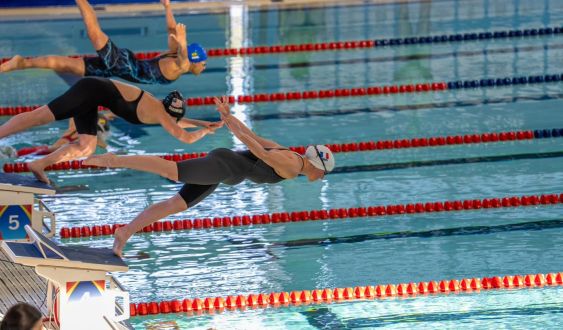
I find myself sitting on a side platform, right at the edge of the water sheet of the historic Club Natació Barcelona. The air is charged with that dense, chlorinated humidity that characterizes high-competition venues, but today the atmosphere gives off something more. A vibration that transcends the purely sporting. A few meters away, the athletes who are about to jump into the water exhaust their last minutes of warm-up, mentally reviewing each stroke. What in any street of the city would be interpreted as an exception, here is the absolute norm. No one is more different than the person next to them.
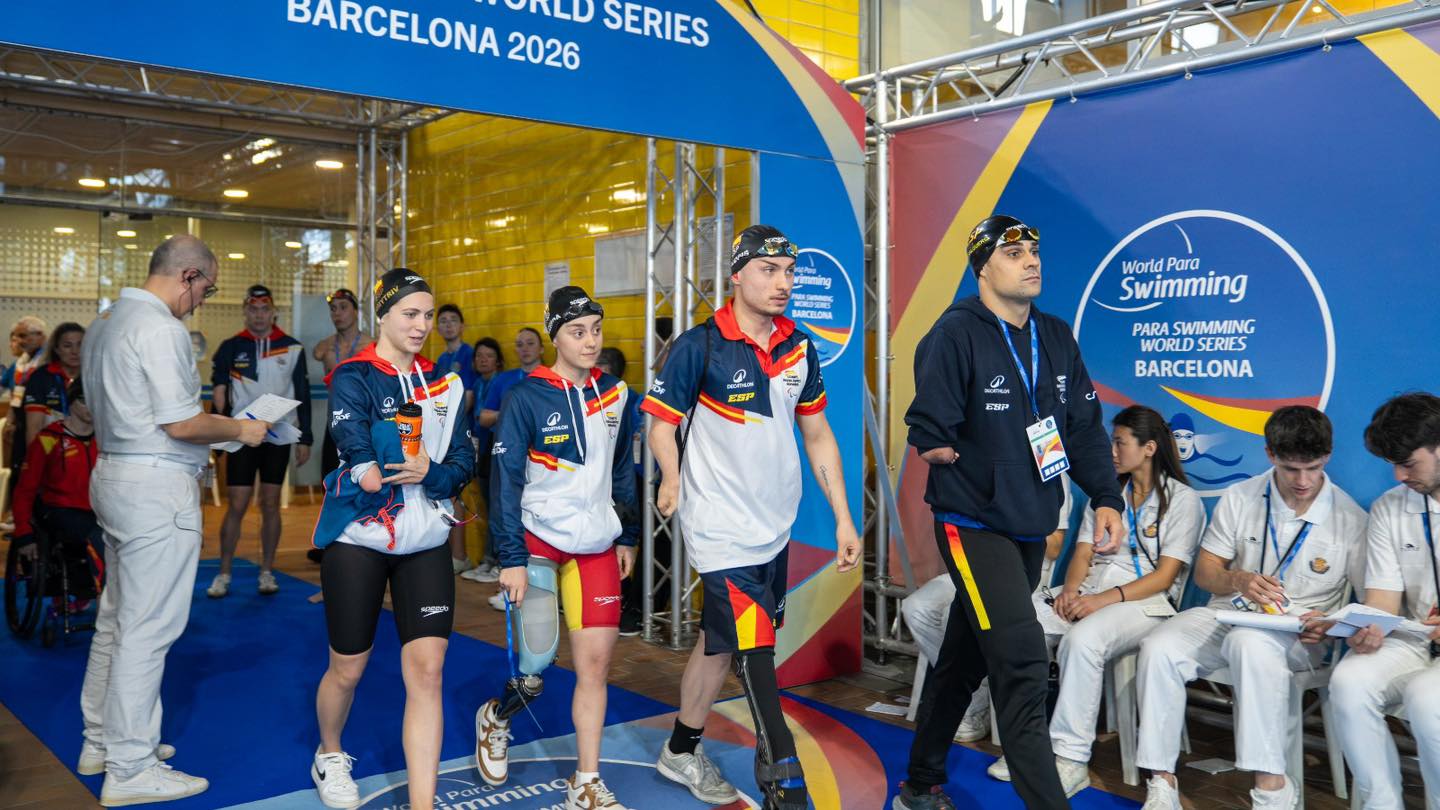
In this microcosm of water and effort, prostheses rest next to towels, wheelchairs await at the starting line, and the sequelae of paralysis or a limb malformation blur under the uniform of a national team. Here I only see a human contingent of elite athletes preparing for their turn, inhabiting a safe space in a medium, water, that understands no physical barriers, but hydrodynamics and will.
Barcelona has once again consolidated itself as the world epicenter of adapted swimming with the celebration of the Para Swimming World Series 2026. It is not just any event; it is the result of institutional and sporting goldsmith work that the Catalan Sports Federation for People with Cerebral Palsy and Brain Injury (FECPC) has been carefully weaving for years. What began as a dream in 2018, when they organized some CPISRA World Games that served as a thermometer, has today crystallized into one of the most beloved stops on the international circuit.
Catalonia's ability to attract events of this level has been evident with the award for the Emerging Project for the Internationalization of the Catalan sports model, recently granted by the Catalan Sports Foundation to the FECPC. The agreement to organize four editions of the World Series at the Club Natació Barcelona is not an isolated event, but a strategic commitment. The ultimate goal is to demonstrate the organizational solvency of the territory to aspire, in the near future, to host a Paralympic Swimming World Championship.
As I watch the delegations unfold, the numbers take on a life of their own. There are almost 240 athletes from 39 countries, an astonishing figure if we consider the complex current geopolitical landscape and the war conflicts that hinder international transit. But success is not measured only by results. Behind all this, there is a team of ten people leading the organization, supported by both protocol and event interns, and an army of 200 volunteers. In total, nearly 600 people work in unison to make this sports festival impeccable.
The digital impact is undeniable: YouTube broadcasts reach thousands of views and the total impact on social media is counted in the millions. However, an uncomfortable question arises when looking at the stands: why, with this level of technical excellence and digital audience, do traditional televisions continue to turn their backs on these events?
In a society that seems increasingly alienated and obsessed with shallow success, making these types of competitions visible gives us back an image of resilience that the so-called mass sport rarely manages to transmit. Often, as families, we take our daughters and sons to media-hyped matches in a kind of initiation ritual, hoping they will absorb the values of sport. However, the true ritual should begin here.
"True overcoming is not the technical gesture, but the iron discipline that has brought them here"
What for the casual spectator may seem like an act of "overcoming," for these people is their strictest daily life. What to my eyes is astonishing —adjusting glasses or putting on a cap with a single hand that barely has a couple of functional fingers— is, in this context, natural. True overcoming is not the technical gesture, but the iron discipline that has brought them here.

I speak with Rodrigo Santillán, a swimmer for the Peruvian national team who has been competing since he was 14 years old. Rodrigo lives with Charcot-Marie-Tooth syndrome, a genetic condition that affects peripheral nerves, causing muscle weakness. He tells me, with a disarming smile, that the atmosphere in Barcelona is "cool," that the city welcomes him with special warmth, and that his goal is to continue traveling the world with the Para Swimming World Series, with his sights always set on the next Paralympic Games.
Rodrigo is not alone; men and women with diverse physical realities share his same ambition. That ambition is what has led the FECPC to professionalize to the maximum. This year, for the first time, they have moved from free entry to a payment system, a necessary step to give value to the event and generate the means that elite sport deserves. And the host club, CN Barcelona, consolidates its inclusive leadership by having prominent Paralympic figures and an elite technical team in its ranks. At the helm is Rubén Reguart Oto, Technical Director of Adapted Sport and one of the great promoters of this model, who works daily so that his swimmers not only compete at the highest international level, but do so fully integrated into the structure of a historic club.
Sports memory inevitably takes us back to 2013, the year Barcelona made history by hosting the first Football World Championship for people with cerebral palsy. That event was the seed that propelled disciplines like boccia and today allows Catalonia to lead milestones such as having consolidated the first federation in the State with a adapted women's football team.
"The true barrier is not in a body that functions differently, but in the gaze of those who have not yet understood that excellence does not have a single form"
At the center of this mechanism is Ismael Sánchez, manager of the FECPC, who has been a key piece in the professionalization of this model. Through transversal programs like Esport sense Barreres, he has transformed sports management into a tool for real social change. For Ismael, the organization of the Para Swimming World Series or the aspiration for a future World Championship are no longer mere competitive desires; they are a strategic necessity to make visible the lack of resources and claim a rightful space in elite sport.
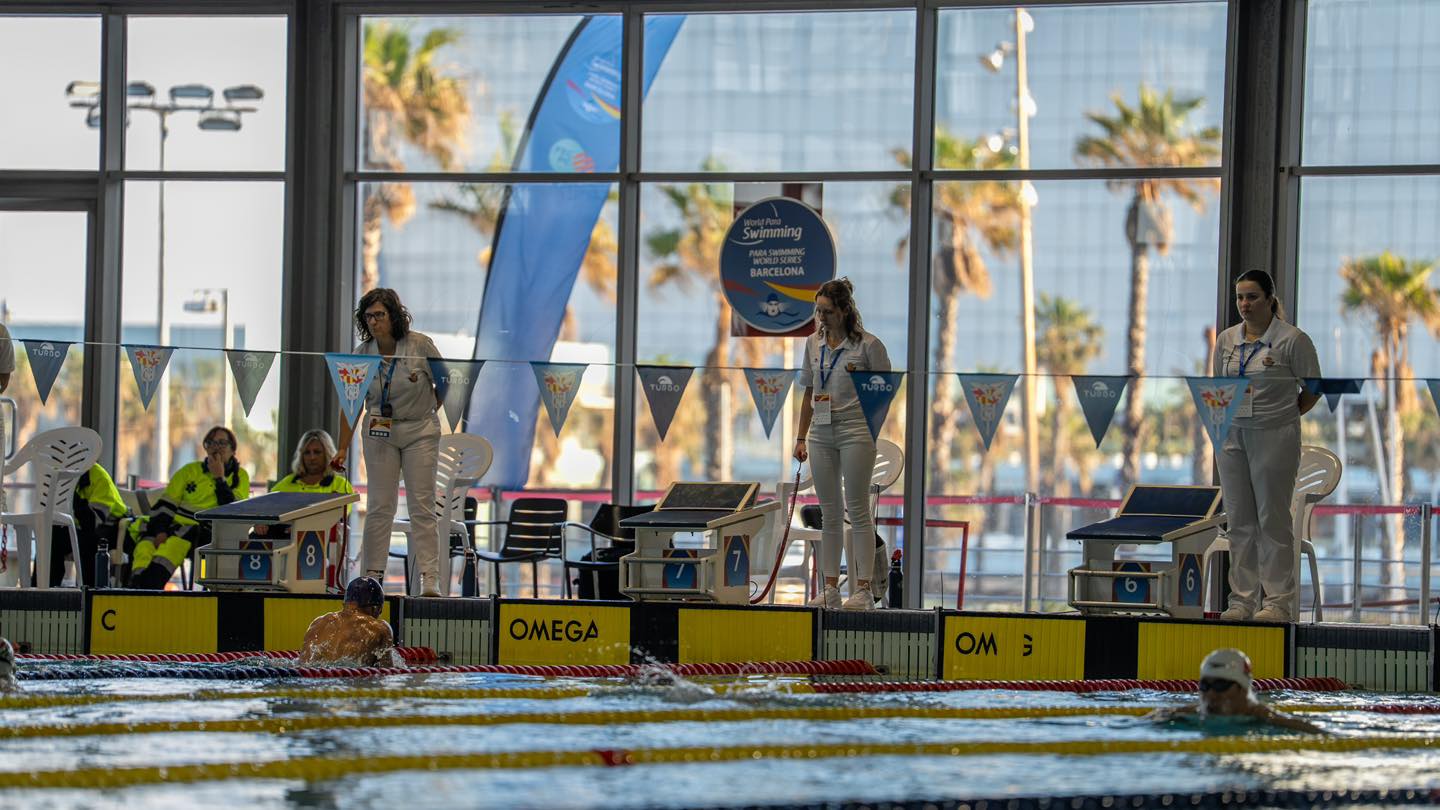
The horizon is drawn as ambitious and transformative. At the center of this planning, the unification of the five adapted sports federations is being considered to consolidate a unique and transversal institutional structure. This impulse seeks to guarantee sports promotion that reaches every corner of the territory. But the true milestone would be to achieve a great dream: a High-Performance Center designed exclusively for people with disabilities. A reference space that not only welcomes the elite but also acts as an epicenter for training and meeting for grassroots sports, technical staff, and the entire Paralympic ecosystem. Because, although current references help generate activity and communicate, the visibility "influencers" have not yet achieved a real structural change in investment policies. Ten years ago, an event of this magnitude would have been unthinkable; today it is a reality, but tomorrow it must be the standard.
I look back at the pool just as a series ends. Here no one competes alone. The human team that accompanies each athlete acts as an extension of their own bodies. It is not just technical assistance; it is the gentle embrace of someone who helps to enter the water, it is the firm hand that holds before the starting signal, it is the strap that keeps the torso in the regulation position. There is a deep tenderness in that mutual trust, a dedication that transcends the rules.

And then something happens that defines the spirit of this place: the audience in the stands erupts in a standing ovation. They not only applaud the one who arrived first but maintain the energy until the last person touches the wall. Here the measure of time is different because the value of effort is absolute.
Barcelona has shown that it is ready to continue being the home of world adapted swimming. The water of Club Natació Barcelona today not only reflects the spotlights of the pavilion but the reflection of a society that, when it wants, knows how to look directly at ability and talent, without labels.
As a writer, but above all as a spectator who can barely swim, I leave here with the certainty that the true barrier is not in a body that functions differently, but in the gaze of those who have not yet understood that excellence does not have a single form. The Para Swimming World Series and the work of the entire FECPC team are the present, but also the beacon that illuminates a future where sport, simply, is for all people.
Add The New Barcelona Post as your preferred Google source for free
Stay informed with the latest news.
