
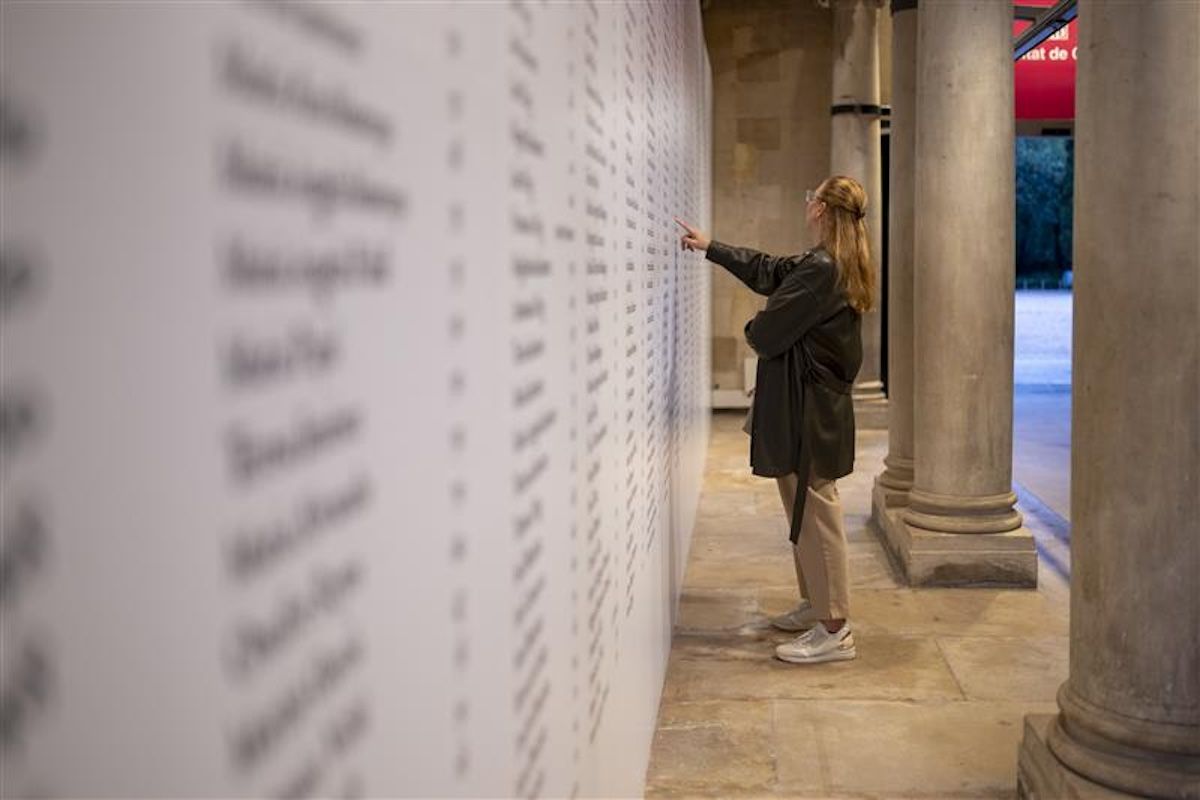
The first attempt at physical and cultural extermination of the Roma people is known as Baró Estardipen, through a Royal Order issued by Ferdinand VI on June 28, 1749, which gave instructions to imprison Roma families throughout Spain. Coinciding with the 275th anniversary of this dramatic episode, the Palau Robert hosts the exhibition Baró Estardipen. General Prison for Roma Men and Women. The exhibition can be visited in the display window and on several panels in the building's garden until December 10.
The brutal persecution against this minority people would last for years, but unfortunately, the repercussions of these acts have never been recognized or valued, neither culturally nor materially. Despite this, it is estimated that Baró Estardipen affected some 12,000 Roma people. Some died and others, men, women, and children, were separated from their families. Curated by Francisco Vargas, the exhibition at Palau Robert is organized by the Department of Equality and Feminism with the collaboration of the Directorate General of Dissemination of the Generalitat de Catalunya.
Exclusion of the Roma people
Also known as The Great Roundup, this operation aimed at the arrest and subjugation of the Roma people, based on an extermination project. And it justified the repression with arguments based on social and economic prejudices. This historical event marks a peak moment of structural anti-Romani sentiment, which for centuries promoted the exclusion of the Roma community.
Under the leadership of figures such as the Marquis of Ensenada, and with the approval of the Church, law enforcement separated children from their families, and they were forced to learn trades or to serve. Girls were sent to orphanages and houses of mercy until they were old enough to work as maids. Baró Estardipen was applied without exception of age or sex, and without discriminating between settled and nomadic Roma populations, with the former being the most affected population.
The deprivation of parental authority and family separation imposed on all Roma people was not the only punishment to prevent their reproduction and extinguish the Roma people. In addition, the mass imprisonment of adult men and women was ordered, which lasted for years, and they were sent to perform forced labor in arsenals, prisons, or factories.
Reparation of historical memory
The commemoration of the 275th anniversary of the Baró Estardipen aims to make known events unknown to most people. Now, this exhibition at the Palau Robert wants to recover the historical memory of the Roma community, recognizing the racism and violence they had to suffer from public administrations and the prejudices they still face today. From a feminist and anti-racist perspective, the exhibition wants to generate awareness of the situation and repair the memory of the Roma people, which has never been recognized or valued.
This commemoration also echoes throughout the territory through the representation of the play No soy tu gitana by Silvia Agüero, and a subsequent dialogue-colloquium during the months of November and December. The central and closing event of the 275th anniversary of the Baró Estardipen will take place at the Palau Robert in Barcelona, on December 9 at 6:00 p.m. More information and registrations on the website of the Institut Català de les Dones.
Add The New Barcelona Post as your preferred Google source for free
Stay informed with the latest news.
